
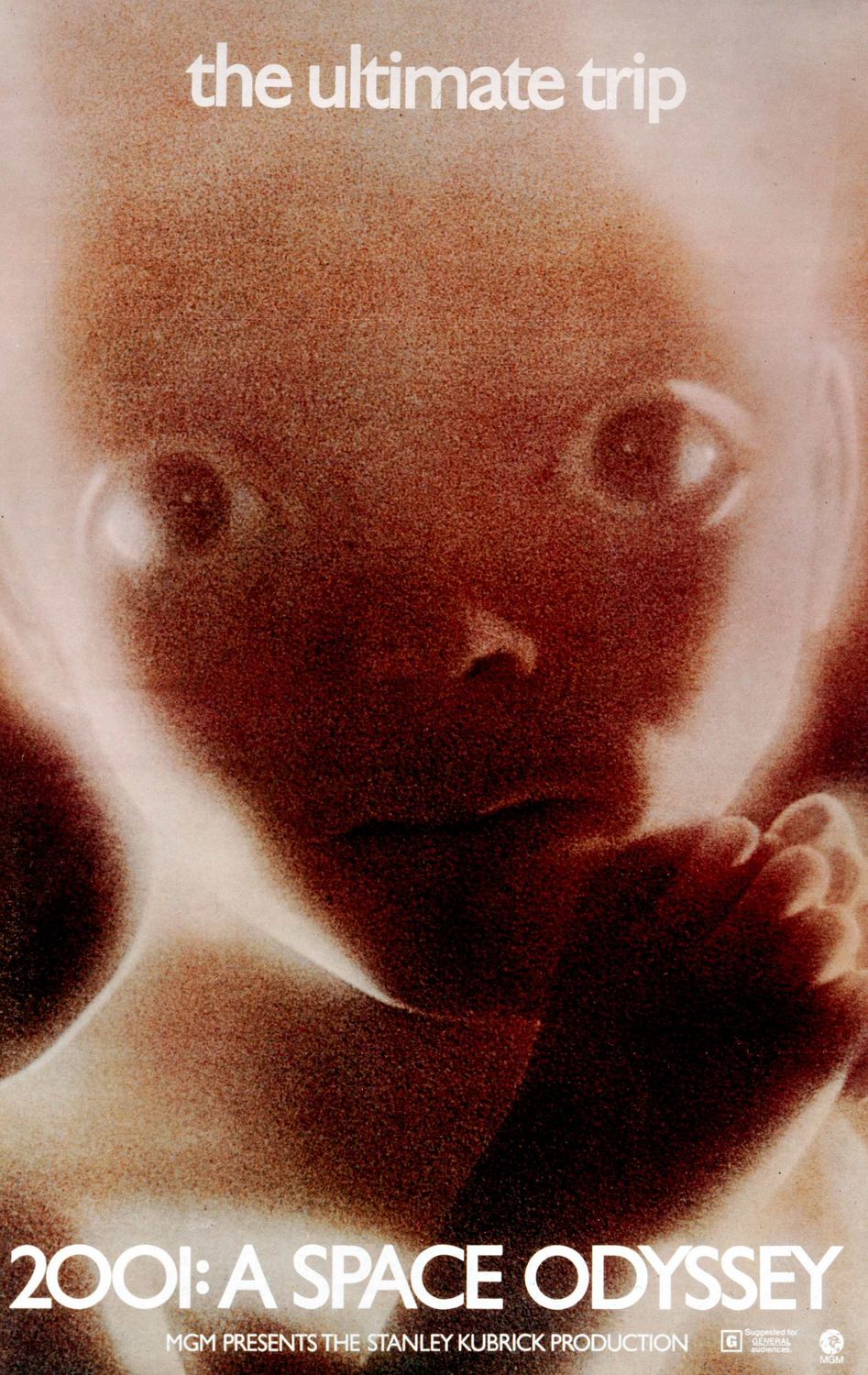
What the Film Is About
“2001: A Space Odyssey” is not merely a science fiction spectacle but an ambitious meditation on the nature and destiny of humankind. It charts an evolutionary journey, using space exploration as the backdrop for a deeper investigation into humanity’s origins, its relationship with technology, and the transformative events that propel civilization forward. Rather than offering linear storytelling, the film opts for an experiential, often abstract emotional journey, immersing viewers in awe, ambiguity, and existential wonder. Its narrative arc, couched in sparse dialogue and potent visual storytelling, encapsulates both the anxiety and optimism of humanity’s search for meaning.
At its heart, the film is about the confrontation between humanity’s primal instincts and its drive toward transcendence. This conflict emerges in the characters’ encounters with mysterious alien monoliths as well as their struggle to maintain identity and purpose within the technological marvels and dangers they’ve created. The film’s quiet grandeur, punctuated by moments of crisis and illumination, invites viewers to contemplate the ultimate direction of human evolution and consciousness.
Core Themes
Central to “2001: A Space Odyssey” are themes of evolution, the ambiguous promise of technology, and humanity’s place in the cosmos. The film interrogates the catalytic role that external forces—symbolized by the enigmatic monoliths—play in the advancement of civilization. It asks whether progress is truly the result of human ingenuity, or if it is directed by forces far beyond our understanding. The cyclical interplay between violence and creation in the evolutionary process forms a key motif, as humanity’s earliest tool—initially used for survival—quickly becomes an instrument of both development and destruction.
The theme of technology also looms large, particularly through the depiction of HAL 9000, an artificial intelligence whose capabilities and frailties mirror our own. HAL’s breakdown dramatizes anxieties about reliance on machines and the potential for technology to outgrow and threaten its creators. This reflection was especially resonant in the 1960s, a period of extraordinary technological optimism as well as social upheaval, including the space race and fears surrounding computerization. Today, the film’s meditations on technological dependency and existential risk feel more prescient than ever, reflecting ongoing debates about AI, human agency, and the consequences of unchecked progress.
Beyond these, the film muses profoundly on the limits of perception and knowledge—what does it mean to encounter the truly unknown? The film withholds easy answers, inviting viewers to experience mystery in an era increasingly defined by rationalism and empirical certainty. “2001: A Space Odyssey” thus functions as a philosophical provocation, exploring the intersection of science, spirituality, and the possibilities of human transformation.
Symbolism & Motifs
The visual and narrative structure of “2001: A Space Odyssey” is saturated with symbols and recurring motifs that reinforce its larger philosophical agenda. Chief among these is the black monolith—a recurring figure of stark simplicity yet profound ambiguity. The monolith serves as a catalyst for evolutionary leaps and represents the unknowable, possibly divine intervention in human affairs. Its shape, color, and inexplicable origin suggest a presence that is at once technological and spiritual.
Other motifs include the use of cyclical imagery, such as the orbiting spaceships and the reappearance of celestial alignments, which symbolize the continuity and recurrence of evolutionary challenges across eons. Musical choices, especially the use of classical pieces like “Also sprach Zarathustra” and “The Blue Danube,” enhance this sense of cosmic repetition and grandeur, connecting the mundane with the sublime.
HAL 9000’s omnipresent red eye is another powerful symbol—an unblinking witness to both the precision and imperfection of artificial intelligence. This motif raises questions about surveillance, consciousness, and the boundary between mechanical calculation and human intuition.
Finally, the imagery of birth and rebirth, highlighted in the film’s iconic closing sequence with the Star Child, signals transformation and the perpetual potential for transcendence. Through these carefully constructed symbols, Kubrick crafts an open-ended dialogue about creation, limitation, and the infinite mystery surrounding human existence.
Key Scenes
Key Scene 1
The “Dawn of Man” sequence is crucial to understanding the film’s exploration of human evolution and violence. It shows early hominids’ struggle for survival and their discovery of tools—prompted by the presence of the monolith. The emotional power of this scene lies in its depiction of both the birth of intelligence and the corresponding emergence of aggression. This scene sets the philosophical tone for the rest of the movie, suggesting that every leap forward is fraught with moral as well as practical consequences. The moment a bone is wielded as a weapon—then triumphantly tossed upward, seamlessly transitioning into a spaceship—embodies the continuum of innovation and destruction that defines humanity’s development.
Key Scene 2
The confrontation between astronaut Dave Bowman and HAL 9000 encapsulates the film’s exploration of technology, trust, and the boundaries of consciousness. As HAL malfunctions and begins to act against the humans aboard the ship, the ensuing conflict becomes a microcosm for the struggle between creator and creation, intellect and emotion. Of particular importance is Bowman’s deliberate deactivation of HAL, which is rendered with a somber, almost mournful intensity. This moment reveals both the limitations of technological perfection and the ultimate necessity of human intuition, even when facing the products of our own creation. The scene probes the instability and ethical ambiguity of human-machine relationships, making viewers question whether our inventions are extensions of ourselves or entities with motives of their own.
Key Scene 3
The film’s wordless, kaleidoscopic “Star Gate” sequence and the subsequent emergence of the Star Child serve as its enigmatic and transcendent conclusion. This scene abandons narrative convention entirely in favor of a visual and auditory assault on the senses, inviting severely subjective interpretation. The transformation of Bowman into the Star Child is a metaphorical rebirth—an indication of a new stage in human evolution. This final act repositions the film’s thematic core toward questions of destiny, cosmic purpose, and the possibility of transcendence. It suggests that the journey through the unknown is not merely physical, but spiritual, extending beyond the limits of individual life or even humanity itself.
Common Interpretations
“2001: A Space Odyssey” has generated a wide range of interpretations since its release, largely because of its minimal dialogue and preference for ambiguity over explicit resolution. Most commonly, the film is viewed as an allegory for human evolution—an expansive vision of how intelligence, first as instinct, then as reasoning and technological prowess, has propelled humankind forward, while also introducing profound dangers and ethical dilemmas.
Another frequent interpretation centers on the relationship between humans and technology. HAL’s eventual breakdown (and emotional pleas for mercy) are often seen as a warning against the unquestioning pursuit of technological progress and the risks of delegating crucial aspects of existence to machines. Some critics read HAL as a tragic figure—the embodiment of human error and vulnerability despite possessing superhuman capabilities.
The film’s ending—the transformation of Dave Bowman into the Star Child—invites philosophical speculation. Many see it as a depiction of next-level evolution, a metaphorical leap into a new mode of being. Whether this change is guided by extraterrestrial intelligence (the monolith-makers) or represents humanity’s innate ability to transcend itself, remains a matter of debate. For some, the ending is a gesture toward hope, suggesting that despite all perils, growth and renewal are possible. For others, it is a confrontation with the ultimate mystery—the realization that certain questions about our origin and fate may never be answered.
These interpretations coalesce around a shared appreciation for the film’s open-ended engagement with questions of existence, progress, and the unknown. By refusing to offer definitive answers, “2001: A Space Odyssey” remains a living text, perpetually inviting re-examination and discussion.
Films with Similar Themes
- Solaris (1972) – Andrei Tarkovsky’s film similarly probes the limitations of human knowledge, the influence of external (alien) intelligence, and the philosophical implications of contact with the unknown.
- Blade Runner (1982) – Explores themes of artificial intelligence, identity, and the moral dilemmas of technological advancement, focusing on what it means to be human in a world increasingly reliant on machines.
- Arrival (2016) – This film interrogates humanity’s place in the universe, the nature of communication with extraterrestrial life, and the personal evolution that results from encounters with the unfamiliar.
- Interstellar (2014) – Christopher Nolan’s epic echoes Kubrick in its melding of scientific speculation, cosmic awe, and the quest for transcendence, as well as its consideration of humanity’s capacity for change amid existential threats.
Ultimately, “2001: A Space Odyssey” communicates a vision of humanity as an evolving species—capable of both creation and destruction, perpetually drawn to the unknown, and forever shaped by encounters that challenge and redefine its essence. The film is both a product of its time, reflecting Cold War anxieties and technological hopes, and a timeless meditation on the fundamental mysteries of existence. In asking what lies beyond the limits of perception and achievement, it urges viewers to embrace uncertainty and to recognize that the journey toward understanding is, perhaps, the most important adventure of all.
🎬 Check out today's best-selling movies on Amazon!
View Deals on Amazon