
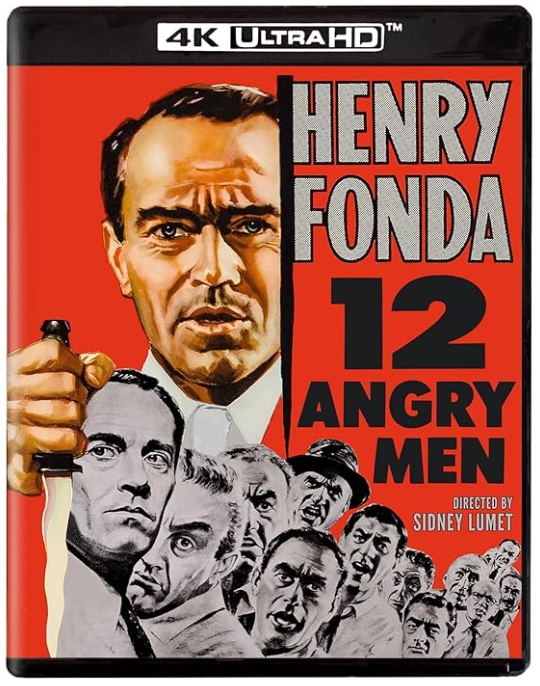
What the Film Is About
“12 Angry Men” (1957) is a tightly wrought courtroom drama that unfolds almost entirely within the confines of a jury deliberation room. It follows twelve men tasked with delivering a verdict on a capital murder case. The emotional pulse of the film comes from the escalating tensions as these jurors, each with their own backgrounds, values, and personal prejudices, must confront their biases and the gravity of deciding a young defendant’s fate. The central conflict is not simply over guilt or innocence, but over fairness, justice, and the responsibility of civic duty. The narrative direction is a journey from complacency and conflict toward cautious deliberation and shared understanding, with the threat of injustice looming if the group fails to rise to the occasion.
As the men debate, tempers flare, alliances shift, and vulnerabilities are exposed. The film’s true drama lies in the gradual, sometimes painful process by which individuals reconsider their assumptions and come to view the defendant—and each other—with greater empathy and integrity. At its heart, “12 Angry Men” explores the moral and psychological contours of justice, as well as the fragile, fraught nature of consensus in a divided group.
Core Themes
The film is a concentrated study of several interlocking themes, chief among them justice, prejudice, civic responsibility, and the complexities of truth-seeking. Through the seemingly simple act of jury deliberation, “12 Angry Men” lays bare the fallibility of human judgment and the persistent influence of personal bias. It scrutinizes the American judicial ideal that everyone deserves a fair trial, urging viewers to recognize how easily prejudice and apathy can distort this pursuit.
Equally central is the theme of social responsibility. The film insists that a functioning democracy relies on citizens who are willing to actively engage, question assumptions, and hold each other accountable—even, or especially, in uncomfortable circumstances. In 1957 America, these ideas resonated in the context of a society wrestling with issues of civil rights, conformity, and the legacy of McCarthyism. Today, the film’s themes remain urgent: the persistence of implicit bias, the challenge of honest discourse in a polarized culture, and the need for active participation in systems of justice.
Moreover, the group dynamic within the jury room reflects broader questions about power and influence. The shifting alliances and moments of courage or cowardice illuminate how consensus is forged—and how easily it can be undermined. The film doesn’t merely warn against miscarriages of justice; it celebrates the difficult, often uncomfortable process of individuals searching for truth together, showing how careful deliberation can challenge convention and build empathy.
Symbolism & Motifs
“12 Angry Men” employs several recurring motifs and symbols to reinforce its deeper concerns. The physical confines of the jury room itself symbolize the pressure-cooker environment of democratic deliberation; the jurors cannot leave until they reach a unanimous verdict, highlighting the inescapable responsibility that comes with their role. The oppressive heat in the room serves as a metaphor for rising tempers and the emotional intensity of moral confrontation, with tempers flaring alongside the temperature. When the storm finally arrives and the heat dissipates, it corresponds with a cooling of passions and a breakthrough in reasoning.
The act of voting—raised hands, repeated ballots—is itself a ritualized motif, reminding the audience of the ways in which democratic processes can feel both mechanical and momentous. The knife, a key piece of evidence, becomes a symbol of the assumed certainty and simplicity of the prosecution’s case; when one juror produces an identical knife, this certainty is shattered, embodying the dangers of hasty conclusions. Even the use of names—most characters are addressed only by their juror numbers—serves to universalize the story, suggesting that the drama could occur anywhere, among any group, at any time.
Body language and the arrangement of jurors around the table also carry symbolic weight. The physical isolation of dissenters, such as Juror 8 standing alone, visually conveys the challenge of resisting groupthink. The shifting positions as minds are changed underscores the potential for transformation and bridges built through dialogue.
Key Scenes
Key Scene 1
One of the film’s most crucial scenes is the first vote, when Juror 8 is the lone individual refusing to return a guilty verdict. Rather than aggressively stating his point or attempting to overturn the majority through rhetoric, he expresses uncertainty and a desire for further discussion. This moment is emotionally charged not because of debate or evidence, but because it introduces the possibility that doubt—and not certainty—can be the more responsible moral position. The scene crystallizes the film’s faith in conscientious dissent as a catalyst for truth, and sets up the film’s central meditation on courage, integrity, and the value of the solitary voice in the face of majority opinion.
Key Scene 2
Another pivotal scene occurs when Juror 10 launches into a prejudicial tirade against the defendant’s background, prompting the rest of the jury to turn away from him, one by one. This moment marks a powerful public rejection of bigotry and an affirmation of principle over prejudice. The silence and physical distancing of the other jurors signify a shift in the group’s moral center. The scene is less about intellectual argument and more about the emotional and ethical damage inflicted by hate—literally and figuratively isolating the prejudiced individual. Here, the film forcefully demonstrates that justice requires not only correct facts, but also the communal repudiation of bias.
Key Scene 3
The final scene, following the acquittal, brings a quiet emotional closure. The jurors file out, identities still largely unknown, except for a brief exchange between Juror 8 and Juror 9, who finally introduce themselves. This understated moment emphasizes the film’s belief in the dignity of ordinary people rising to the demands of moral responsibility. Having struggled through conflict and self-confrontation, they return to anonymity, their personal connections as fleeting as the rare moment of shared resolve they’ve just experienced. This ending refrains from triumphalism, instead leaving viewers with a sense of humility and the reminder that the struggle for justice is ongoing and often unheralded.
Common Interpretations
“12 Angry Men” is widely regarded as a meditation on the potential—and limitations—of the American justice system. Many critics interpret the film as an idealistic affirmation of the jury process, spotlighting the power of reasoned debate and individual conscience to overcome communal inertia and prejudice. According to this reading, the film is a testament to the possibility of justice, provided citizens are willing to invest the necessary attention and moral rigor.
Others take a more somber view, perceiving the film as a cautionary tale about how easily justice can be derailed by apathy, personal bias, or social pressure. The narrative is then seen not only as a celebration of democratic ideals, but also as a warning—democracy is fragile, and only as strong as the willingness of individuals to resist conformity and stand up for doubt and dissent. The tension between optimism and realism in these interpretations remains a subject of enduring debate: is the film ultimately a vindication of the system, or a call for constant vigilance and reform?
A third common interpretation focuses on the group dynamics, reading the film as a psychology lesson in how groupthink, authority, and personal vendettas play out in collective decision-making. By highlighting how quickly reason and compassion can be snuffed out unless defended, some see the film as a timeless exploration of social psychology and the essential—but difficult—work of building consensus in a divided world.
Films with Similar Themes
- 12 Angry Men (1997) – TV Remake – This contemporary adaptation revisits and updates the original film’s themes of justice, civic duty, and the dangers of prejudice within the context of a new era, proving their continuing relevance.
- A Few Good Men (1992) – Explores issues of moral courage and the search for truth within a military court, raising questions about authority, personal responsibility, and the integrity of the justice system.
- To Kill a Mockingbird (1962) – Engages similar themes of justice, prejudice, and the importance of standing against the majority in the context of a racially charged trial in the American South.
- The Verdict (1982) – Examines the personal and ethical struggles of a flawed lawyer as he fights for justice, echoing the emphasis on individual redemption and the difficulties of overcoming systemic failure.
Ultimately, “12 Angry Men” communicates a sober, hopeful faith in the possibility of justice; it insists that society can only live up to its ideals when individuals are willing to grapple with their own prejudices and shoulder uncomfortable responsibilities. The film powerfully reflects the anxieties of its era—fears of McCarthyist conformity and civil rights injustices—while still speaking to contemporary audiences wrestling with the meaning of fairness, the persistence of bias, and the fragile, precious possibility of human understanding across difference. At its core, the film stands as both a challenge and an affirmation: we are capable of better, but only if we choose it, again and again.
🎬 Check out today's best-selling movies on Amazon!
View Deals on Amazon