
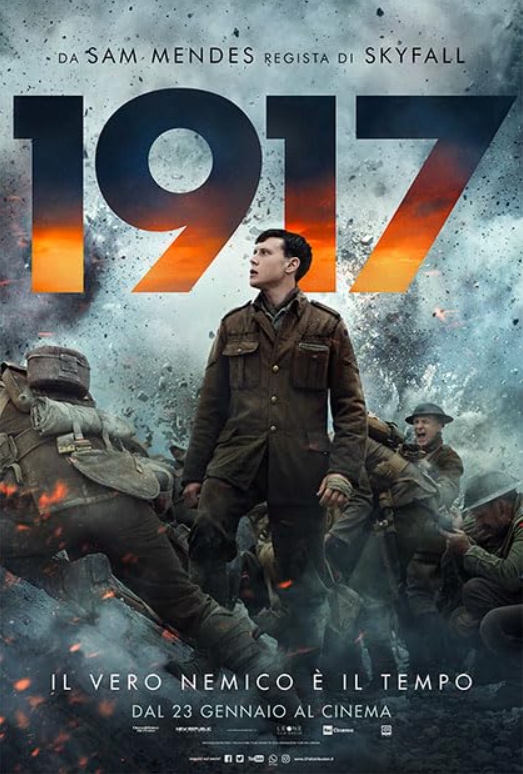
What the Film Is About
“1917” is an immersive meditation on the brutality and absurdity of war as filtered through the urgent, personal journey of two young British soldiers sent across enemy lines. The film doesn’t linger on the grand strategies of World War I, but instead compresses its focus to the intimate and immediate struggles of its protagonists, forcing the audience to experience conflict as a relentless physical and psychological ordeal. What unfolds is less a traditional war epic and more a journey into exhaustion, trauma, and the ever-fraught hope of human connection within chaos. The narrative is propelled by an almost real-time race against fate, with each decision and obstacle revealing emotional costs as heavy as any battlefield casualty.
Core Themes
At its core, “1917” explores several intertwined themes that reach far beyond the specifics of its World War I setting. The most prominent is the dehumanizing impact of war; the film constantly shows how individuals become mere instruments within a machinery of death and desire for victory. The journey across no man’s land and ruined French countryside reflects the shattering of innocence—what begins as a relatively straightforward mission evolves into a grim rite of passage where survival itself becomes a moral quandary. The film delves into the nature of duty, exploring what compels ordinary people to risk everything for others, whether out of personal loyalty, moral conviction, or a sense of obligation to something larger than themselves.
Another central theme is the illusion of control. Despite meticulous planning, the characters are repeatedly shown to be vulnerable to chaos that renders human intentions insignificant. This is underscored by the one-take illusion of the film’s cinematography, which crafts the narrative as a single, uninterrupted flow—suggesting that, like life and war, events evolve with no opportunity to rewind or prepare emotionally.
In 2019, when global politics and headlines once again filled with conflict, displacement, and the haunting specter of mass violence, the film’s focus on individual vulnerability resonated deeply. Its themes endure, reminding viewers of the ongoing costs of war—not just on the battlefield, but in generational trauma and the persistence of hope against crushing odds.
Symbolism & Motifs
“1917” employs striking visual and narrative symbols to enrich its meaning. Chief among these is the motif of lines—trenches, barbed wire, rivers, and roadways—which represent both territorial divisions and personal boundaries. The act of crossing these lines mirrors the psychological and ethical thresholds the characters are forced to traverse. The ever-present mud, decay, and wreckage are not simply historical details, but visual shorthand for humanity’s descent into chaos and its struggle to reclaim meaning from destruction. Broken trees, burning towns, and the recurring sight of dead bodies serve as reminders of both loss and resilience.
A particularly powerful symbol appears in the recurring imagery of light and darkness. Whether in the hellish glow of flares over a ruined town or the gentle dawn in a quiet orchard, the shifting light illustrates the tenuous balance between hope and despair. The cherry blossom motif stands out as a counterpoint to death: a tangible reminder of home and renewal, even as the world those blossoms once bloomed in seems impossibly distant. Small gestures—a letter delivered, a photograph preserved—become imbued with meaning, symbolizing the fragile threads of memory and humanity that persist through unimaginable hardship.
Key Scenes
Key Scene 1
The moment in which the protagonists traverse no man’s land for the first time is crucial in establishing the film’s central meditation on vulnerability. The landscape, scarred and desolate, is not just a setting but a manifestation of the emotional wasteland the characters inhabit. This crossing is more than a physical journey; it signals the passage from the relative safety of certainty into a world governed by contingency and death. The slow, almost ritualistic movement through corpses and craters strips away the myth of glorious heroism, confronting both the characters and the viewer with the raw, impersonal cost of war.
Key Scene 2
Midway through the film, a scene unfolds in the ruins of a bombed-out French village illuminated by flares that carve shadows across broken buildings. Here, the protagonist’s attempts to remain unseen are heightened by surreal lighting and shifting perspectives. This sequence intensifies the motif of chaos intruding upon human will—the light both reveals and conceals, blurring the boundaries between fear and courage. It illustrates how, in war, moments of beauty and terror coexist, and how every step forward risks encountering random, senseless violence. The scene also subtly challenges notions of control, emphasizing the overwhelming scale of forces pitted against a single individual’s agency.
Key Scene 3
The film’s resolution finds the surviving protagonist arriving at his destination, battered and haunted, to deliver his message. The slumped exhaustion and fleeting connection with a new acquaintance highlight the ultimate ambiguity of his journey—though the mission’s immediate objective is achieved, the broader violence continues. This scene crystallizes the film’s view of heroism: not as triumph, but as the persistent decision to act amidst despair and loss. The closing image, a moment of bittersweet quiet under a tree, gestures toward the resilience of the human spirit, suggesting that meaning survives in the act of enduring and remembering, even as war’s machinery grinds on.
Common Interpretations
Critics and audiences alike have approached “1917” as both a technical achievement and a somber reflection on wartime experience. The most widely accepted interpretation reads the film as a deconstruction of wartime heroism—rejecting romanticized versions of combat in favor of portraying soldiers as ordinary people swept up in forces beyond their control. The immersive style, created by the “one-shot” aesthetic, is often cited as a means of placing viewers directly in the soldiers’ boots, making the chaos and confusion viscerally real.
Another common reading focuses on the film’s exploration of duty and sacrifice. Some viewers interpret the story as a parable about honor—what it means to persist when the reasons for doing so are distant, or perhaps even unattainable. Others read the narrative as a critique of military bureaucracy and the futility of war, noting the indifference with which individual fates are managed by those in power.
Though most interpretations highlight the crushing inhumanity of war, some audiences find a redemptive undertone in the film—pointing to moments of compassion and connection as evidence of enduring humanity. Rather than offering easy answers, “1917” invites debate about whether heroism is defined by outcome, intention, or mere survival.
Films with Similar Themes
- Paths of Glory – Explores the dehumanizing effects of military command and the moral ambiguity of wartime decisions, making a thematic connection with “1917” regarding the expendability of individual soldiers.
- Saving Private Ryan – Shares “1917”‘s immersive depiction of war and its attention to the personal costs of duty and sacrifice.
- Come and See – Another brutal portrait of conflict that foregrounds the traumatic psychological impact of war on individuals, echoing “1917”‘s unflinching realism and focus on survival.
- Gallipoli – Examines camaraderie, loss, and the tragic consequences of orders from above, themes directly parallel to those in “1917”.
Ultimately, “1917” is less about victory or defeat than about endurance and empathy under pressure. It communicates—often wordlessly—how human lives are shaped, scarred, and sometimes redeemed by collective catastrophe. In rendering war as a series of moments defined by uncertainty and fleeting hope, the film stands as a testament to the resilience found in ordinary acts, and as a reminder that the most lasting cost of any war is the humanity it imperils and preserves.
🎬 Check out today's best-selling movies on Amazon!
View Deals on Amazon