
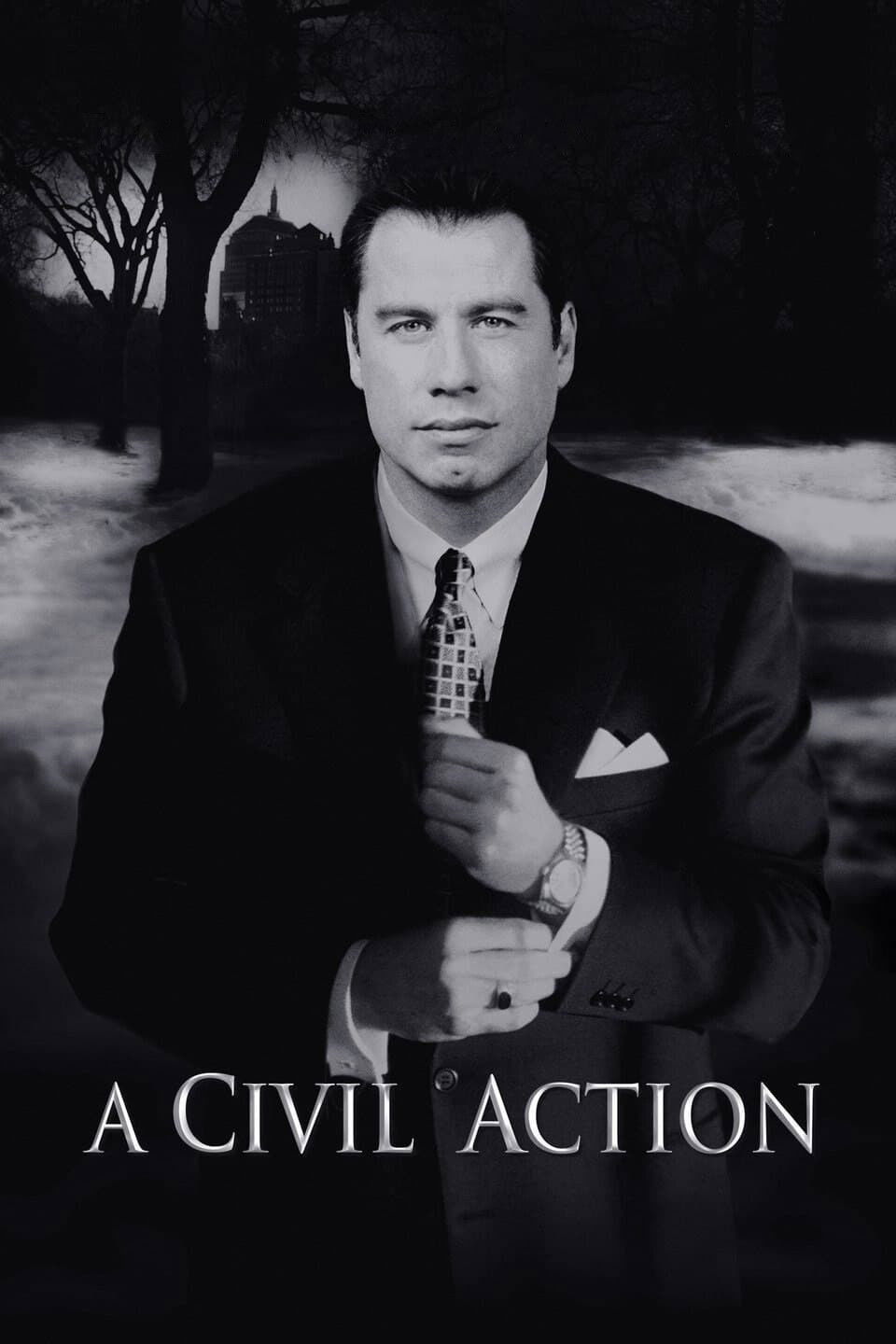
What the Film Is About
“A Civil Action” (1998) is a probing legal drama that dives beneath the surface of courtroom spectacle to examine the human and moral costs of environmental disaster and the pursuit of justice. The emotional journey centers on Jan Schlichtmann, a self-assured personal injury lawyer whose initial pursuit of financial compensation transforms into an agonizing moral crusade. The film traces his evolution as he moves from a mindset focused on victory and profit toward an increasingly desperate struggle to do what is right, even at devastating personal cost.
At its core, the film is less about the technicalities of law than it is about the clash between corporate power and individual responsibility. It follows what happens when the drive for justice confronts the overwhelming forces of bureaucracy, indifference, and institutional inertia. The narrative direction is unflinching and quietly tragic, gradually stripping away preconceptions to explore the limits of American justice and the loneliness of genuine ethical commitment.
Core Themes
“A Civil Action” is fundamentally a meditation on the meaning of justice, the elasticity of morality, and the corrupting influence of power—corporate and systemic alike. The film interrogates the relationship between truth and accountability in a society where legal and moral imperatives are often at odds. Through its depiction of a protracted battle against powerful corporations accused of contaminating a town’s water supply and causing illness, the film exposes how money, legal gamesmanship, and institutional self-preservation can distort the search for truth.
Another prominent theme is personal transformation under duress. Jan Schlichtmann’s journey is emblematic of the cost of idealism: he is forced to reconcile his ambition and pride with his awakening sense of responsibility to people affected by the tragedy. The film also questions whether the legal system is equipped to provide meaningful justice in complex cases or if it merely perpetuates suffering under a veneer of procedure. At the time of its release, these questions echoed anxieties about environmental safety, burgeoning corporate influence, and the erosion of trust in public institutions—concerns which have only deepened in the decades since.
The film continues to resonate because it refuses to offer tidy solutions. Its themes remain timely in a world still grappling with environmental crises, legal inequalities, and the moral ambiguity at the heart of modern institutions. It compels viewers to reflect on their own roles within such systems and the possibility, however faint, of meaningful change.
Symbolism & Motifs
The film employs several potent symbols and recurring motifs to reinforce its exploration of justice and moral responsibility. Water, as the source of both life and death, recurs throughout as a symbol of innocence corrupted by negligence. It stands for purity violated, a natural element made ominous and lethal through human carelessness and greed. The images of water—appearing in legal discussions, in the modest glasses on kitchen tables, and in the landscape of the affected community—underscore both the ubiquity and vulnerability of what should be a basic right.
Another visual motif is the courtroom itself—often portrayed as cavernous, impersonal, and intimidating. The space is more than a location: it represents the wider justice system, magnificent in appearance but implacable and often indifferent in practice. Papers, files, and boxes stacking up serve as an embodiment of bureaucratic inertia, overshadowing the humanity of the plaintiffs and the urgency of their plight.
Cars and the act of travel also function as subtle metaphors for personal journeys—particularly for Schlichtmann. The gradual loss of his material possessions, including his once-cherished cars, is closely tracked against his moral reckoning. As his grip on wealth and status loosens, his path toward uncomfortable enlightenment becomes clearer, suggesting the toll that true commitment to justice extracts.
Key Scenes
Key Scene 1
A crucial scene occurs when Jan Schlichtmann first visits the affected families whose lives have been upended by the tainted water. The emotional gravity of this meeting signals a break from his initial detachment; he is confronted, not with legal abstractions, but living, suffering people. This encounter reframes the case for both Schlichtmann and the audience, anchoring the film’s ethical inquiry. The anguish and rage of the families force Schlichtmann—and viewers—to recognize the difference between technical justice and genuine empathy.
Key Scene 2
Another pivotal moment arrives during the cross-examination of the corporate defendants. In this charged scene, the strategies of obfuscation and misdirection by the defense are laid bare. This sequence powerfully illustrates the imbalance between those who control the narrative—wealthy corporations with teams of lawyers—and the ordinary people seeking truth. The scene underscores a central theme: that the moral high ground in a legal battle offers little practical protection against a well-funded opposition. It also reveals Schlichtmann’s mounting desperation as he realizes that even the best arguments and evidence may not sway a system predisposed to inertia.
Key Scene 3
The film’s emotional climax, and its most poignant symbolic moment, comes when Schlichtmann is left bankrupt and broken, handing over his remaining evidence to the Environmental Protection Agency. Isolated and humbled, he is a man stripped of everything except his hard-won conviction that justice exists—even if imperfectly enacted—outside the courtroom. This final gesture is more than an act of surrender; it is a quiet affirmation of faith in the possibility that others will pick up where he left off. The scene resonates as a statement about the limits of individual action and the enduring necessity for collective responsibility.
Common Interpretations
Critics and audiences have typically viewed “A Civil Action” as a skeptical examination of the American legal system and the hubris of its practitioners. Many interpret the film as an indictment of the principle that “justice shall be done,” revealing how easily that promise breaks down when pitted against entrenched economic interests and systemic apathy. The character of Schlichtmann is widely read as a tragic figure—a modern-day crusader who is ultimately crushed by forces much larger than himself.
Others see the film as a celebration of imperfect heroism. While the legal case ends in something close to failure for Schlichtmann, his journey is interpreted as proof that individual conscience still matters. The film’s ambiguity—its refusal to portray a clear winner—has drawn praise for its realism. Some critics also interpret the ending as a subtle endorsement of activism beyond the courtroom, acknowledging that meaningful change often occurs outside the established order through persistent, everyday acts of courage.
There are also more cynical readings which argue that the film’s narrative demonstrates the futility of seeking justice within flawed systems, and questions whether personal sacrifice is worthwhile when the outcome remains unchanged. These differing interpretations reflect the film’s emotional complexity and its willingness to leave audiences with unresolved questions about morality and consequence.
Films with Similar Themes
- Erin Brockovich – Explores a layperson’s fight against corporate environmental abuse and the personal costs of seeking justice.
- The Verdict – Examines the moral redemption of an attorney battling institutional wrongdoing within an indifferent legal system.
- Michael Clayton – Delves into legal and corporate corruption, highlighting the ethical dilemmas faced by lone individuals confronting systemic rot.
- Dark Waters – Follows a lawyer’s years-long struggle against a corporation responsible for environmental devastation, raising questions of accountability and personal sacrifice.
Ultimately, “A Civil Action” communicates a sobering but urgent message. It exposes the inadequacies of the systems meant to protect ordinary people, and the loneliness of fighting for justice in the face of indifference and overwhelming odds. Yet, it also honors the possibility that one individual’s commitment—no matter how costly—can kindle a broader movement toward accountability. Within the context of the late 1990s and our current era, the film endures as a meditation on the stubborn resilience of decency, the ambiguity of victory, and the enduring struggle to reconcile law with justice.
🎬 Check out today's best-selling movies on Amazon!
View Deals on Amazon