
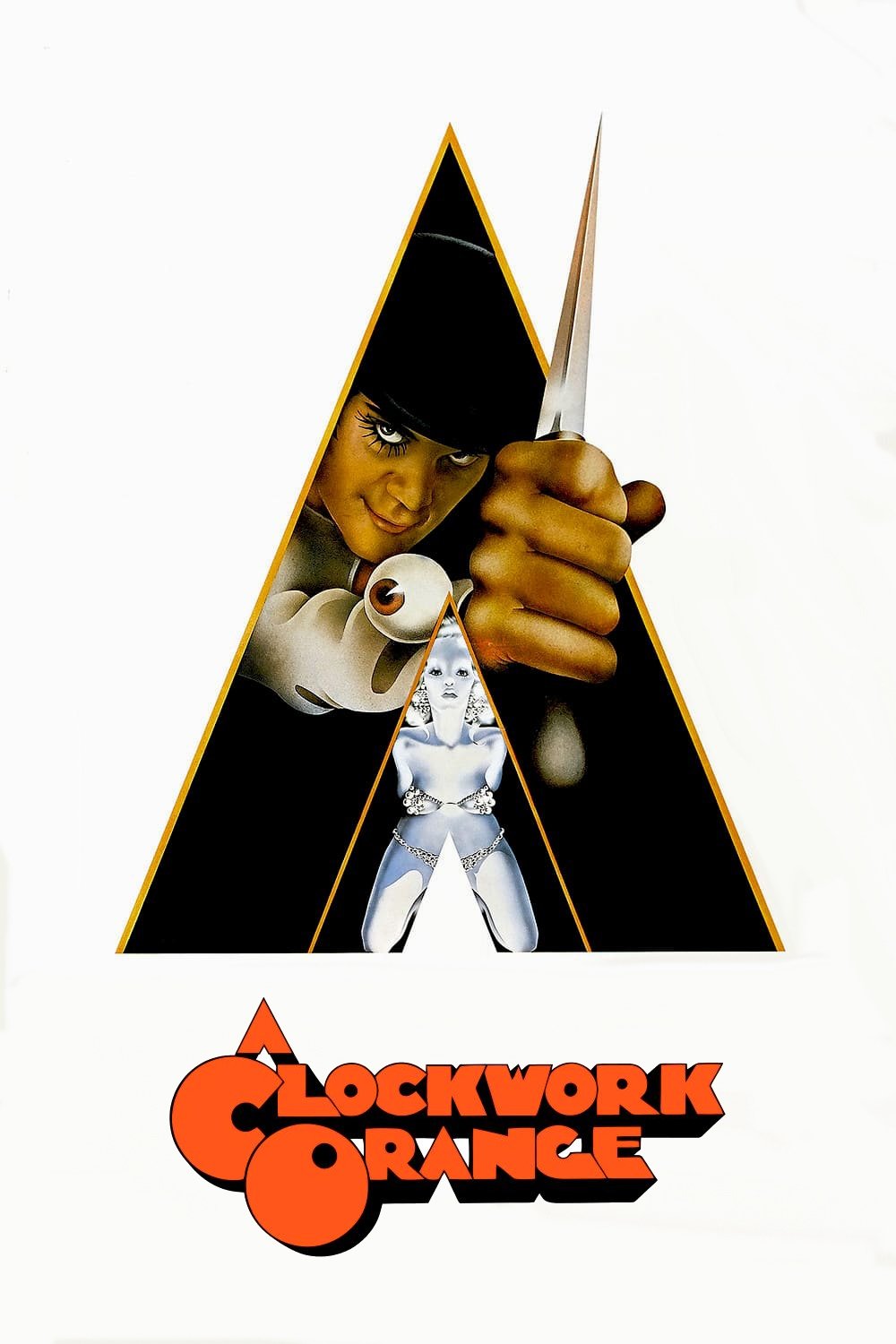
What the Film Is About
A Clockwork Orange (1971) is a dystopian film that thrusts viewers into a disturbingly stylish future, exploring the journey of a young man—Alex DeLarge—as he traverses the emotional terrain between gleeful violence and state-imposed conformity. At a high level, the film interrogates what it means to possess free will, especially in the face of authoritarian power and institutional attempts to “fix” or control deviant behavior. The central conflict lies in the tension between individual choice and social order, as Alex, once an agent of chaos, becomes a subject for a new and controversial experiment in psychological conditioning.
The narrative is not simply about the events in Alex’s life, but about the profoundly unsettling questions raised by his transformation. The viewer is compelled to feel both repulsed by his crimes and, paradoxically, sympathetic as the state strips him of his autonomy. The film’s emotional journey is deeply uncomfortable, as it forces its audience to confront their own responses to violence, punishment, and redemption, all while blurring the line between victim and perpetrator.
Core Themes
The core themes of A Clockwork Orange revolve around the nature of free will, the ethics of state power, the complexities of morality, and the seductive allure of violence. Perhaps above all, the film is a meditation on whether genuine goodness can exist without the freedom to choose evil. In presenting this dilemma, the film challenges the audience to consider the limits of governmental control, particularly when it comes to molding citizen behavior for the sake of social harmony.
Power is explored through both individual and institutional lenses: Alex’s initial reign of terror is an exercise in personal power, while the government’s eventual intervention reflects the totalitarian impulse to suppress undesirable tendencies at any cost. Morality becomes ambiguous, as the narrative interrogates whether it is better to have a society of outwardly good citizens who lack true agency, or one where individuals retain the ability to choose—even if that means choosing violence or cruelty.
The film’s themes were acutely relevant in the early 1970s, a period marked by anxieties about youth subculture, the efficacy of state intervention, and the shifting boundaries of personal liberty. Today, these questions remain pressing in debates about criminal justice, behavioral science, and the ethics of social engineering—making the film’s message enduringly resonant in an age of increasing surveillance and institutional oversight.
Symbolism & Motifs
A Clockwork Orange is replete with visual and narrative symbols that deepen its thematic impact. The most obvious is the “clockwork orange” itself—a phrase that juxtaposes organic life (“orange”) with mechanical control (“clockwork”). This image is central, representing an individual who is externally programmed to act against his or her inherent nature. Alex, after undergoing aversion therapy, becomes such a being: outwardly benign, but inwardly robbed of autonomy.
The motif of the eye recurs throughout the film, most memorably during the iconic scene in which Alex’s eyelids are forced open so he cannot look away from violent imagery. The eye becomes a symbol for forced perception, compulsory participation in the state’s vision of morality, and the violation of inner privacy. Beethoven’s music, especially the stirring strains of the “Ode to Joy,” serves as a motif for both transcendence and corruption—its beauty co-opted as a tool of psychological punishment.
Color and costume also function symbolically: Alex’s stark white outfit and bowler hat evoke both comic absurdity and chilling menace, while the sterile settings of the state institutions contrast sharply with the chaotic, vibrant spaces of his earlier life. The film’s design elements constantly reinforce the duality of control versus freedom, artifice versus reality, and pleasure versus pain.
Key Scenes
Key Scene 1
The scene in which Alex undergoes the Ludovico Technique is pivotal, both emotionally and thematically. His forced exposure to violent films, accompanied by visceral physical sickness, is not just a narrative turning point—it is a harrowing visual metaphor for the stripping away of personal agency. This moment crystallizes the film’s central argument: the question of whether it is morally acceptable to eradicate evil impulses if doing so obliterates free will. The use of iconic imagery—the clamps holding Alex’s eyes open—has become synonymous with the danger of coerced goodness. The emotional impact is heightened by Alex’s suffering, inviting reluctant empathy and raising uncomfortable questions about the legitimacy of state-sponsored “rehabilitation.”
Key Scene 2
Alex’s subsequent visit to the home of one of his former victims, now vulnerable and rendered physically incapable of defending himself, illustrates the perversion of justice at the film’s core. In this reversal of roles, Alex becomes prey to the vengeance of those he once harmed, underscoring the emptiness of his state-imposed “goodness.” The scene interrogates the boundaries of retribution and exposes the cyclical nature of violence; it also complicates sympathies, as viewers are forced to recognize that state and individual acts of cruelty are equally corrupting. This moment further destabilizes traditional notions of morality and highlights the dangers of shifting from one kind of violence (individual) to another (institutional).
Key Scene 3
In the film’s final moments, Alex is ostensibly “cured”—his free will restored by political necessity rather than genuine concern for his wellbeing. The triumphant return of Beethoven’s music signals this reversal, while Alex’s ambiguous smile leaves his moral condition unresolved. This closing scene does not offer neat resolution or redemption; instead, it pointedly asks whether society’s tools for pacifying deviance are themselves brutalizing and dehumanizing. The film concludes as it began—with Alex poised between pleasure and destruction—thus circling back to the essential problem of whether human nature can or should be overwritten by the mechanisms of state power.
Common Interpretations
A Clockwork Orange has inspired a wide array of interpretations, many of which focus on its bold interrogation of free will, authority, and moral choice. A dominant reading sees the film as a cautionary tale about the dangers of excessive state intervention, warning against the dehumanizing effects of social engineering and enforced conformity. Critics often argue that the film presents a kind of moral paradox: in seeking to eliminate violence, the state becomes as inhumane as the criminals it seeks to reform.
Other interpretations center on the film’s portrayal of violence—not just as a social ill, but as an intrinsic part of the human condition. Some viewers see the film as a critique of sensationalist media and the public’s voyeuristic appetite for brutality. There is ongoing debate about whether the film’s stylized violence is a condemnation or a provocation—whether viewers are meant to be repulsed by, or complicit in, Alex’s pleasures.
A further strand of interpretation considers Alex as a product of his environment, reflecting a society that is itself fundamentally corrupt and hypocritical. Here, the film is seen as an attack on authority at all levels—parents, educators, politicians—who fail to provide genuine moral guidance, resorting instead to repressive or self-serving mechanisms of control. These competing interpretations highlight the film’s enduring capacity to provoke debate without reducing its meaning to a single perspective.
Films with Similar Themes
- Film 1 – One Flew Over the Cuckoo’s Nest (1975): Like A Clockwork Orange, this film questions the ethics of psychological control and the suppression of individuality within institutional systems.
- Film 2 – Brazil (1985): Shares dystopian elements and a critique of bureaucratic oppression, raising questions about free will, conformity, and state-sanctioned violence.
- Film 3 – THX 1138 (1971): Explores depersonalization and enforced behavioral conformity in a technologically controlled society, mirroring the struggle between personal agency and societal regulation.
- Film 4 – Fight Club (1999): Investigates the allure and consequences of rebellion against societal norms, especially regarding the search for identity and meaning in an oppressive or meaningless world.
Ultimately, A Clockwork Orange communicates a profoundly unsettling message about the complexity of human nature and the perils of socially engineered morality. Through its provocative blend of visual style and philosophical inquiry, the film invites us to consider whether a society that values order over freedom is truly just—or whether the essence of humanity lies precisely in our capacity to choose, regardless of the consequences. Released at a time of cultural unrest and continuing to resonate in a world still grappling with questions of autonomy and social control, it stands as a challenging testament to the ongoing tension between personal liberty and the demands of collective security.
🎬 Check out today's best-selling movies on Amazon!
View Deals on Amazon