
What the Film Is About
“A Man Escaped” is a taut cinematic meditation on hope, resolve, and the existential demands of freedom. Set against the stark, oppressive backdrop of a Nazi prison in occupied France, the film follows Fontaine, a French Resistance fighter, as he crafts his plan to break out of captivity. The emotional core of the film lies not merely in whether he succeeds but in the patient, almost transcendent discipline with which he pursues the possibility of escape. The narrative direction is inward as much as outward — exploring the psychological territories of isolation, trust, and the stark realities of survival within a dehumanizing system.
Rather than focus on heroic spectacle, the film zeroes in on the intangible struggle: the balance between faith and doubt, and the relentless, almost monastic process of carving out hope in a world designed to extinguish it. The viewer is invited to share in Fontaine’s vigilance, uncertainty, and profound dignity, making each moment of anticipation a part of a larger, spiritual ordeal.
Core Themes
At its heart, “A Man Escaped” is an examination of freedom — not just as an external condition, but as an interior, moral imperative. The film foregrounds the resolve it takes to imagine liberation when all evidence points toward doom. This theme is inseparable from existential questions about agency and choice; each small action Fontaine takes — every gesture of preparation, every risk undertaken — becomes a statement about the irreducible will to survive with dignity.
Bresson’s film probes the limits of faith, both religious and secular. Fontaine’s steady rituals echo a kind of reverence, suggesting that meaning exists even in absolute confinement. Trust is another central theme, complicating the solitary struggle when Fontaine is forced to decide whether to include another in his perilous plan. Guilt, responsibility, and fraternity weave through this moment, expanding the scope of the film from individual survival to communal solidarity.
Released in 1956, the film’s meditations on resistance and hope resonated in a Europe still marked by the trauma of war and occupation. The moral questions faced by those under oppressive regimes — when to act, whom to trust, how to preserve the core of one’s humanity — were acutely relevant. Today, its themes endure because the film positions freedom as both a concrete and abstract pursuit, relevant wherever people are confronted by systems of control, be they political or existential.
Symbolism & Motifs
Throughout “A Man Escaped,” Bresson employs a spare yet powerful palette of motifs and symbols. The recurring image of doors and barriers — locked cells, corridors, the ever-present sound of keys — is more than just a representation of imprisonment; it is a metaphor for the boundaries between despair and hope. Each barrier that Fontaine patiently studies and tests becomes a symbol of the obstacles erected by external forces, as well as those embedded within the self.
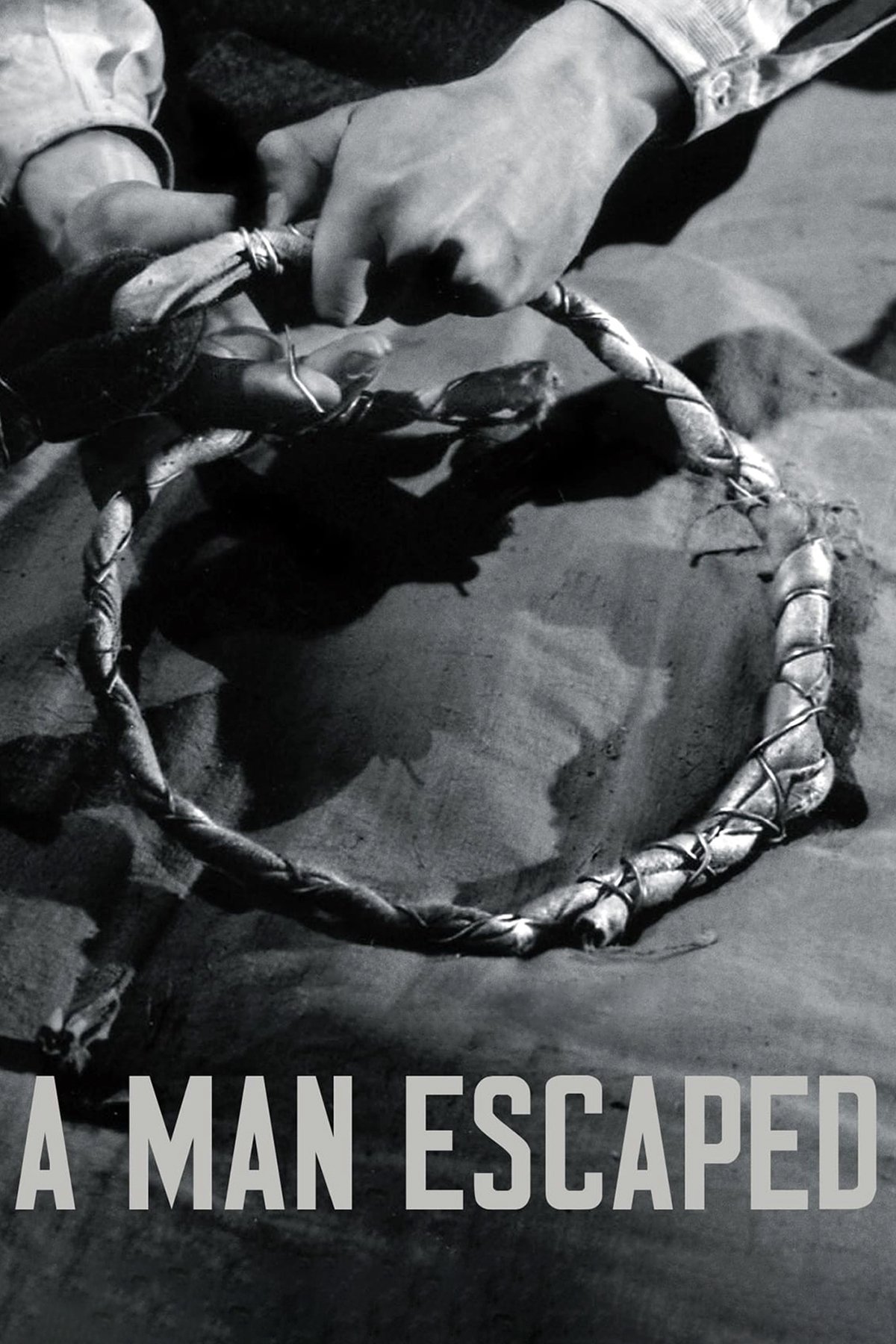
The meticulous attention to hands — carving, tying, touching, trembling — symbolizes both the practical and spiritual labor of freedom. Fontaine’s hands, often shown in close-up, are the instruments of his willpower and courage. They highlight the tangible process of transforming inner resolve into outward action.
Sound is another crucial motif. The near-silence of the soundtrack, punctuated only by mundane or ominous noises (footsteps, warnings, the scrape of metal), immerses the audience in Fontaine’s highly anxious perspective. These sounds act as emotional cues, emphasizing the ever-looming threat of discovery and the need for constant adaptability.
Finally, the motif of faith — both in oneself and in others — is underscored by religious allusions, the scriptural subtitle of the film (“The wind bloweth where it listeth”), and the protagonist’s almost liturgical preparation for escape. These symbols anchor the narrative in a deeper reflection on the search for meaning and grace in times of adversity.
Key Scenes
Key Scene 1
A crucial early scene shows Fontaine’s first, impulsive attempt at fleeing, which ends in brutal failure. This moment is less about the literal attempt and more about establishing the film’s central conflict: the necessity of patience and discipline over reckless hope. The physical violence of the aftermath is left largely offscreen, with the emotional and symbolic impact seen in Fontaine’s hardened resolve and acceptance of the need for a more methodical approach. It reflects the painful learning curve of resistance and the stakes of even petty acts of defiance within a regimental system.
Key Scene 2
A key mid-point scene centers around Fontaine’s decision whether to trust Jost, a young and seemingly naïve new cellmate. The emotional and ethical uncertainty here is paramount: Fontaine knows that involving another increases both the risk and the possibility of betrayal. This moment crystallizes the film’s exploration of trust and the tension between self-preservation and solidarity. Fontaine’s hesitancy and ultimate resolve to include Jost expands the realm of freedom from the individual to the collective, reinforcing the film’s suggestion that true liberation cannot be achieved in isolation.
Key Scene 3
The final sequence, which culminates in the meticulously planned escape, serves as the film’s thematic capstone. The break is performed with hushed, almost ritualistic precision, and every movement is laden with suspense and existential risk. The ambiguity and breathlessness of Fontaine’s final steps outside the walls underscore the film’s recurring question: Is freedom a physical state, or a condition of the soul? The scene does not answer definitively, but rather presents liberation as an ongoing process, as fragile and momentous as the silence that follows Fontaine and Jost into the uncertain night.
Common Interpretations
Critics and audiences have frequently interpreted “A Man Escaped” as an allegory of spiritual and existential struggle. Many see Fontaine’s ordeal as a metaphor for faith under persecution and the power of grace found in deliberate, ethical action. The film’s use of minimalism and its focus on inner transformation as much as physical escape have led to readings that locate the film within both religious and philosophical traditions — especially Christian existentialism.
Some viewers highlight the film’s authenticity, noting Bresson’s documentary-like precision and its grounding in a true story. They interpret the film as a tribute to the resilience of the human spirit and the ethos of the French Resistance. Others focus on the universal aspects, seeing the prison as a stand-in for any system of repression, and Fontaine’s struggle as exemplifying the choice between capitulation and the assertion of selfhood against overwhelming odds.
There are also interpretations that emphasize the film’s ethical paradoxes: the tension between self-interest and altruism, the anxiety of trusting others in life-or-death circumstances, and the burden of hope. While most readings agree on the film’s affirmation of the human will to freedom, some see its ending as pointedly ambiguous, refusing to romanticize liberation and instead questioning what, if anything, is ever truly “escaped.”
Films with Similar Themes
- Le Trou (1960) – Explores the theme of hope and solidarity among prisoners during a meticulously planned escape, echoing the discipline and fraternity at the heart of “A Man Escaped.”
- Army of Shadows (1969) – Delves into the moral ambiguity, secrecy, and existential burdens of individuals resisting oppression during wartime, resonating with Bresson’s study of fidelity and trust.
- The Shawshank Redemption (1994) – Focuses on perseverance in the face of dehumanization and the often silent, internal struggle for hope within prison walls.
- Hunger (2008) – Examines the psychological cost and spiritual dimension of resistance, as well as the ethics of sacrifice in the context of political imprisonment.
Ultimately, “A Man Escaped” communicates a profound truth about the persistence of faith and resolve under conditions deliberately designed to annihilate both. It is a film about the rigor of hope, where freedom is not only an act of physical defiance but an inward victory of spirit. In its precise, almost ascetic style, the film compels reflection on the conditions — both material and spiritual — that make liberation possible, and stands as a luminous testament to human dignity in one of history’s most trying eras.
🎬 Check out today's best-selling movies on Amazon!
View Deals on Amazon