
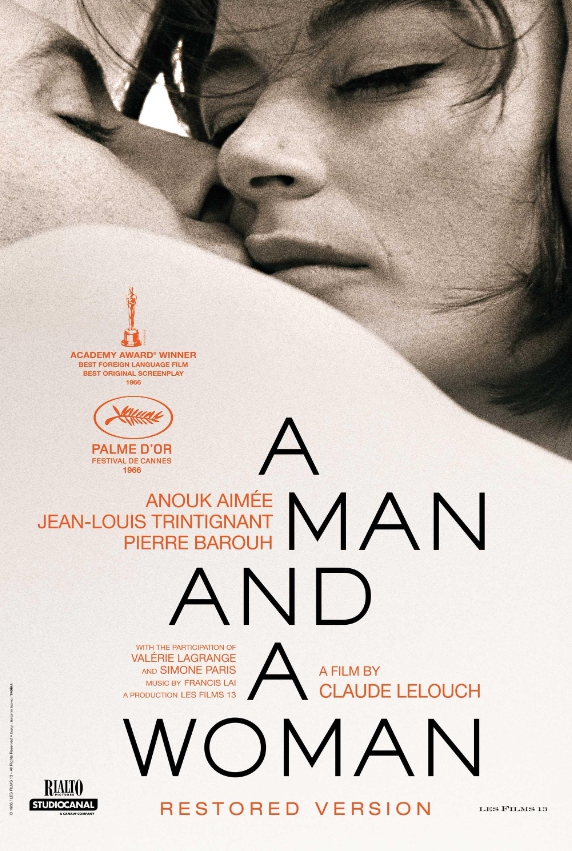
What the Film Is About
“A Man and a Woman” (Un homme et une femme, 1966) is a lyrical meditation on the complexities of emotional rebirth after profound loss. At its core, the film follows two individuals—each scarred by their past—who find themselves on the uncertain threshold of new love. What truly defines the film is not a straightforward romance, but a portrait of vulnerability: how two wounded hearts attempt to rebuild trust, connection, and joy amid lingering memories and unresolved grief.
The film unfolds as an emotional journey marked by the hesitancies, doubts, and tentative steps that accompany any genuine effort to move forward from pain. Underneath the graceful storytelling lies a central conflict: the struggle between the irresistible pull of a promising future and the powerful grip of memories that threaten to sabotage it. As the narrative advances, viewers are invited to witness the incremental shifts in these characters’ inner landscapes as they wrestle with both hope and fear.
Core Themes
At the heart of “A Man and a Woman” are themes of love’s resilience, the shadow of memory, and the ever-present quest for emotional connection in a world shaped by loss. The film delves deeply into how people carry their emotional histories into new relationships. Rather than framing love as a simple act of starting anew, the film insists that the past inevitably entwines with present experience, shaping expectations, hesitations, and desires. The cinematic language lingers on moments of longing and the spaces between words, suggesting that genuine intimacy grows only when individuals acknowledge—not erase—their previous wounds.
Another prominent theme is the intersection between fate and self-determination. The characters appear to oscillate between feeling driven by circumstances beyond their control and moments where their choices hold genuine transformative power. This tension reflects broader questions about agency in our emotional lives: Are we at the mercy of memory, or can we, through courage and openness, shape our own narratives?
Set in mid-1960s France, the film’s themes resonated strongly with a society grappling with shifting norms around romance, divorce, and the evolving role of women. Today, its exploration of trauma, second chances, and the courage to risk vulnerability remains strikingly relevant, inviting viewers to consider the possibility of renewal in an imperfect world.
Symbolism & Motifs
“A Man and a Woman” is renowned for its poetic use of recurring visual, auditory, and narrative motifs. The most recognizable is perhaps the interplay of color and black-and-white cinematography. Director Claude Lelouch alternates between lush color and monochrome, visually signaling shifts in emotional temperature or the boundary between memory and present experience. The muted tones often accompany flashbacks or moments of introspection, subtly marking the characters’ retreat into their inner worlds.
Another key motif is the motif of cars and travel. The act of driving—sometimes through rain, sometimes in silence—becomes a metaphor for both literal and emotional journeys. The car functions as a liminal space: private but in motion, forward but haunted by what’s left behind. It is during these drives that the characters’ guarded facades begin to lower, and their true selves surface.
Music, and especially Francis Lai’s unforgettable theme, recurs as a symbol of yearning and nostalgia. The music’s repetition and emotional crescendo mirror the cyclical nature of the film’s central relationship, suggesting that desire and regret are intertwined, looping endlessly within the human psyche. These motifs combine to create a poetic environment in which love is shown both as an act of faith and as a negotiation with the ghosts of the past.
Key Scenes
Key Scene 1
The moment when Anne and Jean-Louis share a quiet drive together in the rain stands as a pivotal scene. Here, the space within the car becomes charged not with dialogue, but with silence, fleeting glances, and the gentle cadence of windshield wipers. The absence of speech underscores how emotional truth often exists beyond language. This scene is crucial because it allows viewers to witness the emergence of vulnerability—the characters’ willingness to sit with discomfort, neither rushing nor retreating from the possibilities that unfold between them. It is a meditation on the intimacy of simply being present with another person, even when words fail.
Key Scene 2
In another defining moment, Anne’s internal struggle with the memory of her late husband is brought to the surface. Rather than depict grief as a dramatic outburst, the film lingers on her silent, solitary gestures: looking at old photographs, wandering familiar places, or closing her eyes to memories. This tableau illuminates the ongoing burden of loss, and how the past continues to exert an invisible but profound influence on present happiness. The scene subtly reaffirms one of the film’s central theses—that moving forward does not require forgetting, but instead learning to carry the weight of what came before.
Key Scene 3
Towards the film’s conclusion, Anne’s decision—fraught with hesitation and longing—to return to Jean-Louis after initially withdrawing becomes a turning point. Her vulnerability and willingness to risk disappointment serve as both a personal triumph and a universal symbol of hope. This act, simple but monumental, encapsulates the film’s faith in emotional renewal. It suggests that while pain is inevitable and memory persistent, there exists within each person a wellspring of resilience and daring—an invitation to choose connection over retreat, hope over resignation.
Common Interpretations
Critics and audiences typically interpret “A Man and a Woman” as an exploration of the possibility—and fragility—of love after profound loss. Many see the film as a deeply nuanced study of how trauma shapes new relationships, highlighting the courage required to trust again. The film’s minimalist style and poetic ellipses are often praised for conveying the ambiguity of emotion; viewers are left to read between the lines, filling in gaps with their own insights about longing and hesitation.
Another widely accepted interpretation centers on the film’s formal experimentation—its shifts between color and black-and-white, its elliptical editing, and its use of music—as a deliberate attempt to evoke the interior landscapes of its characters. Rather than a straightforward story, the film is experienced as a mood piece, with style and structure reinforcing themes of memory, longing, and temporal dislocation.
Some viewers have seen the film as critique or commentary on mid-century ideas about romance and gender, questioning whether true partnership is possible when emotional baggage remains unresolved, or when societal expectations about love are themselves changing. While few interpret the film as cynical, some suggest its ending is intentionally ambiguous—leaving open the question of whether healing is ever truly complete.
Films with Similar Themes
- Hiroshima Mon Amour (1959) – Explores memory, trauma, and the challenge of forging new love while haunted by the past.
- Brief Encounter (1945) – Centers on emotional restraint and the complexities of connection between two people bound by previous commitments.
- In the Mood for Love (2000) – Examines intimacy, longing, and fleeting connections between individuals shaped by loss and circumstance.
- Blue (Three Colors: Blue, 1993) – Investigates personal grief, the search for renewal, and the endurance of the human spirit after tragedy.
Ultimately, “A Man and a Woman” communicates that to be human is to live in the tension between past and future, pain and possibility. It is a film that honors the courage required to risk love again, the beauty in small gestures of connection, and the complexity of starting over without erasing what once was. Reflecting the social uncertainties of the 1960s and the timeless struggles of the human heart, this film continues to resonate for anyone who has ever grappled with the hope and fear of new beginnings.
🎬 Check out today's best-selling movies on Amazon!
View Deals on Amazon