
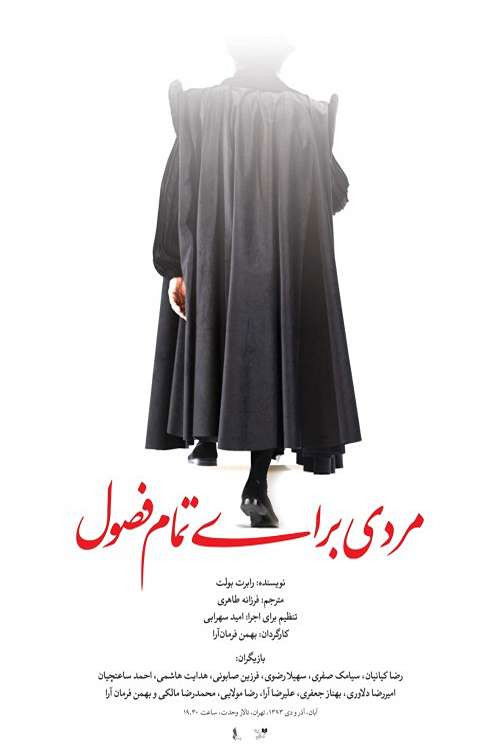
What the Film Is About
“A Man for All Seasons” (1966) is a profound meditation on moral integrity and the costs of conscience. Rather than simply chronicling historical events, the film follows the personal, often harrowing journey of Sir Thomas More as he resists intense pressure to compromise his beliefs in a time of political upheaval. The emotional heart of the film lies in More’s internal struggle to remain faithful to his core values while facing alienation, betrayal, and mounting threats from those around him. At its core, the film grapples with the clash between personal conviction and external authority, immersing viewers in the anguish and quiet dignity of standing alone against overwhelming odds.
The narrative direction ultimately charts a path of escalating tension: between the demands of the state and the voice of individual conscience. It compels viewers to reckon with the meaning of honor, the price of silence, and the vulnerabilities that arise when personal principles collide with power. “A Man for All Seasons” does not present its protagonist as a larger-than-life hero, but as a fundamentally human figure, forced by circumstance to define the limits of his integrity.
Core Themes
The film’s central themes revolve around conscience, integrity, and the persistence of personal ethics within a society governed by shifting allegiances and political expediency. At the most basic level, “A Man for All Seasons” explores the tension between the individual and the state—a classic theme rendered here through More’s refusal to endorse King Henry VIII’s separation from the Catholic Church and subsequent marriage. More’s refusal is not simply political; it is ethical and existential, rooted in a profound sense of duty to his own understanding of right and wrong.
Power and its seductive nature also permeate the film—particularly the ways that those in authority manipulate legal systems and personal relationships for self-interest. The theme of loyalty operates in a complex register: loyalty to one’s self, to friends and family, to the law, and to higher ideals. The story exposes the personal cost exacted by both loyalty and betrayal, showing how individuals justify moral compromise for the sake of social cohesion or personal safety.
Upon its 1966 release, these themes were highly resonant, evoking questions of authority and conscience during a decade marked by social upheaval and the challenge of traditional norms. Today, the film’s concerns remain timely, reminding audiences of the fragility of ethical clarity and the persistent need for moral courage in a world often dominated by convenience and compromise.
Symbolism & Motifs
“A Man for All Seasons” deftly utilizes recurring symbols and motifs to reinforce its exploration of conscience and moral steadfastness. Water, for instance, recurs as a motif representing both fluidity and moral isolation. Early in the film, the Thames serves as a dividing line—not just geographically, but ethically, separating More from the intrigue that swirls around him. More’s penchant for rowing alone further emphasizes his isolation and, simultaneously, his autonomy as he charts a solitary moral course.
The law and legal documents serve as another powerful symbol throughout the film. For More, the law represents both a shield and a trap—a way to articulate and protect his convictions, but also a mechanism that can be twisted by others to achieve unjust ends. The legal maneuvering around the Act of Supremacy, with its paper-thin proclamations and oaths, becomes a symbol of the uneasy relationship between principle and bureaucracy.
Rooms and enclosed spaces are used visually to symbolize the narrowing choices and confinement faced by More as the story progresses. What begins as a story set in open courts and bustling palaces gradually moves to smaller, darker, more restrictive environments, echoing the suffocating nature of living according to truth in a world hostile to dissent.
Key Scenes
Key Scene 1
A pivotal early scene features Sir Thomas More pressed by King Henry VIII and his courtiers to publicly support the King’s divorce. The encounter is not explosive, but it is emotionally charged, exposing the personal risk involved in More’s refusal to bend. This moment is crucial because it reveals the fundamental conflict: the expectation of conformity versus the price of dissent. The tension in the room, the careful choice of words, and the lingering silences all highlight what is truly at stake—More’s sense of self and dignity. It’s less about religious doctrine and more about the conditions necessary for personal integrity, as More resists calls to act against his conscience, no matter how smooth or violent the pressure.
Key Scene 2
Another significant scene occurs as More is interrogated by his peers—former friends, colleagues, and powerful men whose loyalty has shifted with the tide of royal favor. Here, the film sharpens its focus on the ease with which principles are betrayed. This scene magnifies the isolation of the ethical individual, while also building a sense of tragic inevitability. The way More quietly, but unwaveringly, refuses to incriminate himself or betray others emphasizes the central theme that truth, at some point, requires self-sacrifice. The emotional tone is not triumphant but sorrowful, underlining the cost of standing firm while others rationalize their own complicity.
Key Scene 3
The climactic courtroom confrontation serves as both a turning point and the film’s final statement. As More, facing certain doom, articulates his refusal to swear allegiance contrary to his conscience, the themes crystallize: the law’s power is revealed as double-edged, useful as long as it aligns with those in power. The scene provides a devastating comment on the limitations of principle in the real world, where truth can be overruled by expedience. More’s speech is not merely a defense of himself but a universal appeal to the enduring value of conscience. Ultimately, in accepting his fate, More reclaims a moral victory that stands apart from temporal power—demonstrating that, while systems and societies may fail, the individual’s conviction can still resonate and inspire.
Common Interpretations
Critics and audiences have long interpreted “A Man for All Seasons” as an exploration of the ethical imperatives faced by individuals in positions of power, or, conversely, vulnerability. Many see it as a celebration of unwavering personal integrity—Sir Thomas More’s willingness to accept martyrdom for the sake of conscience is regularly hailed as a model of moral heroism and steadfastness. Others, however, read the film more ambiguously: while More’s actions are admirable, they raise uncomfortable questions about the responsibilities of those who hold fast to principle in the face of real-world consequences. Is unwavering adherence to private belief always wise or ethical when it leads to familial suffering or social upheaval?
Some interpretations focus on the film’s commentary on the law and authority, arguing that More’s legalistic maneuvering reflects a sophisticated understanding that both virtue and corruption are inseparable from the systems that govern society. In this view, the film is less about religious conviction and more about the challenge of maintaining justice, fairness, and humanity within imperfect social institutions. These differing perspectives deepen the film’s relevance, making it a subject of ongoing discussion among viewers and critics alike.
Films with Similar Themes
- 12 Angry Men (1957) – Explores the moral responsibility of the individual within a system (the jury), focusing on conscience, justice, and standing alone against pressure from the group.
- The Crucible (1996) – Based on Arthur Miller’s play, this film also dramatizes the conflict between individual conscience and mass hysteria, drawing out themes of integrity and the cost of dissent in the face of corrupted authority.
- To Kill a Mockingbird (1962) – Examines courage, principle, and integrity through a character’s refusal to compromise in the pursuit of justice, even when unpopular or dangerous.
- Judgment at Nuremberg (1961) – Deals directly with individuals confronting legal and moral accountability, highlighting the necessity—and the risk—of defying unjust systems.
In summing up, “A Man for All Seasons” ultimately communicates the enduring and often painful necessity of individual conscience in the face of overwhelming social and political currents. It is a film that stands as a testament to the power—and peril—of remaining true to oneself in a world that often demands compromise. By situating its drama at the intersection of personal integrity and public authority, the film not only reflects anxieties of its own era but also delivers a timeless meditation on the meaning of honor and the dignity of resistance. In doing so, it asks viewers to ponder not only the price of silence, but also the profound value of a solitary voice raised for what is right.
🎬 Check out today's best-selling movies on Amazon!
View Deals on Amazon