
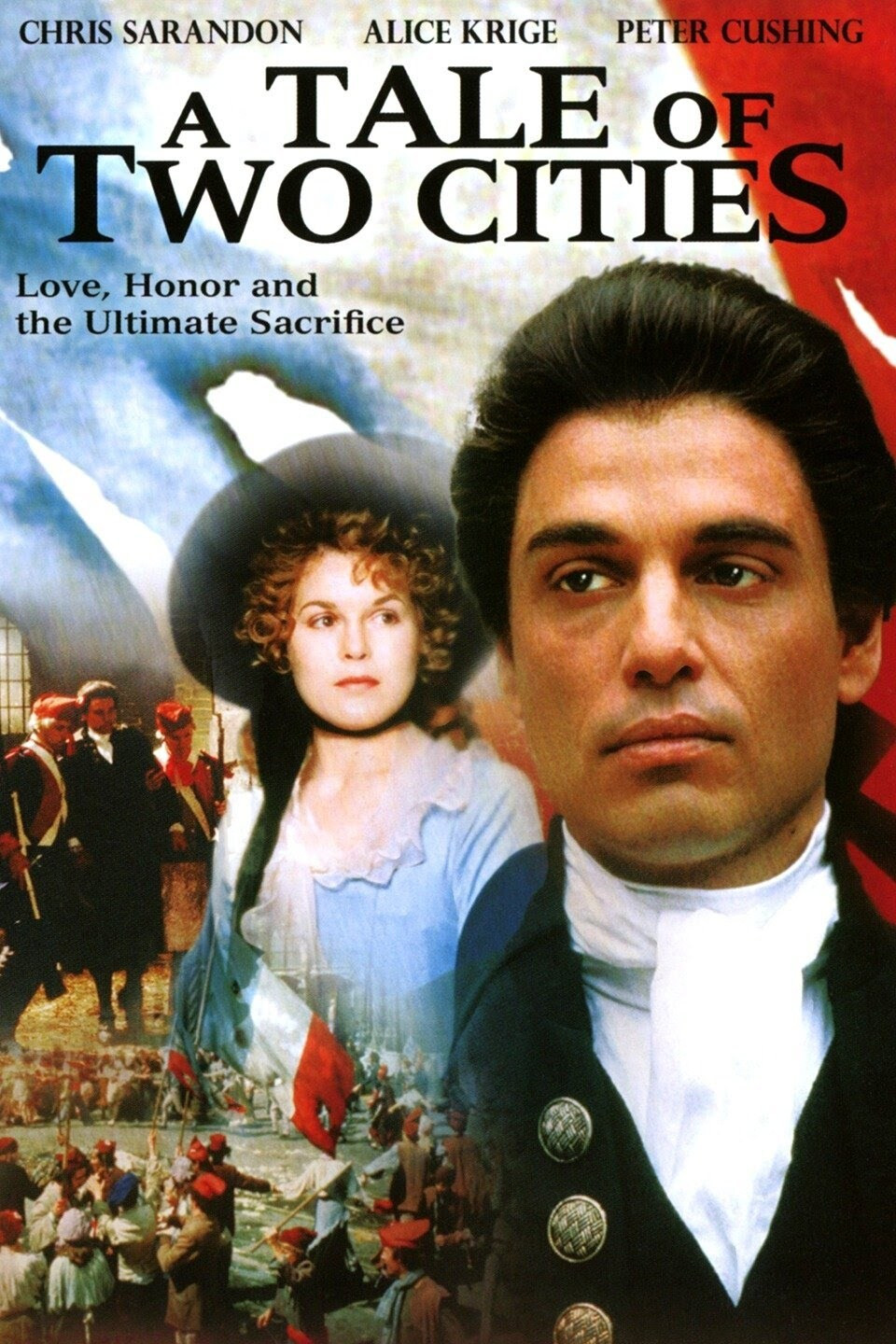
What the Film Is About
Released in 1935, A Tale of Two Cities delves into the personal sacrifices and moral struggles of individuals swept up in the turbulence of the French Revolution. Rather than focusing solely on historical spectacle, the film traces the intertwined emotional journeys of characters whose lives are dramatically shaped by the era’s upheaval. At its center is the exploration of redemption: how love, guilt, and selflessness can coexist with a world mired in social and political chaos.
The narrative pivots around the conflicts between personal desires and greater societal demands. Internal struggles play out against forces of revolution, loyalty, and impending tragedy. Through these character arcs, the film examines what people owe to each other and to society, often highlighting the tension between personal fulfillment and collective responsibility.
Core Themes
A Tale of Two Cities investigates several enduring themes, chief among them being sacrifice, justice versus vengeance, and the cyclical nature of oppression. The film’s treatment of personal sacrifice questions what it means to devote oneself to others, especially in the face of insurmountable odds. The protagonist’s journey is defined by his willingness to place another’s happiness above his own, transforming personal pain into an act of profound self-redemption.
Another core theme revolves around justice and injustice. The revolution’s ideals offer hope for a fairer world, but the pervasive violence and mob mentality raise issues about the moral limits of retribution. This complexity was particularly resonant to audiences in 1935—a period marked by uncertainty and the threat of global conflict. The instability of the 1930s, with political upheavals and challenges to old hierarchies, echoed the film’s examination of revolutions and collective anger. Yet, these ideas remain timely as they question how societies respond to deep inequalities and cycles of violence.
Finally, the film addresses the impact of historical events on individual destiny. Characters contend with fate, fate often shaped by larger socio-political forces. This interplay between the personal and the historical provides a meditation on human resilience, moral ambiguity, and the search for meaning amid chaos.
Symbolism & Motifs
The film employs a range of symbols and motifs to deepen its exploration of transformation and upheaval. One prominent visual motif is the recurring contrast between light and shadow, mirroring the dualities at the story’s heart—love and violence, hope and despair, personal and collective fate. Light often bathes moments of compassion or connection, while darkness shrouds scenes of violence or isolation.
The motif of the guillotine becomes a powerful emblem of both revolutionary justice and the cycle of vengeance. Its repeated presence reminds viewers that ideals can become corrupted by bloodshed when justice leans toward indiscriminate punishment. The city itself, shifting from genteel salons to riotous streets, acts as a character in its own right—a symbol of tumult, possibility, and danger.
Another key symbol is the recurring glass of wine, referencing a cycle of want and temporary solace, and the thread that ties disparate classes together. It becomes a reminder that basic human needs—and desires—drive both connection and conflict. These motifs not only construct the atmosphere but reinforce the central message of duality and transformation.
Key Scenes
Key Scene 1
A pivotal early scene depicts the protagonist’s encounter with another character’s suffering, drawing out his own vulnerability and laying bare the costs of indifference. This moment crystallizes the film’s focus on empathy and marks the start of his inner transformation. The resonance comes less from what is said than from what remains unspoken—the dawning realization that genuine connection carries responsibility.
Key Scene 2
In a later courtroom scene, the stakes of justice and sacrifice converge. Here, the protagonist’s fate becomes entwined with collective revolutionary anger, highlighting how individuals can be either agents or casualties of historical forces. This scene reinforces the film’s examination of mob justice, while simultaneously giving depth to its meditation on the unpredictability of fate and the limits of personal agency. The audience is challenged to consider the morality of vengeance and the price paid by innocents.
Key Scene 3
The film’s climax—a quietly devastating act of sacrifice—serves as both a personal resolution and a philosophical statement. In this culminating moment, themes of love, redemption, and transcendence reach their peak. The quiet dignity of this act contrasts sharply with the violence surrounding it, suggesting that the greatest acts of heroism may be those performed without expectation of recognition. It offers a final commentary on what it means to be truly free: not simply in a political sense, but in moral and personal terms.
Common Interpretations
Most critical interpretations agree that A Tale of Two Cities is, at its heart, a meditation on redemption through self-sacrifice. Many see the protagonist’s journey as emblematic of the human capacity for change—where even the most flawed individuals are capable of profound goodness. Critics and audiences alike have also focused on the film’s cautionary depiction of revolution. While it acknowledges the necessity of social change, it warns against the descent from justice into vengeance, a reading that resonates particularly in times of social upheaval.
Some viewers emphasize the narrative’s foregrounding of love: not simply as romantic fulfillment, but as a broader social and ethical force that motivates individuals toward acts of compassion. Other interpretations highlight the film’s concern with the fragility and unpredictability of fate, suggesting that history is shaped as much by personal choices as by broader social forces. The duality of the film’s title—two cities, two fates, two kinds of justice—lends itself to readings about the tensions between chaos and order, the self and the collective.
Films with Similar Themes
- Les Misérables (1935) – Explores personal sacrifice and redemption amidst political upheaval in revolutionary France.
- Dr. Zhivago (1965) – Examines individual lives torn apart by sweeping historical change, focusing on love and loss during a revolution.
- The Scarlet Pimpernel (1934) – Centers on questions of justice, identity, and rescue during the same period of French revolutionary violence.
- To Kill a Mockingbird (1962) – Grapples with justice, morality, and the courage to stand against injustice within a community facing social conflict.
Ultimately, A Tale of Two Cities argues that individual acts of compassion and sacrifice remain essential, even in the midst of overwhelming violence and social collapse. The 1935 adaptation frames these questions in a way that speaks both to its own era—a time of uncertainty and mounting global tensions—and to modern audiences contending with similar conflicts between justice, power, and humanity. The film endures because it sees beyond historical spectacle to the universal struggles at its core, reminding viewers that meaning is often forged in choices made in the darkest of times.
🎬 Check out today's best-selling movies on Amazon!
View Deals on Amazon