
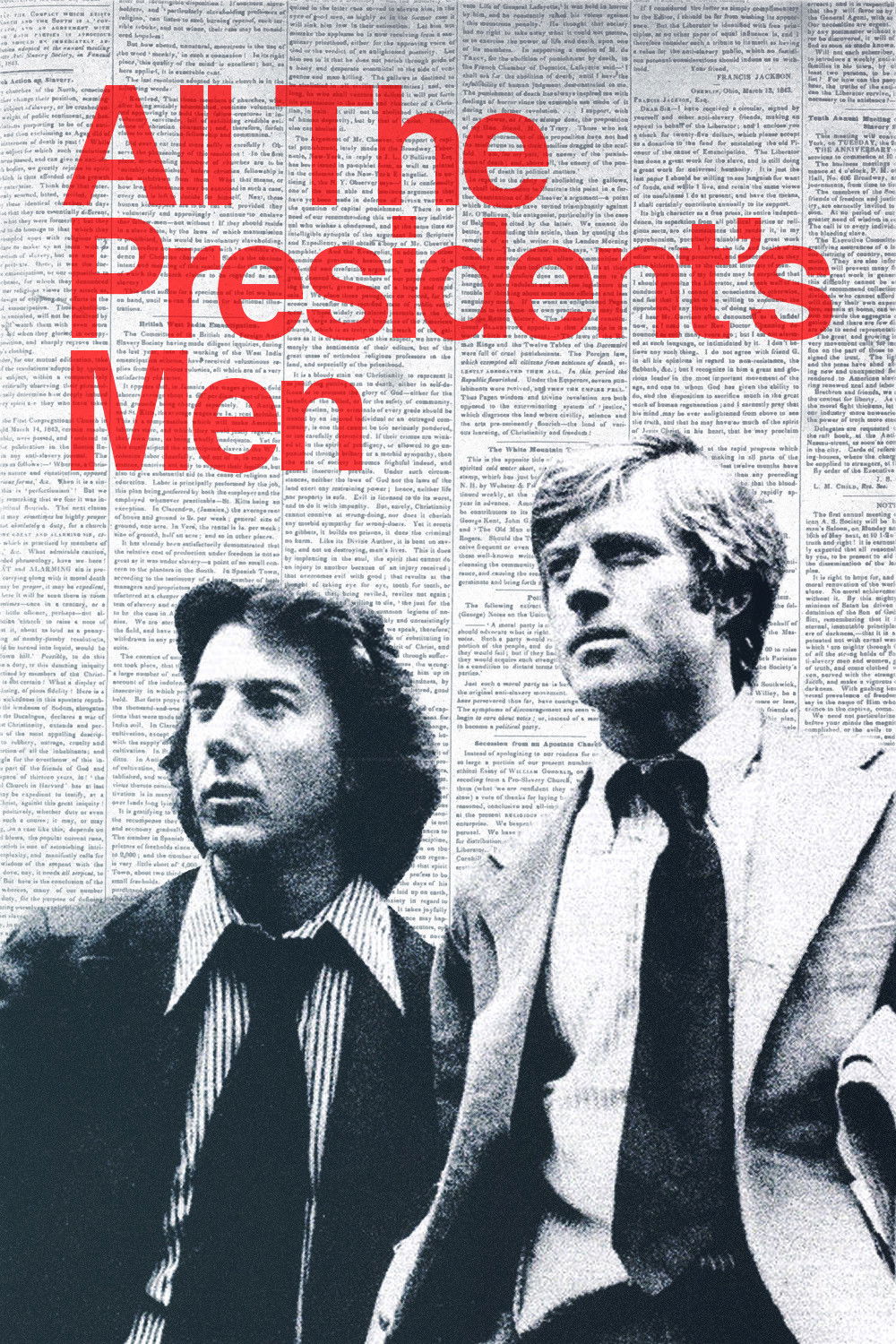
What the Film Is About
“All the President’s Men” is a tense, procedural drama that chronicles the investigation by two Washington Post reporters, Bob Woodward and Carl Bernstein, into the break-in at the Democratic National Committee headquarters—an event that leads to revelations of systemic corruption at the highest levels of U.S. government. The film foregrounds the relentless pursuit of truth in the face of institutional resistance, bureaucratic indifference, and personal risk. Rather than a conventional thriller, it is a quietly suspenseful exploration of how persistence, integrity, and journalistic rigor can confront—and ultimately unveil—abuses of power.
The emotional core of the film lies in the dogged determination of its protagonists, who navigate a labyrinth of uncertainty, misinformation, and escalating danger. Their journey is not just toward uncovering facts, but also about reaffirming faith in democracy and accountability, despite mounting fears and doubts about the reach of power. By the film’s end, the narrative transcends the particulars of the Watergate case, evolving into a broader meditation on truth-seeking and moral responsibility in a democratic society.
Core Themes
The film’s central themes revolve around truth, accountability, power, and the indispensable role of a free press. At its heart, “All the President’s Men” interrogates the tension between an individual’s responsibility to uncover the truth and the systemic forces that seek to obfuscate or distort it. The story is a testament to the perseverance and ethical commitment required to challenge dominant narratives and speak truth to power.
The dangers of unchecked authority are ever-present, reflecting anxieties that were acutely relevant during the 1970s, immediately following the events of Watergate. Cynicism about government motives was widespread, and the film captures the atmosphere of paranoia and mistrust that defined the era. At the same time, “All the President’s Men” remains strikingly resonant today due to ongoing debates about institutional transparency, the proliferation of misinformation, and the role of journalism in holding society’s most powerful actors to account.
Another crucial thematic thread is the isolation inherent in ethical investigation. Woodward and Bernstein are frequently depicted in opposition to overwhelming odds—disbelieved by peers, stonewalled by sources, and shadowed by threats—amplifying the courage and vulnerability required to persist in the face of adversity. This emotional landscape amplifies the universal struggle of individuals trying to enact change in systems resistant to scrutiny.
Symbolism & Motifs
“All the President’s Men” employs a sparse but potent visual and narrative language, using recurring symbols and motifs to reinforce its deeper meanings. One of the most striking motifs is darkness and shadow, most notably in the deep-throat parking garage scenes. These dimly lit meetings are not just visually arresting—they symbolize the obscured nature of truth and the murkiness surrounding the investigation. The cinema’s chiaroscuro aesthetic echoes the ethical gray areas the reporters must wade through.
Another recurrent symbol is the typewriter and the printed word. Scenes of feverish typing or newspapers rolling off the press embody the transformative power of information. The clatter of keys and the hum of the newsroom stand for the relentless drive to reveal facts, as well as the anxiety and urgency fuelling the pursuit. The stacks of documents, notebooks, and microfilm reels serve as both literal and metaphorical evidence: the accumulation of small truths in the service of uncovering a larger one.
The repetition of telephone calls is central to the film’s rhythm, highlighting both the isolation and dogged perseverance of the reporters. The phone as a motif underlines the challenges of communication—misleading information, anonymous tips, fear of surveillance—all obstacles that must be overcome to reach clarity. Thus, routine office objects and actions become loaded with symbolic significance, representing both the banality and drama of real investigative work.
Key Scenes
Key Scene 1
One of the most defining moments in the film is the first clandestine meeting between Woodward and the enigmatic informant known as Deep Throat. Held in an eerily shadowed parking garage, the atmosphere is thick with unease and uncertainty. This scene crystallizes the central struggle: the search for truth is inherently dangerous, surrounded by threat and risk. It encapsulates not just the peril faced by whistleblowers and those who seek them out, but also the emotional toll exacted by such work. The physical distance and measured dialogue emphasize the fragile trust that investigative journalism must navigate and the cost of exposing secrets.
Key Scene 2
A quiet but pivotal scene occurs as Woodward and Bernstein, desperate to verify a crucial piece of information, begin knocking on doors at night, seeking reluctant sources. The camera lingers on their discomfort, vulnerability, and the understandable fear of those they question. Here, the film casts a spotlight on the reporters’ methodical persistence in the face of uncertainty, as well as the ordinary citizens’ reticence to speak against powerful institutions. This sequence delves into the underlying anxieties of an era gripped by suspicion, while illuminating the ethical lines the protagonists must consider: how far can, and should, one push in the search for truth?
Key Scene 3
In the film’s closing moments, as Woodward and Bernstein submit their latest draft for printing on the typewriter, we witness a subtle but profound resolution. The camera draws back to see the two reporters dwarfed by the imposing structure of the newsroom and, beyond its windows, the Washington Monument, a symbol of American democracy. The scene is a visual encapsulation of the film’s thesis: even as individuals seem insignificant when set against massive institutions, their commitment can shape the course of history. This culmination serves as both a celebration of journalistic tenacity and a sobering reminder of the slow, incremental process by which truth comes to light.
Common Interpretations
Critics and audiences have consistently interpreted “All the President’s Men” as a celebration of investigative journalism as a bulwark against authoritarianism and abuse of power. The film is widely seen as a call to vigilance—an assertion that democratic institutions require transparency and scrutiny in order to survive. It has been praised for its realistic, unsentimental portrayal of reporters’ labor, eschewing romantic heroics for a more grounded depiction of dogged, incremental work.
Another frequent reading views the film as an allegory for social responsibility: not only for journalists, but for all citizens. While Woodward and Bernstein are the film’s catalysts, their efforts are ultimately collaborative, reliant on the courage of reluctant informants and the editorial support within their own institution. This collective aspect underscores the interconnectedness of accountability within society.
At the same time, some commentators note the film’s underlying skepticism—its acknowledgment that truth is often provisional, subject to revision, and always contested. The ambiguous, open-ended closing, which eschews a triumphant conclusion, is often cited as a statement on the ongoing, unfinished nature of holding power to account.
Films with Similar Themes
- The Post (2017) – Explores the moral and professional dilemmas faced by journalists seeking to publish the Pentagon Papers, highlighting press freedom, courage, and the ongoing clash between government secrecy and the public’s right to know.
- Spotlight (2015) – Focuses on investigative journalists uncovering institutional cover-ups, drawing direct thematic parallels in its exploration of persistence, teamwork, and the weight of bringing hidden truths to light.
- Zodiac (2007) – Chronicles a relentless search for truth by investigators and journalists, sharing themes of obsession, ambiguity, and the psychological cost of unresolved, far-reaching investigations.
- State of Play (2009) – Blends investigative journalism with political intrigue, interrogating the boundaries of loyalty, truth, and institutional accountability in modern times.
Ultimately, “All the President’s Men” articulates a profound message about the demands of truth-telling in a society where the stakes are high and the powers that be are formidable. By focusing on the minute, procedural realities of investigative work, the film demonstrates that lasting change is seldom the result of singular heroics; rather, it is forged through steady, sustained effort, ethical rigor, and a willingness to confront uncomfortable realities. In doing so, the film remains an enduring meditation on the relationship between citizen and state, the fragility of democracy, and the steadfast courage required to protect both.
🎬 Check out today's best-selling movies on Amazon!
View Deals on Amazon