
What the Film Is About
“Amadeus” (1984) presents a layered exploration of envy, genius, and spiritual crisis centered on the legendary composer Wolfgang Amadeus Mozart, as filtered through the embittered recollections of his contemporary and rival, Antonio Salieri. Rather than simply recounting Mozart’s biography, the film immerses viewers in the psychological landscape of Salieri, whose profound admiration for Mozart’s musical genius is equaled only by his obsessive jealousy. The emotional journey follows both men’s struggles — Mozart’s with poverty, health, and alienation, and Salieri’s with his own mediocrity and spiritual doubt. At its heart, the film is a meditation on the agony of realizing one’s limits when confronted with the miraculous talents of another, set within the lush, perilous world of 18th-century Vienna’s musical salons and courtly intrigue.
Through its confessional framing device, “Amadeus” examines not simply a rivalry, but a crisis of faith and self-worth. The narrative trajectory is less about the external dramas of the music world and more about the internal unraveling of Salieri’s soul as he confronts what he perceives as divine injustice: his sincere devotion to God unacknowledged, and Mozart — profane, childish, and yet impossibly gifted — showered with brilliance. The emotional stakes revolve around this contradiction, driving both men toward tragedy, revelation, and, ultimately, the recognition of their unbridgeable differences.
Core Themes
“Amadeus” is fundamentally concerned with questions of artistic genius, envy, mediocrity, and the mysterious relationship between creativity and the divine. The film interrogates what it means to recognize genius in another, and the corrosive impact that recognition can have on one’s sense of self. Salieri’s envy is not petty resentment, but a spiritual crisis — he wrestles with a God who, in his view, distributes talent arbitrarily. This theme resonates deeply, suggesting that talent and achievement are not always the rewards of diligence or virtue, but gifts that can unsettle or even destroy those who witness them.
The film’s exploration of these ideas was especially urgent upon its release during the 1980s, a period increasingly preoccupied with celebrity, the cult of personality, and the tension between individual merit and luck. These questions remain relevant today in cultures fixated on achievement and plagued by impostor syndrome and unhealthy comparisons. “Amadeus” thus becomes more than a historical drama; it is a universal meditation on how people make sense of inequality — not just of wealth or status, but of ability and the mysterious, sometimes cruel, operations of fate.
Secondary themes include the costs of ambition, the tension between sacred and profane creative inspiration, and the paradoxical loneliness of both mediocrity and genius. The film also reflects on the artist’s relationship to a society that may exploit, ridicule, or ignore them, raising questions about recognition, the value of art, and what kind of legacy artists leave in a world governed by power as much as by beauty.
Symbolism & Motifs
A host of recurring symbols and motifs reinforce the film’s central questions about genius, divine justice, and self-doubt. Music itself is the most prominent motif; Salieri’s descriptions of Mozart’s compositions are couched in religious language, suggesting the music as a form of divine communication — an art that transcends mortal effort. Mozart’s laughter, frequently depicted as irreverent and excessive, becomes an audible symbol of both unrestrained genius and Salieri’s personal torment. It serves as a kind of mocking echo in Salieri’s mind, reinforcing his perception of Mozart as a conduit for cosmic injustice.
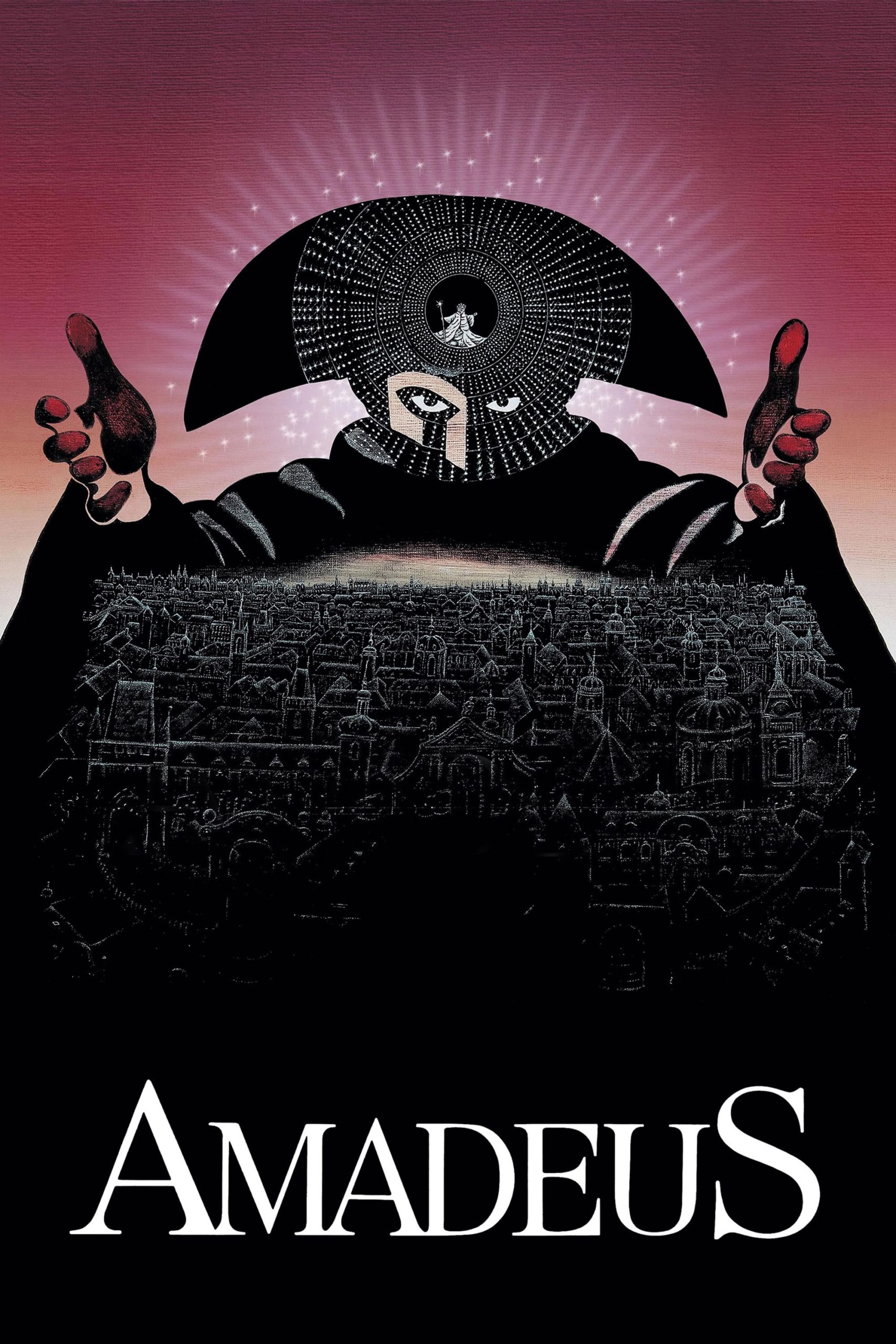
The motif of the mask recurs throughout, most notably in the black-cloaked figure who commissions the Requiem from Mozart, but also in scenes of masked balls and performances. This represents the theme of disguise and hidden identity: Salieri’s own duplicity as he pretends friendship while plotting sabotage, and the broader idea that people’s true grievances and desires are often concealed, only revealed under extreme circumstances.
Religious imagery pervades the story, particularly Salieri’s private relationship with God. The cross, prayer, and confession scenes all symbolize Salieri’s yearning for divine validation and his sense of betrayal. The transformation of religious devotion into bitter rivalry underscores the film’s questioning of whether art is a divine act or a purely human struggle.
Finally, the motif of isolation — visually reinforced by shots of cramped or empty rooms, and Mozart’s increasing social and emotional alienation — mirrors both protagonists’ emotional solitude. The grandeur of the concert halls contrasts with the emptiness of their personal lives, highlighting the disjunction between public achievement and private suffering.
Key Scenes
Key Scene 1
One of the most emotionally revealing moments arrives when Salieri, in awe, peruses an original score written by Mozart. Overwhelmed by the effortless beauty of the music — “as if taken down by dictation from God” — Salieri recognizes his own mediocrity in the face of Mozart’s intuitive brilliance. This scene is crucial because it crystallizes the film’s central dilemma: the pain of being good, but not great, and the spiritual crisis that results from understanding one’s own limitations. The scene is not just about jealousy, but about the struggle to accept that real genius may have no cause or logic, and cannot be earned through industriousness or piety.
Key Scene 2
Another pivotal moment occurs when Salieri, disguised in a mask, commissions a Requiem Mass from Mozart. This scene sharply develops the theme of duplicity and hidden intent. It also encapsulates Salieri’s transformation from admirer to saboteur, propelled not simply by professional rivalry but by a struggle to confront the apparent injustice he perceives between his faithfulness and Mozart’s gift. At the same time, the scene exposes Mozart’s vulnerability; his desperation for money and validation is painfully clear. This interaction highlights how Salieri’s envy compels him to both destroy and participate in the divine act of creating music, revealing the film’s complex portrayal of evil as a product of pain and longing rather than simple malice.
Key Scene 3
Near the film’s conclusion, the scene where Salieri assists the dying Mozart in composing the Requiem serves as both reconciliation and a final statement of the film’s meaning. Their collaboration becomes a paradoxical communion: Salieri, the self-declared “patron saint of mediocrity,” becomes a vessel for Mozart’s genius for a brief moment. This climax illustrates that the borders between greatness and mediocrity can blur, and that even envy and rivalry may be transformed — if only fleetingly — into something generative and redemptive. In the end, Salieri recognizes his own limitations, but also his inescapable role as chronicler and witness to Mozart’s brilliance, emphasizing the dignity and pain inherent in being ordinary among the extraordinary.
Common Interpretations
Critics and audiences frequently interpret “Amadeus” as an exploration of the nature of genius and the anguish of mediocrity. Salieri is widely seen as a tragic figure — not an outright villain, but a man whose awareness of greatness leads to both spiritual destruction and profound empathy. Some readings emphasize the film’s religious undertones, interpreting Salieri’s crisis as a broader existential question about the randomness of fate and the limits of meritocracy. Others focus on the psychological aspect: the destructive power of envy, and how the bitterness of comparison can poison love, faith, and even one’s sense of self.
A more nuanced interpretation views the film as a meditation on the creative process itself. Here, Mozart’s obliviousness is not simply childishness, but an emblem of the true artist — detached from worldly concerns, existing in a space where art flows through rather than from the self. Salieri’s struggles embody the pain of those who must witness, record, and even facilitate genius without ever possessing it.
Still others note the unreliable nature of Salieri as narrator; the film, they argue, may reflect less about historical truth and more about the workings of guilt, memory, and self-justification. Thus, “Amadeus” becomes not merely a story of rivalry, but an allegory for the stories we tell ourselves about talent, justice, and our place in the universe.
Films with Similar Themes
- There Will Be Blood (2007) – Examines ambition, rivalry, and the corrosive effects of envy and obsession within a highly individualistic world.
- Black Swan (2010) – Explores the cost of artistic perfection, psychological fragmentation, and the loneliness of exceptional talent.
- Whiplash (2014) – Investigates the pursuit of greatness, the pressures of mentorship, and the thin line between inspiration and destruction.
- Shine (1996) – Portrays the burdens of prodigious talent, emotional turmoil, and the intersection of genius with mental illness.
In summing up, “Amadeus” ultimately communicates a poignant truth about human nature and art: that greatness and mediocrity, faith and doubt, admiration and envy are intimately connected. The film refuses easy answers, instead suggesting that genius is both a gift and a curse, felt most acutely by those condemned to witness it at close range. Its enduring resonance lies in its honest portrayal of the complex emotions that arise whenever human beings confront their place in the grand, often arbitrary order of talent, luck, and destiny — themes just as relevant in the present day as they were in the era it depicts, or the decade it was made.
🎬 Check out today's best-selling movies on Amazon!
View Deals on Amazon