
What the Film Is About
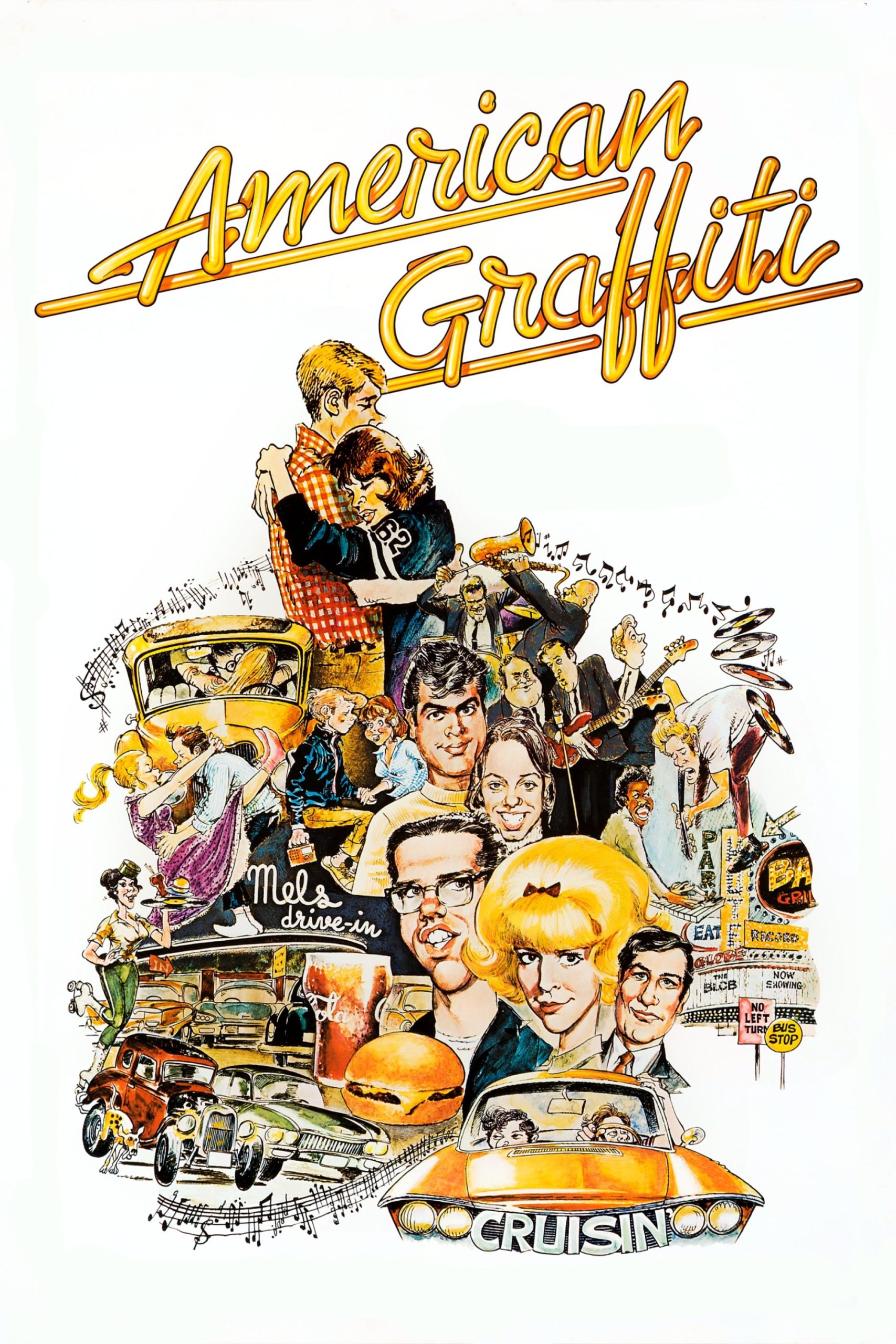
“American Graffiti,” released in 1973, is a reflective exploration of youth at a crossroads. Set over one balmy night in 1962 Modesto, California, the film brings together a group of teenagers grappling with the end of high school and the prospect of adulthood. Its emotional core is centered on questions of identity, belonging, and the uncertainty that accompanies moments of transition. This is not a film about grand events, but about the small, personal moments that define who we become.
The central conflict lies within each character’s heart and mind—should they hold on to the reassuring rhythms of familiar life, or take a leap into the unknown? The film’s narrative direction is one of subtle tension as characters face choices that may alter their futures, from leaving home for college to embracing adult responsibilities. Throughout, there’s a poignant sense of nostalgia, but also an undercurrent of longing and apprehension. The journey, above all, is one of self-discovery and grappling with the bittersweet passage from adolescence into the uncharted waters of adulthood.
Core Themes
At its core, “American Graffiti” explores themes of transition, identity, and the meaning of home. The film interrogates the fear and allure of change, the transformation of American youth culture, and the ways in which individuals define themselves within their social environment. One major theme is the inevitability of growing up, captured in the emotional ambiguity and restless energy of its characters. The liminal quality of the single-night setting acts as a metaphor for a generation caught between the comfort of the past and the uncertainty of the future.
Another significant theme is nostalgia—both personal and collective. Released in the early 1970s during a time of cultural upheaval in the United States, the film’s longing for the “innocence” of the early 1960s resonates as a commentary on lost certainties. For its first audiences, “American Graffiti” provided both a window into the optimism of a bygone era and a lament for the innocence that would be shattered by the decade that followed. Today, the film’s themes remain relevant amid the universal struggle to define oneself in the face of changing circumstances and the ongoing tension between the desire for continuity and the necessity of transformation.
Friendship, community, and a search for belonging also permeate the film. As teenagers circle the town in their cars—cruising, bonding, and encountering strangers—they reflect the desire to be seen and understood. The ever-present soundtrack of classic rock and roll serves as both a unifying cultural reference and a timer counting down the remaining moments of this formative period. The film ultimately suggests that growing up is as much about loss as it is about possibility, and it offers no easy answers for characters or viewers alike.
Symbolism & Motifs
“American Graffiti” is rich with symbolic imagery and recurring motifs, each reinforcing the film’s exploration of transience and identity. Automobiles, for instance, are not just modes of transportation but stand-ins for freedom, social status, and personal expression. The prominence of car culture reflects a period in American life when cruising was both a rite of passage and an assertion of independence. Each car is intimately tied to its owner: a gleaming hot rod signals confidence and rebellion, while the family sedan suggests ambivalence or connection to tradition.
The soundtrack of wall-to-wall rock and roll is another powerful motif—it anchors the film in a specific cultural moment, speaks to the universality of teen experience, and connects the characters even as their paths diverge. The continual presence of radio DJ Wolfman Jack, heard but rarely seen, serves as a kind of mythic narrator. He represents both the voice of a generation and the comforting illusion that youth, with all its possibility, can last forever.
The motif of night and dawn threads through the visual design. The action unfolds between sunset and sunrise, a literal “in-between time” that mirrors the characters’ states of liminality. Shadows and neon lights create a sense of dreamlike impermanence, signifying the evanescence of youth and the fleeting nature of defining moments. The coming of dawn is not just the end of a night but the symbolic beginning of adulthood—an ending and a new beginning coexisting in the same heartbeat.
Key Scenes
Key Scene 1
A crucial scene occurs as the group first converges at Mel’s Drive-In. The location itself is significant—Mel’s is both a social hub and a symbolic crossroads, a place where routes intersect, alliances form, and rivalries flare. In this moment, viewers see each character’s expectations and uncertainties writ small in their interactions. The scene is emotionally charged not merely by what happens, but by what it represents: the subtle realization that nothing will ever be quite the same again. The camaraderie, tension, and personal posturing in the scene illustrate the fragile balance between belonging and difference—setting the tone for the film’s interrogation of identity and community.
Key Scene 2
A later scene centers on an encounter with Wolfman Jack at the radio station. For one of the characters, meeting the elusive disc jockey is a moment of deep personal significance. The scene operates on a symbolic level: Wolfman Jack, a disembodied voice representing dreams and aspirations, is revealed to be an ordinary man behind the curtain. This moment challenges the boundary between fantasy and reality, suggesting that adulthood is less about discovering something magical and more about recognizing the humanity behind the myth. The character’s realization marks a maturation—not a loss of hope, but a shifting of perspective about what can be achieved and what must be let go.
Key Scene 3
The film’s closing moments, as dawn breaks over Modesto and the characters part ways, serve as its emotional and philosophical denouement. This montage is deeply resonant: while some characters head off toward new lives, others stay behind. The ambiguity of their futures is underscored by a final note about where each is destined to end up, a sobering coda that disrupts the carefree nostalgia that precedes it. This turning point reinforces the film’s ultimate message—that change is inevitable, that every choice shapes who we become, and that the only certainty is the passing of time. The ending is neither bitter nor purely sentimental; it is a recognition that the magic of youth is indelibly shaped by its transience.
Common Interpretations
Critics and audiences have frequently interpreted “American Graffiti” as both a celebration and an elegy for early 1960s American adolescence. The film is widely seen as a love letter to a lost era, evoking a time before national trauma and rapid social change. Many view it as a coming-of-age story that peels back the myth of “simpler times” to reveal a complex reality filled with ambivalence, longing, and uncertainty. For some, the film is a critique of nostalgia itself, reminding viewers that the past—no matter how warmly remembered—cannot be reclaimed or fully understood outside the context of its loss.
Other viewers emphasize its psychological dimension: the story becomes a metaphor for the universal process of individuation and the necessity of leaving behind familiar identities and places to grow. It has also been understood through the lens of generational conflict, as the persistent “generation gap” is dramatized not by head-on rebellion, but by the quieter process of leaving home and choosing one’s own path. While nearly all interpretations agree on the film’s affectionate tone, there are divergent views on whether it ultimately idealizes or problematizes the American past. What is clear is that “American Graffiti” leaves a space for viewers to reflect on their own transitions and the personal meaning they ascribe to moments of change.
Films with Similar Themes
- Dazed and Confused (1993) – This film similarly focuses on teenagers at a pivotal moment (the last day of school in 1976), exploring themes of transition, identity, and societal expectations within its own generational context.
- Stand by Me (1986) – While set in a different era and involving younger protagonists, the film delves deeply into the emotional territory of coming-of-age, personal loss, and the bittersweet nature of growing up.
- The Last Picture Show (1971) – Sharing a focus on changing times and the fading of small-town America, this film interrogates the costs and consequences of leaving behind youth and tradition.
- Superbad (2007) – Though comedic in tone, this film echoes “American Graffiti” in its depiction of teenagers facing the end of high school, navigating friendship, identity, and the anxieties of impending adulthood.
Ultimately, “American Graffiti” communicates that growing up is both a universal and a deeply personal experience, marked by uncertainty and a longing for connection. The film’s gentle but unsentimental gaze on a pivotal era in American life reveals both the resilience and the vulnerability of youth. Through its rich tapestry of music, setting, and character, it asks viewers to consider how moments of transition shape not only our individual journeys, but the collective memory of a generation. In holding up a mirror to its own time, the film continues to invite reflection on what it means to come of age, inhabit change, and carry the beauty—and sorrow—of the past into the future.
If you’re deciding what to watch next, you might also want to see how this film holds up today or how it was originally received.
🎬 Check out today's best-selling movies on Amazon!
View Deals on Amazon