
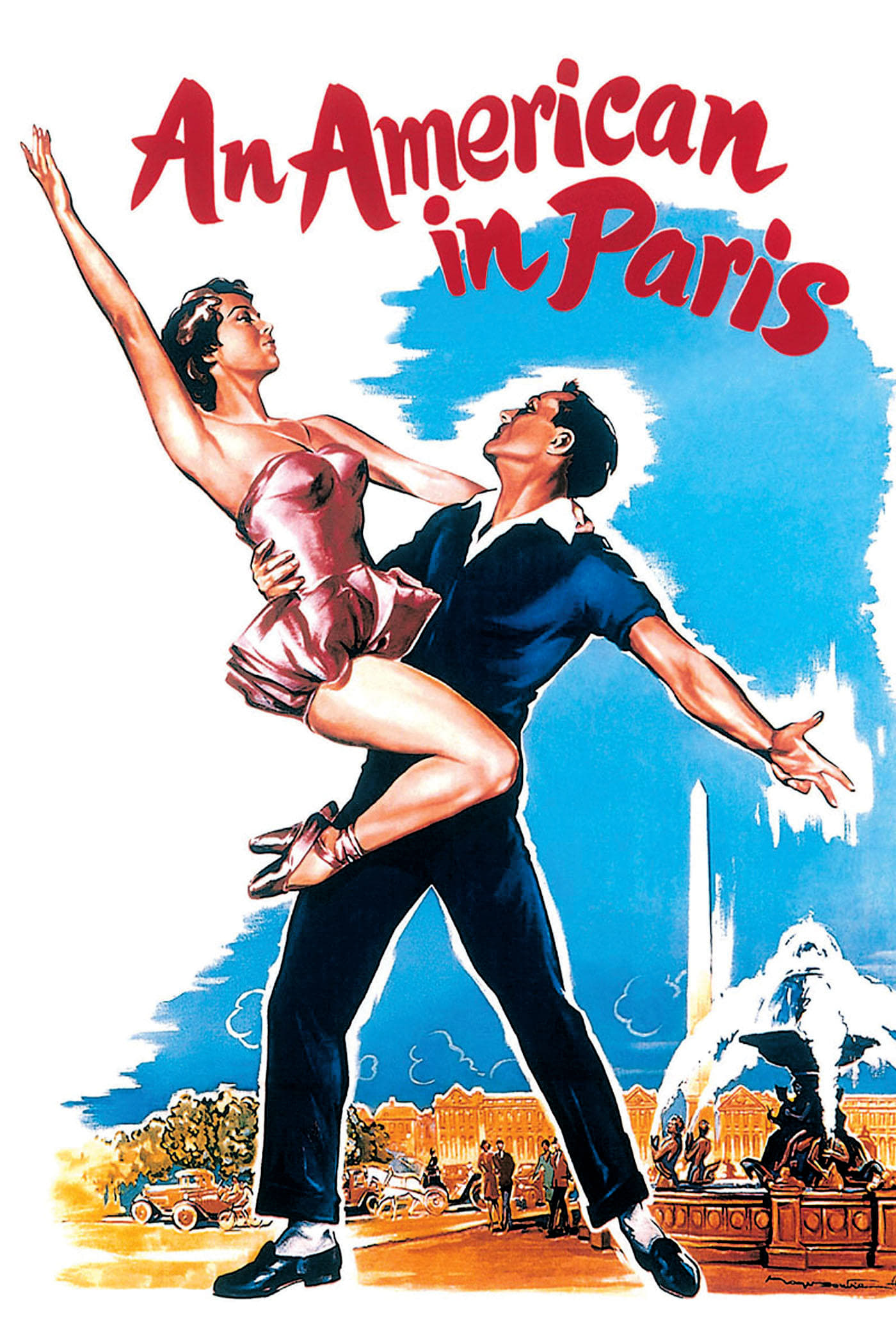
What the Film Is About
When I first experienced “An American in Paris,” I wasn’t just swept away by the effervescent music or dazzling Technicolor sequences. Beneath the lively surface, I felt pulled into a world where art and yearning collide—where every pirouette feels like both an escape and a confession. To me, the film isn’t merely about a young expatriate painter, Jerry Mulligan, drifting through postwar Paris; it’s about those intangible spaces between hope and reality, love and self-sacrifice, pursuit and acceptance. The emotional journey isn’t as simple as the pursuit of romantic love, but it’s rooted in the broader search for personal fulfillment—finding purpose amid beauty and disappointment, striving to leave a mark in a world teeming with regret and possibility.
What makes this story resonate with me is how even the moments of joy are layered with uncertainty. The central conflict—between following one’s ambition and surrendering to one’s heart—drives every interaction. Relationships tangle with aspirations: can love and ambition coexist, or must one give way to the other? The dancers twirl through Paris as if they’re struggling to outpace loneliness or the shadows of the past. The film’s overall direction, to me, is not just about who ends up with whom, but whether anyone can truly shape their destiny, or if we’re all simply improvising as the music plays on.
Core Themes
The core of “An American in Paris” pulses with longing: for love, for understanding, for the intangible joie de vivre that seems just out of reach. Watching it, I’m always reminded how the film explores the tension between aspiration and reality—a theme that felt especially potent in 1951, just a few years after the Second World War. Paris here is a city of memory and possibility, its streets echoing with the ghosts of lost innocence even as they invite reinvention. For me, every musical number feels like an assertion that beauty still matters, even if the world resists it.
Art and artistry run through every frame. I see the film as a meditation on what it means to dedicate oneself to creation—with all the costs and compromises that entails. Jerry isn’t just choosing between two women; he’s choosing between security and risk, between living conventionally and surrendering to the unpredictable rhythms of inspiration. Love, too, is not simply an end in itself but a catalyst for transformation. The film suggests that love’s transformative power is not always gentle—it demands vulnerability, forces hard choices, and may require letting go of one’s own fantasies.
Identity, both personal and cultural, underpins the narrative. As an American, Jerry is an outsider—not just geographically, but emotionally. I often sense an undercurrent of cultural displacement, a question about whether home is a place, a person, or something internal. The adaptation of Gershwin’s music itself becomes a dialogue between American optimism and European romanticism. In an age still reeling from war and looking for hope, this blend was more than stylistic—it was aspirational. Even today, the film’s dreamlike quality speaks to anyone who’s grappled with reinvention, longing, and the search for meaning in beauty.
What I find most timeless is the film’s embrace of ambiguity. It insists on the value of reaching for something just out of reach, even if the reaching hurts. In that striving, I find a bittersweet, urgent relevance—a reminder that artistic and romantic fulfillment are always fraught, always incomplete, but never wholly futile.
Symbolism & Motifs
“An American in Paris” is one of those rare films where the symbols aren’t worn like costumes, but are woven into the world itself. The recurring motif of dance, for instance, feels less like a display of skill than a metaphor for emotional navigation—a physical rendering of the internal push and pull between longing and restraint. Every balletic leap or jazz-inflected tap sequence is a way for the characters to articulate what words can’t reach. For me, dance in this movie stands for the struggle to break free from the everyday, to turn yearning into expression.
Color in this film is never merely decorative. I’m constantly struck by the way certain shades dominate different spaces: incandescent pastels for moments of hope, or shadow-drenched blues when doubt invades. Paris itself becomes a living canvas. The final ballet sequence—arguably one of cinema’s most visually ambitious—uses an evolving palette to traverse Jerry’s romantic memory and fantasy, as if each new style, texture, and hue reflects another facet of lovesickness or possibility. The city, in turn, ceases to be a mere setting and transforms into an extension of Jerry’s internal world. When I watch those painted backdrops, I’m reminded how artists remake reality to fit the contours of desire.
Mirrors and reflections appear throughout, often subtly. There’s almost an invitation in these moments to consider how the characters see themselves and each other—distorted, idealized, or fragmented. I think these reflective surfaces underscore the idea of identity as performance: Here, love and artistic ambition are never simply felt or static. They’re shaped, rehearsed, sometimes exaggerated for effect. For a film so outwardly buoyant, “An American in Paris” is uncommonly aware of the gulf between aspiration and actuality, between the self we present to the world and the one we wrestle with in solitude.
Music, too, operates as both literal soundtrack and emotional landscape. Gershwin’s symphonic energy is more than accompaniment; it’s the pulse of the film’s soul. When melodies recur or lyrics echo prior scenes, I sense the cyclical nature of longing—the way old wounds and hopes resurface, reshaped but never fully resolved. This looping effect reminds me that neither love nor art is ever really finished; they’re processes of continual becoming.
Key Scenes
Key Scene 1
For me, one of the most crucial moments unfolds in the early sequence where Jerry exclaims the virtues and indignities of being a struggling artist in a tiny Parisian garret. On the surface, the scene is playful, but I’ve always read a deeper vulnerability in how Jerry negotiates his cheerful resilience with quiet resignation. His banter with neighbors and casual brush-offs of hardship encapsulate the artist’s dilemma: to mask yearning with humor, to treat poverty as a badge of authenticity. This isn’t just about bohemian charm. It’s an emotional declaration—Jerry is simultaneously thriving on possibility and gnawed by uncertainty. In that moment, the audience is asked to see artistic ambition not as egotism but as a daily reckoning with hope and compromise.
Key Scene 2
The riverside pas de deux between Jerry and Lise is the film’s romantic and philosophical centerpiece for me. The choreography is achingly intimate, the world around them receding as if nothing but music and movement matter. I interpret this scene as the crystallization of what the film yearns to say about love: it is at once ineffable, transcendent, fleeting, and deeply rooted in place. The camera lingers not to showcase dance technique, but to inhabit a state of grace—those rare moments when life feels orchestrated and beautiful, even if it remains fragile. The idyllic flow of the river and the emotional suspension in the dance tell me that love is both sanctuary and risk. Here, for a heartbeat, desire and fulfillment touch before real life intrudes.
Key Scene 3
No analysis would feel complete to me without diving into the climactic ballet sequence. Spanning nearly twenty minutes and driven entirely by Gershwin’s rhapsodic score, the sequence is a fever-dream of memory, regret, and artistic invention. For me, what distinguishes this sequence isn’t simply its innovation, but how it becomes Jerry’s inner odyssey—his lovesick vision rendered in pure color and movement. Paris morphs from a city of strangers to a landscape painted by longing, dotted with references to the broader canon of French art. I experience this ballet not only as an artistic crescendo, but as an existential one: here, “reality” and “fantasy” overlap, blurring the line between what’s been lost, what might be, and what remains impossible. The ballet is Jerry’s testament to the way art can both heal and haunt, offering fleeting closure but also exposing wounds that will never truly disappear. In that sense, the entire film’s philosophy is condensed here: love and artistry offer transcendence, but always at a cost.
Common Interpretations
Whenever I’ve engaged in conversations about “An American in Paris,” I notice that most viewers and critics see the film as a love letter—to Paris, to creative ambition, to the restorative power of romance. For many, it plays as an escapist fantasy; a glittering assertion that art and love might briefly rescue us from the mundane pain of existence. There’s a broad consensus, too, that the film is about reconciliation—between worlds at war, between art and commerce, between the past and the future. Some view Jerry’s journey as a clean triumph of love, but I’m always drawn to a more ambivalent reading.
To me, the celebrated optimism is tinged with melancholy—the persistent awareness that not every dream can be realized, and that even consummated love carries the price of uncertainty. Some interpreters focus on the idea of America’s cultural confidence post-war, Jerry’s expatriate charm standing in for a country reinventing itself abroad. Others see the film as a critique of the fantasy vs. the real—noting that, even in its most joyful dances, there’s the sense of something irrecoverable left behind.
A less common but still perceptible thread centers on the experience of displacement and belonging. Jerry, as the outsider, never quite assimilates, and his happiest moments are those in which he imagines rather than lives in his preferred Paris. For some, the film’s blend of American jazz with French impressionism is the real subject: how cultural exchange generates new forms of beauty, but never without friction. I’m persuaded that the open-endedness of the film’s final images is deliberate—there’s no certainty that the joy will last, just that the act of loving and creating is worthwhile, no matter the outcome.
Films with Similar Themes
- The Red Shoes (1948) – I’ve always seen the thematic resonance here in the portrayal of artists torn between passion and the demands of love. Just as “An American in Paris” dances with the idea that every masterpiece is born from sacrifice, so too does this film interrogate the costs of creative devotion.
- La La Land (2016) – Its pastel-drenched Los Angeles isn’t so different from Minnelli’s Paris; both films explore the tension between artistic ambition and romantic connection. In both stories, the protagonists must confront what they’re willing to relinquish for art, love, or both.
- Moulin Rouge! (2001) – The vibrant, stylized version of Paris in this film feels to me like a spiritual descendant of “An American in Paris.” Each uses fantasy, music, and theatricality to grapple with whether life’s grandeur can survive life’s reality—a theme that runs through every waltz and heartbreak.
- Gigi (1958) – Though lighter in tone, I find “Gigi” similarly preoccupied with the intersection of societal expectation, romance, and the allure of Paris itself. Both films offer musical meditations on innocence lost and the uneasy promises of adulthood.
What I ultimately take from “An American in Paris” is a kind of beautiful restlessness—a belief that neither art nor love are forms of arrival, but of continual striving. The film doesn’t promise happily ever after, but insists that creation and connection matter all the more because they are fleeting, imperfect, and hard-won. In its lush choreography and swooning melodies, I see not just escapist spectacle, but a tender warning and invitation: to risk, to hope, to make something beautiful, even if only for a moment, in a world still uncertain.
If you’re deciding what to watch next, you might also want to see how this film holds up today or how it was originally received.
🎬 Check out today's best-selling movies on Amazon!
View Deals on Amazon