
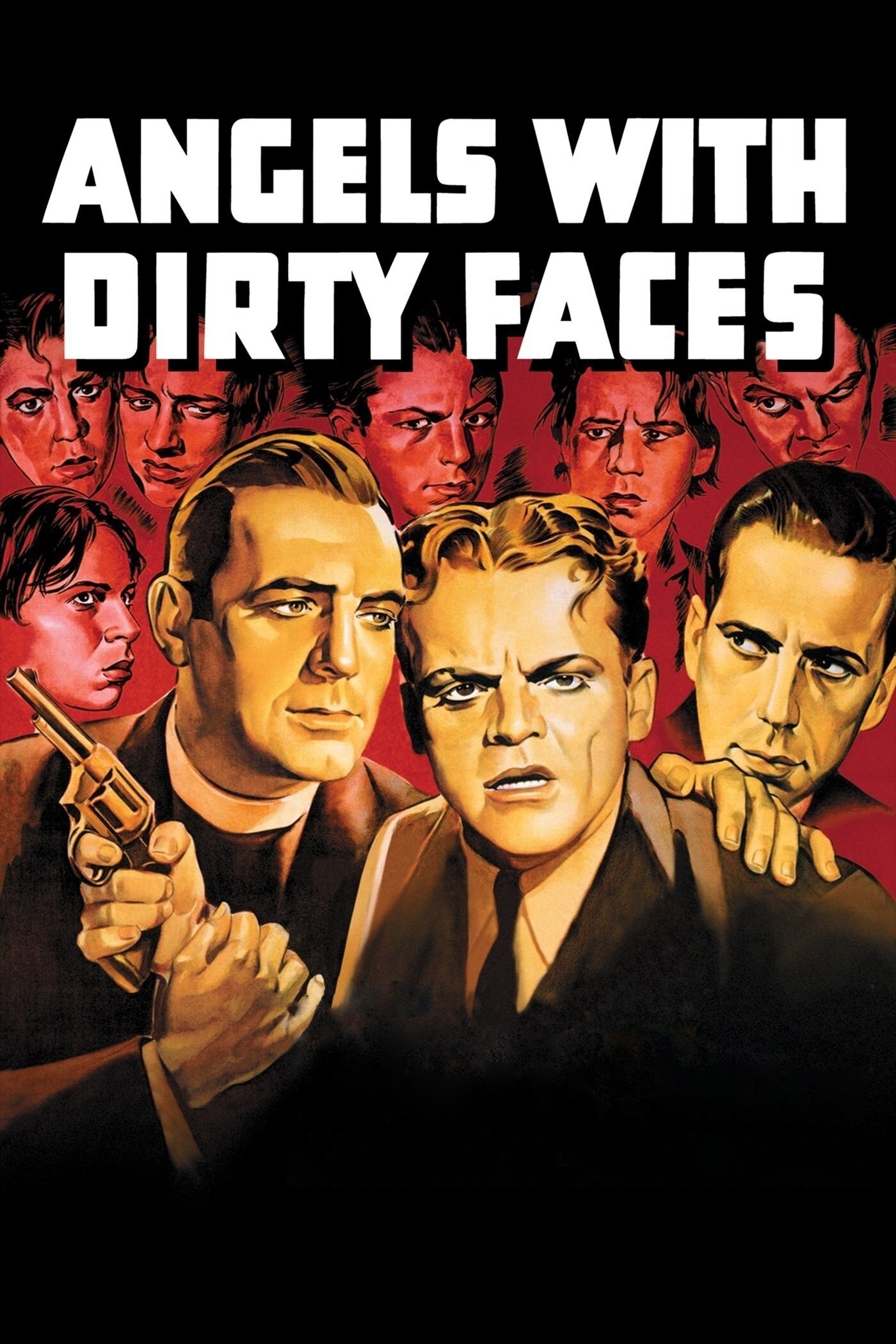
What the Film Is About
Whenever I revisit Angels with Dirty Faces, I’m struck much less by the guns or the gangsters and more by the fundamental tug-of-war at its core—a deeply emotional contest between hope and resignation, between choosing a selfless path and the romance of infamy. I see it as a film that’s not just about crime or redemption in a superficial sense, but about how environments shape destinies, and how impossible it can seem to escape one’s past even amid genuine yearning for change.
What compels me most is the way the central conflict pulses under the surface: two boys from the same slum take opposing paths, yet they are forever yoked by shared memory and guilt. The narrative isn’t simply about crime, but about the shadow it casts—on friendships, faith in betterment, and the next generation waiting eagerly to be shown what’s admirable. The emotional journey feels raw to me: it’s both a lament and a plea, asking just how far one can go before one’s choices are no longer their own.
Core Themes
For me, Angels with Dirty Faces lingers so powerfully because of its unflinching look at moral ambiguity and the seduction of notoriety. As I parse the film, the tension between heroism and criminal allure feels especially urgent. It wants us to confront the blurry line between genuine bravery and the reckless defiance that passes for heroism in the eyes of the desperate and disenfranchised. This isn’t just a story about a gangster’s rise and fall; it’s a film that lives and breathes in the uneasy space between admiration and condemnation.
Another theme I find myself returning to is the burden of influence. The film doesn’t simply preach about right and wrong; instead, it asks what it takes to truly save a child from repeating mistakes. I see the haunting suggestion that personal willpower isn’t always enough—sometimes, the environment and the idolization of the wrong people can drown out even the most heartfelt appeals to conscience. In its release year of 1938, this theme must have echoed uncomfortably in the ears of audiences battered by economic depression, social upheaval, and the grim rise of urban criminal culture. Today, it still plays as a cautionary tale about celebrity culture—how modern-day icons, regardless of their actual virtue, become templates for the next wave of dreamers in our fractured cities.
I can’t ignore how the film touches on loyalty—not just as a virtue, but as a force that can both save and condemn. Am I to admire the loyalty of childhood friends, or should I recoil at how that same loyalty can chain one to a toxic, destructive path? The character of Rocky, so easy to root for because of his charisma, forces me to re-examine what leadership really is and whether charm without principle is anything more than a hollow mask. Watching the film, I’m left with the aching question of whether true change is even possible, or if fate, once set in motion, can ever really be reversed.
I also see the sense of societal complicity, a theme that cuts deeper the more closely I examine the film. It asks uncomfortable questions about how communities—by neglect, by sentimentalizing outlaws, by failing to provide real alternatives—lay the groundwork for the tragedies that result. That resonance, both in the shadowed streets of the 1930s and in my own far more modern city, is part of why the film still matters. It’s not just about how individuals fail, but how societies nurture or hinder hope, and how easily the underdog is celebrated, even when he drags everyone down with him.
Symbolism & Motifs
There is something powerfully mythic at play in Angels with Dirty Faces, and I’m always drawn to the recurring motif of the cityscape—the cramped, shadowed alleyways that seem to cradle and constrain the characters’ fates. To me, the city isn’t just a setting, but a living, breathing organism that both corrupts and shelters. The church and the schoolyard, in stark contrast to the pool halls and tenements, symbolize those slender, embattled spaces where innocence might cling to survival.
A motif that I return to repeatedly is that of faces themselves. The film’s very title suggests duality—these are “angels” tarnished, innocence smudged with the grime of circumstance. When I watch Rocky’s expressions, shifting almost imperceptibly between bravado and vulnerability, I’m reminded how a face can mask pain, longing, fear. The final moments rest so heavily on the notion of what one’s outward appearance means to others—how heroism and shame can be indistinguishable, depending upon whose story is being told.
Another recurring symbol for me is the gang of boys, the “Dead End Kids.” They’re not just background color; they are the living incarnation of the film’s message about influence, hero worship, and the perennial cycle of urban despair. I always feel a pang every time the camera cuts to their rapt faces as they watch Rocky; they reflect not only the promise and peril of youth, but the legacy—both noble and malign—that adults pass on, knowingly or not.
Finally, the use of bars, gates, and fences throughout the film feel symbolic to me—a visual echo of the cage Rocky struggles to escape. These boundaries are not simply physical; they embody the limits society places on rehabilitation, the walls that surround and define both literal and moral confinement. As I see it, the film argues that, as much as we talk about second chances, real freedom is heartbreakingly elusive for so many of its characters.
Key Scenes
Key Scene 1
For me, the moment that first sears itself into memory is when Rocky returns to his old neighborhood and is greeted as a conquering hero by the street kids. The emotional charge of this scene goes far beyond mere nostalgia; I see it as the film’s clearest demonstration of how easily bravado and violence are glamorized, especially among those with little else to admire. Rocky’s swagger is intoxicating to them, and I’m uncomfortably aware that the line between mentor and corrupter is razor-thin here. The reverence in their eyes makes the question of moral responsibility almost overwhelming—if so much adulation is built on a false image, what does it take to tear that illusion down?
Key Scene 2
Later, when Rocky and Jerry, now a priest, face off over the fate of the neighborhood boys, the film’s entire ethical core is laid bare. I see this as the crucible of the film: a friendship transformed into a battlefield where two worldviews collide. Rocky’s insistence that he can’t change, that the kids already know “the score,” is countered by Jerry’s stubborn faith in redemption. It’s a scene that leaves me wrestling with the limitations of both compassion and hard realism. Neither man is wholly right or wrong; instead, I am confronted with the heartbreak of trying to save someone who may not want saving—and the agony of watching the vulnerable pay the price.
Key Scene 3
The prison finale never fails to shake me. When Rocky, facing execution, is begged by Jerry to die “yellow”—to feign cowardice so the boys will lose their respect for him—I see not just a final act, but a desperate attempt to rewrite fate. That moment, in my reading, is the film’s ultimate meditation on sacrifice: Rocky’s act is ambiguous, and I still debate with myself whether he truly lost control or chose humiliation for a higher good. The uncertainty is intentional; I’m forced to sit with the discomfort of impossible choices. Does society force the best out of us only in our last moments—or does it leave us clinging to borrowed heroism until the bitter end?
Common Interpretations
In every classic film discussion I attend, Angels with Dirty Faces remains a lightning rod for debates over moral influence and the power of example. Many critics interpret Rocky’s journey as a study in doomed charisma—the idea that our idols are rarely worthy of the pedestals we build for them. Audiences are often split; some see Rocky’s final act as genuine redemption, while others, like myself, question whether any single gesture can erase a lifetime’s influence.
There’s a well-accepted reading, too, of the film as an indictment of social and economic conditions that create criminals. Rather than blaming individuals entirely, some viewers emphasize how the environment shapes choices, from the poverty-haunted streets to the absence of opportunity. For them, the film is less about personal failure and more about societal breakdown.
I also find many viewers respond to the film’s fascination with duality—how a person can contain both admirable and destructive elements. For some, this isn’t a gangster film at all, but a morality play about the ambiguity of heroism. Less common, but still present, are interpretations that focus on religious symbolism, especially Jerry’s role as both advocate and judge, and Rocky’s ambiguous martyrdom at the end.
Overall, my impression is that the film’s lasting impact comes from its refusal to settle firmly on one moral position. It invites us, each time we watch, to interrogate what makes someone truly honorable: their public actions or their private choices, the legacy they hope for or the consequences they cannot escape.
Films with Similar Themes
- The Public Enemy (1931) – I see a strong connection in its exploration of the rise and fall of a gangster, and the allure of criminal idols, though with a colder distance than Angels with Dirty Faces achieves.
- Dead End (1937) – The film’s focus on urban youth and the perpetual threat of poverty shaping moral outcomes resonates deeply with the themes of environment and destiny present in Angels with Dirty Faces.
- Boys Town (1938) – For me, this film parallels the idea of saving wayward youth and the transformative power—if also the limitations—of mentorship and compassion.
- On the Waterfront (1954) – Here I find similar ground in the exploration of conscience, disillusionment with heroism, and the crushing impact of loyalty in corrupt systems.
What I take away from Angels with Dirty Faces isn’t simple nostalgia for tough guys or mythic city streets. It’s the film’s aching insistence that human beings are neither pure nor irredeemable, that even the hardest faces hide wounds—and that redemption, if it comes at all, may be less about erasing the past than about shouldering unbearable burdens for those who follow. Watching it, I feel the weight of a society complicit in the creation of both saints and sinners, and I’m reminded that, whatever the era, our willingness to question the real cost of hero worship is as vital today as it was in 1938.
For more context before choosing your next film, these perspectives may help.
🎬 Check out today's best-selling movies on Amazon!
View Deals on Amazon