
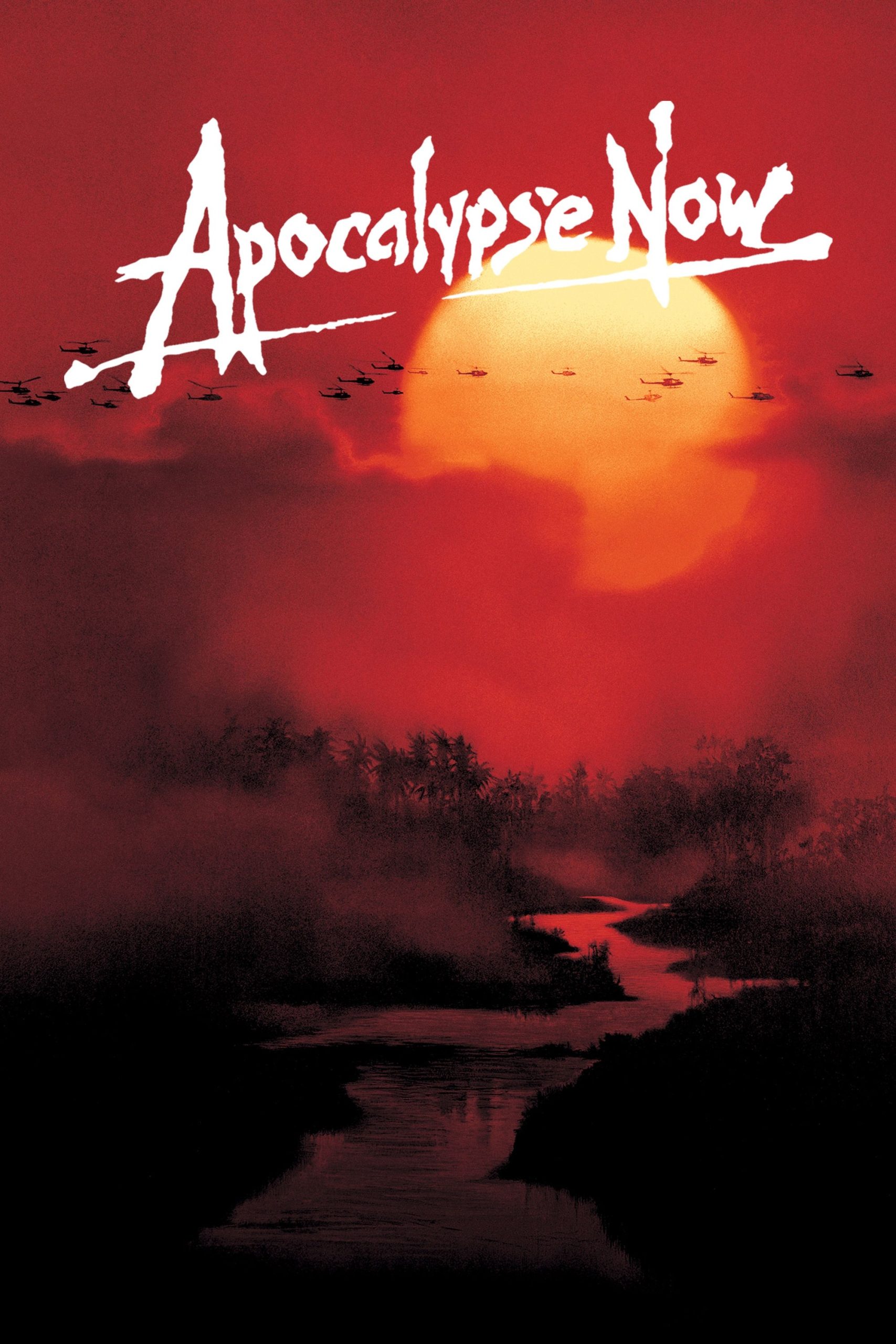
What the Film Is About
Chaos, beauty, and horror—when I first experienced Apocalypse Now, that’s what flooded me. Rather than offering a neat moral or a comforting resolution, this film left me wrestling with confusion and awe. At its heart, it is the psychological odyssey of Captain Willard, sent into the depths of the Vietnam War’s madness to track down and terminate Colonel Kurtz, a once-respected officer turned mythic figure. But for me, this journey is less about a literal mission and more about confrontation with the darkest recesses of human nature—both in others and within ourselves.
Every frame seems to pulse with an existential tension, a sense of sliding into moral freefall. Instead of inviting me to root for triumph or despair, the film asks me to witness the unraveling of certainty. Here, the conflict is not just between soldiers and rebels, but between the self and its shadow; between civilization and the primal chaos that lies beneath. Apocalypse Now does not lead me through war so much as invite me to drown in it, coming up gasping and transformed.
Core Themes
Where do I even begin with the themes that ripple through this film? With every viewing, I’m struck by how much it grapples with the moral ambiguity and psychological disintegration war brings. The central idea, in my eyes, is the seductive and destructive nature of power—how violence and authority, once unleashed, tend to spiral beyond our control. Willard’s journey isn’t just downriver; it’s into the heart of darkness itself, echoing Conrad’s famous novel while imbuing it with new, feverish immediacy.
I find the theme of moral decay and the erosion of identity especially haunting. The film refuses to let me rest on easy dichotomies of good and evil. Kurtz becomes, in some ways, the living embodiment of America’s capacity for both idealism and unspeakable brutality. I sense Coppola questioning whether the very dream of Western civilization is only a thin skin stretched over something savage beneath. That unease feels as fresh to me now as it must have in 1979, when a nation was still raw from the trauma and self-doubt inflicted by Vietnam.
There’s also the persistent tension between order and chaos—the attempt to impose logic, military discipline, and reason on a situation that is inherently irrational. The jungle, the river, and the war itself all seem to conspire to dissolve boundaries. Watching, I’m reminded how easy it is to cross invisible lines and lose oneself, not only as a soldier, but as a human being. These questions about authority, conscience, and the viability of moral codes under pressure have never lost relevance. Every generation finds itself tested, and Apocalypse Now remains a mirror for that testing.
Finally, there’s a sense of futility and the inevitable collapse of illusion. The American presence in Vietnam—depicted as grand, brash, and ultimately hollow—becomes a metaphor for all the ways in which societies and individuals avoid facing their own shadows. Looking back, the themes resonate not only with America’s imperial anxieties but with the ongoing challenge of facing inconvenient truths, whether personal or historical.
Symbolism & Motifs
What lingers most with me from Apocalypse Now are its indelible symbols, many of which pulse just beneath the surface. The river itself is perhaps the most compelling: not just a route through the landscape, but a kind of liquid subconscious, pulling Willard—and all of us—along on a journey inward. I’m always struck by how the river serves as a boundary between worlds: the relative normalcy of military command, and the warped logic of Kurtz’s domain. It’s a boundary that’s porous and dangerous, and every time the patrol boat advances, I feel as if practical reality is dissolving a little more.
The jungle, in turn, acts as a living metaphor for the wildness inside the human soul. In the tangled, lush, and oppressive greenery, I can sense how civilization teeters on the edge of collapse. For me, the overwhelming sights and sounds of the jungle—sometimes beautiful, often menacing— embody the idea that, beneath the thin veneer of order, chaos is always ready to erupt. Napalm, helicopters, and rock music assert control temporarily, but the jungle persists, indifferent and ungovernable.
Colonel Kurtz himself functions as a symbol: not only of military excess, but of the ultimate consequences of seeing too far—of discarding all restraints. The way he is first glimpsed in near-mythic obscurity, his face sliding in and out of shadow, tells me he’s more than just a man. He is what we become when we inhabit the extremes—when courage curdles into horror, and insight becomes madness. I also can’t watch the film without reflecting on the recurring motif of ritual and performance. Military protocol, surface discipline, even the surreal USO show—these are all attempts to conjure meaning in a place where logic threatens to implode.
Blood, water, and fire appear again and again. I’ve always interpreted these as a kind of trinity: water is cleansing but also devouring; fire is both creative and destructive; blood is life and death, intertwined. The persistent use of shadows and light throughout the film further reinforces how much of its meaning dwells in ambiguity. I find these images haunting long after the credits roll, because they speak to primal truths that words alone can’t capture.
Key Scenes
Key Scene 1
For me, the film’s opening montage set to “The End” by The Doors is nothing short of hypnotic, and it instantly immerses me in the film’s psychological landscape. The superimposed images of a burning jungle and Willard’s haunted gaze do more than set the physical scene; they encapsulate the blur between memory and nightmare, leaving me unsettled. I see this sequence as the emotional overture to everything that follows—the dissolution of boundaries between the real and the imagined, sanity and its breaking point. It’s less about where the story begins and more about how war inscribes itself on the soul, making every subsequent moment tingle with a sense of psychological vertigo.
Key Scene 2
Whenever I revisit the infamous “Ride of the Valkyries” helicopter assault, I’m reminded how powerfully the film juxtaposes spectacle and savagery. Colonel Kilgore’s army attacks a Vietnamese village to Wagner’s bombastic score, manufacturing an operatic grandeur out of carnage. This scene always unsettles me: its dazzling bravado masks a profound emptiness and absurdity beneath. Through this bravura set piece, I experience the absurdity of modern warfare—war as performance art, where men become both spectators and actors in the theater of destruction. More than that, it raises uncomfortable questions about complicity and denial; how easily violence can be aestheticized and distanced, until horror becomes another form of entertainment.
Key Scene 3
The confrontation between Willard and Kurtz at the film’s climax holds me in thrall, both for its narrative finality and its allegorical power. Here, in the heart of darkness, the lines between hunter and hunted, sanity and lunacy, leader and monster, blur almost completely. I take this scene as the ultimate crucible—the point at which all the film’s themes converge, and Willard is forced to acknowledge the darkness within himself as well as within Kurtz. The ritualistic nature of Kurtz’s death, echoed by sacrificial imagery and mirrored by the slaughter of a water buffalo, delivers a devastating, ambiguous catharsis. Has anything been solved? Has the cycle of violence stopped, or simply renewed itself? For me, the finale is not about answers but about acceptance of irresolvable contradiction.
Common Interpretations
Over the years, talking with fellow cinephiles and poring through volumes of criticism, I’ve encountered a fascinating spectrum of ways to interpret Apocalypse Now. Many see it as a blistering indictment of the Vietnam War itself—a portrait of American hubris taken to the edge, where superior firepower and technology mask a fundamental moral bankruptcy. This interpretation, for me, is inescapable; the film’s every bullet and bomb seems aimed at the recklessness and arrogance of empire.
But I’ve also been drawn in by readings that focus on the film as a meditation on the nature of evil and self-knowledge. In this view, Willard’s descent is less about Vietnam per se and more about the journey we all take into our unspoken desires, fears, and failings. Kurtz becomes a philosopher of darkness, illuminating the lies we tell ourselves about who we are and what we’re capable of. I resonate with those critics who argue that the film is about the impossibility of truly knowing or escaping oneself—that every expedition outward is also an expedition inward.
There are, of course, viewers who experience the film as an almost mythic allegory about civilization versus savagery, or as a fever-dream about the collapse of meaning once order is stripped away. Some see it as a warning about authoritarianism, the dangers of following orders without question; others perceive a critique of the American myth of invincibility. These interpretations differ in emphasis, but rarely in power: each is rooted in a sense that the film is not content to merely depict history, but to interrogate it at the level of myth and psyche.
Films with Similar Themes
- The Deer Hunter (1978) – I find in this film a complementary exploration of trauma, disillusionment, and the long shadows cast by the Vietnam War on those who fight it. Both films probe what is lost—and perhaps irretrievable—after war.
- Full Metal Jacket (1987) – As I watch this film, the dehumanization inherent in military systems and the breakdown of individual identity evoke strong echoes of Apocalypse Now’s interrogation of authority and compulsion.
- Aguirre, the Wrath of God (1972) – For me, Werner Herzog’s vision of obsession and the unraveling of civilization in the jungle offers a spiritual cousin to Coppola’s landscape of madness and megalomania.
- Platoon (1986) – I see in this film another deeply personal attempt to reckon with Vietnam, moral ambiguity, and the irreconcilability of war’s ideals with its realities; both films force viewers to confront uncomfortable truths about violence and responsibility.
What, ultimately, does Apocalypse Now communicate to me about human nature, society, and its era? I’m left with a visceral sense of awe and anxiety—the recognition that every civilization, every individual, has a darkness that cannot be banished, only acknowledged and, hopefully, not obeyed. The film seems to whisper that the line between order and chaos is always thinner than we think, and that the seduction of power, unchecked by conscience, can unravel even our highest ideals. Coppola’s vision, raw and mesmerizing, isn’t just a document of its troubled time. It endures because it’s willing to look unflinchingly into both collective and personal nightmares, and to reflect on the costs of denying the darkness within. It’s an invitation not to look away, but to look deeper—and in that looking, perhaps, to begin the difficult work of understanding.
For more context before choosing your next film, these perspectives may help.
🎬 Check out today's best-selling movies on Amazon!
View Deals on Amazon