
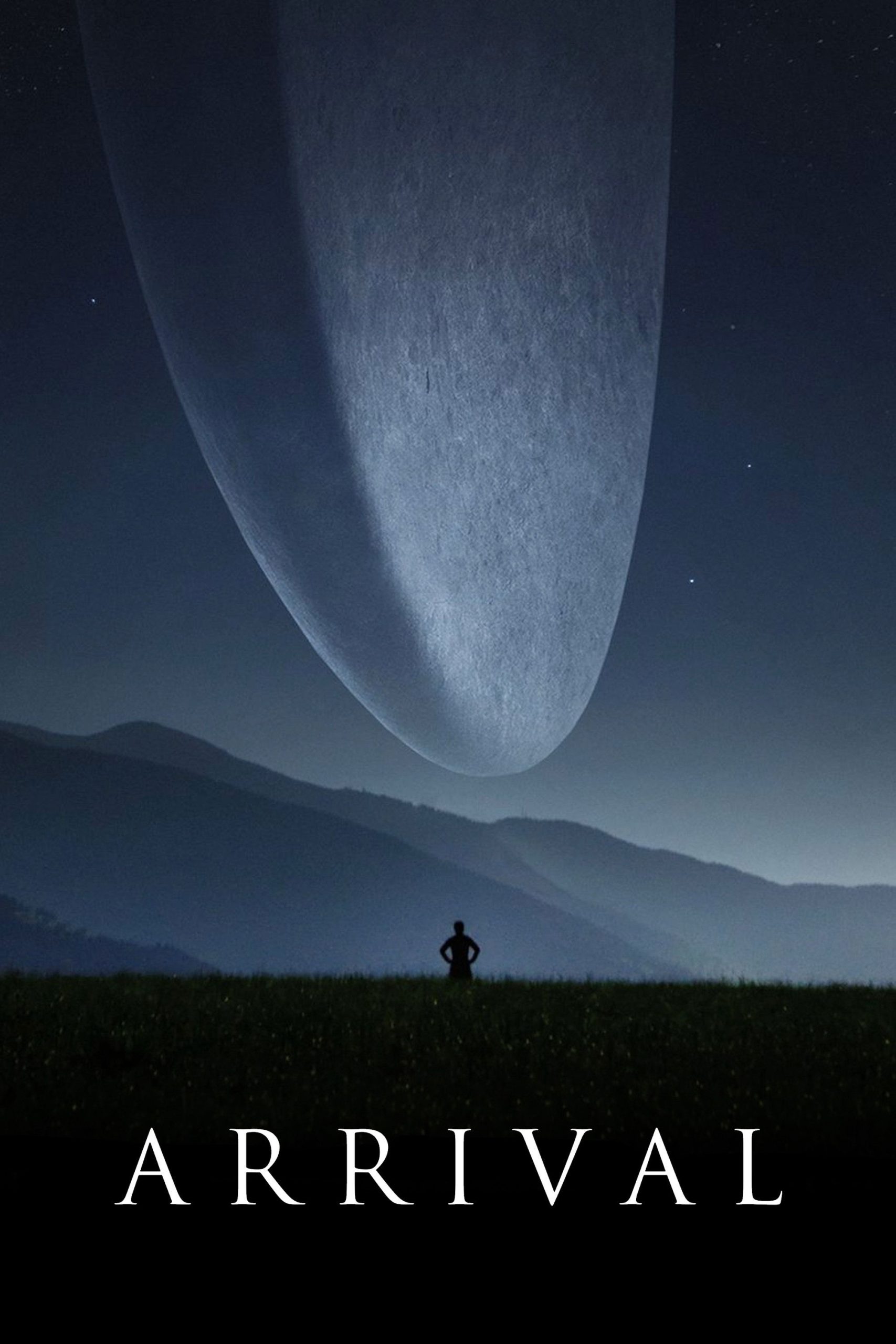
What the Film Is About
From the first scene, I felt “Arrival” pulse with a quiet emotional power. I didn’t approach it as just another science fiction film about aliens, but as a meditative look at isolation, connection, and the ways language shapes the boundaries of our experience. For me, the emotional journey belongs to Louise Banks, who is thrust into a world-defining crisis — one that demands she crack open mysteries not just of literal language, but of grief, time, and the self. The true conflict is never simply between nations or even between humans and aliens. Instead, I saw it as a journey inside, where understanding others requires first unlearning how I’m used to thinking about the world and my place in it.
What snared my attention was how “Arrival” wraps its existential questions in the guise of a tense first contact narrative. It drew me into the persistent ache of loss, the imperative for understanding in an age crowded with miscommunication, and the resilience that comes from radical empathy. The film isn’t about providing easy victories or clear-cut villains; rather, it stages an internal and external negotiation — a race against time to discover if humanity can learn the language of coexistence before fear drowns out meaning.
Core Themes
If there’s one thing I carry with me after watching “Arrival,” it’s the insistence on the power of language — not just as a tool for exchanging information, but as a force that shapes how I perceive and experience reality itself. The film exposes the limits of language and, at the same time, insists on its transformative potential. I was struck by how the story hinges on whether humans can break free from patterns of linear thought: time, for instance, is not merely a sequence but an ever-present dimension. The idea that understanding a language can alter the way one apprehends time — and, therefore, fate — forces me to question everything I take for granted about causality, memory, and choice.
Another core theme I felt running through “Arrival” is grief and the paradoxical beauty of embracing pain. Louise’s journey — and my own vicarious experience of it — isn’t just about deciphering an alien tongue; it’s about learning to say yes to life, even when life’s path is paved with suffering. There’s a subtle but unmistakable meditation on love, sacrifice, and acceptance of the preordained, even in full knowledge of the sorrow ahead. When I trace these themes to their larger context, I find the film’s relevance emerges clearly. “Arrival” was released at a time riven by political and cultural divides, when mistrust dominated national conversations. Its call for patience, openness, and courage in the face of the unknown still resonates in a world where miscommunication can mean catastrophe, and empathy remains in short supply.
If there is another thread I found particularly powerful, it’s the critique of fear-driven decision making — a theme that coils quietly through the plot. As nations veer toward hasty, divisive choices, I’m reminded how habitual fear can derail authentic understanding. The film gently but firmly insists that courage, not paranoia, is what allows us to move forward. It is through the willingness to sit in ambiguity rather than slam the door in fear that true progress emerges.
Symbolism & Motifs
“Arrival” buzzes with symbolism that, for me, adds both textual and emotional depth. The alien language itself — that looping, fluid script — stood out as a motif that recurs visually and thematically. It isn’t just ink on glass; it becomes a symbol for nonlinear time, for unity, for the futility of trying to impose rigid, familiar structures onto something fundamentally new. Each logogram swirls, unbroken, echoing the way Louise comes to experience her own memories and future as a single, unbroken fabric. I found myself wondering what it would mean to truly live without the safety net of beginnings and endings.
Circles and loops appear everywhere in “Arrival.” I interpret these as reminders of the interconnectedness of all things: no start, no finish — just the ongoing movement of experience and consequence. There’s the recurring motif of reflected images (characters mirrored in glass, doubled in shadows), which I sense as a nudge to look past the surface and recognize the multiplicity of perspective, a central tenet to understanding both self and other.
I’m also floored by the way the filmmakers treat sound and silence. Communication, after all, isn’t just about words but presence, tone, and the spaces in between. In several moments, silence is not a void but an invitation: to listen deeper, to question assumptions, and to become aware of the limitations of what I believe is “clear” communication. This use of sound (and its absence) amplifies my sense of mystery, tension, and revelation throughout the film.
Another symbol that lingers for me is the recurring image of the barrier — glass, mist, suits — separating humans from the heptapods. Each physical barrier doubles as an emotional and epistemological one. It’s only when Louise finally steps beyond these boundaries, both literally and figuratively, that true understanding becomes possible. There’s a lesson there; one I find as daunting as it is hopeful: that only vulnerability and risk can close the distance between us and the unfamiliar.
Key Scenes
Key Scene 1
In my experience with “Arrival,” Louise’s first encounter with the alien visitors is nothing less than spellbinding. I see this as the pivotal moment where awe and trepidation collide. The sheer scale, both physical and existential, left me grappling with the unknown — a silence stretching between two kinds of minds. What shook me most was the raw vulnerability: here is a linguist stripped of certainty, facing beings that challenge the very syntax of her world. This scene’s true importance, for me, is in its invitation to approach the unfamiliar not as a threat, but as an opportunity to listen and learn. The emotional weight came from the recognition that every real connection — whether interspecies or interpersonal — begins with surrendering pride and risking misunderstanding.
Key Scene 2
For me, the moment that brings the core themes to the surface occurs when Louise realizes that learning the heptapods’ language allows her to see her entire life, past and future, as one continuum. This revelation is quietly shattering. It doesn’t play by the usual rules of genre payoffs; instead, it asks, “If you knew the pain ahead, would you still walk that path?” I identified with Louise’s dawning comprehension, her acceptance of both the joy and sorrow interwoven in her destiny. It flips what would otherwise be a story about “saving the world” and makes it fiercely personal. Through this scene, I believe the film pronounces its clearest message: real understanding isn’t merely intellectual but existential — a new way of being in the world that floods every choice and memory with unforeseen resonance.
Key Scene 3
During the closing passages, especially as Louise chooses to begin a relationship with Ian, knowing full well the heartbreak that is coming, the film’s philosophical thrust lands with the quiet force of inevitability. I found this to be less a twist, and more a moment of radical acceptance — not resignation, but affirmation. To me, this is where “Arrival” stops being about aliens and becomes a meditation on what it means to love, to lose, and to find meaning even when foreknowledge brings no escape from suffering. It convinced me that the value of life isn’t in its immunity to pain, but in the willingness to embrace experience in its entirety. The turning point here — as Louise says yes to love and to loss — encapsulates what I see as the film’s ultimate argument: that every moment is worth living, even when you know how the story ends.
Common Interpretations
When I look at how critics and audiences approach “Arrival,” there’s a strong consensus around the film’s advocacy for open-mindedness and communication. Many focus on the Sapir-Whorf hypothesis, which suggests that language determines perception, and see the film as a cinematic meditation on this idea. I agree, though I’d add that the film’s engagement with time and fate goes beyond linguistics. Some interpret Louise’s journey primarily as a metaphor for grief and healing, viewing her newfound perception as a way to accept loss and still choose love. Others see the narrative as a political allegory for the importance of dialogue and the dangers of fear-driven nationalism, especially relevant in a real-world context of rising international tensions in 2016.
Where interpretations diverge, it’s often on the question of determinism. For some, the film offers comfort in the inevitability of fate — suggesting peace comes from acceptance; for others, it challenges us to find meaning and agency even within predetermined outcomes. Personally, I find myself in both camps at different moments: sometimes drawn to the serenity of surrender, other times unsettled by what it means to willingly choose pain. What unites these readings is an appreciation for the film’s trust in ambiguity — its refusal to comfort with absolute answers.
The role of motherhood also surfaces in discussions, and I see why; Louise’s journey, particularly her choices regarding her daughter, becomes a microcosm of the film’s central message. The personal swells outward to the universal, and back again, leaving viewers like me with questions that linger long after the credits roll.
Films with Similar Themes
- Interstellar (2014) – I see a kindred spirit in how both films confront nonlinear time and the emotional consequences of embracing the unknown. Love, determinism, and sacrifice ripple through each narrative.
- Contact (1997) – For me, this film shares Arrival’s reverence for the mysteries of communication and personal faith in the face of cosmic uncertainty, daring us to seek understanding rather than proof.
- Solaris (1972) – I’m struck by how both films place existential questioning at their core, focusing on language, memory, and grief as barriers and bridges between self and other.
- Close Encounters of the Third Kind (1977) – The emphasis on communication across boundaries — both literal and emotional — always reminds me of Arrival’s insistence on patience and empathy amidst chaos.
When all is said and done, what stays with me about “Arrival” is its unwavering belief in the possibility — and the cost — of true connection. The film doesn’t flinch from the complex, bittersweet realities of existence; instead, it finds grace within them. I’m left with the sense that our greatest power lies not in conquering the unknown, but in allowing it to transform us, to break us open and expand the limits of who we can become. For its era — and for voices like mine constantly seeking meaning amidst the din — “Arrival” offers an affirmation that vulnerability is not a weakness, but the very foundation of what it means to be human.
If you’re deciding what to watch next, you might also want to see how this film holds up today or how it was originally received.
🎬 Check out today's best-selling movies on Amazon!
View Deals on Amazon