
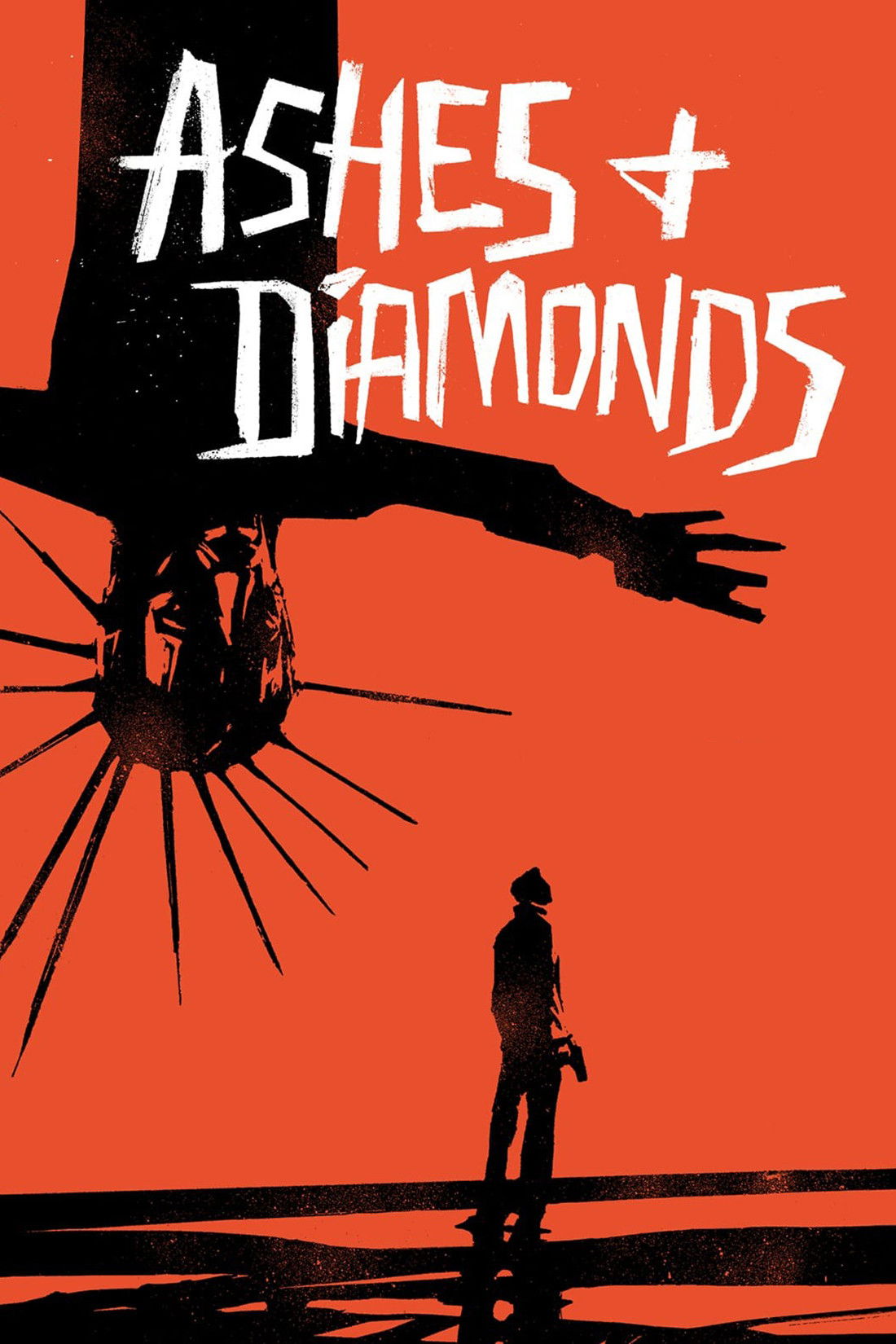
What the Film Is About
Whenever I return to “Ashes and Diamonds,” I’m instantly gripped by the sense of dislocation and exhaustion that permeates every frame. For me, the film isn’t just about the chaotic aftermath of World War II in Poland—it’s a meditation on what happens when ideals collide with the exhaustion of history, when personal and collective identities have been shattered beyond recognition. At its heart, I see it as the story of a young resistance fighter, Maciek, caught between the residue of wartime passions and the emerging ambiguities of peace. Instead of a conventional hero’s journey, the film guides me into a psychological maze where purpose gives way to doubt, and every character seems to teeter on the edge of relevance and oblivion.
The emotional journey here is steeped in longing, regret, and the kind of confusion that follows any seismic societal change. Watching Maciek navigate a world where yesterday’s sacrifices are suddenly suspect, I’m made to feel the ache of a generation forced to choose between fading loyalty and a dawning, uncertain future. The central conflict never truly resolves in the classical sense; instead, it recedes into questions—about loyalty, violence, and the meaning of honor when the enemy is no longer clear. For me, it’s this sense of moral exhaustion and the suspended state of its characters that make the film such a powerful meditation on the aftermath of catastrophe.
Core Themes
What has always struck me most about “Ashes and Diamonds” is its richly layered examination of moral ambiguity. The idea of the ‘hero’ evaporates under director Andrzej Wajda’s lens; instead, I find people robbed of certainty, left only with the ashes of their convictions. Maciek, the film’s protagonist, isn’t just a symbol of lost youth—he’s a vessel for all the confusion and trauma roiling through Poland in 1945. The core themes that resonate most forcefully for me are the collapse of moral clarity, the enduring cost of violence, and the uneasy struggle for a sense of identity in a world untethered from its past.
Loyalty, too, threads through the film with a complexity I find both moving and unsettling. Where does one’s allegiance lie after the old order is swept away? Is loyalty to comrades, to country, or to an idea—and what happens when those lines blur? Watching Maciek, I can’t escape the sense that the film asks whether any loyalty can survive the churning gears of history. This theme has only grown more relevant over time, as various societies grapple with the aftermaths of war, revolution, or political transformation. The Poland the film depicts may be specific, but the emotional landscape feels universal: people trying desperately to anchor themselves amid uncertainty and loss.
Violence, as a means and an inheritance, is another theme I can’t shake. The characters are all marked by what they’ve seen and done, and the film never lets me forget that the repercussions of war extend far beyond its official end. The violence here isn’t just physical—it’s existential, undermining any easy faith in resolution or redemption. Love, fleetingly glimpsed in Maciek’s relationship with Krystyna, emerges as a fragile alternative to violence, but it, too, is shaped by the impossibility of escape from the broader historical tragedy.
In the era of its release, I imagine this questioning of heroism and historical destiny sounded both subversive and heartbreakingly honest. Today, I feel these themes echo just as powerfully, especially in a world weary of simple answers and haunted by the long shadow of collective trauma.
Symbolism & Motifs
I’m endlessly fascinated by the way “Ashes and Diamonds” weaves its meaning less through dialogue and more through its stark, resonant visual language. The motif of fire and burning—a direct reference to the title—keeps resurfacing. I see fire here as both destructive and, paradoxically, illuminating: setting the sky ablaze in celebration, but also symbolizing the hopes and ideals that have already been turned to ash. The fireworks display that stretches across the film isn’t the triumph of a new era; for me, it’s an ironic, almost mocking echo of the violence that has just taken place and a world that can’t quite mourn or celebrate without confusion.
Mirrors and reflections strike me as another persistent motif. They appear at moments when Maciek is compelled to consider his own identity, his loneliness, or the futility of his actions. In one of the film’s most memorable gestures, he gazes into a mirror, gun in hand, the face that looks back at him not quite recognizable even to himself. To me, this motif signals the fractured sense of self that comes from living through upheaval; identity is refracted through violence, history, and personal longing.
The omnipresent setting of the bombed-out church and the ambiguous, empty spaces also carry a profound weight. I read these ruins as physical manifestations of spiritual and ideological collapse—a world built around grand ideals, now hollowed out. The pervasive sense of debris—material and psychological—serves as a haunting reminder that rebuilding is never simply a matter of politics, but a challenge to the very souls of those who survive.
Even seemingly mundane objects—a bottle of vodka, a hotel room door, a cluster of white flowers—take on increased significance. The white flowers, in particular, become for me a symbol of innocence already tainted by history, used as a gesture of remembrance but failing to cleanse the stain of past violence. Each symbolic item in Wajda’s frame is loaded with yearning and irony, offering the viewer no easy solace.
Key Scenes
Key Scene 1
The scene that remains most vivid in my mind is the moment of the fireworks. On the surface, it’s a communal celebration, signaling the war’s end and the arrival of peace. Yet, the juxtaposition of Maciek’s private despair in the foreground with the fireworks bursting above fills me with overwhelming irony and melancholy. This isn’t a patriotic flourish—it’s the loneliness of the individual set against the abstract pageantry of history. The symbolic importance here cannot be overstated: the era’s end is supposedly joyful, but for Maciek and, by extension, for Poland itself, the future is uncertain and the losses are incalculable. For me, this scene crystallizes the film’s message: history doesn’t offer closure; it leaves wounds and questions that firelight can only momentarily obscure.
Key Scene 2
Another moment I return to is Maciek and Krystyna’s tender, doomed interlude in the hotel. Their fleeting intimacy is not simply a respite from violence, but a poignant reminder of what the past years have stolen from them. It is as if Wajda offers a glimpse of human connection as an antidote to chaos—yet it remains painfully out of reach. This scene deepens the film’s exploration of love as a kind of resistance to the surrounding brutality, but it also underlines the impossibility of real escape. The world outside is too present, too scarred, for their encounter to become truly transformative. I see this not as an argument against love, but as an acknowledgment of its fragility in an age defined by uncertainty and grief.
Key Scene 3
The final moments—Maciek’s flight and death in the garbage-strewn field—are, for me, the film’s ultimate statement. Here, stripped of all the grandeur that once defined his cause, Maciek dies unnoticed, writhing in pain among the detritus of a world that’s already moved on. This ending devastates me; Wajda refuses any hint of martyrdom or resolution. Instead, the film’s meaning is distilled into pure existential anguish—the price of violence, the anonymity of death in a world obsessed with new beginnings. In Maciek’s quiet, futile struggle, I see the symbolic exhaustion of a generation and the bitter realization that history discards its soldiers as quickly as it invents new narratives. The bleakness isn’t nihilistic, though; it compels me to question the cost of all our collective myths and the lingering ache of personal sacrifice.
Common Interpretations
From my perspective, the film’s ambiguity has fueled diverse interpretations over decades. Many critics, especially those writing shortly after the film’s release, saw it as a subtle commentary on Polish national identity—a lament for lost innocence and an implicit critique of the new communist order. I find this reading persuasive, especially in the way Wajda interrogates the narratives of heroism and betrayal that had become central to postwar Polish self-understanding. For some, the film is a requiem for the wartime resistance, highlighting the moral ambiguities and disillusionment left in the conflict’s wake.
Other viewers, though, approach “Ashes and Diamonds” less as a political allegory and more as a universal existential drama. In my experience, this reading foregrounds the personal: Maciek’s story becomes less about Poland specifically, and more about the problem of living authentically amid the collapse of all certainties. For those who prize existential readings, the film takes its place alongside European cinema’s broader fascination with alienation, fate, and the search for meaning after catastrophe.
Of course, some audiences have pushed back against what they see as Wajda’s “romanticizing” of the anti-communist resistance, pointing to the film’s stylizations and the moody charisma of its protagonist. Yet, I think the film resists both simplistic heroism and outright condemnation. That’s what keeps me coming back: the refusal to provide answers, the haunting sense that the film’s meaning lies in its unresolvable tensions.
Films with Similar Themes
- The Third Man – I find a powerful thematic connection in the way both films depict postwar societies wrestling with ambiguity, loss, and the collapse of clear moral frameworks.
- The Cranes Are Flying – This Soviet classic intersects with “Ashes and Diamonds” through its portrayal of individuals caught between love and historical trauma, emphasizing the personal costs of war.
- Paths of Glory – Like Wajda’s film, Kubrick’s anti-war drama questions the nature of heroism and sacrifice, exploring how identity and morality unravel in the crucible of violence.
- Closely Watched Trains – I’m reminded of this Czech film’s bittersweet, tragicomic exploration of coming of age amid historical upheaval, with a tone that is both intimate and existentially fraught.
In the end, what “Ashes and Diamonds” communicates to me is deeply unsettling and stubbornly enduring. The film resists the comfort of myth or ideological certainty. Instead, it immerses me in the confusion, yearning, and inescapable ambiguity of a society reeling from violence. The characters’ struggles—for love, for clarity, for meaning—are never resolved, echoing the persistent scars of history on the individual psyche. For me, it’s this sense of lives unfolding in a liminal space, between ashes and diamonds, that lingers long after the credits roll: a haunting meditation on what it means to inherit a world in ruins and to search, amid all that’s been lost, for a reason to keep living.
For more context before choosing your next film, these perspectives may help.
🎬 Check out today's best-selling movies on Amazon!
View Deals on Amazon