
What the Film Is About
There are times when a film slashes through the pleasant façade of human relationships and dares to show what lies beneath—sometimes chilly, sometimes raw, always distinctly human. Watching “Autumn Sonata,” I was struck not by sweeping plot machinations but by how quietly, yet relentlessly, the film pulls me into a suffocating room with two women—mother and daughter—whose unresolved pain vibrates in every line and silence. For me, it’s less a conventional story and more an autopsy of love: the ways it fails, the ways it festers, and the desperate hope that it might somehow still heal.
The central struggle, as I felt it, revolves around the emotional chasm between Eva and her mother Charlotte. Every conversation between them carries a weight of things left unsaid for years—regrets, misunderstandings, unmet needs. The film moves with almost claustrophobic focus through their reunion, charting not just the surface courtesies but the deeper battle for acknowledgment, for validation, for some sign that wounds might close. Rather than a linear journey toward resolution, I sensed the film circling around the core question: Can two damaged people truly reach each other, or are they doomed to orbit apart forever?
Core Themes
Exploring “Autumn Sonata,” I found myself wrestling with the film’s devotion to questions of emotional legacy, maternal influence, and the way aspirations—artistic and personal—collide with human frailty. What lingered with me long after the credits was the film’s refusal to settle for easy answers about forgiveness or reconciliation. Instead, it interrogates the invisible contracts between mothers and daughters: the expectations, the disappointments, and the deep, often unspoken resentments that echo through generations.
One recurring idea I kept returning to is the tension between public persona and private yearning. Charlotte, a celebrated pianist, embodies creative brilliance at the cost of maternal absence. Eva, the daughter, clings to the remnants of her own ambitions, but these are continually dwarfed by her memories of neglect. The film seems to ask, with aching sincerity, whether artistic accomplishment can ever justify personal dereliction—or whether the debts of love must eventually be paid, no matter how high the cost to the self.
I also see the film as a study in confrontation—not just between two people, but with oneself. Neither character wants to look at their shared history directly; instead, trauma and disappointment seep into the pauses, the failed apologies, and the resentful glances. “Autumn Sonata” was released in a Sweden reckoning with the quiet revolutions of the 1970s: shifting gender roles, changing family structures, and a growing willingness to challenge patriarchal patterns. Even today, I think its themes resonate because we remain haunted by the same questions: How do we inherit and transmit pain? How do we both harm and hunger for those we love most?
Symbolism & Motifs
The first thing that struck me about “Autumn Sonata” was its spare, theater-like setting: a sparsely furnished house, muted autumnal tones, and a palpable sense of containment. To my eyes, this is less about realism than resonance. The house becomes almost a third character—the repository for memory, regret, and unspoken longing. I read the autumn season itself as a symbol not only of approaching death or decline, but also of a last, desperate riot of color before dormancy: a metaphor for Eva and Charlotte’s fragile hope for connection in the twilight of their lives.
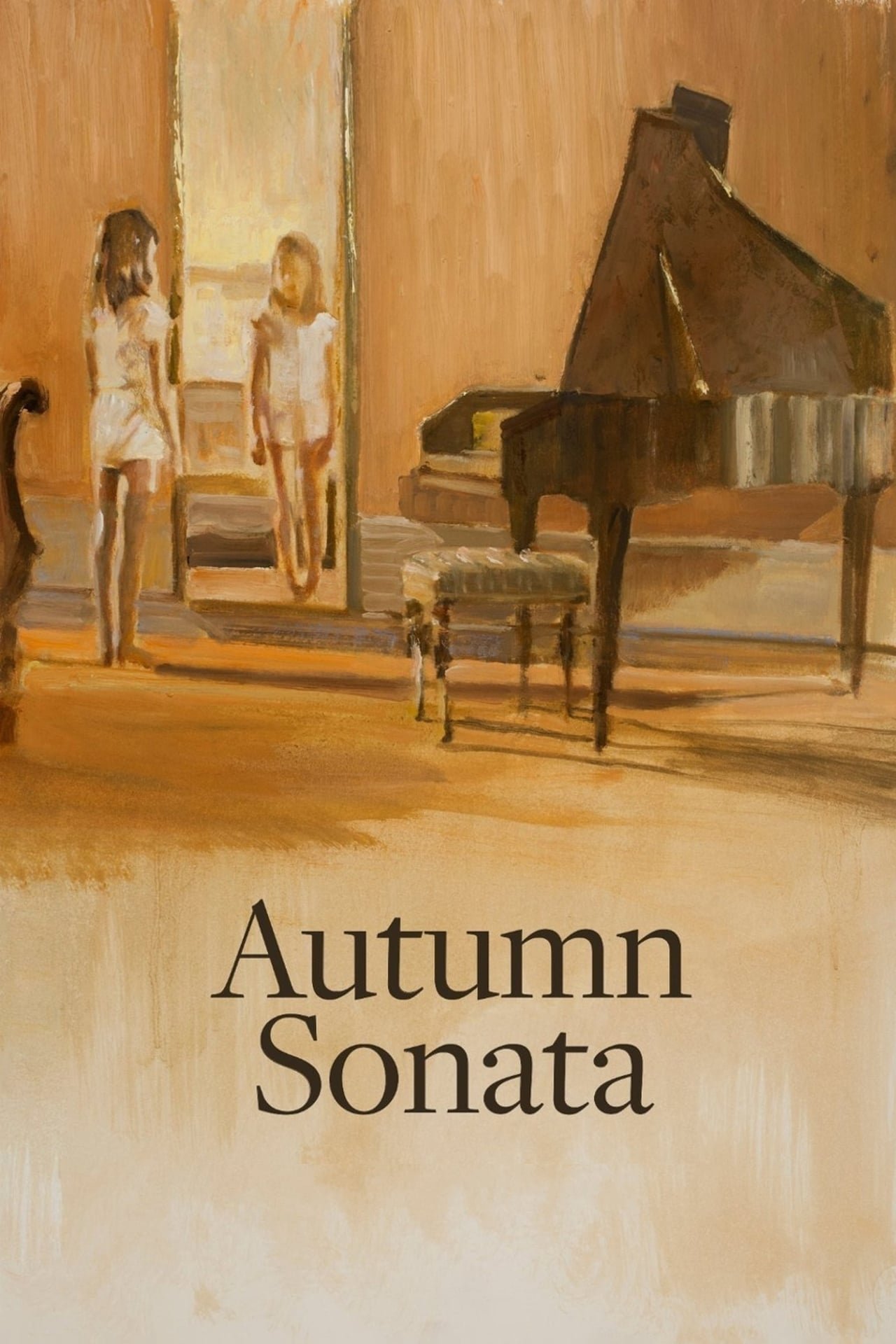
The piano recurs as a potent motif throughout the film. For Charlotte, it is a means of escape and validation—a tangible expression of her identity and brilliance. For Eva, the same instrument becomes a reminder of her mother’s absence and her own inadequacies. If music exists to bridge the gaps between people, “Autumn Sonata” captures the tragic irony that sometimes, art can also amplify what separates us.
I notice hands are everywhere—touching, clasping, hesitating, withdrawing. Hands become the language of both care and rejection, often saying what mouths cannot. There’s also an abundance of mirrors, which I interpreted as a visual echo of the film’s deeper concern: the struggle to recognize ourselves in those who wound us, and the terror that in doing so, we also confront uncomfortable truths about our own failings.
Key Scenes
Key Scene 1
There’s a moment when Eva plays the piano for her mother, choosing Chopin. For me, this is the film’s nerve center. Eva, usually tentative, pours herself into the music—not to impress, but hoping her mother will finally see her, acknowledge her pain and her effort. Yet Charlotte cannot resist critiquing, shaping Eva’s playing to her own aesthetic. I found this heartbreakingly true to life: the way parental “advice” can become another form of erasure. The scene made me confront the agony of showing our truest selves to those we most want to please, and being met instead with condescension or dismissal. The music here is not simply performance; it’s a plea—and the silence that follows is more devastating than any harsh word.
Key Scene 2
Another scene I keep replaying is the late-night confrontation: Eva, trembling yet resolved, finally puts into words the wounds she has borne since childhood. In this extended monologue, she confesses how her mother’s presence was experienced as a series of absences—how approval and affection always seemed rationed, how even her suffering went unnoticed. I was transfixed by the rawness here; these are not the polite exchanges of daily life, but the kind that surface rarely, when survival demands them. What strikes me is Charlotte’s own vulnerability in response; her confusion, defensiveness, and flickers of remorse. This moment explodes the myth that pain can be easily laid out, explained, and thus banished. Instead, I saw how intricate and cyclical the patterns of blame and need become between parent and child. The “truth” is not a fixed object to be uncovered, but a tangled, living thing—resistant, complex, and devastating.
Key Scene 3
I’ll never forget the morning after, when Charlotte prepares to leave. Any expectation I might have had for a clean resolution is gently refused. The conversation between Eva and Charlotte is polite, almost brittle; apologies are attempted, but not completed. What’s left is an aching ambiguity—no sudden healing, but perhaps the faintest stirring of understanding. I see this not as cynicism, but clarity: the recognition that some wounds resist closure, and that life’s most urgent emotional reckonings often end in silence, not triumph. For me, this final encounter distills the film’s belief in the stubbornness of hurt, but also—crucially—our stubbornness to keep reaching anyway, even if only imperfectly.
Common Interpretations
When I discuss “Autumn Sonata” with others, I repeatedly encounter a division in how the film is received. Many see it primarily as a searing portrait of familial dysfunction, a meditation on how children internalize and reflect the emotional absences of their parents. Critics frequently cite the way the film stages psychological realism, stripping away artifice to reveal a sort of emotional x-ray. This view emphasizes Charlotte as a tragic figure—damaged, damaging, but never monstrous. She is, in these readings, a casualty of her own life’s ambitions and disappointments.
Another interpretation that resonates with me focuses on the generational legacy of trauma and the impossibility of fully escaping it. For these viewers, Eva and Charlotte’s impasse is emblematic: it is not a personal failure, but a systemic one, shaped by social expectations of motherhood, gender roles, and the cult of genius. I often find myself swayed by this approach, understanding the film as a more expansive comment on the culture of the time—a Sweden (and a Western world) in which women’s aspirations, whether familial or artistic, are fraught with sacrifice and guilt.
Finally, some see “Autumn Sonata” less as specifically maternal than existential: a broader investigation into loneliness, the limits of empathy, and the mysteries of forgiveness. In this reading, Charlotte and Eva stand in for all those who yearn for reconciliation and meaning in a cosmos that offers no easy answers. While I appreciate this universalist take, I always return to the intensely personal—how the film’s emotional specificity is what gives it such haunting power.
Films with Similar Themes
- “Interiors” (1978) – For me, this Woody Allen drama wrestles with comparable questions about maternal distance, suppressed emotion, and the bitter legacies of artistic preoccupation. The thematic overlap lies in the unflinching examination of how family rifts can become existential wounds.
- “Ordinary People” (1980) – I see strong parallels in its depiction of grief and the failure of parents and children to truly communicate; both films lay bare the ruinous cost of emotional repression.
- “Cries and Whispers” (1972) – Another of Bergman’s chamber dramas, and to my mind, a kindred exploration of women bound by kinship yet isolated by fear and resentment. The films echo one another in their use of color, silence, and the body as containers for suffering.
- “Terms of Endearment” (1983) – While more mainstream in tone, I find this film’s shifting mother-daughter dynamic and its honest interrogation of maternal imperfection to be very much in dialogue with the core dilemmas of “Autumn Sonata.”
Ultimately, “Autumn Sonata” holds a mirror to the private wars waged in the quiet rooms of families. I walked away from the film convinced that its true subject is not blame, nor even forgiveness, but the desperate, yearning struggle to be seen—not as ideals or disappointments, but as people, flawed and trying. As I see it, this is not only timeless, but essential to understanding why love, in all its messy forms, remains the great subject of cinema—and the lives we live beyond the screen.
For more context before choosing your next film, these perspectives may help.
🎬 Check out today's best-selling movies on Amazon!
View Deals on Amazon