
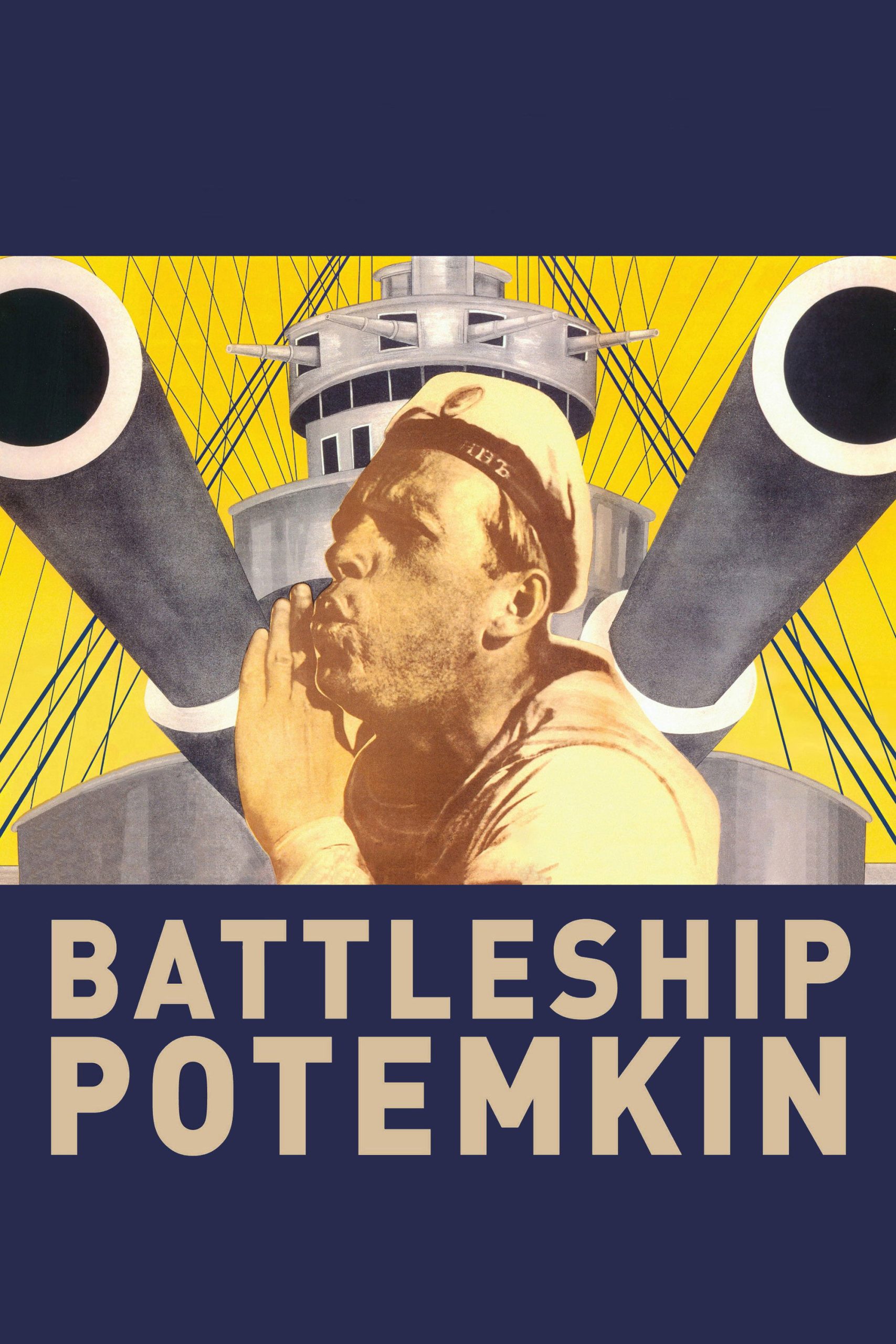
What the Film Is About
When I first watched Battleship Potemkin (1925), I was immediately struck by how the film propels its audience into a world where the emotional stakes are felt in every frame. For me, the film’s high-level story isn’t just about a crew’s mutiny; it’s a visceral expression of collective outrage, dignity under siege, and the ignition of hope in the face of institutional brutality. I felt deeply invested in the tension that builds on the ship, as private injustices burst into public rebellion. Eisenstein’s narrative moves with the pulse of revolution, carrying the viewer along an arc that is as much emotional as it is historical.
Rather than simply guiding me through a linear plot, Battleship Potemkin asks me to witness the eruption of societal conflict—something that resonates on both individual and communal levels. The film’s emotional journey compelled me into the swirling emotions of its characters: humiliation, fear, moral outrage, and finally, the exhilarating if uncertain, rise of hope. All of this unfolds with a clarity of intent that transcends its immediate setting, sweeping me into a meditation on how deeply human beings yearn for justice and recognition. What I found most striking is the film’s blend of palpable anger and unwavering compassion—qualities that inform its enduring power.
Core Themes
Looking back on this film, I’m continually impressed by how Eisenstein explores the theme of collective action. For me, the heart of Battleship Potemkin isn’t in the mechanics of revolution, but in the portrayal of solidarity—how ordinary people, pushed to their limits, find the courage to unite against systemic oppression. This is most evident in the way the sailors look out for each other, refusing to be divided by fear or violence. I see the film as a study in moral awakening, showing how once the idea of freedom takes root in a group, it becomes unstoppable, regardless of the cost.
Another theme that never fails to strike me is the nature of institutional power and its tendency toward dehumanization. I felt that the film is unsparing in its depiction of authority figures—officers, Cossacks, and an indifferent medical examiner. In their hands, the machinery of the state is exposed as both bureaucratic and cruel. Eisenstein’s approach doesn’t simply vilify individuals; instead, he shows how systems—even traditions meant to maintain order—can become instruments of horror when they stifle empathy.
Watching from a modern perspective, what surprises me is how remarkably contemporary these themes feel. Released at a time of political upheaval and revolution in Russia, Battleship Potemkin tapped directly into the anxieties and hopes of its own era. Yet even today, as conversations about authority, protest, and human rights continue, I find the film’s message urgently relevant. It’s a meditation not only on how power corrupts but on how courage and unity can be born from shared suffering. These are questions that societies everywhere still grapple with, and I find myself returning to this film whenever the dynamics of power and protest resurface in our present moment.
Symbolism & Motifs
My lasting memory of Battleship Potemkin is anchored in its use of potent visual symbols. I can never forget the recurring motif of the ship itself—at once a microcosm of Russian society and a symbol of resistance. For me, the Potemkin embodies a transition, transformed from an instrument of the Tsarist regime into an emblem of hope and collective agency. The silhouette of the ship cutting through the water mirrors the trajectory of revolution: uncertain, but determined.
The motif of food—specifically, the rotten meat—is equally unforgettable. My interpretation is that the maggot-ridden meat signals more than just sailors facing physical deprivation; it’s a metaphor for the corruption at the heart of authoritarian rule. The camera lingers on this image, inviting me to reflect on deeper questions about what is tolerable, what is poison, and what catalyzes outrage. The act of refusing the meat becomes, in my eyes, a moment of moral refusal and an assertion of basic humanity.
I also find the film’s use of the sea to be rich with meaning. The vast, indifferent ocean framing many sequences hints at both isolation and possibility. For me, it’s a dual symbol—representing the daunting scope of the sailors’ struggle, but also the boundlessness of collective dreams. When the camera looks out onto the endless horizon, I sense both the threat and the promise contained within revolutionary moments.
Finally, no discussion of Eisenstein’s visual language is complete without mentioning stairs—particularly in the Odessa Steps sequence. To me, the flight of stone steps becomes a symbol of the social ascent and descent faced by the masses. The steps are simultaneously a connection (binding people in common experience) and a trap (amplifying vulnerability in the face of mechanized violence). The repeated images of feet, wheels, and movement reinforce for me the inexorability of history; there are moments when it seems nothing can stop a people in motion, for better or worse.
Key Scenes
Key Scene 1
For years, I’ve returned again and again to the moment when the sailors, ordered to execute their own comrades, refuse to shoot. That sequence crystallizes everything the film means to me. The tension on their faces, the silent flinches, and the surging wave of noncompliance—these details evoke the internal battle between conscience and fear. In my experience, this is the scene where Eisenstein’s commitment to collective subjectivity is laid bare. The camera doesn’t just observe; it aligns my sympathies with the sailors, making me feel the moral gravity of their decision. This scene stands as a testament to the possibility of saying “no” in the face of overwhelming pressure and brutality. For me, it’s the emotional fulcrum of the film—where humanity reasserts itself against faceless authority.
Key Scene 2
The massacre on the Odessa Steps is, without a doubt, among the most harrowing visual poems I’ve ever witnessed in cinema. What I take from this iconic scene isn’t simply an indictment of violence, but a meditation on the ways in which innocent bodies are caught and shattered by historical forces beyond their control. The close-ups of boots, terrified faces, crumpling bodies, and—unforgettably—a baby carriage careening down the stairs, have haunted me long after viewing. Here, Eisenstein makes abstract brutality concrete, forcing me to reckon with the cost of apathy and the collateral damage of authoritarian rule. The sequence redefines the mass as both victim and potential agent—a group whose suffering must not be dismissed as mere background noise. I read the Odessa Steps as Eisenstein’s warning: power unchecked will always find a way to trample the defenseless.
Key Scene 3
For me, the final approach—when the fleet meets the Potemkin and the expected confrontation dissolves into solidarity—operates as both climax and thesis. I remember holding my breath, expecting violence, only to witness an extraordinary moment of collective recognition. The lowering of the flags, the swelling of music, the exchange of salutes: these are, for me, cinematic shorthand for a revolution’s most fervent hope. In this conclusion, Eisenstein insists not on the inevitability of violence, but on the possibility of connection and mutual support among the oppressed. The gesture of unity is not naïve; it’s hard-won. For me, this is the most resounding affirmation of the film’s vision—a testament to the contagiousness of courage, and the fragile, beautiful possibility that ordinary people, when faced with injustice, might choose alliance over annihilation. The film leaves me contemplative, hovering between the pain of loss and the exhilaration of collective hope.
Common Interpretations
Over time, I’ve come to see that Battleship Potemkin is one of those rare films whose meaning continues to unfold across generations. Most critics view it as a masterwork of political cinema—a revolutionary call-to-arms, designed not just to depict history but to shape it. I often encounter interpretations that emphasize the film’s function as propaganda: Eisenstein’s manipulation of montage, his carefully composed visual grammar, and his stylized approach to emotion make the film an effective tool of persuasion as much as a work of art.
However, in conversations with cinephiles, I’ve come across more nuanced readings. Some see the film’s depiction of violence—particularly in the Odessa Steps sequence—not solely as a condemnation of Tsarist repression, but as a broader reflection on the cyclical nature of revolution. The idea that history itself is a series of interlocking human tragedies, propelled by courage but never without cost, gives the film its tragic power. I’ve also heard thoughtful arguments that the film, while overtly collectivist and ideologically driven, creates moments of unexpected intimacy—close-ups that humanize the anonymous masses and linger on individual suffering, complicating easy readings about the triumph of the group over the individual.
I’ve noticed that modern viewers, especially those less familiar with Soviet history, tend to connect the film to a universal desire for dignity in the face of oppression. For them—and for me—Battleship Potemkin becomes less about revolutionary doctrine and more about the emotional truth of endurance, resistance, and renewal. I find the film’s endurance lies precisely in this capacity to mean different things: a rousing anthem, a cautionary tale, or a meditation on the endlessly complex nature of social change.
Films with Similar Themes
- Strike (1925) – I see clear parallels here: both films, made by Eisenstein, plunge deeply into themes of collective resistance and the human consequences of industrial exploitation. The motif of solidarity born from shared suffering is as pronounced as in Battleship Potemkin.
- The Grapes of Wrath (1940) – When I watch Ford’s adaptation, I sense the same commitment to documenting the struggles of “ordinary” people against vast, impersonal forces. The journey from despair to solidarity holds powerful resonance with Potemkin’s emotional arc.
- Z (1969) – Costa-Gavras’s incisive political thriller taps into the explosive energy of mass protest and the corrupting influence of authoritarian power, echoing many of Potemkin’s core themes.
- Matewan (1987) – Sayles’s labor drama has always reminded me of Potemkin in its portrayal of working-class unity forged in the furnace of economic and racial tension. Both films urge viewers to see dignity in resistance and the cost of standing together.
For more context before choosing your next film, these perspectives may help.
When I reflect on what Battleship Potemkin ultimately communicates, I come back to its vision of human nature as poised between despair and defiance. I am left contemplating how the film’s era—marked by revolution and the search for justice—still echoes in so many corners of the world. The film doesn’t pretend that unity is simple or that victory is inevitable. Instead, it speaks to the agony and necessity of struggle, the dignity of refusing to be complicit, and the possibility of shaping history through collective will. My experience of the film is always tinged with both awe and caution: I see in its frames not just a distant past, but a template for how people everywhere might respond when confronted by the machinery of oppression—with empathy, courage, and a fervent hope for renewal.
🎬 Check out today's best-selling movies on Amazon!
View Deals on Amazon