
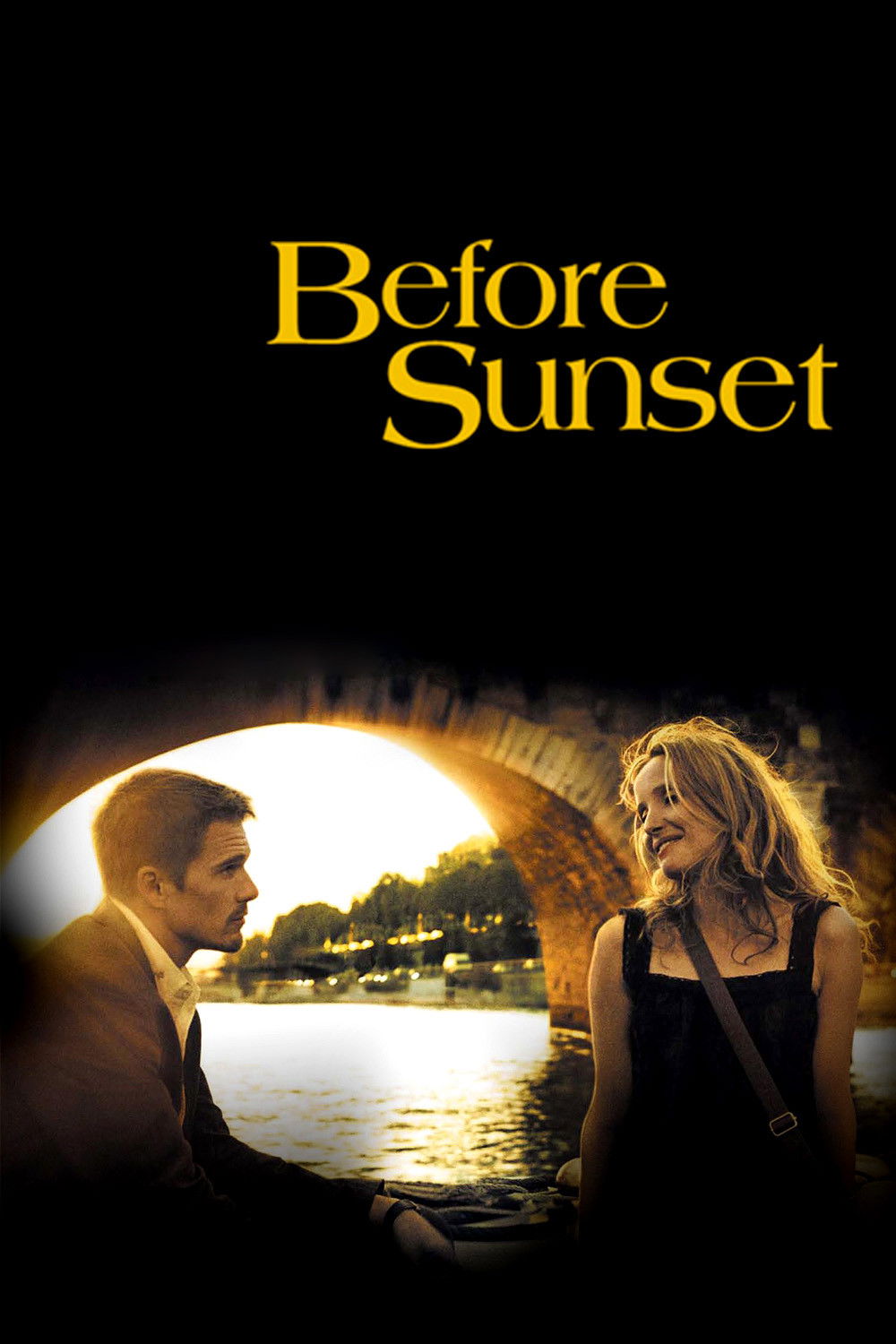
What the Film Is About
The first moments I spent watching “Before Sunset” left me with an intimate sense of suspended reality—like I was eavesdropping on a conversation I was never meant to hear, one rich with the weight of lost time and unrealized possibility. For me, the emotional journey is less about following Jesse and Celine’s literal walk through Paris, and more about observing the delicate dance of two souls who orbit each other—each haunted by roads not taken. The film carves out a world in which a handful of hours contain a lifetime’s worth of anticipation, regret, hope, and yearning.
What I find most compelling is not the surface-level reunion, but the underlying friction between memory and reality. Both Jesse and Celine have meticulously constructed internal myths about their earlier encounter; this film is their reckoning as those myths rub up against lived experience, raw disappointment, and the complex, grown-up compromises they now inhabit. The central conflict, to me, isn’t just whether they’ll seize a second chance—it’s whether true connection stands a chance against time, distance, and accumulated emotional baggage.
Core Themes
If there’s one thing “Before Sunset” insists upon, it’s that time is both an enemy and an ally. I always find myself acutely aware of the film’s ticking clock—not just within the narrative, but also in its philosophical underpinnings. The movie interrogates the gap between the person we meant to become and the one we ended up being. Its conversations constantly circle around regret: the regret of paths not chosen, words not spoken, and moments missed. To me, it’s a film about the way we mythologize our past, especially in the realm of love, and about the profound courage required to confront those myths as an adult.
I’m riveted by “Before Sunset’s” exploration of authenticity and vulnerability. The intimacy between the characters hinges not on grand declarations, but on small but hard-won truths—admitting disappointment, voicing unfulfilled dreams, allowing one’s flaws to be seen. These themes were particularly resonant in 2004, an era lurching toward a more global, interconnected culture while people’s personal lives, like those of Jesse and Celine, remained scattered and disconnected. The persistent ache of longing for genuine human connection still feels painfully fresh even today, making the film perennially relevant.
Love, in this film’s world, is never simple nostalgia. It’s muddied by reality, shaped by change, continuously under threat from habits and circumstance. Watching Jesse and Celine try to bridge the ever-widening gulf of their separateness, I’m reminded that “Before Sunset” isn’t about romance as an ideal, but about the almost unbearable beauty and risk of real emotional intimacy. It asks whether fleeting encounters can truly transform us, and whether we have the courage to rewrite our life’s trajectory, even as the shadows of routine stretch longer behind us.
Symbolism & Motifs
Every time I revisit this film, I’m struck by its relentless use of movement as a motif. Nearly every significant exchange takes place while walking—along the Seine, through bookshops, and under the shifting Parisian sun. It creates an environment where time itself is in flux, and where the progress of conversation directly mirrors inner transformation. For me, these walks symbolize more than travel; they reveal how emotional journeys are rarely linear. Jesse and Celine circle ideas, double back on memories, and sidestep painful admissions, all reflected in the literal meandering through the city.
Another motif that stands out to me is the constant presence of clocks and the encroaching darkness as the sun sets. The film repeatedly frames the narrative against the ticking of a clock—every exchange underscored by the knowledge that time is running out. This is not just a practical constraint but, in my reading, a metaphor for the relentless forward motion of life. Each minute lost is irreplaceable, every hesitation carries its own cost. The setting sun itself becomes a symbol: a benediction, a warning, and perhaps an opportunity for renewal.
Perhaps the most subtle yet poignant motif is that of storytelling. Both Jesse and Celine reinterpret their past meeting, often contradicting or reshaping their memories. It’s a film that gently interrogates the line between memory and fiction, hinting that the most important stories we tell may be the ones we rewrite in order to make sense of regret, longing, and love. I find myself wondering, each time, if their connection is more real in the remembering than it is in the moment, and what that says about the narratives by which we steer our lives.
Key Scenes
Key Scene 1
The conversation in the riverside café always catches me with its unvarnished vulnerability. Here, Jesse and Celine finally begin to break through the layers of polite curiosity and old inside jokes. As the coffee cools, they begin exposing the disappointments of adulthood—the ways in which marriage, work, and daily routine have subtly betrayed their youthful aspirations. The air thickens with not only nostalgia, but a palpable sense of “What if?”
In my eyes, this scene is less about the details of their confessions and more about the courage it takes to articulate unmet needs to another human being. I sense a kind of healing in their willingness to let their guard down, even if only for a shared afternoon. The café becomes a crucible for honesty, and the film’s belief—that true connection comes from shared vulnerability—feels achingly clear.
Key Scene 2
For me, the drive through Paris in the backseat of Celine’s car is one of the film’s most devastatingly honest moments. Here, the conversation starts to slip from flirtation into confrontation. Their playful banter dissolves into raw, sometimes awkward admissions of loss and dissatisfaction—both with themselves and with the choices they’ve made. I’m always haunted by the mounting sense that the possibility for happiness (with each other or elsewhere) is slipping through their fingers.
It’s in this confined space—trapped together in a moving car—that the film’s central themes of regret and accountability crystallize. I see it as a metaphor for adulthood: the plans we set in motion often carry us along in directions we never quite intended. As Jesse and Celine trade confessions, I realize how acutely the film understands that real intimacy often requires facing uncomfortable truths. This is where the film challenges its own romantic promises, reminding me that honesty is the only antidote to a life lived by rote.
Key Scene 3
Every viewing, I wait for the quiet intimacy of the final apartment scene, where the boundaries of time and social convention seem to melt away. Celine’s impromptu dance, the lazy, playful charm in her movements, and Jesse’s lingering at the edge of the night, all build toward an emotional crescendo. The scene is almost anti-climactic in its subtlety; nothing is definitively resolved, yet everything changes.
To me, this ending represents a radical openness—to possibility, to self-forgiveness, to love that refuses to fit a schedule or a plan. The famous refrain—“Baby, you are gonna miss that plane”—has always struck me as a gentle refusal to be governed by timetables, to assert the value of savoring the moment despite looming obligations. In this quietly charged atmosphere, I believe the film quietly insists that what matters isn’t the grand gesture, but the decision to stay, to be present, and to let go of the scripts we thought were written for our lives.
Common Interpretations
Across essays, reviews, and long conversations I’ve had with other film lovers, there’s a general consensus that “Before Sunset” is a meditation on second chances and the enduring hope for meaningful connection. Many viewers interpret the film as a realistic counterpoint to the idealism of young love—the first film’s magic is tempered by the complications of adulthood, yet the possibility that love can survive (or even be rekindled) isn’t dismissed, only rendered more fragile and precious by time.
I often encounter the reading that “Before Sunset” is primarily about regret: the way our decisions echo and accumulate, and how the ache of the unrealized can haunt even the most seemingly content lives. Others notice a thread of existential anxiety running beneath the romance, especially in the way Jesse and Celine wrestle with authenticity and self-delusion. I find it especially resonant that many critics see the film as a study in honest conversation—how rare, risky, and ultimately transformative it can be to truly express oneself, even when the outcome is uncertain.
Of course, not everyone leaves with the same emotional takeaway. Some see the ending as hopeful, a stolen reclamation of individual agency against the tyranny of routine. Others detect a bittersweet resignation: that even with all their clarity, Jesse and Celine are ultimately prisoners of their circumstances and patterns. I find myself toggling between those views, depending on my own mood—and it’s that openness, that refusal to flatten life into neat conclusions, that gives the film such a persistent hold on me.
Films with Similar Themes
- “Lost in Translation” (2003) – I see this film as a meditation on fleeting, transformative connections formed in the midst of adulthood’s confusion and alienation. Both films use a city’s ambiance to underscore the ephemeral beauty of brief encounters.
- “In the Mood for Love” (2000) – This film resonates with me in its exploration of longing, emotional restraint, and the tension between societal expectations and private desire, much as “Before Sunset” explores what cannot be openly spoken.
- “Her” (2013) – I connect these two films in their nuanced portrayals of how technology and modernity reshape the nature of intimacy, and in their underlying yearning for authentic connection despite layers of mediation and distance.
- “Once” (2007) – Like “Before Sunset”, it captures a sincere, grounded portrait of two people whose lives briefly intersect, articulating how music, conversation, and shared vulnerability become vehicles for transformation.
When I step back from “Before Sunset,” what lingers is its insistence that the search for meaning isn’t about chasing grand epiphanies or perfect resolutions. Instead, the film gently but persistently urges me to recognize the extraordinary within the ordinary: that the contours of a single afternoon—its confessions, small silences, and hard-won laughs—can become a crucible for self-reckoning and change. In a society captivated by speed and certainty, “Before Sunset” reminds me of the enduring power of slowing down, listening closely, and daring to be seen. It’s as much a love letter to the messy, inconclusive nature of real life as to Paris itself—ultimately communicating that the courage to connect, even imperfectly, is the most meaningful act we can hope for.
For more context before choosing your next film, these perspectives may help.
🎬 Check out today's best-selling movies on Amazon!
View Deals on Amazon