
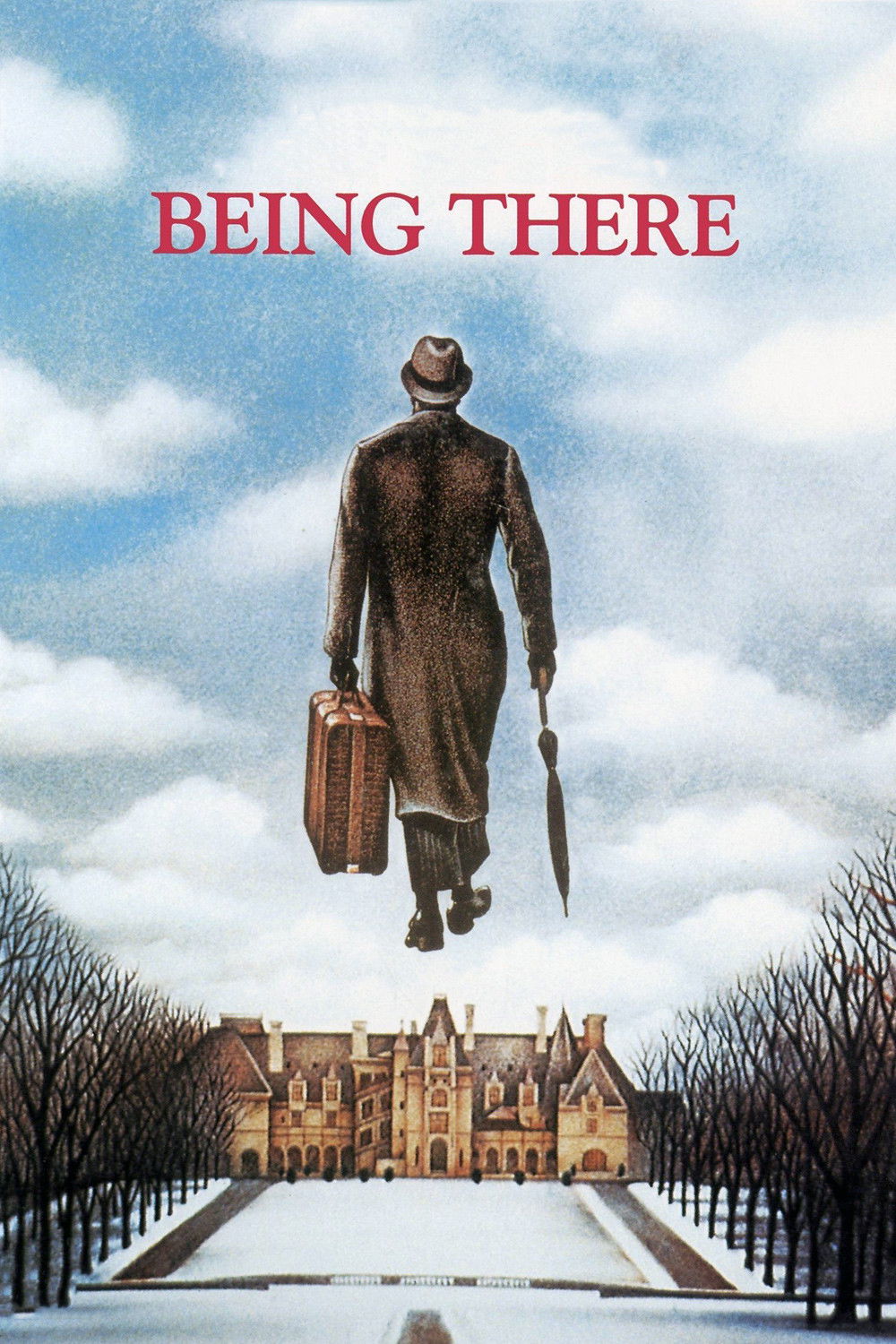
What the Film Is About
The first time I saw “Being There,” I was struck by a peculiar quiet in its emotional register—an unsettling sort of calm. At its core, I experienced the film as an odyssey of a truly passive soul, Chance, who walks through chaotic, ambitious Washington society largely unaffected by the turbulence around him. There’s a central conflict here that I felt deeply: the gulf between perception and reality. The narrative follows Chance’s journey, but emotionally, the story is about how others weaponize innocence for their own ambitions, and how sincerity can echo powerfully in a world addicted to surface and spectacle. The entire film seems to orbit Chance’s stillness, creating a strange tension between emptiness and the desperate meaning-making of those around him.
What gives the narrative such momentum, I think, isn’t action as much as implication. The film quietly dares us to ask: when a man has no inner agenda, what happens when society mistakes neutrality for genius? As I watched, I found myself unsettled by how quickly identity is projected onto blankness. Watching Chance’s rise was like watching a parable unfold in slow motion—one that reveals as much about the observers as it does about the observed.
Core Themes
On the surface, the film’s premise feels almost built for dark comedy, but what grabbed me by the collar was how “Being There” interrogates the difference between authenticity and performance. The story’s central preoccupation, in my view, is the absurdity of status and the emptiness of public discourse. I find myself continually returning to how the film takes aim at the machinery of power—political, economic, even social—and reveals how little of it rests on substance. It’s satire, yes, but also a melancholy meditation on the irrelevance of depth in a world governed by image.
Another theme that resonates is alienation. I found the film brought to the fore my own discomfort with the way people talk past one another, each hungry to hear only what confirms their hopes or biases. Chance, by virtue of his guileless literalism, exposes exactly what happens when communication is emptied of meaning and replaced by projection. This was especially relevant in 1979, when the United States was reeling from political scandal and shifting toward image-driven leadership. Watching today, I feel it resonates even more in our age of social media, where performance often trumps reality, and shallow utterances can skyrocket someone to influence.
The film’s dry wit underscores the tragedy of how society fails its outliers. To me, “Being There” is a warning disguised as a joke: beware the collective hunger to find meaning in emptiness, and the ways systems reward the blankest slate with the grandest expectations. It is also a quiet, damning comment on the fragility of identity—a subject I find as relevant to the individual as to society.
Symbolism & Motifs
I can’t watch “Being There” without feeling that every image, every bit of set design, is charged with significance. The motif of the garden dominates for me, functioning less as a setting than as a recurring metaphor. Gardening, in Chance’s mouth, becomes a spiritual principle and a currency of wisdom—ironic, since it’s devoid of intentional profundity. I see every mention of tending, pruning, and waiting as a stand-in for larger themes of growth, patience, and the cyclical nature of power.
Television is another vital motif throughout. I always read the incessant presence of TVs as a symbol of mediation—a lens that shapes, distorts, and sometimes replaces actual experience. Chance absorbs everything through a screen, so his worldview is assembled from fragments of other people’s realities. In this, Chance becomes both a product and a mirror of a society that prefers simulacra to substance. There’s something deeply unsettling about the way scenes are framed through TV screens, subtly underlining the performative, staged quality of life in politics and elite circles.
Even Chance’s name is symbolic. That play on ‘chance’ and ‘change’ reminds me, each time I consider it, of the randomness that governs who rises and who falls. His very presence exposes the largeness of accident and coincidence in social mobility. The film’s recurring use of double meanings, particularly around garden and gardening, calls to mind the dangers of willful misinterpretation, as people grab hold of simple statements and use them to craft a grand narrative where none truly exists.
Silence and stillness, as motifs, carry surprising weight. The film’s use of long pauses and slow pacing draws me into its contemplative space—almost forcing viewers to confront how much interpretation they bring to any void, whether conversational or visual. To me, these moments are the film’s way of asking: what do we hear, and what do we invent, when we’re faced with an unfilled canvas?
Key Scenes
Key Scene 1
The moment where Chance appears on television for the first time always stays with me. I view this scene as the heart of the film’s message: the transformation of a nobody into a sudden authority, powered only by the alchemy of mass media. There’s an odd tenderness to his performance, but also a deeply satirical edge—everyone hears brilliance, while I’m acutely aware that Chance is simply repeating garden platitudes. The weight of collective projection is on full display. I always feel a kind of horror under the comedy: the real possibility that public discourse doesn’t require substance, only a blank canvas and a platform.
Key Scene 2
Another scene I return to often is one in which Chance, mistaken for an economic sage, offers his view on the seasons in the garden. The way the gathered powerbrokers hang on every word, mining for esoteric insight, underlines the film’s satiric core. What’s fascinating is how this moment lays bare the anxiety of those in power. They’re so desperate for vision and answers that they’ll anoint anyone who offers a reassuring metaphor, no matter how vague or accidental. For me, this isn’t just a critique of government or elite institutions—it’s a mirror held up to anyone who seeks wisdom from empty vessels simply out of fear of uncertainty.
Key Scene 3
The film’s final scene—Chance wandering out onto the surface of the water—has haunted me for years. It feels dreamlike, almost supernatural, and strikes me as a final, poetic comment on the interplay between appearance and reality. People want to see a miracle; they find one. Is this an elevation beyond the physical, or just elegant fakery? My own interpretation is that the film ends with a sly wink at the ways mythmaking overtakes observation. The image of Chance literally walking on water collapses the border between real and constructed identities, suggesting that, in the end, society’s need for hope or spectacle can elevate the most ordinary among us to places they neither understand nor desire.
Common Interpretations
When I discuss “Being There” with others, I’m always intrigued by how polarizing its message can be. Many critics view the film as a scathing indictment of modern politics, highlighting the idea that those in power are often chosen less for their insight than for their appearance or perceived aura. My own reading runs parallel to this, but I also see the film as mournful—a lament that straightforwardness is so rare it can be mistaken for genius.
Another prevalent interpretation is that “Being There” is a critique of television culture, specifically the way media creates heroes and thought-leaders out of blank slates. I see this as especially resonant today, where fame is often bestowed on those who are best at projecting the image the audience craves. Some viewers, though, see Chance’s innocence as a force for good, a kind of holy fool who disarms corruption through guilelessness. Personally, I find this a less convincing read: Chance doesn’t subvert the system, he simply exposes its emptiness by thriving within it without even trying.
There’s also a smaller camp that sees the film as an existential fable—an exploration of the meaninglessness of life and the arbitrary nature of roles. I share a degree of sympathy with this view, especially when reflecting on how randomly Chance is elevated and adored, possessing no ambition, agenda, or true agency in his rise. Ultimately, what I return to most frequently is the unsettling reflection the film offers of its audience—our own complicit desire to assign meaning, import, and prophecy where perhaps only accident exists.
Films with Similar Themes
- Network (1976) – For me, this film shares a critique of media culture’s elevation of spectacle over substance, portraying a world where authenticity is less important than television ratings and sound bites.
- Forrest Gump (1994) – I notice echoes here in how an “innocent” character is interpreted by society at large, their simple remarks refracted into profound (or at least convenient) wisdom, exposing collective desires and delusions.
- Dr. Strangelove (1964) – While more overtly satirical, I interpret this as another film that unearths the absurdity at the heart of leadership, questioning whether competence or merely projection guides those at the top.
- The Great Dictator (1940) – Chaplin’s classic, in my eyes, tackles the perils of performance and mistaken identity within spheres of authority, challenging the audience to recognize both the danger and the hollowness of such confusions.
Sitting with “Being There” after all these years, I find it impossible to separate the film’s central message from the era it was made in—1979 America, just out of Watergate and teetering on the edge of the Reagan Era. The film, through its humor and hush, invites me to re-examine not just how leaders are chosen, but why we are so eager to find saviors where none exist. “Being There” does not offer answers or solutions. Instead, it leaves me dwelling on the uncanny capacity of society to build myths around nothing at all—and on the gentle, persistent melancholy that comes from watching people mistake their own yearning for truth.
If you’re deciding what to watch next, you might also want to see how this film holds up today or how it was originally received.
🎬 Check out today's best-selling movies on Amazon!
View Deals on Amazon