
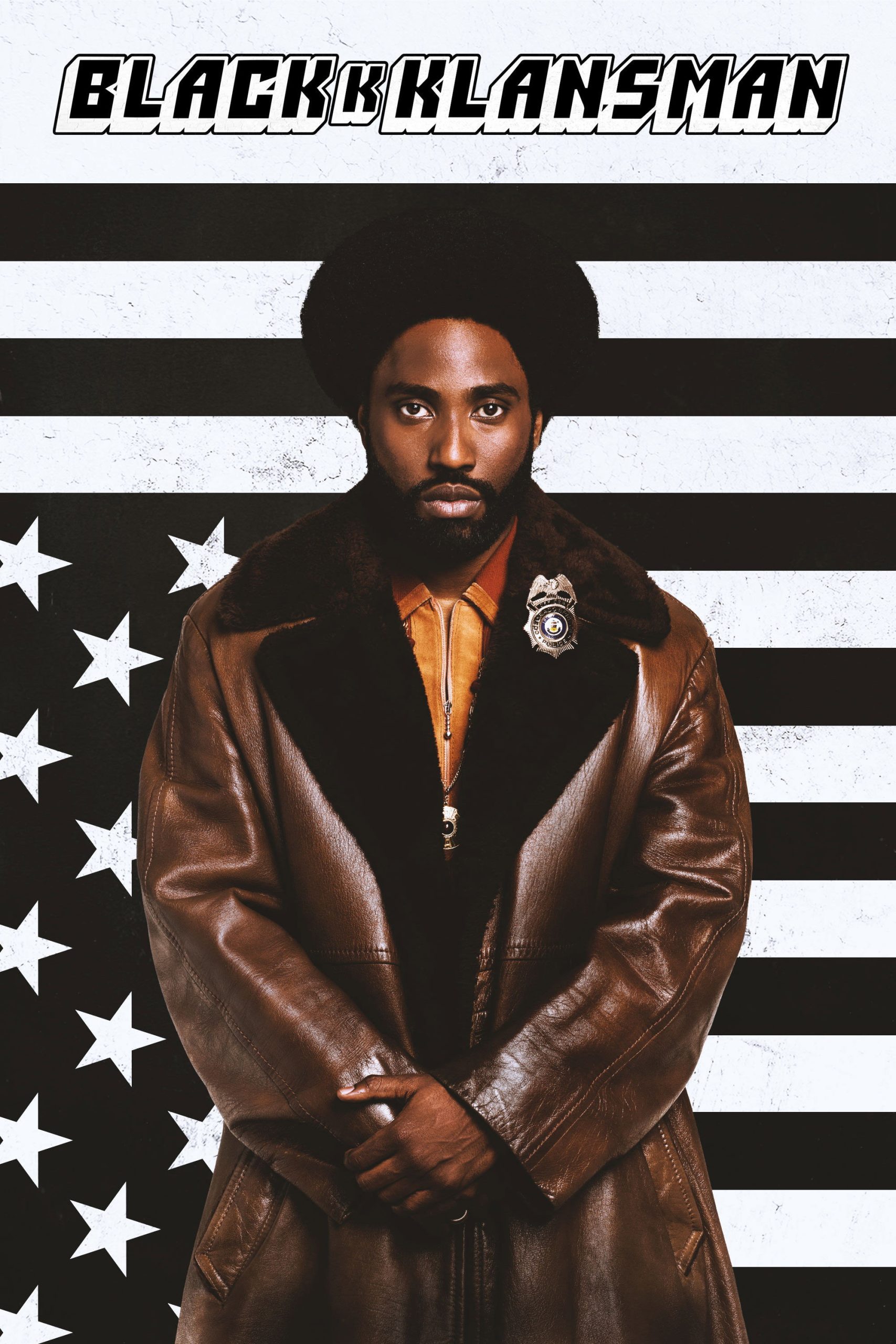
What the Film Is About
There are films that wash over me, and others that seem to grab me by the lapels and demand I pay attention. BlacKkKlansman belongs unmistakably to the second camp. To me, the film is less about the specifics of one police investigation in the 1970s, and more about the jagged, uneasy intersection between identity, power, and truth in American life. On its surface, it’s about a Black detective who—against all odds and absurdities—infiltrates the Ku Klux Klan. But beneath the punchline-level pitch lies a deep, uncomfortable tension between who we are publicly and privately, and what we’re willing to do to confront the systems that shape us. It’s a film that kept me shifting in my seat, not just with suspense, but with the uneasy recognition of how little has really changed.
I felt the journey through this film was one of constantly shifting standards: Who is allowed to belong? Who is protected by institutions? And how do moments of righteous defiance sit alongside moments of dark comedy or heartbreak? The narrative moves with an energy that feels both angry and satirical, but at its core, I sensed a kind of exasperated hope—if not that things will change easily, then that they can at least be faced head-on, even when the odds seem impossibly long.
Core Themes
What struck me most about BlacKkKlansman was its direct engagement with the idea of identity—how it’s both a shield and a weapon within the machinery of society. The film digs into the messiness of dual identities: the protagonist’s life as both a Black man and a police officer (an institution historically fraught with racism), and the act of literally “passing” on the phone as a white supremacist. For me, the theme of code-switching isn’t just a clever narrative device; it’s the emotional engine of the story, reflecting the compromises and masks minority communities still wear for survival and resistance today.
Another theme that kept surfacing in my mind was the insidious endurance of systemic racism. The Klan isn’t portrayed simply as a fringe cult; I was unsettled by how the film shows their thinking echoing throughout the halls of power, law enforcement, and the everyday cultural conversations. To me, the film’s humor doesn’t soften this—it sharpens it, framing the Klan’s delusions as both laughable and terrifying. Watching this in 2018, in the wake of renewed white nationalist visibility and debate over police violence, I felt the film speaking with a sense of urgency, as if shouting through the screen: “Don’t kid yourself. This is not just history.”
There’s also a throughline about allyship and complicity. I kept returning to questions the film poses—sometimes overtly, sometimes slyly—about what it means to “help” from within a broken system. Can reforms come from the inside, or does participation inevitably mean compromise? I don’t think the film hands out easy answers, and as someone who’s spent a lot of time interrogating my own position within systems of privilege and resistance, I found its ambiguity pointed and affecting.
Symbolism & Motifs
Spike Lee’s attention to visual and verbal motifs is one of the things I always look forward to, and in BlacKkKlansman, these elements hit with both subtlety and force. The recurring use of old film reels—be it the grotesque spectacle of Birth of a Nation or the contrasting beauty of Black Power speeches—stuck with me as a way of showing how white supremacy has long staged itself for the masses. The camera lingers on faces in the audience, drawing my attention not just to the individuals, but to the act of watching itself: Who is being seduced by this narrative? Who is bearing witness to it?
Uniforms also function as a motif that’s impossible for me to overlook. Whether it’s a police badge or a Klan robe, these symbols flatten the humanity of those who wear them, reducing people to roles in a larger drama. For the protagonist, the constraints—and ironies—of each uniform run deep. The badge offers a measure of legitimacy, but one that’s always qualified; the Klan robe, even more so, represents the faceless machinery of hate yet is paradoxically easy to infiltrate if your voice and story fit the script. I found myself thinking about how uniforms invite us both to perform and to hide, and what it costs to take them off.
There’s an unmissable motif of duality throughout—split screens, mirrored conversations, and coded language—that to me reinforce the idea that America’s racial line is never as clear or fixed as people would like to believe. Each echo between past and present, each visual rhyme, asks whether history is really just repeating, or if it’s actually a single ongoing refrain.
Key Scenes
Key Scene 1
The scene that has stayed with me most was the retelling of the lynching of Jesse Washington, recounted by Harry Belafonte’s character. For me, this moment stopped the narrative cold in the most intentional, necessary way; it is not a deviation from the story, but in many respects, its moral and emotional center. The slow, deliberate pacing—a contrast to the kinetic energy of the rest of the film—forced me to confront the horror and historical reality behind the abstractions of “hate” and “racism.” Hearing the brutality described calmly, over photographs, while the Klan’s festivities play out in parallel, made it impossible for me to see racism as simply an individual failing. The trauma runs systemic and deep. This scene does not let the viewer off the hook. It forced me to sit in discomfort, to listen, and to consider whose stories often get sanitized or lost in national memory.
Key Scene 2
The sequence of the protagonist making contact over the phone with Klan members, and his white partner then donning his persona in person, strikes me as a perfect distillation of the film’s take on performativity and the absurd dangers of racial passing. The tension is almost farcical, but the stakes are deadly serious. This doubling—one man’s voice, another’s body—brings home for me the surreal calculus non-whites often face: how to be “acceptable” in one context and “genuine” in another. I was left wondering not just about the external risks of being discovered, but about the psychic toll of living bifurcated lives. In this scene, identity isn’t stable; it’s an act, a mask, a thing negotiated line by line, gesture by gesture. The film, I think, is making us reckon with how every institution—policing, white supremacy, even friendship—demands a form of role-play, and that the price of slipping out of character is sometimes violence or erasure.
Key Scene 3
The ending sequence, which abruptly moves from the 1970s narrative into footage from contemporary American protests and rallies, hit me like a dash of ice water. This montage doesn’t so much resolve the story as confront me with its persistence. Any hope or catharsis I’d built up over the previous two hours is disrupted by the unmistakable message: “This is now.” As someone who’s watched countless movies about racism that neatly compartmentalize the past from the present, I found this break deeply affecting. It demands that I reflect on complicity—not as a spectator of history, but as a participant. The film’s refusal to tie things up with a bow feels like a final statement on the dangers of complacency. In forcing the connection between past and present, Lee all but dares me to ask myself what I’ll do about it once the lights come up.
Common Interpretations
In my discussions and readings, it’s clear this film lands differently depending on viewers’ perspectives, but there are a few strong threads. Many critics see BlacKkKlansman as a searing indictment of American amnesia—the tendency to treat white supremacy as some distant, resolved issue. For them, the film’s most daring argument is that history isn’t just haunting us; it’s alive and mutating in the present. I share this interpretation, feeling that the final montage in particular punctures any daydreams about progress being a straight line upward.
Others focus on the film’s use of satire and humor. I have encountered interpretations where the absurdity and comic timing of the Klan infiltrations are viewed as a way to rob hate of its dignity—to expose its believers as not only dangerous but ridiculous. I found some of this analysis compelling because it challenges the mythic, almost cinematic power that hate groups often claim in the media. But I also sense that the humor is a double-edged sword, inviting laughter even as it underscores the horror lurking underneath. There are those who argue the humor is a kind of coping mechanism, a way to make the film’s hard truths explorable without numbing the viewer or lingering only in despair.
Still others have pointed out the ambivalence of the film’s message about institutional reform. The protagonist’s relationship with the police force is never uncomplicated, and I’ve read essays suggesting the film isn’t optimistic about the possibility for true systemic change—at least, not without a more radical reckoning. Personally, I feel the film raises the question of complicity versus resistance without ever fully resolving it, and I appreciate its willingness to leave me in that ambiguity rather than feeding me a neat answer.
Films with Similar Themes
- Do the Right Thing (1989) – I see thematic kinship in both films’ examination of race relations, police brutality, and community, though with different tones and narrative structures.
- Mississippi Burning (1988) – The investigation into racist violence by law enforcement draws a line to BlacKkKlansman, as both films grapple with the limits of institutional justice and the deep roots of hatred in American society.
- Fruitvale Station (2013) – This film, focusing on the lived reality of police violence against Black Americans, echoes the sense of unresolved grievance and institutional complicity that I found central to BlacKkKlansman.
- Get Out (2017) – I was reminded of this film’s use of genre (horror/satire) to dissect racism; both films blend elements of humor and anxiety to confront the enduring psychological weight of white supremacy.
Reflecting on what BlacKkKlansman leaves me with, I’m most moved by how it refuses anyone—audience or characters—the comfort of certainty. Its message for me is not about celebrating progress or wallowing in defeat, but about the relentless, exhausting struggle to name and confront the enduring poisons of racism, denial, and complicity. There’s both anger and hope here, interwoven into a portrait of America that feels, at once, painfully specific and uncomfortably universal. What I take away is a challenge: the work of truth-telling and solidarity is ongoing, and the choice to look away is never an innocent one.
For more context before choosing your next film, these perspectives may help.
🎬 Check out today's best-selling movies on Amazon!
View Deals on Amazon