
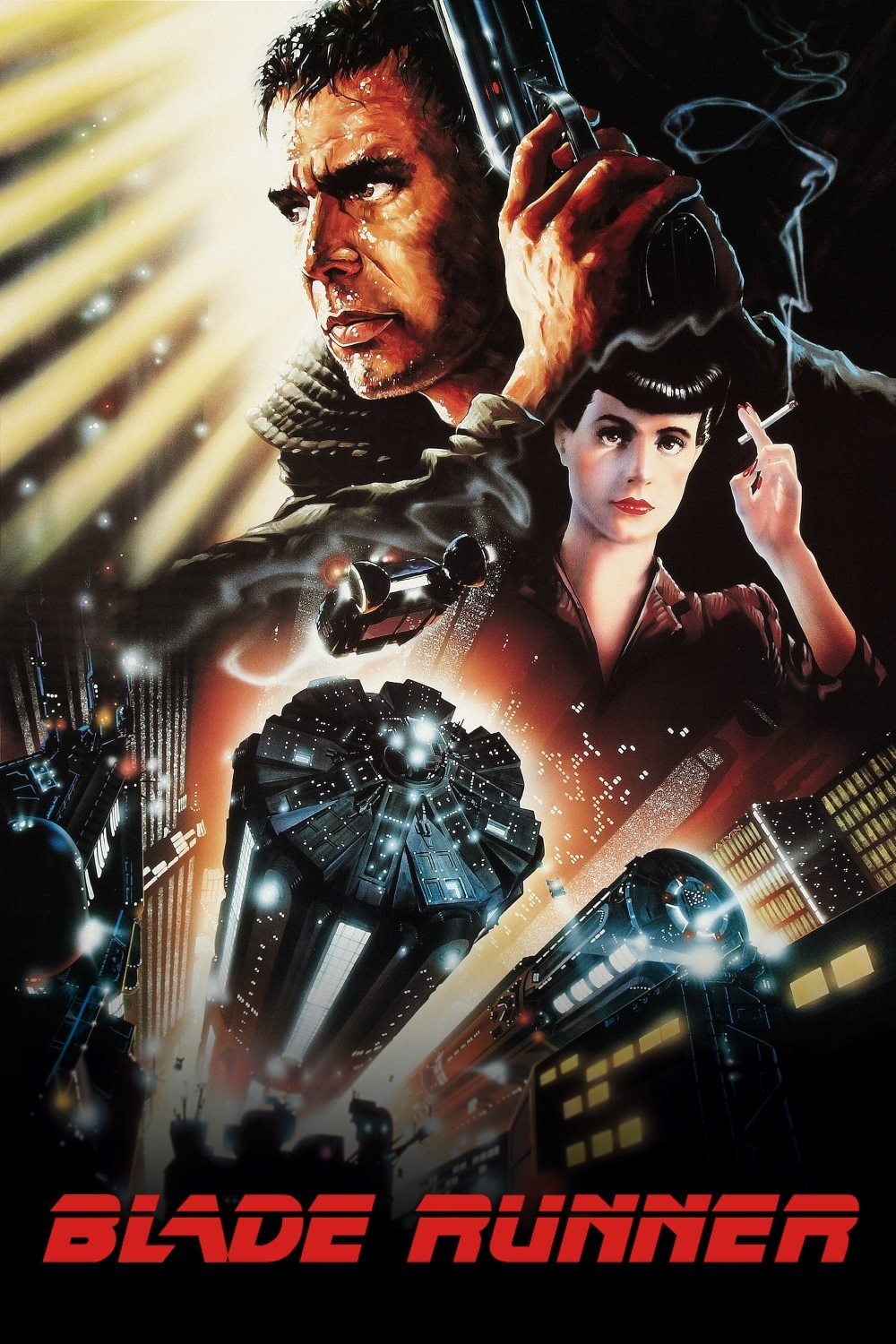
What the Film Is About
When I reflect on Blade Runner (1982), it feels less like a science fiction narrative and more like being dropped in the middle of a philosophical riddle—one where the answers are as ambiguous as the rainy neon-lit streets that define its haunting world. What drew me in was not just the idea of humanoid replicants running from their human creators, but the emotional turbulence lurking beneath every encounter. On the surface, the film is a chase: a burnt-out blade runner named Deckard must hunt down synthetic beings. But beneath that, I felt the real struggle was about the cost of consciousness, the burden of empathy, and the meaning of mortality, whether your cells are organic or assembled in a lab.
The beauty of Blade Runner, for me, is in how unrelentingly it explores the gray spaces: not just about what makes someone human, but whether the existential pain and longing of life are privileges or punishments. Watching it, I found myself less concerned with who lives or dies and more captivated by the film’s quietly desperate search for meaning—sometimes in the crumbling corners of its cityscape, often in the mournful eyes of both hunter and hunted.
Core Themes
What always strikes me most about Blade Runner is its tangle of themes that are as contemporary now as they were at the dawn of the 1980s. For me, the question of identity is the film’s deepest current: what, if anything, is at the core of a person? The replicants are assembled from code and flesh, yet their yearning to live, to love, and to be remembered resonates with a painful familiarity. When I watch Deckard’s interactions with them, I get the sense that identity is fragile and constantly shifting—a performance as much as an essence.
I also see a deeply embedded theme of empathy. To me, the film’s famous test for humanity—the Voight-Kampff—has always seemed more revealing about the people administering it than about those being tested. What does it mean that humans feel compelled to measure “empathy” scientifically? Are we less human for needing such instruments? This unease forms an undercurrent through every confrontation, pushing me to think about how society draws lines, and how easily those lines can be erased.
Mortality is another theme that implodes the boundary between creator and creation. The replicants’ artificially short lifespans force them to see every moment as precious, a feeling that I believe is almost inaccessible to those who think of themselves as immortal or invincible. The film provokes me to ask whether pain, loss, and impermanence might—paradoxically—be the stuff that makes existence worthwhile.
When I look at the world Blade Runner inhabits—overcrowded and alienating, obsessed with technological progress yet spiritually empty—I glimpse a prescient critique of my own era’s obsession with innovation at the expense of humanity. Back in 1982, this future must have felt chillingly close; now, decades later, it feels like prophecy. Environmental decay, urban solitude, surveillance—these are not just backdrops but woven into the film’s anxious meditation on the cost of unrestrained ambition. Even as decades pass, I continue to see just how personal these themes are for anyone feeling unmoored in an increasingly mechanized world.
Symbolism & Motifs
Every time I rewatch Blade Runner, the layers of symbolism seem to multiply rather than clarify. The motif that always lingers long after the credits roll is that of the eye. It dominates the opening shot of the city, glows in animal replicants, and serves as the key method for distinguishing human from non-human. Eyes in this film are not just organs of sight—they are windows into the soul, vessels of memory, and sometimes, instruments of judgment. I interpret the recurring focus on eyes as a challenge: can we truly see others, or even ourselves, for what we are?
Another motif that shapes my understanding of the film is the relentless rain and darkness pervading Los Angeles. The city’s perpetual gloom suggests, for me, a world in spiritual eclipse—one where boundaries between inside and outside, public and private, have all but collapsed. The rain is both cleansing and suffocating, echoing the internal anguish of those searching for meaning against impossible odds.
Animals also hold a significant symbolic weight. In a world where real animals are rare and precious, most that appear are artificial, just like the replicants themselves. When I see an artificial owl or snake, I’m reminded that nature—and perhaps innocence—has become commercialized, a luxury good in a society that has lost its sense of wonder. Animals, then, represent a yearning for authenticity and for connection to a more natural order that has been obliterated by human excess.
Finally, the origami figures left behind by Gaff serve as enigmatic breadcrumbs leading me through Deckard’s journey. For me, each folding—a chicken, a unicorn—mirrors the transformations taking place inside Deckard himself: is he brave, is he unique, is he more than what he appears to be? These small gestures speak volumes about identity and predestination, allowing me to endlessly ponder their true messages.
Key Scenes
Key Scene 1
For me, one of the most essential moments in the film is Roy Batty’s confrontation with his creator, Tyrell. There is a raw vulnerability in Batty’s plea for more life, even as he oscillates between violence and sorrow. What haunts me is not the spectacle of creator versus creation, but the way this scene distills the themes of mortality and rebellion into something deeply human. Batty’s desperate longing to live is so moving because it’s uncomfortably recognizable—an echo of every fear and wish that comes in the face of death. In this moment, I believe the film exposes the cruelty and hubris of playing god, yet also the tragic dignity of resisting one’s fate, however impossible that resistance may be.
Key Scene 2
Another scene that continues to unfold in my mind is Deckard’s Voight-Kampff test with Rachael. What strikes me here is not just the revelation of Rachael’s synthetic nature, but the emotional devastation that follows. I feel the test is less a scientific procedure and more like an existential cross-examination, one that subtly reveals humanity’s own insecurity. As Rachael struggles with the knowledge that her memories—and therefore her sense of identity—are implanted, I am forced to question whether any of us are truly the authors of our own pasts. The look in her eyes, confused and deeply wounded, reminds me that identity is always partly constructed, and perhaps our attachments to it are more fragile than we want to admit.
Key Scene 3
To me, the film’s true statement arrives in Roy Batty’s final monologue—his words in the rain, “All those moments will be lost in time, like tears in rain.” I return to this scene over and over, always finding new pain and new wonder in it. In his dying moments, Batty performs an act of compassion, letting Deckard live. It’s a stunning act—one that collapses the false binary between human and replicant. Watching it, I feel overwhelmed by the sense that individual experience, however fleeting, is what gives life its gravity. The meaning is not in the length of life but its intensity; not in origins, but in experience and the capacity for grace. For me, this is the film’s final, unforgettable truth.
Common Interpretations
Whenever I delve into discussions about Blade Runner, I’m always struck by the variety and richness of interpretations it inspires. Many see the film as a cautionary tale about the dangers of unchecked technological advancement and the possibility of losing our own humanity in the process. Others take a more psychological view, interpreting the replicants’ plight as an allegory for marginalized groups, forever striving for recognition and dignity in a world determined to keep them “other.”
Another thread I find compelling revolves around Deckard himself. I’ve encountered numerous debates: is Deckard a replicant? Does it matter if he is? For some, this ambiguity is central—the film intentionally dissolves boundaries, suggesting that our need for categorical answers is itself a kind of blindness. I resonate most, though, with interpretations that see Blade Runner as a meditation on the universality of mortality. Roy Batty’s quest for more life is, in the end, our own; if humanity is defined by anything, perhaps it is our shared confrontation with impermanence and the hope for meaning before the end comes.
Of course, the film’s environmental and social backdrop draws interpretations about consumerism, loss of nature, and the spiritual cost of progress. The city’s dense, multicultural crowds share space with those living on the margins, making the film feel like both a snapshot of urban alienation and a warning about inequality. For me, though, the heart of the film lies in its invitation to look at ourselves through the eyes of the “other”—to ask, over and over, what allows us to claim the gift (or curse) of being human.
Films with Similar Themes
- 2001: A Space Odyssey (1968) – I find this film deeply connected through its exploration of human evolution, artificial intelligence, and the nature of consciousness, even though its style is more visually abstract than conversational.
- Ghost in the Shell (1995) – For me, this Japanese anime revisits many of Blade Runner’s central themes: identity, artificiality, and the tension between technology and soul in a cybernetic, posthuman future.
- Her (2013) – I’m drawn to this quieter, more intimate story for its poignant meditation on loneliness, love, and the blurry lines between real and artificial emotions in a technologically saturated world.
- Children of Men (2006) – I can’t help but see echoes of Blade Runner in its depiction of a dystopian, emotionally stunted society, fraught with themes of hope, mortality, and the persistence of empathy against overwhelming odds.
When I step away from Blade Runner, what lingers most is its refusal to offer easy answers. Instead, it peels back the layers of what it means to exist—to search for warmth in a cold city, for identity in a world that prizes imitation, for grace in the face of annihilation. I find myself returning to its mysteries again and again, drawn by the suspicion that we are all, in some sense, wandering these rainy streets: longing to be seen, hoping to matter, and always, always reaching for meaning before our own “tears in rain” dissolve into memory. For more context before choosing your next film, these perspectives may help.
🎬 Check out today's best-selling movies on Amazon!
View Deals on Amazon