
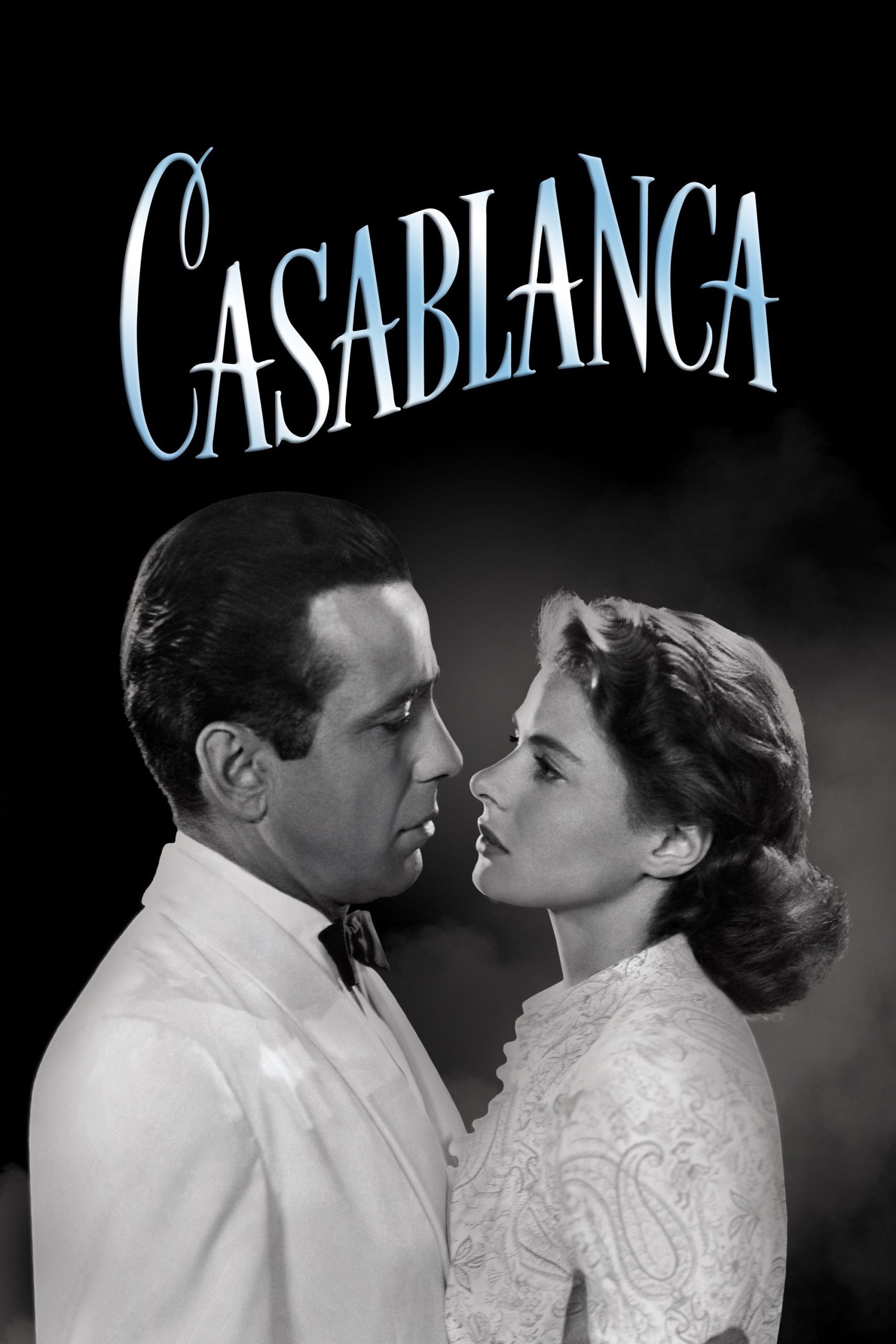
What the Film Is About
The first time I watched “Casablanca,” I remember feeling that it transcended the boundaries of genre. It was more than a love story, more than a war drama, and certainly more than just an old Hollywood romance. Even though the 1942 release date seemed impossibly distant from my own life, its emotional core felt immediate. The dusty Moroccan city, the shadowy interiors of Rick’s Café, the murmur of accents from everywhere in war-torn Europe—these details worked their way past nostalgia and planted a quiet sense of urgency in my chest. “Casablanca” is about the uncertainty and compromise of people caught in the machinery of history, but through the journey of its characters, I began to see it is really about the tensions between love and duty, self-interest and nobility, and the way history can press one’s private choices into service of something larger than oneself.
For me, “Casablanca” exists at the uneasy crossroads between personal longing and the responsibility to act for others. That crossroads is realized in Rick Blaine, who opens the film as a hardened exile, nursing wounds to his heart and pride in a neutral city, only to find himself torn by the unexpected return of Ilsa Lund. On every viewing, my attention drifts away from the broader war constructs and zeros in on these two: one shaped by resignation and the other by fierce hope, both shackled by their past. Yet, as an audience, we are not spared the larger climate: the thrum of refugees, the looming pressure of Nazi-occupied France, and the desperate maneuvers for salvation. Watching it, I am always reminded of how universal the question is: What do we owe to ourselves, and what do we owe to the world?
Core Themes
Over the years, I have found myself returning to “Casablanca” less for the romance and more for the complexity of its themes. Perhaps the most resonant theme for me is the interplay of sacrifice and moral ambiguity. Rick, Ilsa, and Victor Laszlo each navigate the tightrope where private desire meets collective necessity. There is no clear villainy or perfect heroism—only the hope that, by setting aside personal happiness, one might serve a cause greater than oneself. This tension feels especially poignant now, in a world still shaped by the aftermath of wars, occupation, and the search for asylum.
The film’s treatment of duty fascinates me. Every significant character faces a reckoning with what it means to do “the right thing,” but the path is never clearly marked. Rick’s apparent cynicism masks a deep well of hurt, but also an ability to act nobly when the situation demands it. I see in him both the allure and danger of neutrality—a warning against the seductive comfort of detachment, especially when others suffer. The city of Casablanca, caught between Axis and Allied influences, becomes a metaphor for perpetual limbo, where neutrality is impossible and every small decision is fraught with consequence.
Another enduring theme is exile—not simply in the physical sense, but existentially. Rick, Ilsa, and Laszlo are all exiles from their countries, their ideals, and their former selves. The transient community in Rick’s Café—filled with refugees, opportunists, and secret police—reminds me that the sense of belonging can be as fleeting as a forged visa. Yet, even as doors close and escape routes disappear, human connection persists. The thin line between trust and survival is everywhere in the film, and it leaves me wondering how I might behave when all certainties are stripped away.
Then, there is love, but not the untroubled kind. The love in “Casablanca” is blemished, burdened by regret and interrupted by history. It is not about getting what one wants, but accepting the limits of fate and time. The relationship between Rick and Ilsa, built on longing and thwarted by circumstance, has served as a personal metaphor for the bittersweet recognition that not all loves are destined to last. Their willingness to let each other go, for something larger than themselves, is heartbreaking but deeply moving. I can’t help but consider how rarely cinema depicts love as an act of relinquishing power—an act of willful, dignified sacrifice.
Symbolism & Motifs
Each time I revisit “Casablanca,” I am struck by its careful use of symbolism and recurring motifs that give further depth to its characters and the setting. For me, the most powerful symbol remains the Letters of Transit, those elusive documents that grant safe passage to Lisbon and ultimately freedom. They embody more than bureaucratic authority; they are hope itself—the dream of escape, salvation, and agency. To hold them is to hold one’s fate, and so much of the film’s tension coils around who possesses them, who deserves them, and at what cost.
Rick’s Café Americain itself is a motif and a symbol: a haven for the desperate, an island of apparent neutrality in a sea of chaos. But, as the film unfolds, I see it is also a crucible that forces everyone within it to confront their true allegiances. The décor, the shifting clientele, the music, and the constant negotiation reinforce how temporary all sanctuaries can be—neutral ground cannot last when the world itself is polarized.
The recurring image of passports, visas, and border crossings speaks to themes of freedom and restriction. Every character is, in some sense, a prisoner. The barriers to escape are emotional as much as physical. Watching Major Strasser wield his authority to deny visas, I felt the blunt reality of power: survival often depends on more than one’s cleverness or courage—it requires luck and, sometimes, mercy from the very people one cannot trust.
Another motif that often catches my attention is the use of shadows and light in the film’s cinematography. The play of light in Rick’s smoky bar draws sharp lines between safety and exposure, trust and suspicion. The shadows on Rick’s face as he debates his decisions suggest interior tumult, while the brightness on Ilsa in the Paris flashbacks highlights the clarity and happiness that have been left behind. These choices are never arbitrary, and they act on me less through intellect than emotion, pulling me into the characters’ private uncertainties.
Music, too, is loaded with resonance. “As Time Goes By” is more than a love theme; it is a refrain of inevitability and memory. Each time Sam plays it, I feel pulled backward and forward—reminded that, no matter how one tries, some moments imprint themselves forever on the soul. The song operates as a kind of emotional time machine, its melody carrying the ache of hope deferred.
Key Scenes
Key Scene 1
One scene that never fails to move me is the moment when Rick lets Ilsa board the plane with Laszlo. This sacrifice, so un-Hollywood in its refusal to unite the romantic leads, struck me as radical the first time I saw it. What resonates is not just the pain of letting go, but the admission that collective good can outweigh private happiness. Rick’s choice is not simply an abandonment of love, but an embrace of responsibility. I often find myself thinking about all the mundane ways in which our daily choices mirror, on a lesser scale, his dilemma: moments when we are called to rise above our own interests, even though the cost is personal.
Key Scene 2
Another scene that cuts deeply is the stirring rendition of “La Marseillaise” in Rick’s Café. As the patrons rise to sing, drowning out the Nazi anthem, the effect is electric. My chest tightens every time—there is defiance and unity in a single, collective outcry. In that moment, I feel the real stakes of the era: for people stripped of home and dignity, identity becomes resistance. The tears on Yvonne’s face as she joins in always remind me that, for many, patriotism is rehabilitation—an act of rediscovering who you are when history tries to erase you. The communal singing is emblematic of the power of solidarity, and the risk of voicing dissent even when defeat seems certain. It lingers with me as a testament to resilience and quiet courage.
Key Scene 3
One more scene I hold close is Rick’s confrontation with Captain Renault as the film draws to a close. Their relationship—ambiguous, tinged with mutual respect and suspicion—boils down to a simple act of choice. Watching Renault toss in his lot with Rick, choosing to join the battle “beginning of a beautiful friendship,” I am reminded that solidarity can be forged in the unlikeliest of places. Moral clarity, the film seems to argue, is not innate but discovered, often at the crossroads of crisis. In my own life, I am frequently struck by how ethical decisions are shaped by context and shared risk. Casablanca, for all its romance, is fundamentally about people growing into their humanity in concert with one another.
Common Interpretations
Throughout my years of discussing and reading about “Casablanca,” I have encountered several prevailing interpretations, many of which I find myself returning to when re-examining the film. One common reading is that it is a parable about American intervention in World War II. Originally, many saw Rick’s reluctance to get involved as a metaphor for the United States’ initial isolationism, and his ultimate conversion a mirror for the nation’s pivot toward engagement following the attack on Pearl Harbor (December 7, 1941). Although I live in an era when American involvement in world affairs is often scrutinized, I can sense the resonance of this reading: the question of when to act, and at what cost, still animates public debate.
Another thread often followed is the film’s meditation on fate versus free will. Rick’s transformation seems to be at once driven by events beyond his control and catalyzed by his own choices. Every time I watch him resist and finally accept the necessity to act, I find another layer of complexity. It’s tempting to attribute his journey to fate—a kind of cosmic convergence of personal and political imperatives—but his agency is undeniable. This duality underlines my own struggles with the limits of personal autonomy. I wonder how any of us would react when pulled into a conflict much larger than ourselves.
Many viewers, myself included, are struck by the mature portrayal of love and longing. The film resists tidy resolution or romantic fantasy. Rick and Ilsa’s farewell is, for me, a rare instance of a film recognizing that true love often involves loss, compromise, and sacrifice rather than fulfillment. This maturity has influenced how I see stories about relationships more broadly, encouraging me to look for complexity instead of easy fixes or satisfyingly simple endings.
There is also, of course, the interpretation that “Casablanca” is a film about exile—one that echoes beyond its historical context. In an age of mass migration and refugees, the anxieties and aspirations of Rick’s patrons feel more relevant than ever. Watching the film, I am always reminded that the desire for safety and freedom is persistent and universal. The city’s liminality, its way-station quality, serves as a metaphor for how displacement shapes identity. It leads me to wonder how much of our own sense of self is defined by the borders we cross or are denied.
Films with Similar Themes
Each time I try to contextualize “Casablanca” within the broader realm of cinema, I am drawn to works that similarly explore the collision of personal desire and historical necessity. “Notorious” (1946), another film directed by Alfred Hitchcock, offers a different but equally compelling exploration of love complicated by war and duty. Its protagonists must balance genuine affection and the demands of espionage, often with tragic repercussions. Watching it, I am reminded again how loyalty and romance are routinely tested by events beyond the individual’s control.
“The English Patient” (1996) evokes for me the same blend of longing, sacrifice, and war-induced rootlessness. The film’s characters, like those in “Casablanca,” are torn between personal histories and the inexorable march of global events. The pain of separation and the impossibility of returning to a prewar innocence feel like direct descendants of Rick and Ilsa’s struggle. I see in both films a yearning for lost time, for moments foreclosed by the machinery of history.
“The Third Man” (1949) by Carol Reed also springs to mind, with its portrait of postwar Vienna as another liminal city. In its shattered streets and morally ambiguous characters, I sense echoes of Casablanca’s emotional topography. Both films refuse to offer simple solace or triumphant endings. Instead, they ask viewers to grapple with ambiguity and the price of survival.
More recently, “Cold War” (2018), directed by Pawel Pawlikowski, captures the spirit of doomed romance against the backdrop of twentieth-century geopolitics. The love between Zula and Wiktor, shaped by the constraints of Stalinist Poland and the Iron Curtain, is as all-consuming and ultimately unattainable as that between Rick and Ilsa. I see in “Cold War” a direct lineage of films that accept that love, no matter how powerful, is sometimes at the mercy of forces it cannot overcome.
Among American films, “To Have and Have Not” (1944), again featuring Humphrey Bogart, is often cited as a kindred spirit to “Casablanca.” Though lighter in tone, its portrayal of opportunists, refugees, and troubled alliances in occupied Martinique echoes many of the same dilemmas. While watching it, I find myself appreciating the way these films use romance to investigate much deeper questions about freedom and responsibility.
Ultimately, what keeps me returning to “Casablanca” is not merely its craftsmanship or legendary performances, but its willingness to stare down the messy reality of human experience—its doubts, its compromises, its fleeting instants of nobility. In every generation, there are new wars, new exiles, and new lovers forced to choose between what is easy and what is right. For me, “Casablanca” endures because it understands the cost of such choices—and honors their lingering ache.
For more context before choosing your next film, these perspectives may help.
🎬 Check out today's best-selling movies on Amazon!
View Deals on Amazon