
What the Film Is About
Every time I revisit Alfred Hitchcock’s “Dial M for Murder,” I feel as though I am peering into a glass box: a stage where the most frozen, domesticated spaces crack under the weight of intimate betrayals. I find myself irresistibly drawn in, not just by the exquisite mechanisms of suspense but by the unsettling way the film reflects the faces we present to our loved ones—and the lurking shadows behind them. The story moves almost entirely within the confines of a London apartment, but its real drama unfolds in the shifting tectonics of trust, suspicion, and self-betrayal between husband and wife, between lovers, and, of course, between each of us and whatever frail truth we dare to inhabit.
Even on my first viewing, I realized that “Dial M for Murder” wasn’t just an ordinary thriller. It whispers to the audience about the nature of appearances and intentions, orchestrating not merely a puzzle box plot, but a psychological tapestry. At the core, the film is about Tony Wendice (Ray Milland), who arranges a meticulous plan to dispose of his wife Margot (Grace Kelly). Yet watching it, I’m much less interested in his greed or her innocence as in Hitchcock’s calm certainty that danger is always lurking, just beneath what seems safe and ordinary.
To me, each scene radiates with a sense that anyone might be unknowably other—your closest partner, your dearest friend. I’ve found that this is what keeps the film alive through decades: the way it slyly asks, can we ever be sure of who shares our most intimate spaces?
Core Themes
The central theme I find pulsing through “Dial M for Murder” is that of deception—deceit not just as a criminal act but as an essential component of everyday life. What intrigues me, as a watcher and a thinker, is how the film explores the many forms deception takes: the calculated performance of Tony, the innocent secrets Margot holds, the ways strangers and even lovers can fashion themselves into whatever the moment demands. Here, deceit isn’t a deviation; it is the language of survival within refined society.
The film is also a study of control and helplessness. I have come to see Tony’s elaborate planning, not simply as villainy, but as a reaction against the uncertainties of existence. He tries to orchestrate every move, not considering that life—especially the lives of others—has its own momentum. I relate to this futile, anxious urge to arrange reality so that nothing can surprise you, even while knowing that such control is an illusion. Margot’s vulnerability, her reliance on the systems of justice and evidence, places her in a mirror position: forced to depend on others to see her and rescue her. For me, this highlights that in relationships, and perhaps in all society, we are constantly negotiating between asserting control and surrendering to the unpredictable.
Another theme sits with the seductive nature of danger hiding in plain sight. I find profound unease in the way “normalcy” itself becomes a mask for evil. Hitchock seems to suggest that the routines—the drinks trolley, the breakfast table, the very layout of our homes—can be weaponized, that domestication itself is only as safe as our illusions allow. This makes me wonder how often our comfort is built on things half-glimpsed, never confronted.
Symbolism & Motifs
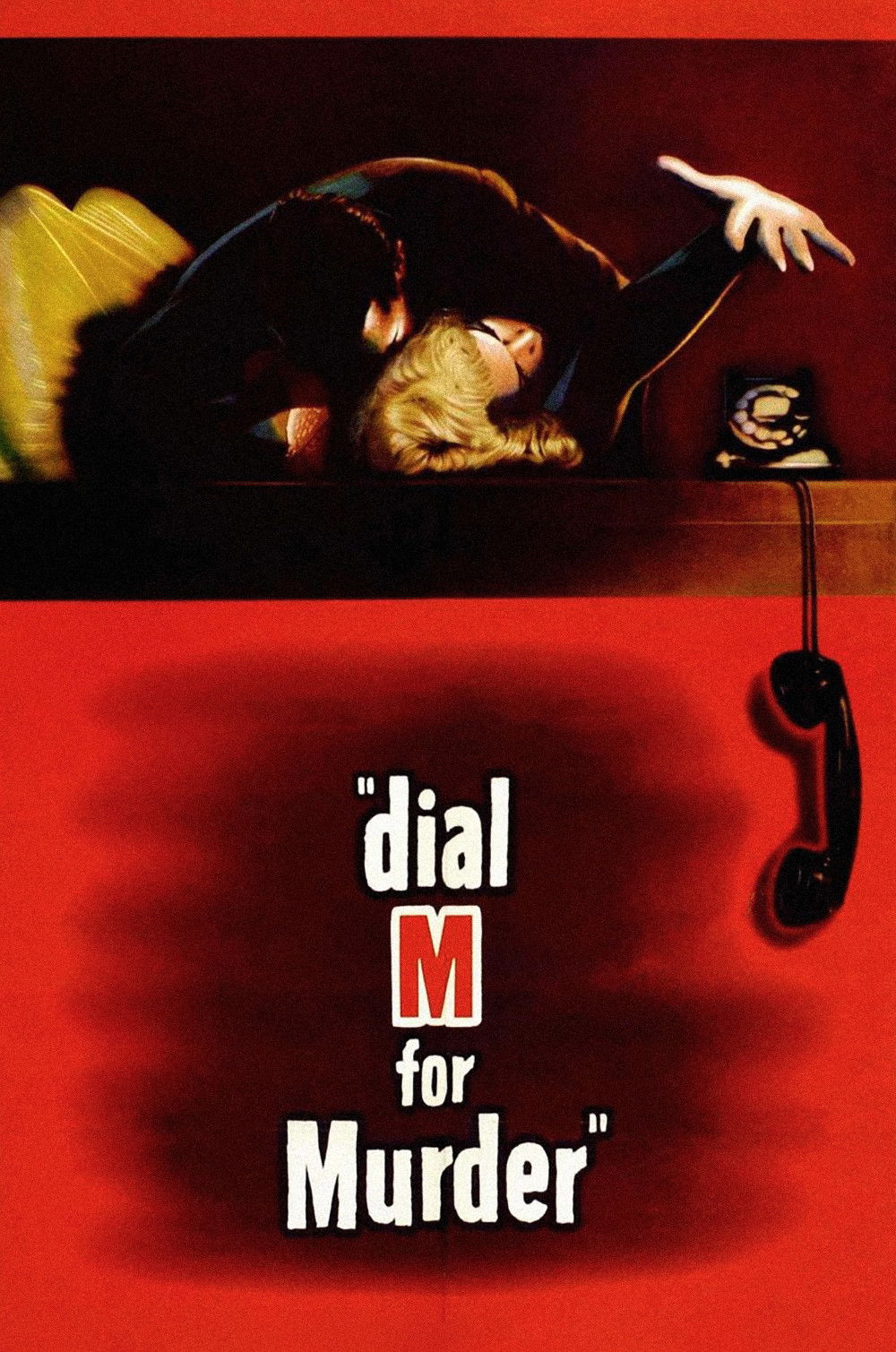
Over the years, I’ve become almost obsessed with the everyday objects and subtle symbols Hitchcock deploys throughout the film. The telephone is perhaps the most obvious—its titular “M” a cryptic invocation of murder, mechanism, and perhaps the mysterious. It is both a tool of connection and a harbinger of disaster. I’ve thought a lot about how the simple act of answering a phone becomes the axis upon which life or death spins. In a deeper sense, the phone embodies how easily the intimate rituals of home can be perverted by schemes and threats from those closest to us.
Keys—so many of them—form the other essential motif. They represent privilege, access, and exclusion; they are tokens of trust exchanged, lost, misused. I always notice how easily keys shift between hands, enabling or preventing entry. In my own life, the metaphor holds true: access to another’s inner world is precarious, permission can be revoked or stolen.
The apartment itself functions as a visual metaphor for marriage—and for the mind. It’s a space defined by invisible boundaries: doors always on the cusp of opening or closing, rooms in which secrets dwell, thresholds both literal and psychological. Hitchcock’s camera lingers on the placement of rugs, the arrangement of furniture, until the smallest domestic detail feels nimble with significance. I remember watching Margot navigate her own home, and feeling the chill of knowing that safety in any space is a conditional thing.
Key Scenes
Key Scene 1
Whenever I recall the moment when Margot fends off her would-be killer with a pair of scissors, I’m struck not just by its sheer suspense, but by what it means about agency and vulnerability. The struggle is brutal, not grand or melodramatic, but flailing and desperate. It shows the unpredictable reserves of will that arise in moments of crisis. Margot, backed against the wall in every sense, turns a household object—a symbol of domestic labor—into a tool of survival. For me, this overturns the supposedly impassive roles mapped onto husband and wife: Margot becomes the agent of her own rescue, even in the midst of chaos. Yet victory brings little reassurance—her subsequent journey is one of confusion and suspicion, rather than release. In my own fears, I recognize how traumas rarely result in tidy resolutions.
Key Scene 2
There is a quieter moment, often overlooked, when Tony calmly demonstrates to his reluctant accomplice, Swann, how the murder should proceed. The scene is chilling for its precision and its cold, transactional quality. What gets to me, every viewing, is the way Tony turns seduction and violence into a kind of choreography. He lists step after step, reducing the act of murder to an exchange of favors, a sequence of actionable items. The gulf between Tony’s calm narration and the horror inherent in the plan lays bare the film’s concern with compartmentalization—the ability to separate intention from action, ethics from opportunity. I find myself uncomfortably reminded of how easy it is, in everyday life, to rationalize self-serving behaviors. The dialogue here lingers in my mind: how often do I, too, break down the troubling into manageable, almost banal, steps?
Key Scene 3
For me, the film’s final confrontation—when Inspector Hubbard begins carefully exposing Tony’s guilt—is its most quietly shattering moment. The unraveling doesn’t come all at once; rather, it is a patient, methodical stripping back of Tony’s fabricated reality. The authority of Hubbard isn’t bombastic; it’s the patient force of truth, working against time and skillful deception. As I watch Tony’s composure give way, I see the vulnerabilities of all who hide behind carefully tended facades. What moves me most is not merely the triumph of justice, but the way truth emerges not in a dramatic burst but through relentless, careful accumulation. The sequence makes me ponder the labor involved in finding what’s real in my own life or in those I love. Unmasking is rarely sudden—it’s the result of faith in patience and method, and the courage to confront what is hidden.
Common Interpretations
Over time, I’ve discovered that viewers read “Dial M for Murder” in many ways. Some see it purely as a technical exercise—a master’s class in suspense and narrative economy. Others focus on Hitchcock’s subversion of gender roles or his use of space as a metaphor for domestic entrapment. I often encounter those who view the film less as a thriller than as a wry social commentary: a portrait of upper-class desperation, where surface respectability conceals rot beneath.
Many have linked the psychological gamesmanship of Tony with the director’s own fascination with manipulation—both onscreen and off. I am convinced there is truth to this: Hitchcock seems to delight in implicating the audience, in positioning us as witnesses and voyeurs, complicit in the tidy web of cause and effect. The film, read in this way, becomes about the pleasures and dangers of watching itself—the risk that accompanies every act of seeing, knowing, judging.
Some critics have suggested that “Dial M for Murder” is less concerned with morality than with the instability of identity and truth. Each character, under pressure, reveals unexpected facets. I find value in this approach; it reminds me that we are seldom, if ever, one thing only. Crisis, the film suggests, reorganizes the self—sometimes for the better, sometimes simply to survive.
Films with Similar Themes
As I reflect on “Dial M for Murder,” I’m naturally drawn to other films that grapple with deception, domestic peril, and the shifting nature of truth within intimate spaces. Intriguingly, Hitchcock’s own canon brims with such explorations—“Rear Window” and “Shadow of a Doubt” both examine the secrets hidden within seemingly safe environments. Each time I watch these films, I encounter new anxieties about trust and knowledge: what do we allow ourselves to see, and what remains in shadow?
More contemporarily, films like “Gone Girl” take up the same preoccupations, updating them for the age of media mediation and performative identity. I find “Gone Girl” especially fascinating for how it extends the questions of marital trust and self-presentation into a satirical, almost savage new context. Similarly, “Double Indemnity” and “Body Heat” probe the overlaps between criminal intent and romantic attraction, their femmes fatales and antiheroes echoing the same ambiguities I find so appealing in “Dial M for Murder.”
Even literary adaptations like “The Talented Mr. Ripley” and “Sleuth” build intricate puzzles out of duplicity and motive, challenging me to consider how psychology and opportunity entwine. Each of these works compels me not just to watch, but to question the boundaries I draw between performance and confession, safety and exposure.
If you’re deciding what to watch next, you might also want to see how this film holds up today or how it was originally received.
🎬 Check out today's best-selling movies on Amazon!
View Deals on Amazon