
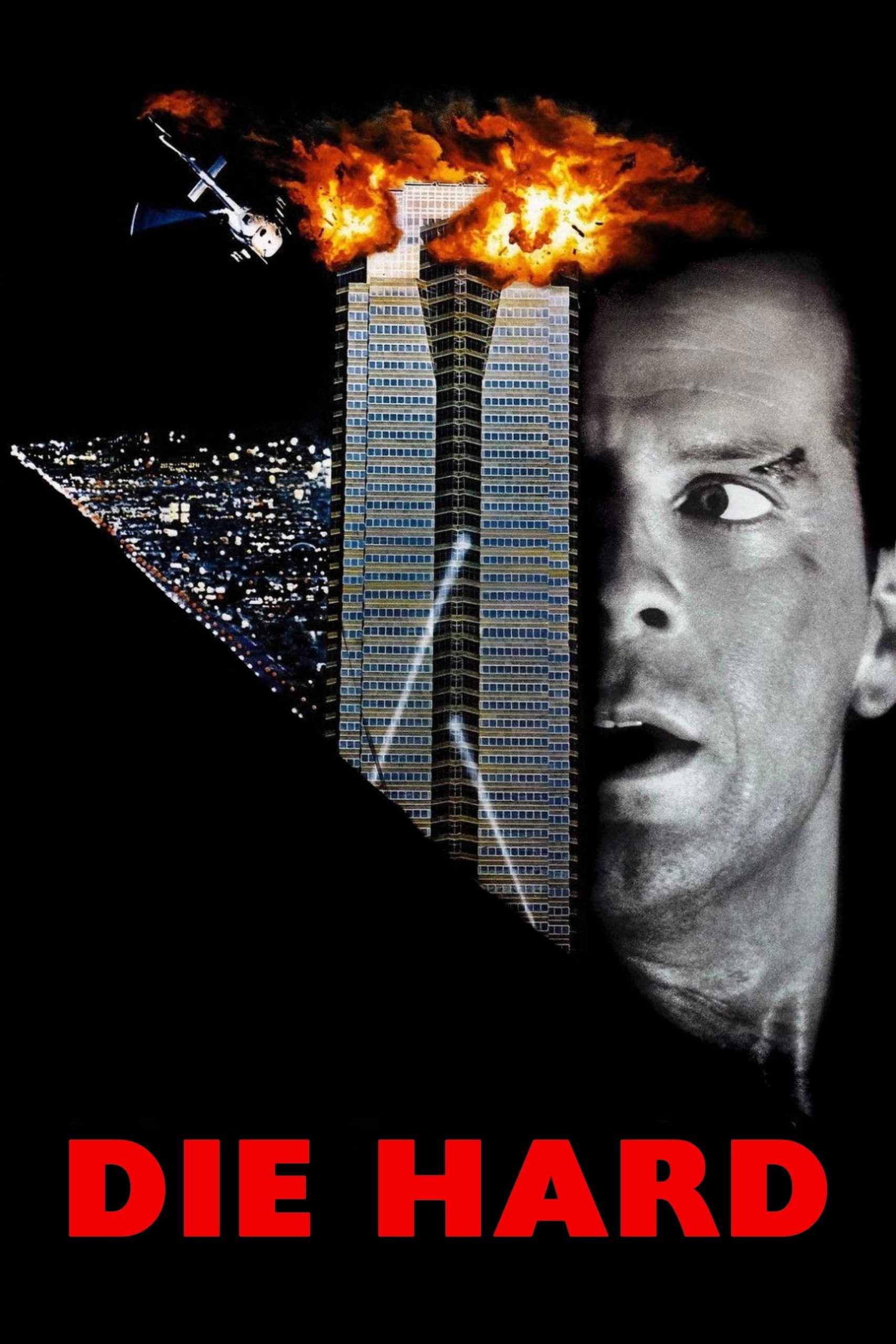
Every December, as the gentle avalanche of holiday programming buries our screens in sparkling joy, I return to a film often debated for its seasonal credentials but never doubted for its impact: “Die Hard.” My ritual is a far cry from the clinking eggnog and roaring yule logs of most Christmas movies. Instead, I encounter a battered, barefoot cop named John McClane weaving through the glass-and-steel labyrinth of Nakatomi Plaza, an outsider in every sense. Each viewing prods at different parts of my life and consciousness. Beneath its redolent spectacle, “Die Hard” is not just an action thriller but an unexpectedly raw fable about human resilience, vulnerability, and the yearning to connect—even when all seems lost. This film’s pulse beats with more than gunshots and one-liners; for me, its soul lies in the fragile humanity within impossible odds.
What the Film Is About
When I first saw “Die Hard,” I expected little more than kinetic mayhem—a bare-knuckle cop against a crew of urbane terrorists, the collapse of law and order replaced by a single man’s grit. John McClane, a New York City police officer, travels to Los Angeles to mend his fraying marriage. Instead, he finds himself fighting for his—and others’—lives as a sophisticated group, led by Hans Gruber, takes hostages in a high-rise during a Christmas party. McClane becomes the reluctant, resourceful hero, navigating an alien environment and unrelenting danger with humor, desperation, and sneaky intelligence. Yet, to define “Die Hard” as a mere cat-and-mouse game would miss everything I believe has made it linger for decades.
The film is, at its sinewy core, a story of emotional and existential estrangement—one man alone in hostile territory, cut off from love, safety, and community. Every blast, punch, and sharp exchange ultimately circles back to the search for belonging and meaning in a crushing urban wilderness. In Nakatomi Plaza, high above the glittering city, McClane faces not just terrorists but his own isolation and inadequacies. That struggle, framed by violence but illuminated by wit and longing, is what brings me back to “Die Hard” long after other, flashier action films fade from memory.
Core Themes
Over time, I’ve grown convinced that “Die Hard” persists because it is about much more than one night of chaos. Its surface—a relentless action movie—hides a substrate threaded with anxieties and aspirations that feel perennially human. I continue to discover new facets in its core themes:
- Alienation and Displacement: McClane is literally out of place—an East Coast cop in a West Coast world, a blue-collar ethos adrift in corporate luxury, a husband separated from his wife by both geography and personal failings. The glass tower becomes a visual and psychological barrier between him and connection.
- Masculinity and Vulnerability: For all his bravado, McClane is not the invincible automaton of prior action heroes. I find his pain, fear, and occasional helplessness not signs of weakness, but points of identification—for me and, I suspect, for audiences who crave more complex humanity in their heroes.
- The Individual Versus the Institution: “Die Hard” reverberates with suspicion toward institutions failing to protect or understand individuals. Whether it’s the corporate machine, smug bureaucratic police leadership, or detached FBI protocols, McClane stands in sharp relief—a solitary figure forced to improvise solutions in the absence of trust or support from the systems supposedly designed to help.
- Redemption and Reconciliation: The action, for all its pyrotechnics, is ultimately about a man trying to earn back the trust and love of his wife. This is not a plot device for me—it is the gravitational center of every risk McClane takes.
What makes these themes so resonant is their grounding in everyday struggles. Not all of us will crawl through ventilation shafts or leap from burning buildings, yet who hasn’t faced situations where they feel powerless, misunderstood, or desperate to heal a broken relationship? In watching McClane’s ordeal, I’m really watching a crucible for all the small, unseen battles of real life—only writ large and luminous on the screen.
Symbolism & Motifs
I have come to appreciate the intricate visual and thematic motifs that thread their way through “Die Hard.” Far from accidental, these symbolic strands tell a subtler story than that of guns and bombs. Chief among them:
- The Skyscraper as Fortress and Prison: Nakatomi Plaza is both a modernist marvel and a claustrophobic trap. Its shimmering walls and transparent facades suggest progress and openness, yet they quickly become barriers—solid glass curtains that hem McClane in, isolate the hostages, and invert the idea of the American Dream. For me, the building embodies the duality of urban life: all the promise and all the peril, stacked and sealed above the city’s heart.
- Bare Feet as Vulnerability: Among the most indelible images from “Die Hard” is McClane’s bloodied, shoeless feet. His predicament is at once physical and symbolic—an emblem of exposure, fragility, and the stripping away of all advantages. Unlike armored action icons, McClane is presented as painfully human, every wound a reminder of both his mortality and his resolve. I find this image far more affecting than any bullet wound or bruised facade—it sticks with me because it’s so unvarnished and true.
- Communication Devices as Lifelines and Dividers: Throughout the film, walkie-talkies, telephones, and radios become existential lifelines—means of reaching allies, issuing cries for help, or manipulating foes. At the same time, these devices reveal the limitations and failures of communication, both technological (static, interference) and emotional (misunderstandings, institutional arrogance). To me, this motif underscores the challenge of truly being heard in a world of noise and bureaucracy.
- Glass as Transparency and Obstacle: Shattered glass recurs throughout “Die Hard”—literalized in the harrowing scene where McClane’s feet are cut while running across a floor littered with shards. Glass represents both the modern world’s promise of openness and the ever-present threat of pain and separation. For me, every glinting pane signals the precarious nature of safety and connection in McClane’s—and our own—worlds.
- The Christmas Setting as Irony and Redemption: The holiday backdrop, replete with decorations and carols, provides a sharply ironic contrast to the violence and chaos. Yet I see the Christmas setting not as a mere gimmick, but as thematically vital: a time of reunion, forgiveness, and renewal, subverted and finally reclaimed through McClane’s ordeal.
Key Scenes
The structural elegance of “Die Hard” lies in its ability to graft meaningful, character-driven moments onto the scaffolding of action. Three key scenes stand out to me—not just for their technical prowess, but for the seismic emotional shifts they represent.
Key Scene 1
McClane’s radio exchanges with Sgt. Al Powell—specifically, their confessional conversations in the midst of siege—shift the film onto unexpected emotional ground. Alone on a rooftop, bleeding and terrified, McClane unburdens himself to Powell over the police radio, sharing regrets about his marriage and his fear he won’t live to make amends. I am always struck by the intimacy in these moments: stripped of bravado and spectacle, McClane is reduced to his rawest self. These conversations, more than any shootout, reveal the cost of heroism—the loneliness and uncertainty that aren’t mitigated by victory. I see my own fears echoed in John’s voice, the terror that one might never be able to redress past mistakes.
Key Scene 2
The sequence in which McClane, forced to run barefoot across broken glass, is a deft marriage of physical and psychological stakes. It is agony incarnate: every step, every wince, punctures the tough-guy myth that action heroes emerge unscathed. For me, this scene crystallizes the film’s proposition that sacrifice is not abstract—it is daily and excruciating. McClane’s stubborn perseverance spurs me to remember that courage is forged not by invulnerability but by exposing oneself to pain and pushing through it, shard by shard.
Key Scene 3
The final confrontation between McClane and Hans Gruber encapsulates decades of tension between individual agency and systemic power. Gruber’s calm, almost philosophical demeanor, coupled with his manipulation of corporate structures and hostages alike, casts him as McClane’s mirror—an avatar of control and calculation pitted against McClane’s improvisational humanity. I am always riveted by the moment when McClane reveals his final trick, taped pistol and all. The scene is saturated with dread, wit, and ambiguity: the hero, triumphant yet battered, finally returning to his wife but never truly escaping the scars. The image of him stumbling from the building, bloodied and exhausted, is not one of total victory but of survival at great personal cost. That grayness, I think, is why the story lingers long after Gruber’s fall.
Common Interpretations
Conversations with fellow fans and scholars have shown me just how widely “Die Hard” is read—and misread. Some see it as a conservative paean to individual heroism and American ruggedness; others view it as a subversive critique of those same values. I have encountered persistent debates over its status as a Christmas film, a question that for me is far less interesting than why it continues to evoke such passionate responses each holiday season and beyond.
- Some interpret the skyscraper siege as a metaphor for the collapse of 1980s institutional trust—a world in which corporate, governmental, and media structures are either complicit or useless, leaving only the individual’s wits and conscience to navigate peril.
- Others focus on its gender politics, critiquing or celebrating the way McClane’s vulnerability and humor break the mold set by Arnold Schwarzenegger or Sylvester Stallone—action stars whose near-invincible physiques defined an earlier era.
- A further strand explores the immigrant experience through Hans Gruber’s character, situating his foreignness not just as villainy, but as a reflection of global anxieties and shifting power dynamics in the late twentieth century.
- Many, like me, see in McClane’s bare feet and battered body a parable on suffering, empathy, and the slow work of redemption. Redemption here is tactile, not rhetorical: earned step by painful step.
These interpretations rarely settle into comfortable consensus. For my part, I find the greatest value in the way the film resists tidy reduction. Every Christmas, I watch it anew and see another layer: fear, hope, regret, recognition—the whole kaleidoscope of being on the edge.
Films with Similar Themes
In looking for films that evoke similar emotional and thematic resonances, I find myself drawn to works as diverse as “Die Hard” itself. They are not always as kinetic, but they share its concern with the lone individual, the failure of institutions, and the existential stakes of ordinary courage:
- First Blood – The original Rambo film, before the sequels turned the character into a caricature. Its exploration of alienation, trauma, and misunderstood heroism resonates deeply with McClane’s predicament.
- The Towering Inferno – A granddaddy of the disaster genre, where the gleaming skyscraper becomes both refuge and deathtrap, and the struggle to survive tests not just muscle but soul.
- The French Connection – If “Die Hard” presents the everyman hero, “The French Connection” offers its bruised, morally ambiguous relative: another story of obsession and the limits of institutional power.
- Speed – A 1990s heir to “Die Hard’s” legacy, with a similarly relentless pace and a protagonist forced to think, adapt, and bleed without institutional support. The resonance lies in improvisation under duress.
- Collateral – Here, the city itself becomes a disorienting maze, and a single, desperate night tests the boundaries of courage and self-definition.
- Inside Man – A film that echoes “Die Hard’s” interest in authority, subterfuge, and the hidden costs of heroism—only this time with the lines between hero and villain even more blurred.
Each of these works, in their own registers, addresses the question that “Die Hard” asks over and over: What does it take, in a hostile world, to stand up—not just physically, but morally and emotionally? And what happens when imperfect people, not supermen, face the crucible of crisis?
If you’re deciding what to watch next, you might also want to see how this film holds up today or how it was originally received.
🎬 Check out today's best-selling movies on Amazon!
View Deals on Amazon