
What the Film Is About
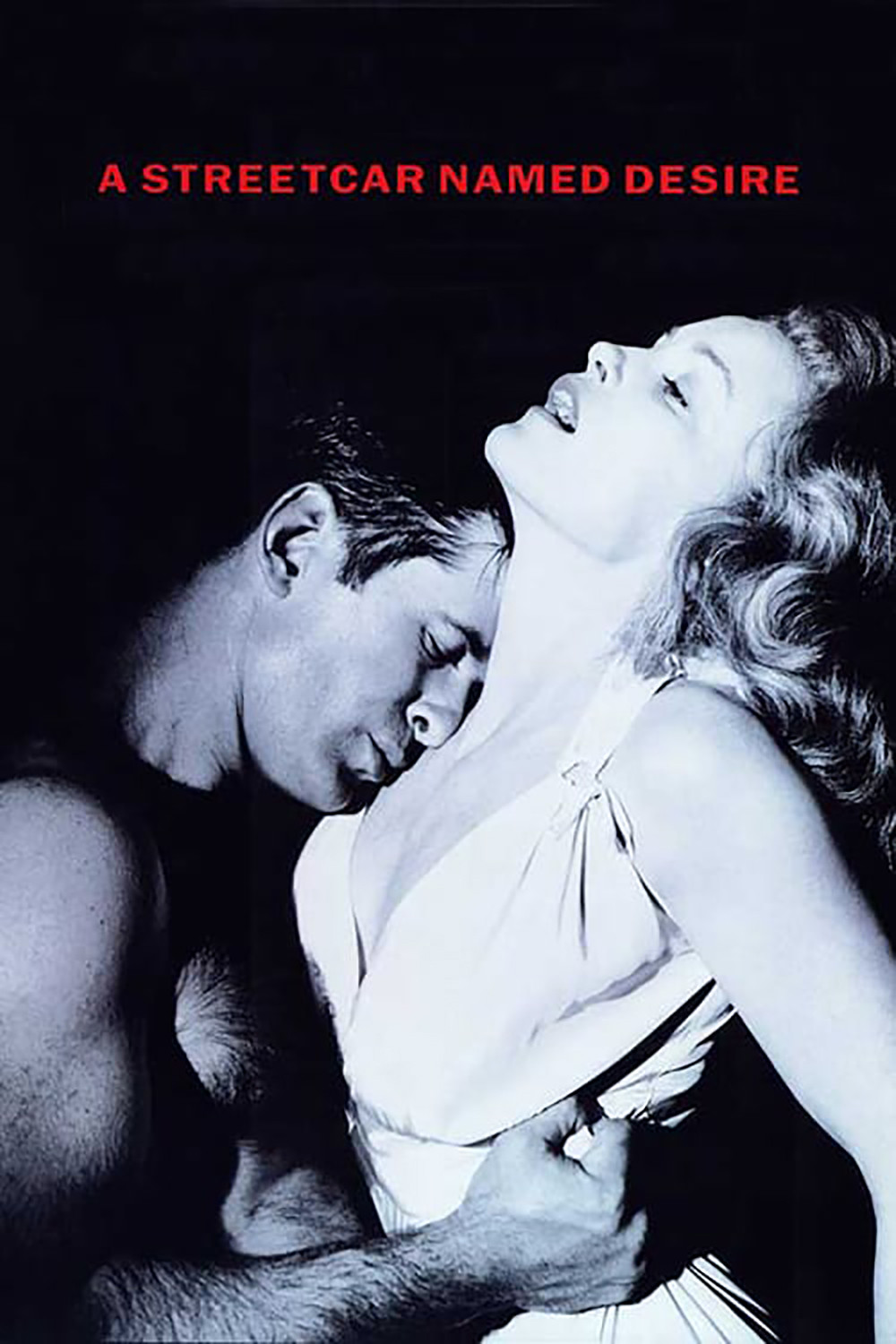
“A Streetcar Named Desire,” released in 1951 and directed by Elia Kazan, is a shattering emotional drama centered on the uneasy coexistence of fragile illusion and harsh reality. At its core, the film follows the fraught interactions between Blanche DuBois, a fading Southern belle desperately clinging to the remnants of her former life, and Stanley Kowalski, her sister Stella’s brash and unyielding husband. The narrative draws its power from deep emotional currents — Blanche searching for refuge and validation in a world that no longer accommodates her, and Stanley asserting brutal dominance to maintain control over his environment. This tension creates a psychological battleground, where personal traumas, class conflict, and the clash between the old and new South collide.
Rather than focusing on external events, the film’s journey is primarily internal. The audience is invited to witness the steady unraveling of Blanche’s sense of self, the erosion of her fantasy world in the face of Stanley’s unrelenting realism, and the tragic cost the characters pay for their inability to reconcile past and present. The emotional trajectory is one of hope muted by despair, connection fractured by mistrust, and the tragic consequences of refusing to face the truths of one’s circumstances.
Core Themes
“A Streetcar Named Desire” is rich in complex themes, exploring the destructive power of illusion, the raw dynamics of power and control, and the ongoing tension between tradition and modernity. Central to the film is the idea that personal identity can be both a refuge and a prison. Blanche’s desperate attempts to mask her vulnerabilities through fantasy and performance invite empathy but also critique; her illusions serve both to protect and to isolate her. The film interrogates how society rewards or punishes such self-delusions, particularly when performed by women.
Power — physical, sexual, and psychological — emerges as another defining theme. Stanley, representing brute force and the rising postwar working class, asserts his dominance not only over Blanche but over the household itself. His raw masculinity is both alluring and terrifying, underscoring postwar anxieties regarding gender roles, patriarchy, and the collapse of old social orders. The toxic interplay between Stanley and Blanche highlights how power is both overtly exerted and subtly internalized.
The film also navigates themes of desire, shame, and decay, set against the decaying grandeur of New Orleans. The characters’ struggles echo larger questions of belonging, survival, and the price of self-deception. Released just as American culture was changing after World War II, the film exposes the vulnerability of individuals caught between eras — overwhelmed by changes they cannot control, yet unwilling or unable to adapt. Today, these themes still resonate in discussions about gender, class tension, mental health, and the nature of personal truth.
Symbolism & Motifs
Throughout “A Streetcar Named Desire,” motifs and symbols intensify the underlying themes. The titular streetcar, for instance, is more than a mode of transport; it stands as a metaphor for inescapable fate — a vehicle that carries Blanche, and by extension the viewer, toward an inevitable reckoning. The physical journey is inseparable from the emotional one, as Blanche is both propelled forward by desire and drawn inexorably toward her own undoing.
Light and darkness are persistent motifs, used to illustrate Blanche’s psychological state. She shuns bright light, preferring faded, soft illumination as a means to conceal both physical aging and emotional scars. Lampshades and dim bulbs are her allies in crafting a world free of scrutiny, yet they also point to the impossibility of hiding from truth forever. This interplay between light and shadow is mirrored in the cinematography, which uses expressive chiaroscuro to enhance the sense of encroaching doom.
Music — particularly the recurring polka tune, “Varsouviana” — acts as both a trigger and a character in itself, encapsulating the memory of Blanche’s traumatic past and her inability to escape it. Whenever the music surfaces, it marks the intrusion of memory and the unrelenting pressure of guilt and grief. Other recurring images, such as the faded grandeur of the apartment and Blanche’s tattered finery, reinforce the film’s meditation on decay, the fleeting nature of beauty, and the impossibility of returning to an idealized past.
Key Scenes
Key Scene 1
Blanche’s first encounter with Stanley is crucial for establishing the battle lines that define the film’s psychological conflict. This meeting is not just an introduction but a declaration of war between competing worldviews: Blanche, with her cultivated poise and affectations, versus Stanley’s unapologetic earthiness. The tension here radiates outward, foreshadowing the destructive consequences of their incompatibility. The scene’s importance lies in its emotional undercurrents — the way Blanche’s refined manners clash with Stanley’s directness, setting up the fatal misunderstandings and resentments that drive the narrative.
Key Scene 2
The pivotal sequence in which Stanley confronts Blanche with evidence of her troubled past represents more than an exposé; it’s an assault on the barriers she has constructed to protect herself from reality. This confrontation, fraught with rising intensity, embodies the film’s exploration of truth versus illusion. The scene strips Blanche of her defenses, exposing her vulnerability to both the characters on screen and the audience. Through this public dismantling of Blanche’s illusions, the film interrogates societal attitudes toward female transgression and punishment, while also questioning the moral authority of those who claim to possess the truth.
Key Scene 3
The final removal of Blanche by strangers — as Stella weeps and Stanley looks on, a study in guilt and defiance — crystallizes the film’s tragic vision. This scene is not simply the end of Blanche’s stay but an emotional and moral judgment passed on the characters by both society and themselves. The shattering of Blanche’s constructed self is complete, her fantasies and hopes no longer offering protection from the world’s indifference. The ambiguity of the remaining characters’ reactions underscores the film’s refusal to offer simple moral answers. Instead, it leaves the audience confronted with the cost of cruelty, the fragility of the self, and the enduring need for kindness, no matter how fleeting.
Common Interpretations
Most critics interpret “A Streetcar Named Desire” as a tragedy of human vulnerability. Blanche is often seen as a symbolic casualty of a patriarchal society unwilling to accommodate, or even understand, emotional fragility. Some readings focus on Stanley as an emblem of a new, remorseless America, brushing away the past with little regard for the wreckage left in its wake. Others frame the narrative as a meditation on the dangers of living in illusion, suggesting that Blanche’s downfall is as much a result of her inability to accept reality as it is of Stanley’s cruelty.
Audiences and scholars have also debated the role of truth and deception, with some arguing the film shows the necessity of illusion as a buffer against unbearable realities, while others view illusion as ultimately self-destructive. Interpretations can also diverge on the question of blame — whether blame lies more with Stanley’s aggression, Stella’s passivity, or Blanche’s own untenable fantasies. What unites these perspectives is a recognition of the film’s unflinching portrayal of psychological distress, gender conflict, and social transformation.
Films with Similar Themes
- Who’s Afraid of Virginia Woolf? – Explores the corrosive effects of illusion and brutal honesty in intimate relationships.
- The Heiress – Examines the crushing influence of power and expectation on a sensitive woman trapped in a rigid society.
- Cat on a Hot Tin Roof – Investigates family secrets, sexual repression, and the painful clash between truth and facade in the American South.
- Revolutionary Road – Looks at the consequences of failed dreams and the search for authentic identity within a conformist society.
Ultimately, “A Streetcar Named Desire” communicates a deeply human message about the costs of denying reality, the poignancy of faded dreams, and the lasting consequences of cruelty and misunderstanding. It paints a haunting portrait of postwar America’s shifting social landscape — a world where old certainties are crumbling and new ones have yet to be forged, leaving individuals exposed, yearning, and profoundly alone. The film endures not simply because of its dramatic intensity, but because it holds a mirror to the ways in which our need for kindness, belonging, and dignity can be undone by forces both within and beyond our control.