
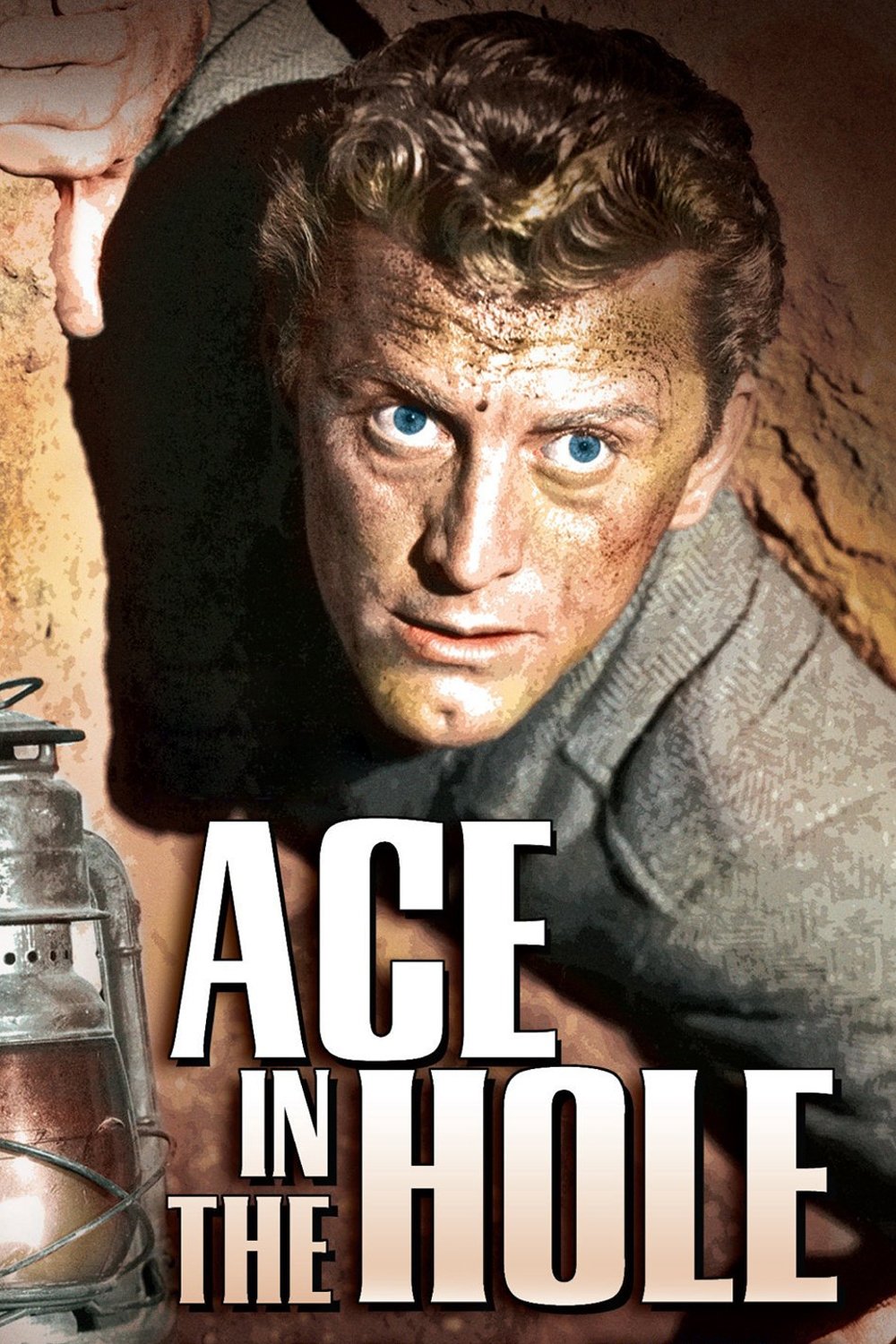
What the Film Is About
“Ace in the Hole” (1951) is a searing and cynical drama that unspools the emotional descent of a once-prominent journalist, Chuck Tatum, as he orchestrates and exploits a human tragedy for his own gain. At its heart, the film is less a tale of rescue than a scathing critique of ambition gone awry, the ruthless underbelly of American opportunism, and the complicity of a public eager for spectacle. As the central conflict grows, the narrative propels viewers through a landscape where ethical boundaries erode, and self-interest overshadows decency.
The movie tracks Tatum’s emotional transformation — or perhaps, devolution — as he manipulates both the story and those involved, pitting integrity against self-advancement. It is an investigation of the corrosive effects of unchecked ambition and the destructive allure of fame, all set against the backdrop of a nation fascinated by personal catastrophe. The film doesn’t follow the expected trajectory of rescue and redemption; instead, it drives relentlessly into moral ambiguity and the costs of exploitation.
Core Themes
At its core, “Ace in the Hole” is a meditation on the themes of media sensationalism, moral compromise, and the commodification of human suffering. The film unflinchingly explores the idea that the line between news and entertainment has been perilously blurred, a concept that was already simmering in American postwar society but reaches a fever pitch in the film’s universe. Ambition—particularly when it feeds on the misfortunes of others—is dissected with brute honesty. The film suggests that the pursuit of success, especially in the field of journalism, can become deeply corrosive when divorced from ethical and humane considerations.
Morality is another critical theme that threads through every frame of the movie. Tatum’s choices force viewers to question to what extent individuals—and institutions—will sell their souls for personal or commercial gain. The public’s insatiable appetite for spectacle is not left unexamined; instead, it becomes the engine of Tatum’s manipulation, implicating society at large in the narrative’s downward spiral. Although released in 1951, “Ace in the Hole” remains urgently relevant today, when the boundaries between private grief and public curiosity are ever more porous, and media-driven narratives often eclipse the real human stakes involved.
Symbolism & Motifs
“Ace in the Hole” makes extensive use of symbolism to comment on the nature of exploitation, entrapment, and the machinery of sensationalism. The literal cave where the miner is trapped becomes a potent symbol for both physical enclosure and moral entrapment. It mirrors not just the victim’s predicament, but also Tatum’s own self-imposed prison, as his quest for recognition ensnares him in a situation spiraling out of his control.
Recurring motifs, such as the ever-growing crowd gathered around the accident site, reinforce the collective nature of the film’s indictment. This crowd transforms from a handful of concerned locals into a fairground spectacle, mirroring how public tragedies are commercialized and turned into mere entertainment. The motifs of cameras, microphones, and tabloid headlines further underscore the omnipresence of media and its distorting influence on truth and empathy.
Another significant recurring element is the carnival that springs up around the disaster site. It serves as both a literal and figurative spectacle, with rides, food stands, and vendors profiting off the stuck miner’s plight. The carnival becomes a grotesque mirror of the larger world, reflecting society’s appetite for distraction and sensation, and underscoring the theme that suffering can become a lucrative commodity in the right hands.
Key Scenes
Key Scene 1
One pivotal moment in the film is when Chuck Tatum seizes control of the unfolding story, convincing local authorities to delay the rescue efforts. This scene is crucial because it marks the moment when Tatum decisively prioritizes his own interests over the welfare of the trapped miner. It’s a chilling depiction of how easily expedience can override empathy and serves as the ethical axis upon which the story turns. Symbolically, it’s here that the cave ceases to be merely a physical obstacle and becomes a test of conscience—one that Tatum will ultimately fail.
Key Scene 2
Another significant scene occurs as the carnival atmosphere takes hold around the disaster site. Families flock to the location not out of concern, but for entertainment. This moment reveals how the crowd, and by extension the viewing audience, becomes complicit in the exploitation. The transformation of the rescue operation into a commercial fair exposes the collective moral erosion underpinning the film’s worldview. Here, the film challenges the notion of isolated guilt and instead highlights a shared societal thirst for sensation, posing uncomfortable questions about voyeurism and complicity.
Key Scene 3
The closing sequence of the film, with Tatum collapsing—physically and spiritually exhausted—serves as an unequivocal statement on the costs of unchecked ambition and ethical decay. At this juncture, the narrative offers no easy absolution. Rather, the ending delivers a sober reckoning, with Tatum facing the consequences of his actions without redemption. This final moment is not just a personal reckoning for the protagonist but a broader commentary on the corrosive power of media spectacle and human selfishness. It anchors the interpretation that the search for a “big story,” achieved through any means, ultimately leads to ruin.
Common Interpretations
Most critics and viewers interpret “Ace in the Hole” as a blistering indictment of modern journalism and the ways in which the press can manipulate reality for profit and acclaim. The film is often cited as a cautionary tale about the ethical perils facing both reporters and their audiences, focusing sharply on the dangerous intersection of commerce, ambition, and news reporting.
Some interpretations emphasize the film’s broader social critique, seeing it not just as an attack on journalists but as a commentary on the entire culture of media consumption and public spectacle. This perspective highlights the film’s depiction of an audience that craves drama and is willing to overlook ethical misgivings as long as it is entertained. Still, others find in Tatum’s downfall a more personal narrative about human frailty and the self-destructive potential of egotism.
There is also a reading that focuses on the existential dimensions of the story—the idea that the cave, the carnival, and the endless cycle of news all represent the traps people build for themselves, driven by their own desires and fears. While these interpretations differ in emphasis, they converge on the understanding that “Ace in the Hole” is a prescient critique of spectacle, complicity, and collapsed morality.
Films with Similar Themes
- Network (1976) – Examines how television sensationalism exploits real people for ratings, paralleling the theme of media as spectacle.
- Sweet Smell of Success (1957) – Explores the ruthless, compromising pursuit of fame and influence in journalism, drawing a line to the ethics of “Ace in the Hole”.
- Nightcrawler (2014) – Focuses on a modern media vulture who manipulates crime stories for personal gain, echoing the film’s concerns about self-interest and public fascination with misery.
- The Big Carnival (1951) – As an alternate title for “Ace in the Hole” itself, this emphasizes how the spectacle aspect is central to the film’s thematic purpose.
Ultimately, “Ace in the Hole” exposes the dangerous intersection of ambition, apathy, and the machinery of commerce that can turn real-life suffering into entertainment. It was a daring film for its time, capturing both the anxieties and the aspirations of postwar America while anticipating contemporary debates around media ethics and public voyeurism. At its heart, the film asserts that the quest for acclaim and profit, unmoored from compassion, inevitably leads not to victory but to moral and personal ruin. Its message endures as a bracing reminder of the responsibility borne not just by storytellers, but by anyone who participates—directly or indirectly—in the consumption of other people’s pain.