
What the Film Is About
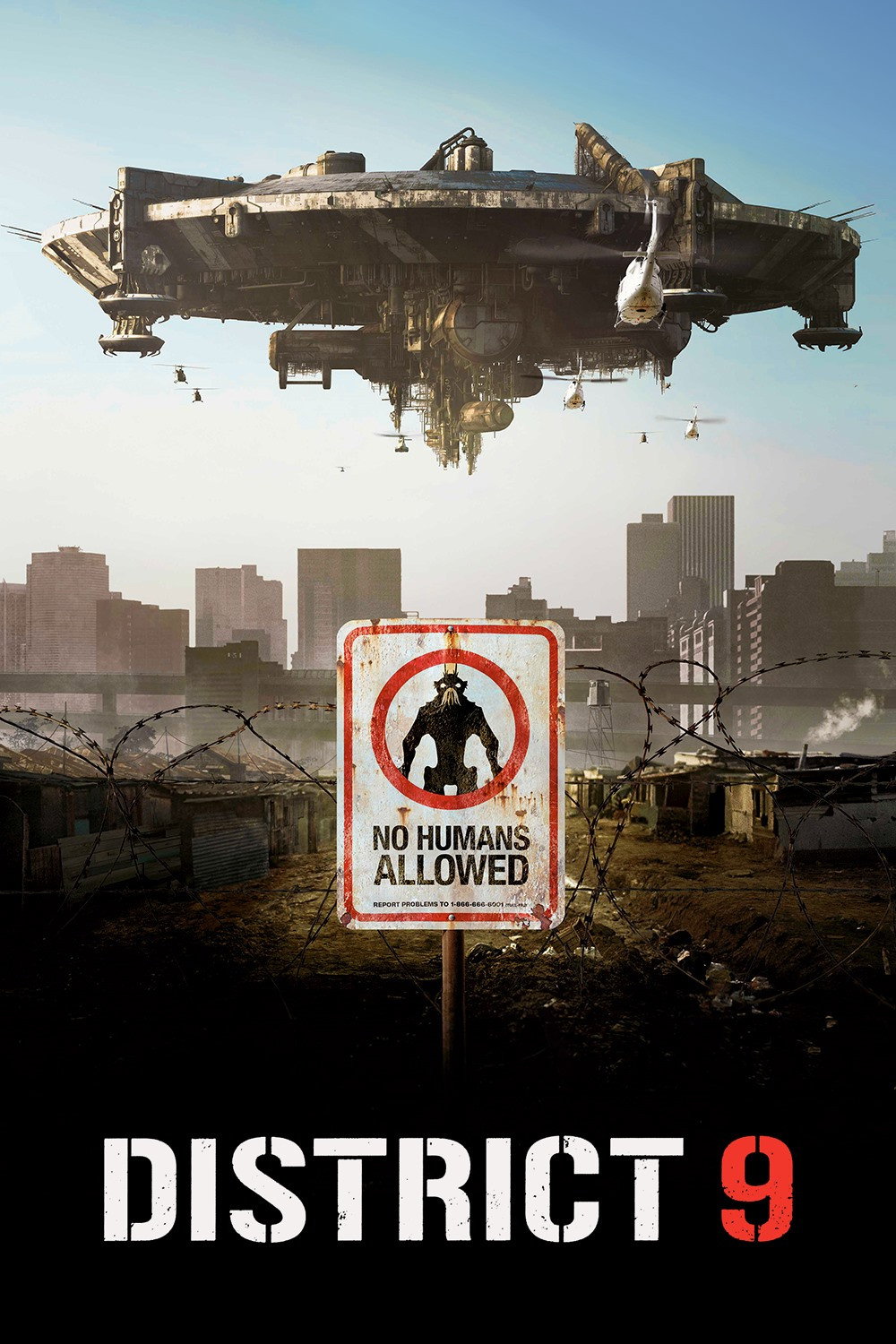
Few films have ever left me so unsettled—and yet so compelled to reflect on the state of our shared society—as “District 9.” When I first encountered Neill Blomkamp’s striking debut, I couldn’t shake the visceral discomfort it kindled within me. The premise is straightforward yet dramatically strange: a massive alien spaceship stalls over Johannesburg, South Africa, and its inhabitants—quickly dubbed “prawns”—are corralled into a militarized, squalid camp below. Yet beyond its science fiction trappings, what gnawed at me was how little imagination was needed to draw the line between this dystopian vision and the all-too-real horrors of history. “District 9” uses its speculative skin not merely for thrills, but as a lens: one that ruthlessly magnifies human prejudice, bureaucratic cruelty, and the desperate yearning for dignity.
As I watched the journey of Wikus van de Merwe—a bureaucrat unwittingly caught in a nightmare of transformation—I found myself confronting uncomfortable truths. This was not simply a story about aliens and humans, but about the boundaries we draw and the suffering they enable. My own responses vacillated between horror at the system’s callous machinery and a guilty recognition of how easily one is swept up by its momentum. I realized that, for me, “District 9” is less about what separates species than what connects us in our capacity for both empathy and exclusion.
Core Themes
The heart of “District 9” throbs with timeless themes filtered through gritty modernity. At its core, the film is a meditation on otherness and xenophobia. It is impossible to miss the pointed metaphor to apartheid South Africa, a regime defined by segregation and systemic violence against the country’s Black majority. The setting is not incidental, nor is the use of documentary-style realism; both conspire to merge speculative fiction with historical memory. Watching the actors interact with the “prawns,” whose deprivation mirrors that of groups forcibly segregated and dehumanized, I felt the charge of an allegory weaponized against complacency.
Yet, there are deeper examinations at play—ones that challenge the very fabric of identity and transformation. Wikus’s own metamorphosis from human to prawn is not just a body horror plot device; it is, in many ways, an invitation. As his physical appearance changes, so does his perspective, forcing him—and us—to cross the boundaries that separate “us” from “them.” I remember feeling unsettled as I realized how easily comfort breeds complicity, and how suffering is often the bridge to empathy we’d rather not cross.
There is also a persistent thread about authority and power, explored through the bureaucracy of Multi-National United (MNU). The callous efficiency of the corporation’s operations—euphemistic paperwork masking violence—mirrors real-life histories where institutions perpetuated cruelty under the guise of order. For me, “District 9” pulses with the danger of unchecked authority and the chilling effect of dehumanizing propaganda.
Symbolism & Motifs
Blomkamp’s film is saturated with symbolism, perhaps none more tragic than the eponymous district itself. The camps, with their ramshackle shacks and crawling filth, recall images of real organizational horrors: the refugee camps, townships, and ghettos that scar the living memory of our world. I was reminded of historical photographs: desperate faces behind wire, children playing in ruins, communities striving for normalcy amid chaos. The symbolism hits hardest when the camera lingers; the rows of garbage, the casual brutality, the language of infestation.
The transformation of Wikus is another potent motif. As he sheds his skin, I was struck by how the physical horror is intertwined with social and emotional awakening. I could not help but see his mutation as a metaphor for the possibility—however painful—of change. It is not just a body at war with itself, but a psyche forced to confront everything it once took for granted. His growing affinity with Christopher Johnson, a prawn striving to rescue his kind, suggests that authentic connection is possible only once we surrender privilege and listen, even at the cost of our own security.
The weaponry, genetically linked to alien DNA, stands in for access and power, but it is also a symbol of how the tools of violence become coveted even as their origins are dehumanized. Each time a human character salivates over using prawn technology, I felt the eerie echo of histories where dominant groups craved the labor, culture, or creativity of those they ostracized.
Key Scenes
Key Scene 1
The eviction sequence—Wikus going door to door, brandishing documents and perfunctory smiles—remains one of the most uncomfortable and memorable moments for me. It’s filmed with documentary verisimilitude: handheld shots, jumpy edits, confrontational outbursts. What disturbed me, even more than the violence, was Wikus’s jovial officiousness. There is a grotesque normalcy to his work; his jokes, his pride in procedure, are eerily reminiscent of those who implement cruel policies without a second thought. I found myself flinching, recognizing how bureaucracy can anesthetize even well-meaning people. The eviction is not just a physical act—it’s a ritual of othering, where each handshake is poisoned by power and fear. The ease with which suffering is rationalized haunts me still.
Key Scene 2
Wikus’s transformation accelerates, and the climactic laboratory scene where his body is mercilessly exploited by MNU scientists stays lodged in my mind. Strapped to a gurney, Wikus becomes an object, a specimen whose autonomy is erased. I felt the horror of a system that reduces the unique to mere utility—another form of violence justified by the supposed greater good. The disconnect between Wikus’s cries for mercy and the cold calculation of the doctors is a direct mirror of every historical moment where profit and progress trumped the worth of a suffering individual. I could not watch this scene without recalling episodes of Nazi medical experimentation or the dehumanizing pseudo-sciences that found justification for segregation and enslavement. Even the language used—clinical, detached, procedural—echoed with the emptiness of moral abdication.
Key Scene 3
The film’s denouement, where Wikus rises to protect Christopher and his child, marks, for me, a hard-won redemption. The battered, exiled man, cast out by both human and prawn society, finally chooses sacrifice over self-preservation. In the firefight that ensues, with robotic exo-suits and bursts of alien weaponry, the spectacle is less about action than about intent. Wikus’s choice stands as a repudiation of everything the first act stood for: bureaucratic indifference, casual cruelty, and the tribal urge to belong at any cost. He now chooses to be ‘alien’—to act with compassion even as the world turns away. That this act is born of profound loss only underscores the possibility that true empathy may emerge only from suffering, a lesson both bitter and oddly hopeful to me.
Common Interpretations
Since its release, “District 9” has sparked extensive debate around its allegorical intent and the ways in which it interrogates the past, present, and future. Many critics read the film as a thinly veiled parable about apartheid—the systemic segregation of Black South Africans under white rule during the twentieth century. Watching as a contemporary viewer, I cannot ignore the pointed references: the language of eviction, the forced marches, the separation of families. These are not the inventions of speculative fiction, but echoes of griefs still raw for millions.
Other interpretations focus on the universality of alienation and the migrant experience—the film as a reflection of contemporary refugee crises, where the displaced are routinely corralled, criminalized, and commodified. I see in “District 9” a mirror held up to recent conflicts, where otherness becomes a cause for suspicion and the vulnerable are caught in webs of indifference.
There is also a layer of critique aimed squarely at corporate and military interests. With Multi-National United in control, the apparatus of state is shown as a tool for maintaining power rather than protecting dignity. For me, Wikus’s entrapment is a cautionary tale about any system that places utility above humanity.
Yet, I think there is another, subtler thread—an exploration of transformation and redemption. Wikus’s journey, however traumatic, is ultimately a plea for connection beyond difference. Many interpret his final fate—a memory lost, a body changed, a heart awakened—as the high cost and enduring necessity of empathy. In a world fixated on boundaries, “District 9” quietly suggests their ultimate fragility.
Films with Similar Themes
As I reflect on “District 9,” I am drawn to other films that wield genre to speak truth to power and probe the mechanics of alienation. Among these, “Children of Men”—set in a near-future Britain teetering on collapse—stands out with its raw depiction of refugees, discrimination, and hope kindled by unlikely hands. Both films refuse platitude in favor of visceral immersion, using speculative fiction to lay bare contemporary anxieties.
“Elysium,” Blomkamp’s spiritual successor, extends “District 9″’s dissecting gaze to class and healthcare, with Earth’s teeming masses left behind as the privileged few orbit in luxury. Here, too, the transfer of bodies and identities plays central roles, implicitly questioning the lines we draw to exclude or include.
John Carpenter’s “They Live” mines paranoia and consumer culture, using alien infiltration as an allegory for insidious social control. Similarly, “The Handmaid’s Tale” (in both film and television) explores how bureaucracy and coercion erase agency, particularly among the already marginalized.
But perhaps the deepest kinship is with “The Battle of Algiers.” Though not science fiction, its documentary aesthetic and unflinching account of colonial violence mirror the ethics and urgency of “District 9.” Each time I watch these films, I am reminded that the past—refracted through fiction or reconstructed as history—bears lessons for the present, if only we’d listen.
If you’re deciding what to watch next, you might also want to see how this film holds up today or how it was originally received.
🎬 Check out today's best-selling movies on Amazon!
View Deals on Amazon