
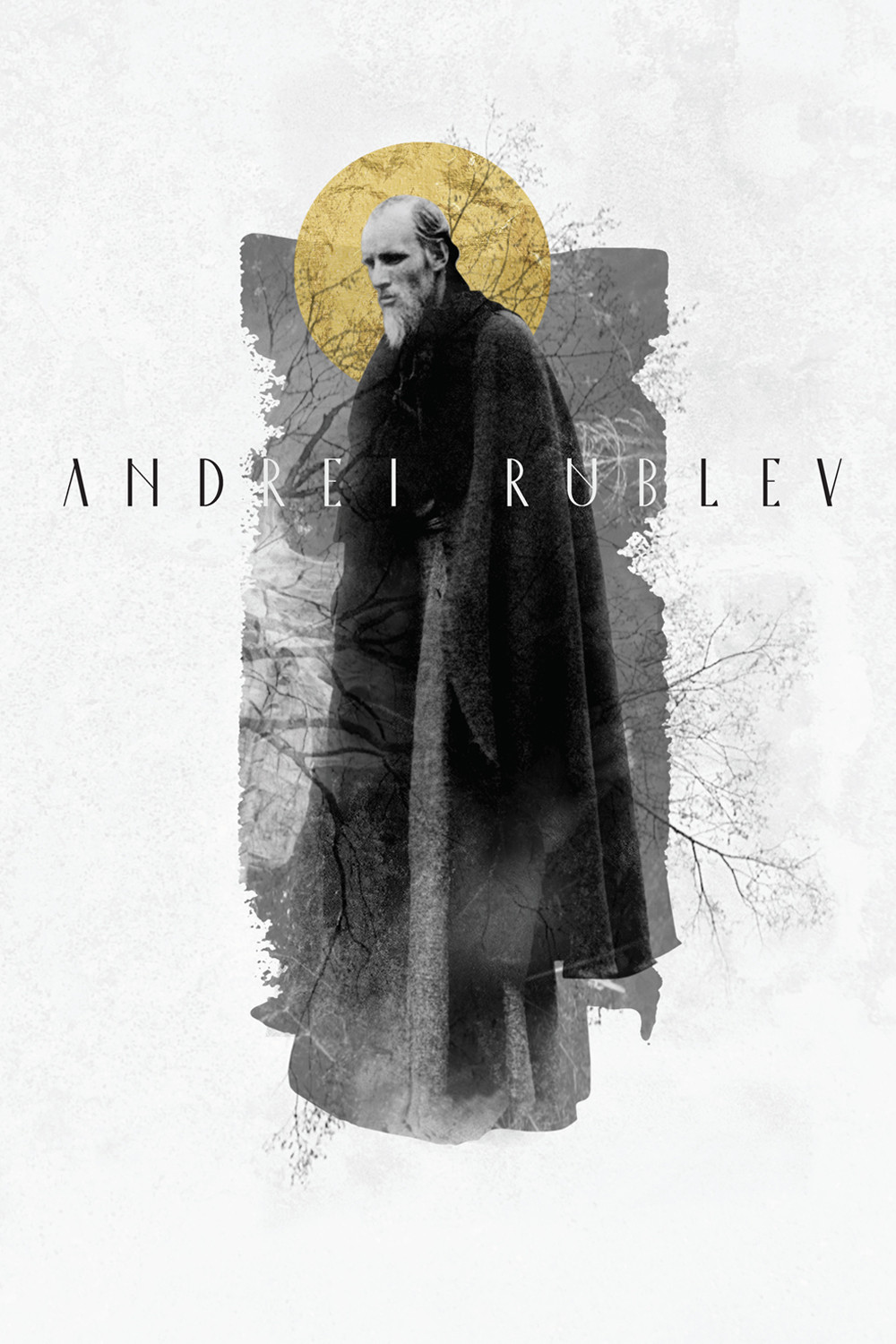
What the Film Is About
Before Andrei Rublev, I rarely felt such a sober weight from a film—like being pulled into one of those ancient Russian icons, only to realize the brushstrokes are blood, sweat, fear, and trembling faith. For me, this film isn’t just about the titular Russian icon painter. It is about the excruciating process of carving out meaning and beauty amid chaos and brutality. I see a journey not only for the quiet monk-artist, but for every soul stifled by violence, searching for a reason to create, forgive, and endure.
What truly captivates me is how the emotional arc of Rublev is painted with uncertainty and doubt. Instead of an easy narrative, I’m swept along on a search for faith—often more an agonized questioning of the very foundations of morality and art, rather than a conclusive arrival. The central conflict, as I see it, is not just man versus history, but the individual wrestling with the silence of God and the meaning of artistic calling when the world seems only to scream with cruelty.
Core Themes
Sitting with Andrei Rublev, I can’t avoid confronting the film’s relentless meditation on artistic purpose: what is the use of beauty in a world that burns churches, subjugates innocence, and mocks faith? The theme of suffering is woven deeply—not as an end, but as a crucible through which spiritual and artistic truth are forged. For me, the film’s obsession with violence (physical, emotional, cultural) is less about shock and more about what survives such horror—sometimes only a gesture of kindness, a fleeting belief, or a fragile mural.
Morality in this film isn’t simple. I’m often left uncomfortable by Rublev’s own choices and the choices of those around him. It strikes me how Tarkovsky interrogates the responsibility of the artist: to what or whom does Rublev owe his gifts? The audience expects the purity of the monk-artist, but I see instead a man paralyzed by ethical dilemmas—should he stay silent or speak up, create or withhold, forgive or judge? This ambiguity, which would have felt dangerous in the Soviet 1960s, resonates even more now, as artists everywhere continue to question their relevance and obligations in societies fractured by violence and doubt.
The film’s dialogue with faith is both explicit and thorny. Watching Rublev’s protracted crisis of belief, I recognized not just the torment of one man, but the aching modern predicament—how to maintain hope and conviction, let alone devote oneself to beauty or the numinous, when every institution and certainty seems to collapse into brutality. Yet, even in its bleakest passages, the film seems to say that creativity is not a luxury, but an act of faith. Whether through icons, bells, or simply carrying on, such acts suggest the stubborn possibility of salvation for both individuals and communities.
Andrei Rublev also dwells, almost obsessively, on the cycles of destruction and rebirth. Medieval Russia appears perpetually on the brink of apocalypse—invaded, betrayed, divided—but the emergence of a new icon or the sound of a bell marks that history is never just tragedy; perseverance is possible. I feel viscerally that the film’s central argument is about the necessity of memory, empathy, and art to stitch together generations battered by recurring violence. Forty years ago as today, in the face of cultural erasure or upheaval, Tarkovsky’s themes still reverberate.
Symbolism & Motifs
Tarkovsky’s visual imagination overflows with symbolism; almost every frame felt to me like an invitation to probe deeper beneath the surface turbulence. The recurring motif of the icon is the most explicit. Every time the film lingers on a painted wall or a face washed in candlelight, I sense not only reverence for beauty but the idea that art is the mediator between earth and spirit, the visible and the invisible. Where violence destroys, the icon endures, asserting that spiritual reality persists beyond physical ruin.
The motif of silence and speech fascinated me most. Rublev spends much of the film mute—sometimes by choice, more often by circumstance. I see his wordlessness as a symbol of the artist’s separation from the world, bereft of explanation or justification in times of suffering. When he chooses to break his silence, it’s never trivial. This weight underscores how communication itself (artistic or otherwise) is fraught, precious, and never neutral when history is at its most turbulent.
Another persistent image is fire—burning villages, torched churches, and even the smoke curling in ruined chapels. I read this as both literal and metaphorical: the world of Andrei Rublev is constantly threatened by annihilation, yet fire also purifies and reveals. Out of the ashes, sometimes, comes a glimmer of the transcendent—either in an icon, a new beginning, or the prosaic return to community. Opposite fire is water: rain and rivers serve as moments of cleansing, possibility, and transition. Whenever Rublev or others cross water, I sensed an opportunity for inward or outward change.
Animals—horses in particular—appear again and again. To me, they embody the fateful, uncontrollable powers at work in the world: nature is neither malicious nor kind, and often indifferent to human striving. Yet there’s something moving about how the film frames animal cruelty or beauty: a mirror to man’s own divided impulses. Above all, the bell at the film’s climax emerges as the film’s essential metaphor—not merely as a feat of engineering but as hope literally cast from the raw materials of despair, rung into being by faith and communal effort.
Key Scenes
Key Scene 1
The Tatar raid, with its harrowing violence and desecration of the church, stands in my mind as the film’s moral and emotional crucible. I remember feeling almost numb at the relentless cruelty on display—not because the film is gratuitous, but because I realized Tarkovsky wants me to feel the weight of loss and the obliteration of old certainties. It’s in this hellish aftermath, with Rublev shaken beyond speech and taking a vow of silence, that I grasp the film’s essential question: how can beauty return to a world shattered by trauma? This scene is crucial because it refuses to offer easy redemptions; faith, if it survives, does so only after passing through the fire of absolute despair.
Key Scene 2
The episode of the aspiring bellmaker, Boriska, left a deep impression on me. Surrounded by skepticism and the threat of failure, the young boy embodies both the fragility and necessity of belief. Boriska’s mania and improvisation as he orchestrates the casting of the bell feel like a distillation of the artistic process—harrowing, uncertain, and compulsively brave. As the bell finally tolls, not only does the community rediscover hope, but Rublev himself is awakened to the enduring spirit of creation. This scene cleaves to the heart of the film: art is both a personal struggle and a communal bond, often sustained by those most battered by life.
Key Scene 3
For me, the film’s final moments—when Rublev breaks his silence to comfort Boriska, embracing both the terrified boy and, metaphorically, his own vocation—are quietly devastating. In that simple act of compassion, Rublev seems to recover not just his voice but his purpose. This is the film’s ultimate statement: forgiveness, understanding, and the willingness to create in the face of ruin are what endures. We’re left dwelling not in resolution, but in the hesitant possibility of spiritual and artistic renewal—a grace earned, never granted.
Common Interpretations
Whenever I engage with others on Andrei Rublev, I find the film inspires a spectrum of interpretations, evidence of both its ambiguity and depth. Many, myself included, see it as a profound meditation on the artist’s duty and burden. The tension between silence and speech, action and resignation, is read by some as a coded exploration of Soviet censorship and the struggle to produce honest art under repressive regimes; others simply see a timeless inquiry into creativity under duress.
Some critics, especially in early Soviet reception, viewed the film’s religious dimension as an ambivalent critique of both organized faith and dogmatic ideology. I personally read the film’s interrogation of faith as sincere but honest about doubt and despair. Audience interpretations often focus on Rublev’s crisis as an existential journey, more than an explicitly Christian one—how to construct meaning and moral responsibility in a world stripped of order.
Interestingly, the bellmaking episode is sometimes interpreted as a “film within a film,” Tarkovsky’s parable about cinema itself: an act that demands risk, collective participation, and belief, even (or especially) in the absence of clear knowledge or guarantees. I’m repeatedly moved by how viewers sense in Rublev a call to empathy and resilience—not requiring religious faith, but faith in the power of creative acts, even if their meaning or effect can’t be foreseen.
Of course, some interpretations lean toward historical allegory, with Rublev’s Russia seen as a mirror for Soviet society, trapped in cycles of oppression and revival. For me, the film works best not as an easy stand-in for a political message, but as a deeply personal reckoning—one that expands outward, inviting each of us to ask what we might create, preserve, or forgive in the wreckage of our own histories.
Films with Similar Themes
- The Passion of Joan of Arc (1928) – I think of this Dreyer masterpiece often while watching Rublev—themes of faith, suffering, silent endurance, and the moral challenge of holding onto one’s convictions in the face of a violent, doubting world.
- The Seventh Seal (1957) – Bergman’s film resonates with me in its bleak medieval setting, philosophical grappling with faith and meaning amid war and death, and the loneliness of the seeker or artist searching for divine truth in a silent universe.
- The Mirror (1975) – Another Tarkovsky work, this film’s non-linear structure and poetic interrogation of memory, trauma, and the persistence of beauty naturally circle back to the themes I see in Rublev about the artist’s role and cultural survival in turbulent times.
- Stalker (1979) – Yet again, in Tarkovsky’s allegorical, metaphysical approach, I find a similar questioning of faith, destruction, and the possibility of redemption—not through miracles, but through the very process of searching, longing, and enduring.
For me, Andrei Rublev endures not because it answers the old question—what is beauty for, when the world is cruel?—but because it dramatizes the ongoing struggle to keep asking. The film is not content with nostalgia or easy transcendence. It lingers in uncertainty, challenging me to consider the costs and responsibilities of making art, keeping faith, or simply surviving with integrity. Created in a time and place where questioning was itself subversive, Rublev’s story seems to whisper that even amid devastation, the fragile work of creation—painting an icon, forging a bell, offering a word of comfort—can remake meaning from silence and ashes. That insistence on art, memory, and forgiveness is its final, stubborn hope.
If you’re deciding what to watch next, you might also want to see how this film holds up today or how it was originally received.