
What the Film Is About
Stepping into Annie Hall always feels a little bit like opening a diary that’s half confession, half fever dream. What makes this film so enduring for me isn’t just its piercing wit or neurotic charm, but the way it peels back the layers of romantic idealism and asks how—and why—we try to make sense of our most intimate connections. It’s not a love story in any ordinary sense. Instead, I see it as an emotional x-ray: Woody Allen’s onscreen persona, Alvy Singer, grapples not just with Annie, played with vivid authenticity by Diane Keaton, but with the gap between what we want romance to be and how it actually finds its way into our lives. The core tension for me is less “will they stay together?” and more a series of self-interrogations: Can we change? Can we really see each other? How do we keep nostalgia and disappointment from choking out what’s real?
At its heart, I find Annie Hall to be a search for meaning in relationships that twist and shift as our expectations, fears, and quirks evolve. Rather than a classic narrative arc, there’s a mosaic of memory, regret, and hope, always refracted through a deeply self-aware, even anxious comic voice. The journey isn’t just about Alvy and Annie; it’s a universal quest through insecurity, self-sabotage, and the electric rush of possibility that comes with new love—and the somber clarity with which it often ends.
Core Themes
The central themes that jump out at me in Annie Hall orbit around love’s limitations and the myths we construct to give our connections meaning. From my perspective, the film’s examination of romantic love—the way it’s built up, rusts, and fractures—is inseparably linked to self-identity. Alvy’s relentless narration, with its meta-commentary and asides, signals a neurotic self-consciousness that I think was especially resonant in the 1970s, as social certainties crumbled and introspection became something of a cultural obsession. Allen captures not just the anxiety of the era, but also the skepticism of simplistic happy endings.
What also feels vital—then and now—is the film’s meditation on memory and time. Instead of offering a seamless, rose-tinted recollection of love, Allen uses non-linear storytelling to highlight how memory distorts, idealizes, and reorganizes the past to fit psychological needs. I see this as the film’s way of honoring the messiness of real experience, rejecting tidy explanations in favor of honest uncertainty. At the same time, the drama pulls the rug from under easy cynicism by acknowledging the beauty and poignancy that still lives inside lost love.
Another theme that has always fascinated me: fear of intimacy versus the need for connection. I’m constantly struck by the way Alvy’s hyperactive inner monologue boxes him in. Both he and Annie struggle to articulate what they want, and the chasm between self-perception and how others see us is exposed with a bittersweet touch. In my reading, this isn’t just about New York neurotics—it’s about anyone who has ever worried that their inner strangeness or insecurity would sabotage the possibility of closeness.
Finally, because the film is so steeped in the intellectual currents of its moment—therapy culture, sexual revolution, the fading optimism of the sixties—I find it’s also making an argument about the impossibility of truly escaping yourself. This tension resonates today, in an era of even greater self-scrutiny and curated identities. That mixture of longing, comedy, and melancholy feels as contemporary to me now as it must have felt nearly fifty years ago.
Symbolism & Motifs
Every time I return to Annie Hall, I’m drawn to its sly, unvarnished use of recurring images and narrative techniques that deepen its central concerns. The city itself—New York versus Los Angeles—functions as more than just backdrop. For me, these two urban landscapes serve as externalizations of the characters’ psyches. New York is claustrophobic, intellectual, and alive with anxiety, mirroring Alvy’s cerebral but anxious disposition. Los Angeles, airy and superficial in the film’s eyes, becomes a symbol for Annie’s search for new freedom, but also perhaps for disconnection and drift.
Another motif I keep noticing is the language of performance and self-reflection: characters break the fourth wall, cartoons invade live-action, and flashbacks replay moments with wry editorializing. Rather than show the “truth” of events, Allen layers irony and distance. For me, these moments underscore the difficulty of honest self-examination—memory and identity are fluid, reframed by experience and insecurity. In one scene, Alvy literally pulls Annie and himself out of their bodies to analyze their intimacy from afar, blurring lines between analyst and subject, comedian and confessor.
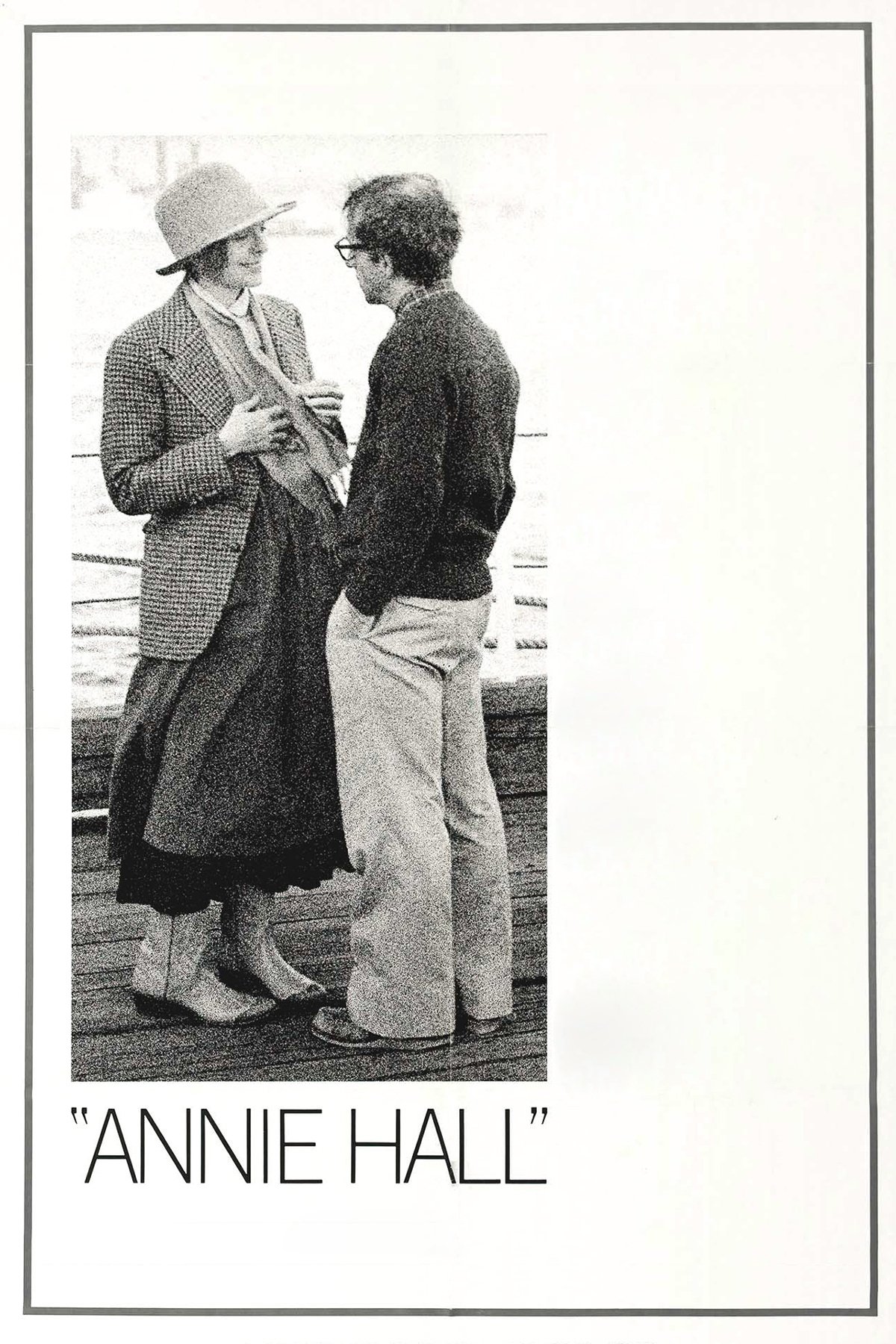
Fashion itself—Annie’s loose ties, baggy pants, and unconventional style—acts as an emblem of individuality and transformation. I read Annie’s attire as a rejection of normative femininity, and as a visual stand-in for her uncertain evolution and shifting sense of self. By comparison, Alvy’s reliance on stand-up routines and psychoanalysis signals that irony and intellect are his armor: tools for both connection and avoidance. When Annie sings, there’s a raw vulnerability; when Alvy jokes, I see a man desperate to outpace his own pain.
And I’d be remiss not to mention the running motif of missed connections—split-screen therapy scenes, subtitles that reveal inner thoughts, and dialogue constantly at odds with underlying emotion. Each formal device, for me, reinforces the essential loneliness at the heart of even our most intimate moments. The film’s brisk back-and-forths and clever set pieces loop us in to a set of anxieties about saying what you mean—and meaning what you say—before the window closes for good.
Key Scenes
Key Scene 1
One sequence I can never shake is Alvy and Annie’s first lobster-cooking fiasco in the kitchen. On its face, it’s a slapstick romp—a pair stumbling through physical comedy, laughter spilling over as the lobsters scuttle across the floor. Yet, every time I watch, I see this as a touchstone for the film’s central message. This is the moment when two people, awkward and unpolished, let their guards down and, for a fleeting beat, simply enjoy being together. The absence of pretense, the pure silliness—these small, imperfect joys are what Alvy mourns long after Annie is gone. For me, it’s a reminder that, however intellectual or self-protective we become, love inevitably flourishes, and founders, in the unscripted chaos of real life.
Key Scene 2
There’s one scene at the sidewalk outside the movie theater that I find particularly telling—not only because it encapsulates the film’s humor, but because it so sharply exposes the private anxieties within public encounters. While Annie and Alvy quarrel in line, Alvy, incensed by a nearby pontificator, drags the real Marshall McLuhan onscreen to deflate the blowhard’s arguments. On the surface, it’s a metatextual joke; but on a deeper level, it captures the tension between needing to be understood and the impossibility of ever truly correcting another’s self-perception. The moment feels like wish fulfillment for a character obsessed with validation. I read it as a window into Alvy’s insecurity—his urge to turn life into a stage where he can control outcomes, even when the stakes are painfully minor. It’s funny, yes, but also a little bit devastating: relationships aren’t debates you can win with the right authority at your side.
Key Scene 3
The film’s closing scene—Alvy reflecting on his relationship with Annie, their reunion at a café, and his attempts to turn their story into a play—has always been, for me, its emotional anchor. Here, sentimentality collides with self-awareness. Alvy recalls the old joke about needing the eggs, a metaphor which gets under my skin every time: we keep seeking out connection, folly and all, not because it’s rational or painless, but because it’s human. The scene is no grand reconciliation; it’s a resigned, affectionate acceptance that love was real even if it couldn’t last. The entire preceding whirlwind—neuroses, banter, heartbreak—fades into a gentle clarity: our stories, for all their flaws, remain worth telling and remembering. That’s the film’s last word, as I see it, and it lingers long after the credits roll.
Common Interpretations
Among critics and many viewers I’ve spoken with, Annie Hall is most often celebrated as both a subversion and elevation of the romantic comedy. Some see it as a treatise on the impossibility of sustaining love in a world obsessed with self-consciousness and analysis. Others, and I count myself among them, recognize a deeper generosity beneath the intellectual banter: yes, the film mocks the cliches of romance, but it also aches for connection, refusing to write off the value of even fleeting relationships.
There’s also a rich debate over the film’s value as a snapshot of 1970s urban life—the sharp contrast between New York insecurity and LA glibness is frequently read as an allegory for the fragmentation of identity in late 20th-century America. Some analysts focus on the role of therapy and introspection, interpreting Alvy’s introspective monologues as indicative of a generation’s growing fascination (and frustration) with self-improvement culture. I’ve seen others argue that the film is, more than anything, an anthem for melancholy nostalgia—a longing for a past that, paradoxically, is only ever fully accessible in hindsight or fiction.
While I’ve always been drawn to the notion that Annie Hall exposes the limits of reason, I know there’s another side: for some, Annie herself is the real protagonist—a woman carving out her own agency in an era of shifting gender roles. These viewers argue that Alvy, for all his wit, remains trapped, while Annie grows and transcends him. I see both readings as valid, but neither quite diminishing the film’s core: it’s both a portrait of individual limitation and a celebration of the messy, bracing courage to try again.
Films with Similar Themes
- Manhattan – Like Annie Hall, this film tackles romance, self-reflection, and the dissonance between longing and belonging, all set amidst the quirks and anxieties of urban life.
- Eternal Sunshine of the Spotless Mind – I see a powerful thematic echo here: both films puzzle over memory, the impossibility of erasing our emotional histories, and the paradoxical pull of painful love.
- Before Sunrise – The real-time conversations and focus on connection, transience, and missed opportunities mirror Annie Hall’s bittersweet investigation of intimacy and what might have been.
- When Harry Met Sally… – While lighter in tone, this film riffs on the tension between friendship and romance, male and female perspectives, and the enduring question: can men and women ever really “get” each other?
After wrestling with all the humor and heartbreak this film has laid out, I’m left thinking about the stories we spin just to make life bearable, and the way nostalgia glues together the pieces of relationships that refuse ever to fit cleanly. Annie Hall isn’t just about one particular love affair, nor is it content to skewer the conventions of its genre. Instead, I believe it’s trying to say that love—fleeting, irrational, dazzling, disappointing—is never less than meaningful simply because it ends. The urge to connect, to remember, and to delude ourselves that the next version might finally “work” is, in my mind, the very heart of being human. Even as the film skewers its own characters’ pretensions, it refuses to mock the sacredness of yearning itself. That is what, above all, has kept me coming back: the recognition that even in facing heartbreak, we keep reaching for the eggs.
If you’re deciding what to watch next, you might also want to see how this film holds up today or how it was originally received.