
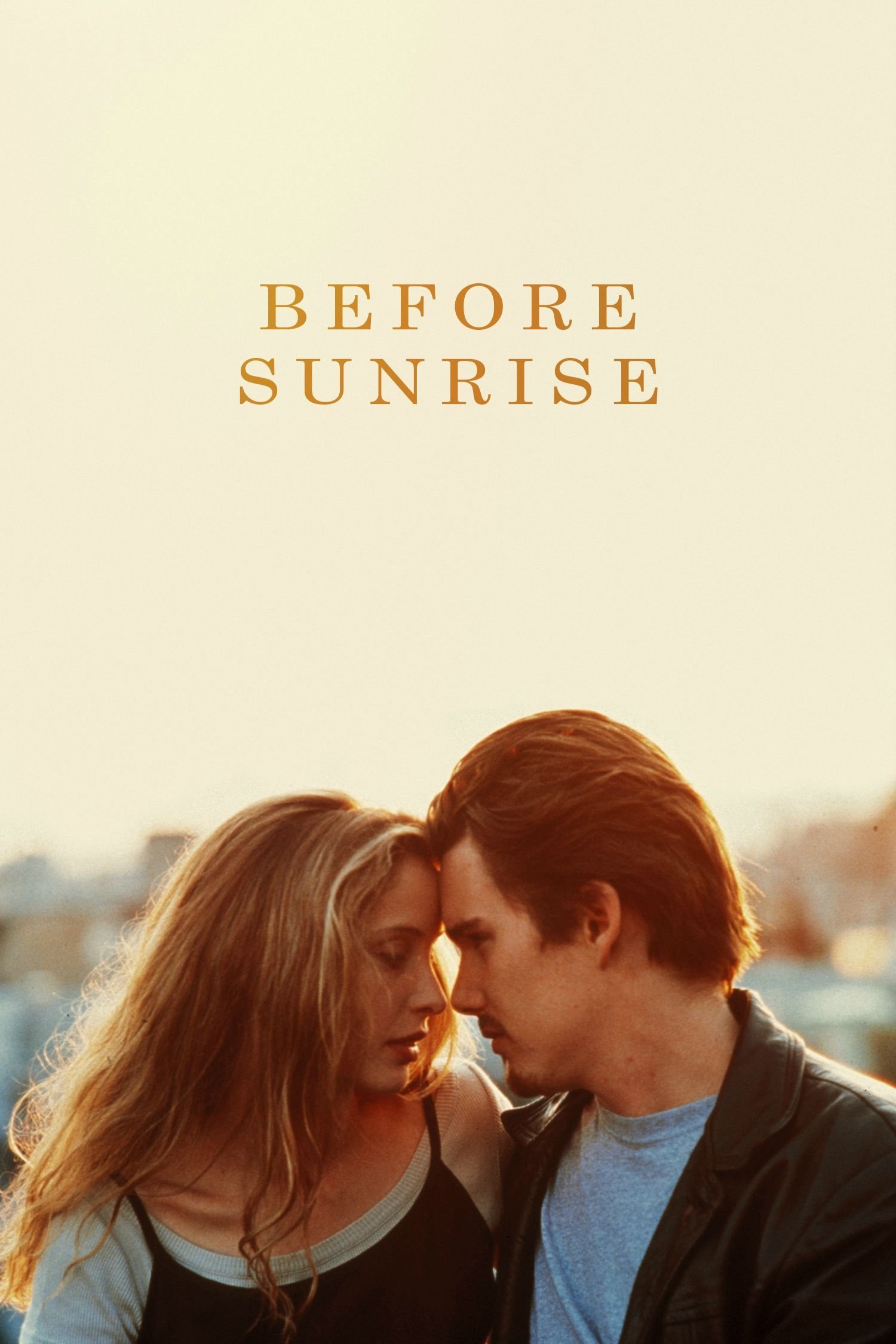
What the Film Is About
Before Sunrise, for me, will always stand out as cinema’s most honest conversation about fleeting human connection and electric possibility. Rather than the familiar crescendo of romance or the mechanics of plot, I experienced it as something closer to quietly falling into step with two strangers dancing with their own doubts. It’s a film rooted not in high drama, but in the heightened reality of one extraordinary evening: a single night given over to hope, vulnerability, and the permission to be truly curious with another soul. At its heart, I see it as less about whether love will last and more about whether authentic connection—however brief—can change who we become.
Emotionally, the journey is about risk. Both Jesse and Céline are at crossroads: they meet because they dare to step off their prescribed life paths, and it’s this existential leap that forms the core tension. I find myself drawn to the way the film traces the arc from polite, semi-guarded conversation to those raw exchanges where fear, desire, and honesty start to intermingle in unpredictable ways. Rather than a story just about falling in love, I see it as a story about discovery: of another person, yes, but just as much of oneself.
Core Themes
When I look beneath the surface, the themes of Before Sunrise resonate with my own thoughts about impermanence, openness, and the mechanics of intimacy. The film meditates on the possibility of deep connection between two people whose lives, by all practical measures, should intersect only for a moment. There’s a profound sense of transience hovering over every encounter—they are quite literally racing against time, and this awareness infuses each conversation with urgency and poignancy.
To me, the film gently interrogates the myth of “the one” and challenges whether love is a sustained choice or a flash of cosmic serendipity. I often interpret their dialogue almost as a philosophical duel, oscillating between skepticism and yearning. Another theme that jumps out to me is language—how words are used both to bridge gaps and to maintain protective distance. Through long, winding conversations, the film explores questions of trust, vulnerability, and identity: how much are we willing to expose ourselves to someone we may never see again? And what can two strangers teach each other about themselves?
I think of the film’s 1995 release as significant—Europe was grappling with its own new freedoms and uncertainties after the fall of the Berlin Wall (in 1989); Americans were questioning traditional love stories in the wake of changing social attitudes. The search for authenticity, so central to the characters, mirrors the cultural uncertainties of the time, but it feels just as urgent and relevant for anyone today confronting life’s crossroads: Should I reach out? Should I stay guarded? What am I risking if I let myself connect?
Symbolism & Motifs
The imagery and recurring motifs in Before Sunrise always feel deliberate, yet never forced. One of the most resonant symbols for me is the train itself— motion, transition, and the sense that life’s direction can turn on a single, spontaneous decision. Their walk through Vienna becomes far more than a picturesque backdrop; the city is always there, humming with art, decay, and the echo of past lovers. The shifting urban landscape seems to parallel the layered, evolving nature of conversation and attraction.
I’m especially struck by the recurring motif of clocks and timepieces—visible in shop windows, train stations, and even in their dialogue. It’s impossible to forget that their night is finite; the ticking clock invests each moment with weight. I also notice how the film uses physical barriers—fences, narrow passageways, bridges—not simply as background, but as reminders of the boundaries between public and private, between what’s said and what remains hidden. And throughout, there’s a gentle, almost melancholic focus on things that won’t last: a poem scrawled by the river, the brief encounter in a record store booth, the evanescent glow of dawn.
For me, these motifs aren’t just aesthetic—they quietly insist on the importance of presence: being alive to the ordinary and aware of the fragility of experience. Everything is fleeting, and yet there’s beauty in allowing a moment to be enough, rather than demanding it be permanent.
Key Scenes
Key Scene 1
The listening booth scene in the record store always stops me in my tracks, both for its simplicity and its emotional precision. When Jesse and Céline sit, shoulder to shoulder, listening to a song, the silence is loaded—each is acutely aware of the other, but neither dares to meet the other’s gaze. I see this as the film’s purest expression of longing: that awkward, exhilarating space between inquisitiveness and self-protection. The music becomes a third presence, allowing them to imagine what could be, but giving them cover from the fear of taking that next step. I interpret this as the essence of attraction: desire suspended, potential palpable, and the ordinary transformed into something unforgettable.
Key Scene 2
Later, when they meet the poet by the river who offers to compose a poem using a word they choose, I sense a deep crystallization of the film’s core themes. Here are two strangers interacting with a third—an encounter brimming with mutual suspicion, curiosity, and the possibility of connection. The poet’s creation, ephemeral but searingly heartfelt, becomes a metaphor for the entire night: what is shared may vanish utterly with dawn, yet it lingers in memory and meaning. By trusting this odd, artistic interaction, both Jesse and Céline further allow themselves to be changed by chance, making the film’s argument for openness to serendipity and the unknown.
Key Scene 3
The morning-after sequence, when the pair retrace their steps through empty Vienna, hits me harder than any overtly romantic climax. The sunlight exposes the nakedness of their brief attachment. When they have to part ways, the significance of every unspoken promise and unfinished conversation becomes clear: nothing has been resolved, but everything has shifted. This is where the film’s real statement coalesces for me—meaning is created not in grand gestures, but in the willingness to risk disappointment and separation for the sake of honesty and connection. By not providing a tidy resolution, the film leaves us suspended in uncertainty, echoing the ambiguity at the heart of all meaningful relationships.
Common Interpretations
Over the years, I’ve seen Before Sunrise spark passionate debate: is it a story of soulmates or merely a privileged fantasy? Some critics argue that it’s fundamentally about youth and idealism—an ode to brief encounters that flare up and fade away, never meant to last or repeat in the same form. I tend to agree that the film celebrates impermanence, but I also see it as something more: an experiment in radical openness, an argument that the most authentic human experiences depend on our willingness to be present with another person, without scripts or guarantees.
A frequent audience interpretation focuses on the almost exaggerated ordinariness of the dialogue—that all the big feelings emerge not from melodrama, but from questions and confessions that anyone could ask a stranger late at night. Some viewers find the characters’ self-absorption off-putting, suggesting that the film is a meditation on youthful narcissism. I hear this critique, yet I’m consistently struck by the generosity with which Jesse and Céline listen to each other. For me, the film isn’t about finding romantic perfection, but about what happens when we temporarily suspend disbelief, drop our performance, and let ourselves be seen.
Another thread I often find in criticism is the notion that Vienna itself becomes a character—its history and architecture inviting conversations about time, memory, and the ephemeral nature of love. By wandering through a city with centuries of heartbreak, hope, and triumph encoded in its stones, the characters’ own fleeting night is both magnified and dwarfed. Whether viewers interpret this as elevating their experience or putting it in perspective depends a lot on one’s own romantic temperament.
Films with Similar Themes
- Lost in Translation – I often think of this film for its exploration of transient intimacy; two people meet in an unfamiliar city, forging an unlikely bond that is meaningful precisely because it is impermanent.
- In the Mood for Love – There’s a shared longing and restraint here; both films dwell on the tension and beauty in missed opportunities and unspoken desires.
- Once – Like Before Sunrise, this film spends time with two people drawn together by art and conversation, finding connection in a narrow window of time and space.
- Her – While the technology and premise differ, the underlying questions about what we open ourselves to, and whether a fleeting relationship can be transformative, feel deeply resonant.
When I reflect on Before Sunrise as a whole, what stays with me is not just the tender hopefulness of its romance, but its insistence that even the shortest encounters can have lifelong impact. The film doesn’t argue that every meeting is fate, but instead that the courage to listen—to ourselves and to others—is the only certainty. Released in an era when love stories were often loud or overwrought, its quiet faith in conversation, possibility, and imperfection feels beautifully subversive and endlessly relevant.
If you’re deciding what to watch next, you might also want to see how this film holds up today or how it was originally received.