
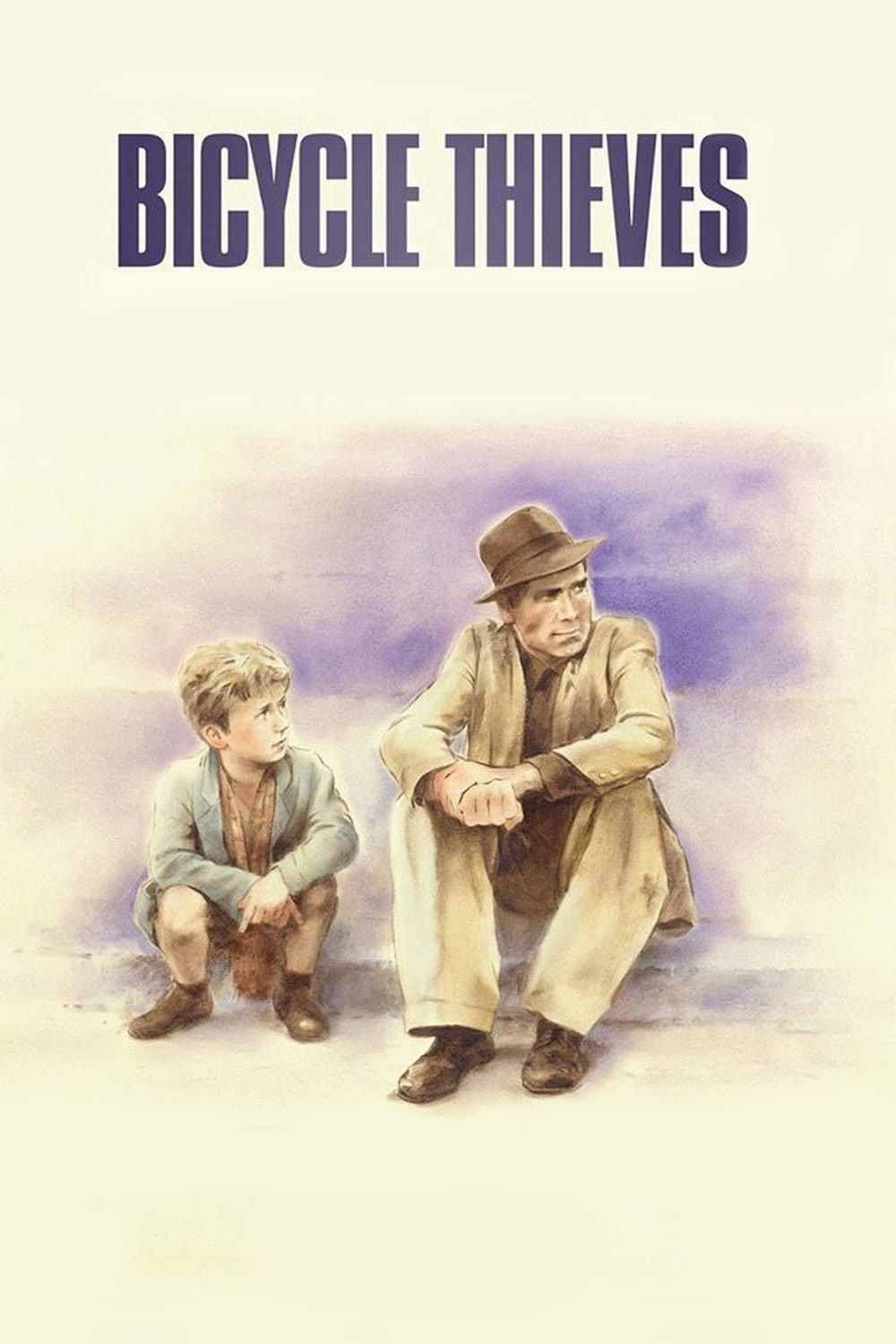
What the Film Is About
Every time I revisit “Bicycle Thieves,” I’m struck less by the physical journey and more by the emotional terrain it traverses. The world it shows isn’t one of adventure or heroism, but of gnawing desperation and quiet endurance. I see the film’s core as the agonizing attempt by a father to preserve dignity in front of his son, even as the world conspires against him. For me, the pulse of the story is a father’s hope colliding with an unforgiving postwar reality, the struggle for work and respect tangled up in love, shame, and fear.
When I think about what propels the film, it’s not the hunt for a missing bicycle so much as a crushing uncertainty—we watch a man’s worth being measured, eroded, and ultimately judged not only by his peers but by his own child. This is more than a tale of loss; it’s an unrelenting, intimate confrontation with the fragility of hope and the resilience of love under the weight of poverty.
Core Themes
From my perspective, one dominant thread running through “Bicycle Thieves” is the dignity of the individual within an indifferent or, worse, hostile society. The film examines how economic hardship is not just about hunger or shelter, but about losing a sense of self. I’m always left reflecting on what it means to be seen as disposable—a cog easily replaced or cast aside—when systemic forces overwhelm personal virtue and effort.
For me, the impact of unemployment here is about more than financial instability; it strips away community and agency. The perpetual threat of poverty, especially in immediate postwar Italy, was a living force, not an abstract danger. It’s impossible for me to separate the film’s themes from the era’s historical backdrop: war had just ended, reconstruction floundered, and millions were thrust into a battle not of bullets, but of survival with little hope of rescue.
Another theme that lingers in my mind is the volatile territory of fatherhood and masculine identity. The father’s quest is not just for a stolen bike, but for validation—proving to his son (and himself) that he is capable, worthy, and honorable. The child’s presence intensifies every setback, every moral falter. Those small hands watching his father’s every move transform what could have been a private humiliation into a deeply public emotional trial.
Lastly, I see the film’s confrontation with solidarity and alienation. Early on, there’s a temptation to believe in the kindness of strangers and the social net—fleeting moments where empathy glimmers—but these dissolve into a darker lesson. In “Bicycle Thieves,” social bonds are frayed, intermittent, and often replaced by suspicion or opportunism. I keep coming back to how the film refuses easy sentiment or community, making its portrait of postwar society all the more stark and contemporary.
Symbolism & Motifs
When I watch the film, the motif of the bicycle itself always stands front and center. I can’t help but see it as far more than a mere vehicle: it’s the embodiment of dignity, hope, and the narrow bridge between mere existence and a chance at a better life. The simplicity of the object, juxtaposed with its overwhelming value to the family, makes every appearance of the bicycle a meditation on survival in a world of scarcity.
The city of Rome looms as another persistent symbol. For me, the city’s labyrinthine streets are not just setting, but a living force—the indifferent background to personal suffering, sometimes hostile, sometimes simply uncaring. Rome becomes a character in its own right, reflecting the postwar chaos and alienation that marked late 1940s Italy. Urban sprawl, crowds, and disorientation all reinforce the sense of impotence in the face of institutional apathy.
Water recurs throughout as both a practical and symbolic element. Like many, I notice the rain at pivotal moments signifying not just the unpredictability of fate but also the washing away of hope. Whether it’s storms cutting across the action or images of mud and puddle, there’s a subtle but persistent sense that life is washing over these characters, unyielding in its power.
Lastly, the motif of hands—searching, pleading, clutching, letting go—haunts me long after the film ends. The physical gestures of reaching, pushing, and grabbing become a language of need and struggle. The intimacy of touch, especially between father and son, is as resonant as any spoken words.
Key Scenes
Key Scene 1
The image that always arrests my attention comes early: the quiet pride as the father places the newly-redeemed bicycle in the hands of his family, their faces alight with cautious hope. For me, this scene is pivotal not because of dramatic action, but because it’s suffused with a sense of imminent possibility. There’s a palpable joy—in this moment, the mundane object becomes a ticket to participation in society. Yet I can’t escape the tension; even within this fragile happiness, there’s anxiety, a knowledge that fate can change in an instant. The father stands as a provider once more, while under the surface, the cracks are vivid and pulsing.
Key Scene 2
I always return to the extended search through the bustling Roman streets, following clues, pursuing rumors, desperate amidst the faceless throng. The emotional weight accumulates here—the father’s optimism curdles into exhaustion and then accusation. What strikes me is not the mechanics of the hunt but the way the city transforms into an antagonist, with strangers indifferent or actively hostile. There is a shift in the father-son dynamic: the child becomes frightened witness to the erosion of his father’s composure and certainty. It drives home, for me, how the pursuit of justice or restitution collapses in a place where no one takes responsibility or even notices.
Key Scene 3
Late in the story, the moment where the father succumbs—his choice to blur the line between victim and perpetrator—has always felt devastating and deeply human. This is the point where hope gives way to shame and the myth of personal control shatters. In the son’s silent gaze, I see the real cost of poverty: not just hunger, but the loss of moral certainty and innocence. As they move through the streets together, exposed in their vulnerability, I feel the film is laying bare its ultimate truth about powerlessness and endurance. It’s a scene that signals not resolution, but the endlessness of struggle, and it leaves me reflecting on what perseverance truly costs.
Common Interpretations
Whenever I engage with other viewers or critics, a recurring interpretation emerges: “Bicycle Thieves” is seen as a stark illustration of postwar Italian poverty, a world where the promises of progress ring hollow. For many, the story’s power lies in exposing the illusion that hard work and honesty are enough to secure a dignified life. Instead, personal virtue is constantly threatened by forces beyond one’s control.
Others, especially those attuned to father-son stories, see the film as a profound reflection on masculine identity and parental responsibility. The slow unraveling of the father’s authority and his son’s gradual loss of innocence form the emotional backbone of this reading. I’m fascinated by how viewers divide between focusing on the social critique versus the intimate tragedy—the two are so deeply intertwined that neither thread can be considered in isolation.
There’s also a strong current, particularly in academic circles, that reads the film as an indictment of institutional failure. Social services, the police, and even religious institutions are depicted as powerless or indifferent. For me, this aligns with the sense of a world where suffering is individualized and collective action is nowhere to be found.
Of course, some emphasize the film’s neorealist aesthetic—the use of non-professional actors, real locations, and everyday struggles—as an antidote to escapist cinema. For these viewers, “Bicycle Thieves” isn’t simply a bleak portrait, but a revolutionary act, forcing attention on lives otherwise hidden from view. I find all these readings compelling, because each foregrounds a different aspect of the film’s layered humanity.
Films with Similar Themes
- Umberto D. – Whenever I seek films that probe the human toll of poverty and aging in postwar Italy, “Umberto D.” springs to mind. Its thematic kinship lies in its portrayal of marginalization and the erosion of dignity, with another protagonist battling loneliness and social neglect.
- The 400 Blows – For me, Truffaut’s debut resonates not just because of its narrative, but for how it grapples with childhood alienation and family dysfunction. Like “Bicycle Thieves,” it bears witness to the pain of growing up within indifferent institutions and fractured homes.
- The Grapes of Wrath – Whenever I want an American perspective on dispossession and familial struggle, I turn to this film. Both features chronicle journeys shaped by economic necessity, social injustice, and the relentless search for hope in times of scarcity.
- Tokyo Story – I see a shared, understated sadness in the way “Tokyo Story” and “Bicycle Thieves” explore family bonds under strain. Both films invite us to reflect on generational disappointment, urban dislocation, and the way small moments become quietly transformative.
When I reflect on “Bicycle Thieves,” I see it as a piercing, uncompromising statement about the price of dignity in a world torn apart by structural forces. It doesn’t glorify suffering or propose easy solutions—it bears honest witness to what it means to be vulnerable, to try and fail, and to keep loving despite humiliation and loss. To me, it remains a bracing testament to the intertwined fates of parents and children, and a reminder that society’s true measure is found in how it treats its most precarious members.
If you’re deciding what to watch next, you might also want to see how this film holds up today or how it was originally received.
🎬 Check out today's best-selling movies on Amazon!
View Deals on Amazon