
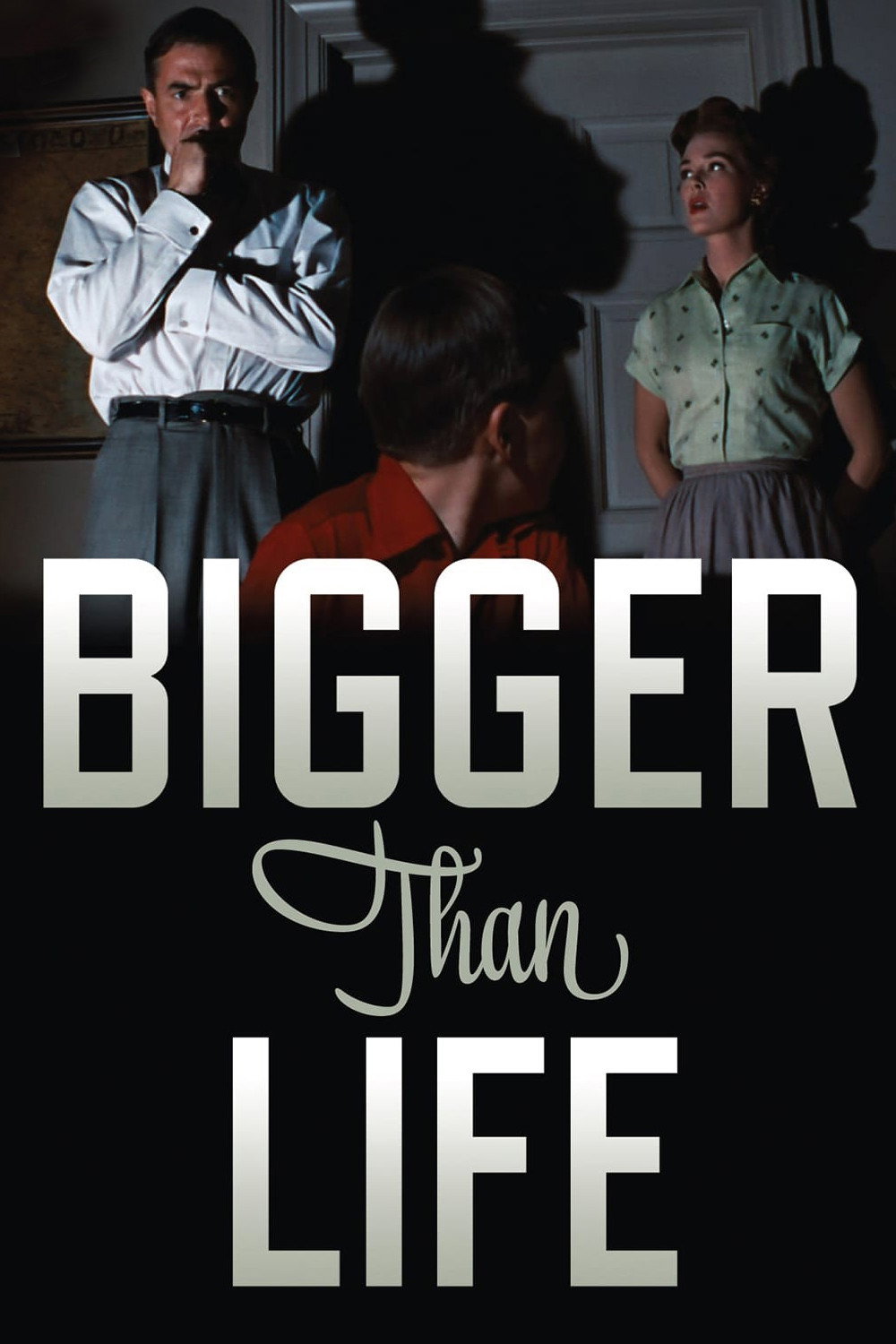
What the Film Is About
I have always been haunted by the anxieties simmering beneath the surface of “Bigger Than Life.” What strikes me first, and what lingers most stubbornly, is how the film carves into the fragile hope of American prosperity and the terrors lurking just behind it. To me, this isn’t a tale fixated on addiction or illness alone; rather, it’s a ruthless cross-examination of the postwar American dream—one that exposes how easily ordinary comfort gives way to dissonance, fear, and obsession.
Watching as a family man slowly unravels, pressured by forces both internal and societal, I’m compelled to see the film as an autopsy of dignity—or perhaps its slow, surgical removal. The conflict is, at its core, psychological: a man at war with himself while those who love him orbit helplessly, desperate to reach or reform him. Instead of confirming goodness or stability, the narrative points us toward uncomfortable terrain, asking whether the homes we build and ideals we cling to can possibly shelter us from our darker compulsions.
Core Themes
Every time I revisit “Bigger Than Life,” I find myself wading through a tangle of themes, all anchored by the film’s refusal to provide tidy answers. Most powerfully, I see it dissecting the myth of postwar American stability. Ed’s breakdown isn’t just a personal tragedy—it’s the collision of personal repression with social expectation. The film cracks open the façade of an idealized home, revealing a familial structure ill-equipped to survive true vulnerability or the pressures of relentless self-improvement.
Isolation emerges as another central axis here. What chills me is not just Ed’s descent, but the silence that envelops him—his inability to confess, connect, or unravel safely. The film’s world may look pristine, but it is one of profound alienation. I see it as a critique of the era’s prescribed masculinity, the expectation that men shoulder burdens alone, and the inadequacy of emotional tools given to navigate genuine crisis.
Power dynamics thread through the domestic sphere, transforming the home into a site of authoritarian struggle. When illness morphs Ed into a tyrant, I sense the film equating unchecked patriarchal power with danger—a warning that personal authority can curdle into violence when left unexamined. This strikes me as especially prescient within the context of the 1950s, when public confidence in authority figures surged alongside private anxieties about control and agency.
These concerns matter as much today as they did six decades ago. Society still grapples with impossible expectations: productivity, composure, upward mobility. The terror of letting down loved ones, or being exposed as frail, remains universal. I find in the film a cautionary message about the limits of pride and the necessity of confronting our vulnerabilities—personally, and collectively—before they become destructive.
Symbolism & Motifs
As I analyze the visual language of “Bigger Than Life,” what leaps out at me is the relentless use of ordinary domestic objects to signal extraordinary distress. The family home, shot with hyper-clarity and geometric precision, transforms before my eyes from a place of refuge into an arena of dread. Its bright windows and right angles, initially comforting, become claustrophobic—beauty curdling into threat. The way the setting shifts under psychological strain mimics the characters’ unraveling, making the familiar appear monstrous.
Mirrors and frames are used, to my eye, as recurring motifs that underscore internal and external perceptions of identity. Whenever Ed studies his reflection, I feel the tension of self-perception versus reality—the sense that he has become a stranger to himself. The motif of doors and thresholds is equally loaded. In this film, doors aren’t just passageways; they are barriers, often closed or looming, reinforcing how cut off each family member becomes from the others as crisis tightens its grip.
Perhaps the most chilling motif is the medicine bottle—the prednisolone pills that give, and then violently strip away, Ed’s sense of control. The pills symbolize not only medical intervention but also the larger societal belief in easy fixes—whether medical, social, or psychological. Through their central presence, I sense the film’s skepticism toward the blind trust in modern progress or authority to solve fundamentally human suffering.
Color itself works as a symbol in the film. I’m struck every time by the way the lush, saturated palette serves not as reassurance, but as an ironic counterpoint to the spiritual bleakness onscreen. Even in moments of supposed tranquility, the film feels suffused with a manic energy—the “bigness” of life is never comforting, but almost too immense to bear.
Key Scenes
Key Scene 1
There is a scene early in Ed’s transformation that stays with me: the moment when his altered personality emerges fully, and he begins wielding his authority not as a nurturing presence, but as a tool for domination. I’m always unnerved by how the family’s face changes in this instant—they’re no longer interacting but orbiting a new, unpredictable center. The emotional charge here is electric; what’s crucial isn’t just the content of Ed’s outburst, but the suddenness with which love and order curdle into suspicion and dread. It marks the juncture when the home ceases to be a sanctuary, and the full cost of pretending all is well becomes apparent. For me, this is the turning point that confirms the film is not about an illness or substance, but about the structures we use to shield ourselves, and how fragile they are under stress.
Key Scene 2
Midway through the film, there is a particularly suffocating dinner sequence that, every time I watch it, makes my skin crawl. Here, the ordinary ritual of breaking bread morphs into a power play, every exchange brittle with tension. I see this meal not as sustenance, but as an implicit test: Does everyone know their part? Will the mask of normalcy hold? The strain between spoken words and unspoken terror encapsulates the dangers of repression and denial that dominate not just this family, but the social fabric they represent. Ed’s growing irrationality collides with the polite scripts of family life, and it’s clear—to me, at least—that the true horror is not what is said, but what can’t be said.
Key Scene 3
The film’s denouement, in which Ed stands at the brink of irredeemable violence, is—without a doubt—its most searing moment. What grips me is not only the emotional chaos of the scene itself, but the way it lays bare the psychic damage inflicted by years of self-denial and misplaced faith. In this climax, the breakdown of an individual mirrors the breakdown of every institution—family, medicine, even faith—that is supposed to protect us. The sense of catharsis is ambiguous at best. By the time the family is reassembled, nothing can quite unspool the damage. I’m left with the impression that healing, if it comes at all, must begin with honesty about our pain and limits—a truth the film suggests, but refuses to guarantee.
Common Interpretations
Over the years I’ve spent immersed in film criticism and history, I’ve encountered several prevailing interpretations of “Bigger Than Life.” Some critics focus on its status as a blistering critique of 1950s conformity and repression, seeing Ed’s collapse as a byproduct of societal pressures to suppress weakness and project perfect strength. In this view, the film’s message is less about one man’s illness and more a warning about what happens when cultural scripts become more important than emotional truth.
Others interpret the film through the lens of toxic masculinity and patriarchal authority. To these viewers, Ed’s transformation represents not so much a break from his role as father and provider, but the logical—if horrifying—extension of it. The house becomes a microcosm of the American hierarchy, and the threat to his family is not simply his illness, but the unchecked permissiveness of his power.
There’s also a strand of thought that reads the film as a broader critique of faith in science and technological progress. The prednisolone, hailed initially as a miracle, quickly morphs into a symbol of unintended consequences. I share some sympathies with this line of thinking; the film certainly radiates skepticism about society’s reliance on quick fixes, whether in medicine, mass culture, or psychology.
Though some viewers see a note of optimism in the film’s closing moments, I invariably finish with a sense of unresolved tension. The mechanisms that failed Ed and his family remain in place—fragile, but untouched. It’s this refusal to comfort or exonerate, I think, that makes the film enduringly complex and, for me, deeply unsettling.
Films with Similar Themes
- Rebel Without a Cause (1955) – I connect these films for their exposure of postwar discontent beneath suburban placidity. Both critique the emotional voids left by societal expectations, focusing on families unable to cope with deep-seated crises.
- The Man in the Gray Flannel Suit (1956) – This film, much like “Bigger Than Life,” interrogates the price of conformity and the psychological toll of keeping up appearances. I find both stories meditate on internal fracturing masked by external composure.
- All That Heaven Allows (1955) – The theme of repression and the cost of failing to fit social molds links this melodrama to “Bigger Than Life.” For me, each film’s polished world belies erupting personal discord and shame.
- Ordinary People (1980) – Though made decades later, its critical gaze on family dysfunction and suppressed pain deeply echoes what I experience watching “Bigger Than Life.” Both prod at the consequences of bottled emotion and unspoken trauma.
Personally, I think “Bigger Than Life” still lands with bruising force because it wrestles with what lies beneath the surfaces we curate—whether family portrait, career trajectory, or suburban façade. If the film warns against anything, it’s the cost of pretending: the dangers in denying pain, in worshipping order at the expense of honest feeling, in allowing authority—medical, paternal, or societal—to become absolute and unchecked. Within the anxious beauty of its frames, I continually find an urgent call for compassion, humility, and the courage to confront our own frailty—values that, to my mind, remain as vital today as they did in the film’s own uncertain era.
If you’re deciding what to watch next, you might also want to see how this film holds up today or how it was originally received.
🎬 Check out today's best-selling movies on Amazon!
View Deals on Amazon