
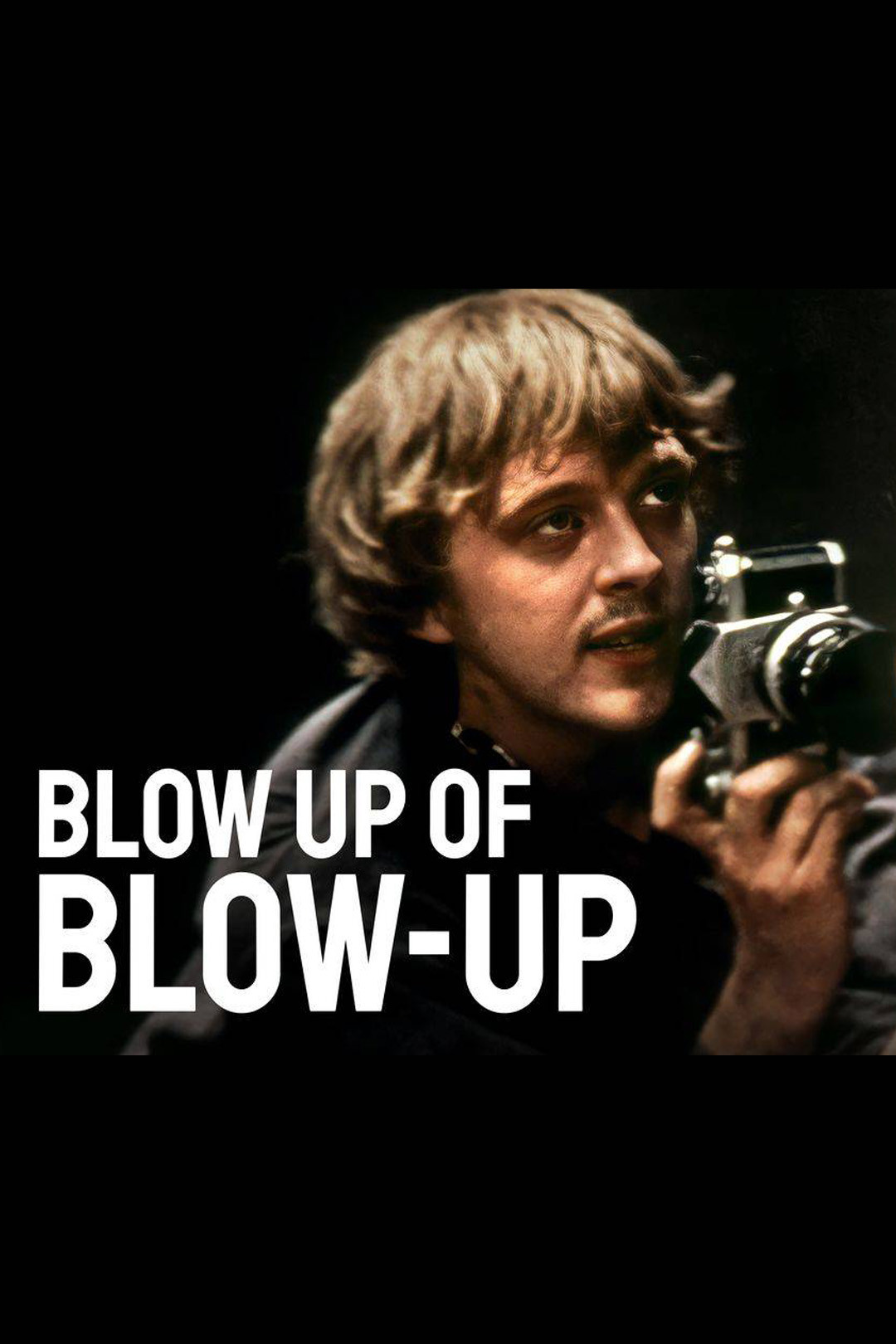
What the Film Is About
I remember the first time I watched “Blow-Up,” I was unsettled by how the film let the viewer drift in ambiguity, refusing to offer comfort or clarity. My experience was less about following a detective story and more about feeling the gnawing uncertainty inside the main character. To me, the film captures the psychological disorientation that arises when you think you’ve witnessed something profound, only to discover you can no longer trust your perception. The narrative moves not by uncovering facts but by unraveling the protagonist’s certainty, focusing on the emotional coldness and disconnect that comes from a life organized around surfaces, style, and fleeting sensations.
There’s a prevailing sense of rootlessness that shapes every frame for me—a beautiful world where nothing feels real or permanent. The central conflict feels internal, not driven by external threats but by a mounting desperation to grasp some ultimate truth beneath the layers of artifice. The film’s direction is ambiguous; I found myself questioning not just the protagonist’s discoveries, but my own reasons for wanting answers. It’s the loneliness of seeking meaning in a world that refuses to be pinned down.
Core Themes
My personal reading of the film centers around the elusive nature of reality and the instability of perception. The film’s exploration of truth and doubt has always resonated with me, especially in how it interrogates the role of the observer. What struck me hardest was the idea that reality is both constructed and fragile; what we see is filtered by our desires, our technology, and our boredom. “Blow-Up” lingers on the impossibility of achieving objective truth, whether it’s in art, memory, or daily existence.
At the heart of the film, I found a ruthless meditation on modern alienation. The characters float through a landscape saturated with fashion and sensuality, yet the more I paid attention, the more I saw how detached and unfulfilled they seemed. This is not just a critique of 1960s “Swinging London,” but a statement about any era where appearance seduces us away from substance. My understanding is that the film uses its protagonist’s journey to pose questions about the reliability of images, the ethics of looking, and the emptiness that arises when everything becomes a surface to be photographed but never truly seen.
When I consider its original context in 1966, I see how it tapped into anxieties about authenticity and the fragmentation of identity in a rapidly changing, media-saturated society. Today, the themes feel more urgent than ever, anticipating issues of surveillance, digital manipulation, and our uneasy trust in images and narratives. I’m always struck by how “Blow-Up” refuses moral judgment; it merely exposes the consequences of living without a stable sense of what is real or meaningful.
Symbolism & Motifs
The centerpiece of the film, for me, lies in its recurring images of cameras, photographs, and mirrors. The camera is not just a tool; it becomes an extension of the protagonist’s doubt, a way of both seeking and escaping reality. Every time he lifts his lens, I sense a hope that the world might reveal its secrets—but the act of photographing also creates a filter, distancing him from genuine experience.
Mirrors and reflective surfaces abound, hinting at the doubled nature of truth and the instability of self. I see these motifs not just as visual flourishes, but as reminders that we are forever confronted with interpretations rather than direct encounters. There’s also the motif of silence and absence: empty parks, wordless interactions, unexplained mysteries. I’m always drawn to how these absences are loaded with significance—the things not seen or heard become more powerful than what’s on display.
I’m struck by the motif of the blown-up photographs themselves—grainy, ambiguous, endlessly scrutinized for meaning that may not exist. To me, they’re objects of obsession, standing for our futile attempts to fix or possess the truth through technology. The visual language is sly, often showing us crowded scenes with people milling aimlessly or models posing, only to pull back and reveal that nothing substantial is ever happening beneath the surface. This constant doubling and uncertainty create a sense of existential unease that seeps into every aspect of the film.
Key Scenes
Key Scene 1
For me, the sequence where the photographer first enlarges his pictures in the darkroom acts as the film’s existential core. As each print is blown up, the details become less clear, not more—what appeared as a factual record morphs into a puzzle of shadows, smudges and ghostly shapes. This moment is crucial because it captures the philosophical anxiety at the heart of the film: the more we scrutinize reality, the less sure of it we become. I experience the protagonist’s mix of excitement and dread as a proxy for my own desperate search for meaning, doomed by the limits of perception.
Key Scene 2
There’s a brilliant, understated scene in which the photographer, surrounded by beautiful models and the architecture of high fashion, looks utterly disconnected—a moment that, to me, crystallizes the film’s message about alienation. The room is full of movement, color, and sound, yet his blank expression is almost accusatory, as if he’s searching for significance in a world that only offers surfaces. That sense of watching life unfold from a glass box—never truly participating—felt devastatingly accurate to me, and it’s here that I fully grasped the film’s critique of an aestheticized, depersonalized modernity.
Key Scene 3
The film’s enigmatic final sequence, featuring a group of mimes enacting an invisible tennis match, has stayed with me for years. I always found this scene to be the director’s final, provocative gesture: the protagonist stands on the edge of the artificial game, then seemingly allows himself to “hear” the sound of an imaginary ball. In that moment, reality becomes whatever we collectively agree to believe. For me, this is the film’s ultimate statement—“truth” is not discovered but constructed, and our complicity in illusions is inescapable. Watching the photographer accept, however briefly, the rules of this fabricated reality, I felt the film’s ambiguity take root in a profoundly unsettling way. It’s less a resolution than a recognition that ambiguity is our condition.
Common Interpretations
When I’ve spoken with other film enthusiasts and read critical responses to “Blow-Up,” I’ve seen a handful of dominant interpretations emerge. Many viewers, like myself, view the film as a sustained meditation on epistemology—the limits of what can be known or proven through the senses. Some critics have argued that the film is ultimately about voyeurism and the morality of spectatorship. I’m drawn to readings that emphasize how the protagonist, in attempting to “capture” reality with his camera, participates in a kind of artistic violence—rendering people and events as objects, stripping them of context and complexity.
There are also interpretations that connect the film’s ambiguity to the social and political atmosphere of 1960s London. Some scholars have suggested that the pervasive uncertainty is a reflection of the decade’s upheavals: cultural revolution, shifting sexual mores, and the destabilization of traditional values. Yet, the film refuses to make explicit statements, leading many to see its core meaning as a celebration of ambiguity itself. I often find myself returning to the idea that “Blow-Up” is less interested in solving a mystery than in examining why we crave certainty in the first place.
At the same time, there are viewers who read the film as self-referential—a comment on the nature of filmmaking and art. The creation and manipulation of images, the way viewers and creators alike construct meaning where there may be none, has always struck me as one of the film’s most daring meta-commentaries. These multiple layers of interpretation don’t dilute the film; they make it more rich, more alive to changing historical and personal contexts.
Films with Similar Themes
- Rear Window – I’m reminded of the way this film probes the ethics of observation and how seeing is complicated by desire and ambiguity, much like the uneasy relationship between the observer and the observed in “Blow-Up.”
- The Conversation – The obsession with surveillance and the inability to achieve clarity echoes the protagonist’s anxious search for truth, drawing parallels in their treatment of perception and mistrust.
- Lost Highway – I see a kindred spirit here in the use of shifting realities, doubles, and identity breakdowns, tying into the existential uncertainty and alienation present in “Blow-Up.”
- Peeping Tom – Both films challenge the morality of the gaze; for me, the uneasy proximity between looking and possessing is a deep thematic current they share.
Reflecting on what “Blow-Up” ultimately communicates, I come away with a sense of profound epistemological humility. Human nature, as I see it through this film’s blurred lens, is defined by a restless pursuit of understanding that’s perpetually thwarted—not necessarily by outside forces, but by our own limitations and the seductive promise of images. The society it portrays is one obsessed with appearances, chasing after moments of truth only to discover layers of ambiguity and unresolvable doubt. When I think about the era of its creation, I see a work that presciently questioned trust in media, authority, and personal experience, offering no easy answers and refusing to close its mysteries. “Blow-Up” lingers because it captures what it feels like to be alive in a world that dazzles you with surfaces while hiding the ground beneath your feet.
If you’re deciding what to watch next, you might also want to see how this film holds up today or how it was originally received.
🎬 Check out today's best-selling movies on Amazon!
View Deals on Amazon