
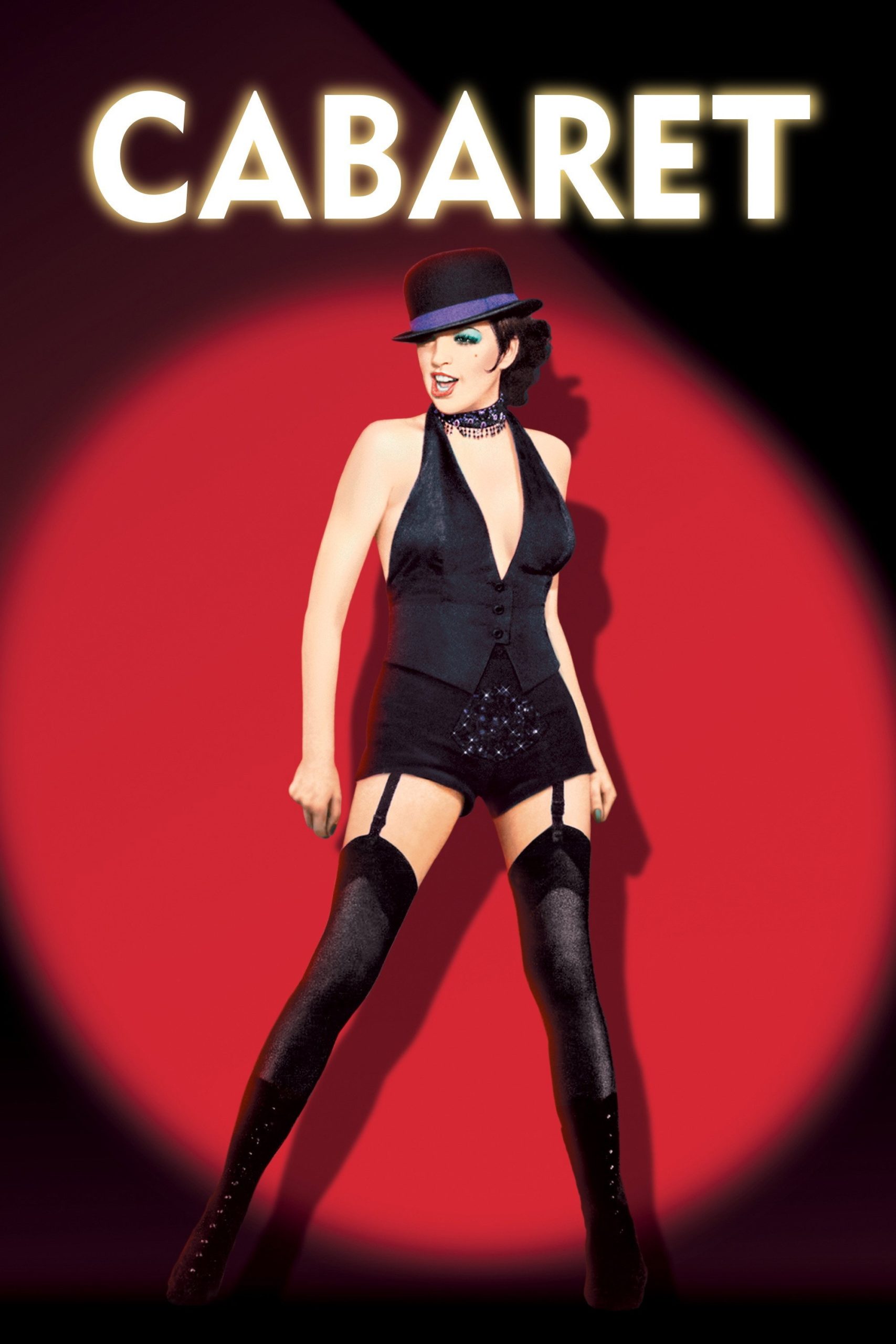
The first time I saw “Cabaret,” I felt an unsettling mix of seduction and dread—an uncanny sense that wove itself through the electric performances and glittering stagecraft. Berlin in 1931, presented through the haze of Weimar excess, felt at once thrillingly alive and curiously brittle. I was compelled by the film’s intoxicating celebration of freedom—sexual, artistic, and social—even as an unspoken disaster crept relentlessly in the background. “Cabaret” didn’t simply narrate a story; it invited me into a world masked by makeup, music, and laughter, daring me to look closer at what lurked beneath the surface. I found myself circling the central question: how do we, on the brink of disaster, choose what to see and what to deny?
What the Film Is About
“Cabaret” is more than a musical set in a Berlin nightclub at the dawn of the Nazi Party’s rise; it’s a fever dream of individual yearnings and collective blindness. The Kit Kat Klub—perpetually alive, decadent, and defiant—serves as both sanctuary and spectacle, a haven for misfits to perform and reinvent themselves with every song. Sally Bowles, played by Liza Minnelli with kinetic bravado, draws me deep into her pursuit of liberation, her desperate hunger for life and possibility. Intersecting with Sally are Brian, the English academic whose reserve is a thin veneer for his own desires and confusion, and a swirling cast of lovers, outcasts, and opportunists. Behind the fizz of romance and rebellion, the film uses Berlin’s cabaret scene as a microcosm for a society slipping toward catastrophe. At every turn, “Cabaret” asks: how much can and should we celebrate, even as shadows grow longer? What are the costs of ignoring those shadows?
Core Themes
To me, “Cabaret” does its most vital work not in recounting events, but in excavating the emotional and cultural stakes of a generation trying to live vividly while history closes in. The most resonant themes are:
- Freedom versus responsibility: Characters pursue pleasure and authenticity, but their self-involvement breeds a blindness that enables social collapse.
- Denial and escapism: The cabaret offers a sanctuary, but the stage lights both illuminate and obscure the dangers beyond its walls. The artistic freedom is exhilarating, yet a collective act of willful misdirection.
- The seductive but impermanent nature of decadence: The film’s delirious energy is shadowed by a sense of doom—joy becomes frantic, love is fleeting, and every celebration seems to teeter on the verge of disaster.
- The tension between individual identity and social forces: Characters—immigrants, sexual minorities, dreamers—populate spaces where they can claim identity and agency, but those spaces are fragile.
- Art as resistance, complicity, and survival: The cabaret’s performances both mock and reflect the world outside, revealing art as a double-edged tool—capable of protest, denial, and self-delusion.
These themes shimmer through every musical number, exchange, and camera movement. For me, “Cabaret” is a meditation on the consequences of seeking personal fulfillment while dark tides rise outside our chosen refuges.
Symbolism & Motifs
The power of “Cabaret” lies in its stunning, carefully wrought symbolism. Rewatching the film, I can trace how its motifs accumulate meaning, turning objects and gestures into signposts for emotional and political realities.
- The cabaret itself is a prism: simultaneously a bubble of liberation and a hall of mirrors that distorts what’s happening in the streets. Every time I see the painted faces and choreographed moves, I’m reminded of the thin line between self-expression and self-deception.
- The Emcee, portrayed with riveting ambiguity by Joel Grey, becomes less a character than a trickster archetype—a master of ceremonies for both revelry and ruin. His omnipresence is a constant reminder that what we laugh at may be the very thing that undoes us.
- Mirrors recur with almost obsessive intensity. Characters glimpse themselves transformed, disguised, or exposed. The mirrors—onstage and off—insist on questions of self-knowledge: are we honest with ourselves when we step onto the stage of daily life? Or are we always performing?
- Music is never innocent. Every song (especially iconic numbers like “Money, Money”) does double duty: a commentary on both the audience’s desires and the real-world anxieties simmering underneath. I notice how the numbers, at first playful, grow more pointed as political reality intrudes.
- The recurring motif of masks and makeup, both literal and psychological, points to a larger question that the film poses: when do our defenses, our makeup, become prisons?
What I find most profound is how the spectacle amplifies the tension between seeing and refusing to see. The cabaret’s lights are brightest as danger approaches—a cinematic embodiment of the compulsion to celebrate in the face of encroaching darkness.
Key Scenes
For me, “Cabaret” is defined not by its plot but by a handful of unforgettable set-pieces. These scenes gather the film’s meanings into focus, distilling its central anxieties and allure. Below, I reflect on three such moments that have stayed with me long after the credits rolled.
Key Scene 1
The performance of “Wilkommen” that opens the film is more than a lively introduction—it immerses me directly into the world’s seductive ambiguity. The Emcee, eyes twinkling, beckons the audience (both onscreen and me as a viewer) into a space of apparent freedom and acceptance. But where is the line between inclusion and insulation? The Emcee’s welcome masks an underlying message: you may feel safe here, but only if you ignore what it costs outside. Each time I encounter this opening, I sense the thrill of entering a protected world, even as I feel the chill of its fragility. The club’s giddy invitation is also a warning: joy is conditional, and the circle of light can’t last forever.
Key Scene 2
The countryside beer garden sequence, featuring “Tomorrow Belongs to Me,” is perhaps the most jarring tonal shift I’ve ever experienced in cinema. Unlike the insulated world of the cabaret, this scene explodes into the daylight—there’s nothing hidden or escapist about it. A clean-cut youth sings a song of hope for “tomorrow,” his face bright with passion and idealism, while ordinary people join in, swept up in collective euphoria. Only gradually do the camera and my awareness register the insignia—clearly fascist—on his uniform. The song, at once beautiful and horrifying, reveals the magnetic power of nationalism and the ease with which hope can turn sinister. For me, this moment is the heart of “Cabaret’s” warning: denial is not neutral; what we ignore can quickly claim its own stage. The visceral power of the scene comes from how I—like the film’s audience—am seduced before I realize the danger.
Key Scene 3
Near the end, Sally’s bravura performance of “Cabaret” crystallizes the film’s contradictions. She belts out lyrics about living for today and ignoring tomorrow—her philosophy incarnate, delivered with desperate abandon. The weight of her losses and confusions is painted over by spectacle, but can’t quite be concealed. Watching her, I find myself both exhilarated and saddened: the cabaret’s joie de vivre is an adrenaline rush, but it’s also an act of defiance against meaninglessness and despair. Sally’s song is both a climax and an elegy—a dazzled, trembling refusal to let fear steal her joy, even if the refusal costs her everything. The lights are brightest before they go out.
Common Interpretations
With each subsequent viewing, I’ve encountered myriad interpretations of “Cabaret,” many jostling for attention because the film resists tidy answers. Some see it principally as a political allegory—the story of how Weimar Republic freedoms were swept away by the rise of Adolf Hitler and the Nazi Party. In this light, the club and its denizens represent the last, brilliant gasp of resistance before tyranny. Others focus on themes of sexuality and gender, reading the cabaret as a haven for marginalized desire—spaces where queerness, gender non-conformity, and hybridity can be (fleetingly) visible and celebrated.
Still others interpret “Cabaret” as an existential cautionary tale. The pursuit of personal fulfillment takes on tragic proportions—what are the risks of building one’s life on fantasy, denial, and artifice? What happens when we choose not to see the signs of disaster? For me, the film is all these things, but it also asks viewers to implicate themselves. Do I celebrate even as the world trembles? What do I blind myself to, for the sake of momentary happiness?
Films with Similar Themes
“Cabaret” sits in dialogue with a host of other films about art, freedom, and historical upheaval. Its concerns linger through an entire subgenre of works that grapple with decadence, denial, and the pull of political catastrophe.
- The Damned (1969): Luchino Visconti’s operatic study of a German family’s corruption during the rise of nazism, pulsing with similar themes of denial and complicity.
- Berlin Alexanderplatz (1980): This television epic adapts Alfred Döblin’s modernist novel and renders the chaos, longing, and desperation of Weimar-era Berlin in melancholy detail.
- Moulin Rouge! (2001): Though set in fin-de-siècle Paris, Baz Luhrmann’s film is a stylized ode to bohemian freedoms, doomed love, and the role of theater in masking hardship.
- La Grande Bellezza (2013): Paolo Sorrentino’s portrait of contemporary Roman decadence mirrors “Cabaret’s” fascination with spectacle, emptiness, and the search for meaning on the edge of decline.
- All That Jazz (1979): Bob Fosse’s own semi-autobiographical work continues his exploration of art, self-destruction, and the blurred boundary between performance and reality.
- Cabaret (1931): The earlier adaptation of the same material by Jean Ross and Christopher Isherwood, nearer to the existential anxieties and sexualities of its moment.
When I return to “Cabaret,” I feel the power not only of the specific history it conjures but of the universal dilemmas it dramatizes: the tension between celebration and responsibility, self-delusion and self-knowledge. The world of the cabaret, with its laughter and longing, becomes a mirror—sometimes harsh, sometimes dazzling—held up to all eras where freedom is at once most precious and most precarious.
If you’re deciding what to watch next, you might also want to see how this film holds up today or how it was originally received.
🎬 Check out today's best-selling movies on Amazon!
View Deals on Amazon