
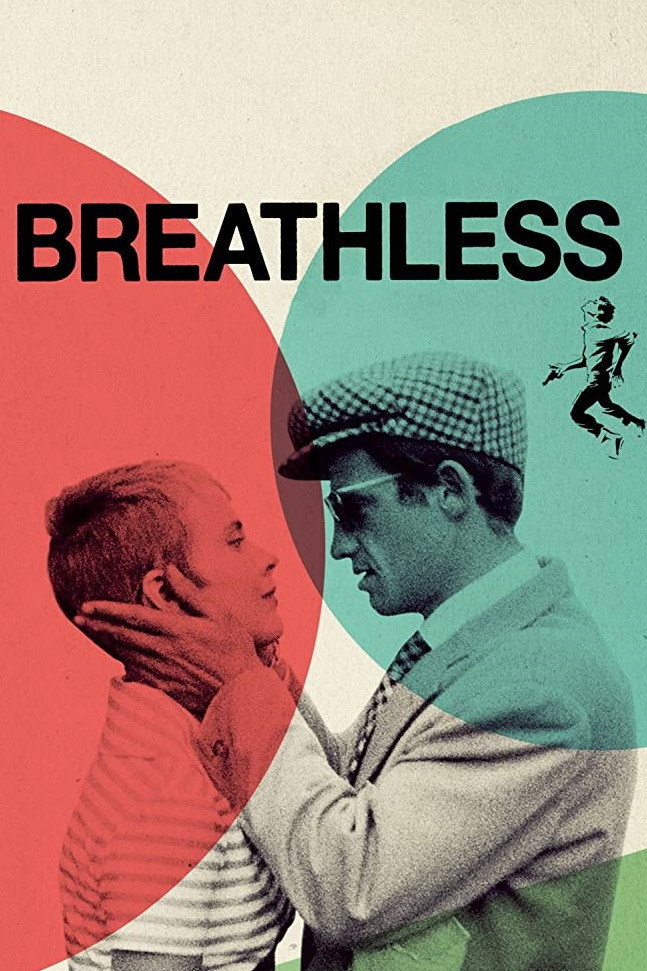
The first time I encountered Jean-Luc Godard’s “Breathless,” I was struck less by its story than by the almost weightless way it brushed aside the trappings of traditional cinema. I was pulled into a Paris that felt real yet lightly surreal—a world where characters moved with casual disinterest through love, crime, danger, and boredom. What followed was not just a love letter to the French New Wave, but a deeply personal confrontation with modern existence. Watching “Breathless” didn’t just alter my sense of film; it sharpened my awareness of the quiet, anarchic yearnings inside everyone I knew, myself included.
What the Film Is About
To describe “Breathless” in summary feels, paradoxically, to betray its spirit. The bare facts: Michel, a small-time crook, steals a car, kills a police officer, and drifts through a few days in Paris, pursued by the law. Along the way, he doggedly courts Patricia, an American journalism student, pulling her into his escalating troubles. That’s the skeleton. But the soul of “Breathless” is in its fractured, jittery rhythms and the restless energy of its characters—their half-meant words, their unresolved gestures. What unfolds is not so much a story as a cinematic state of being: a window into two souls adrift in a city that thrives on flux and illusion.
When I watch “Breathless,” plot always falls away. Instead, I’m left with its fractured conversations, the characters’ silent betrayals, and an atmosphere heavy with a kind of glamorous futility. Godard’s Paris is chaotic yet sharply observed, a place where people touch and withdraw, always seeking meaning but settling for sensation.
Core Themes
What jumps out at me every time is “Breathless’” profound engagement with alienation—alienation from self, from lovers, from the city itself. Michel speaks and acts like someone unsure of his own reality, echoing the existential drift so pronounced in postwar Europe. His bravado masks a deep rootlessness, a half-played homage to Humphrey Bogart and the gangster myths of Hollywood. Michel isn’t just a criminal; he’s an imitator, caught between reality and cinematic fantasy, desperate to craft his own legend yet incapable of conviction.
Patricia fascinates me differently. She is both inside and outside her own life—an observer with her notebook, recording events as if they belonged to someone else. When she finally chooses her autonomy over loyalty, it’s as if she’s breaking a spell, asserting the right to narrate her own existence rather than drift in someone else’s story.
- Alienation: Both Michel and Patricia are isolated not only from each other but from the wider world. Their relationship is a negotiation between connection and detachment—a dance without harmony.
- Rebellion and Freedom: Michel embodies a chaotic kind of freedom, continually running from both the law and the expectations of society. His criminality is less political than existential, a refusal to be pinned down.
- The Absurd: Everywhere in “Breathless,” life appears arbitrary, sometimes comic, often without clear consequence or logic. Characters act impulsively, as if driven by whims rather than reason. In this sense, the film feels like a cinematic reflection of the existential absurdity chronicled by Albert Camus and his intellectual peers.
- Identity and Performance: Michel’s entire persona is performance—his mimicry of Bogart, his poses in the mirror, his perpetual awareness of being watched (or wanting to be watched). There is no stable self; instead, “Breathless” gives us performance as reality.
When I see Michel grimace into a mirror, collar up, cigarette dangling, he doesn’t just want to be a gangster; he wants to dissolve into myth. I see Patricia clutch her notebook, always observing—she wants to extract herself from myth, claim a story of her own. Their collision is the film’s richest sadness, its unresolved question about whether we can ever really connect or even know ourselves in a world so saturated with images and ideals.
Symbolism & Motifs
Godard’s canvas is thick with symbols—and with the act of subverting them. Cars whirl through the city streets, representing escape, mobility, but also chaos and aimlessness. The ever-present cigarettes, the iconic posters of Bogart, and the littered newspapers become more than props; they’re fragments of a media-saturated landscape where personal history is inseparable from pop culture.
- The Mirror: Repeated shots of Michel examining himself in mirrors reinforce the theme of self-conscious identity. He’s not just looking—he’s searching for a character to inhabit, hoping the reflection will offer clarity he can’t find elsewhere.
- Cigarettes and Iconography: Michel’s chain-smoking is more than a gesture of cool—it’s a ritual, a way to fill silences and assert an identity borrowed from the silver screen. The use of posters and newspaper headlines inside Patricia’s apartment speaks to the way reality and fantasy bleed into each other.
- The City as Maze: Paris feels less like a romantic capital than a labyrinth, a space where people are perpetually lost. Chases and conversations unfold without clear destinations, emphasizing the instability and unpredictability of modern urban life.
Watching “Breathless” for the third or fourth time, I started noticing how objects pass between Michel and Patricia—cars, cigarettes, newspapers, notebooks. They are constantly trading symbols of power, evasions, and desires, as if language alone can’t hold the intensity of what they fail to say. The very form of the film—the notorious jump cuts, the breathless pacing—mirrors this restlessness. The movie seems to trip over itself to keep moving, as if afraid of inertia, terrified of ever standing still long enough to be caught by meaning or consequence.
Key Scenes
Key Scene 1
The roadside shooting that launches the story is brief, almost offhand. Michel’s impulsive murder of a police officer is not drawn out or romanticized; it’s abrupt, almost accidental. In that moment, I am reminded of how violence can be random and senseless. There’s no grand motivation, only nervous energy, a flicker of fear, and then Michel is again in motion, as if he could outrun history itself. The banality of the act reverberates through the rest of the film: nothing is fated, everything is possible, but also meaningless.
Key Scene 2
The extended conversation in Patricia’s apartment—often called the “bedroom scene”—unfolds with uncommon naturalism. This sequence might be the emotional heart of the film. Drifting from flirtation to argument to philosophical banter, Michel and Patricia expose their deep-seated loneliness. More than any action sequence, these aimless moments—their cigarettes, laughter, and sudden silences—bring their alienation into sharp relief. The two are physically close yet emotionally adrift, spiraling through a conversation that always threatens to verge into meaning before retreating into ambiguity.
Key Scene 3
The final sequence—Michel shot in the street, staggering and contorting as he tries to flee—remains one of the most haunting climaxes I’ve ever watched. Patricia’s stunned detachment as she watches him collapse encapsulates the existential isolation that has shadowed both characters. Her cryptic gesture of rubbing her lips, echoed from Michel’s earlier performance of Bogart, serves as both homage and farewell. That moment lingers for me: the impossibility of authentic communication, the loneliness of finality, the echo of an entire life experienced as if through glass.
Common Interpretations
I’ve found that “Breathless” inspires a wide range of readings, largely because of its refusal to explain itself or tidy up its emotional ambiguities. To some, the film is a critique of modern society’s obsession with images and glamour, a playful but pointed warning against confusing fantasy with reality. Others see it as a kind of existential case study, chronicling what happens when people drift outside the boundaries of tradition, family, or ideology and attempt to find meaning in a world that offers none by default.
Academic critics often connect Godard’s jump cuts and fragmented storytelling with the fractured identity of his characters. In interviews, Godard himself has pointed toward a postwar malaise that informed his vision—a sense that the old codes of honor and morality, so central to classic Hollywood, no longer had currency in the moral ambiguity of modern France. The anti-hero isn’t just stylish; he’s lost.
- Some read “Breathless” as pure pastiche, a self-aware homage to crime films that also parodies them. The film’s entire style—a kind of cinematic riffing—mirrors Michel’s own lack of direction.
- Many interpret Patricia’s role as emblematic of emerging female autonomy, or at least the beginnings of it in a rapidly shifting cultural climate. Her final act is often read as a refusal to be subsumed by someone else’s story.
- For a significant segment of viewers, “Breathless” captures the spirit of 1960s Paris: the tension between new freedoms and abiding loneliness; the perpetual oscillation between engagement and escape.
I think perhaps the deepest resonance comes from the simple possibility that “Breathless” is about the dilemma of consciousness itself: the endless search for connection in a world where language, gesture, and identity are always unstable, always on the verge of falling apart.
Films with Similar Themes
The existential drift I sense in “Breathless” finds echoes throughout the history of cinema, both before and after 1960. For me, watching these works alongside Godard’s film helps illuminate not only “Breathless” itself but a broader cultural longing for authenticity, meaning, and connection amidst chaos.
- La Dolce Vita (Federico Fellini, 1960): Another story of alienation amidst urban glamour, Fellini’s landmark follows Marcello, a journalist, as he drifts through Rome’s decadent nightlife. Like Michel, Marcello searches for meaning in fleeting encounters, always aware of his own performance.
- Jules and Jim (François Truffaut, 1962): This film similarly explores the instability of love and friendship in a rapidly modernizing Europe. Its restless energy, fluid camera work, and ambiguous morality feel spiritually linked to Godard’s vision.
- Bonnie and Clyde (Arthur Penn, 1967): Deeply influenced by the French New Wave, this American touchstone picks up the theme of lovers-on-the-run, adding a vivid sense of doomed rebellion and mythic fatalism. The merging of crime, romance, and surface cool owes much to “Breathless.”
- Pierrot le Fou (Jean-Luc Godard, 1965): Godard’s later return to the lovers-on-the-lam motif pushes existential themes even further. The lush colors, the poetry, the willful absurdity—everything feels amplified, as if Godard is both refining and parodying the style he unleashed in “Breathless.”
- Drive (Nicolas Winding Refn, 2011): A contemporary work drenched in homage, “Drive” dresses up the alienated modern man in a new kind of cool, drawing visual and emotional cues from Godard. It’s seductive but ultimately just as lonely.
Returning to “Breathless” after so many years, I always feel its energy like a live wire, crackling with unresolved longing and the thrill of perpetual motion. I see in it the anxieties and freedom of the modern self—our hunger to be seen, our despair at not being truly understood, our desperate, often futile improvisations in the face of uncertainty. If I still feel disoriented at the film’s end, I suspect that’s precisely Godard’s point: in a world so uncertain, wide open, and deeply performative, clarity may just be an illusion. “Breathless” leaves me restless, but never unmoved.
If you’re deciding what to watch next, you might also want to see how this film holds up today or how it was originally received.
🎬 Check out today's best-selling movies on Amazon!
View Deals on Amazon