
What the Film Is About
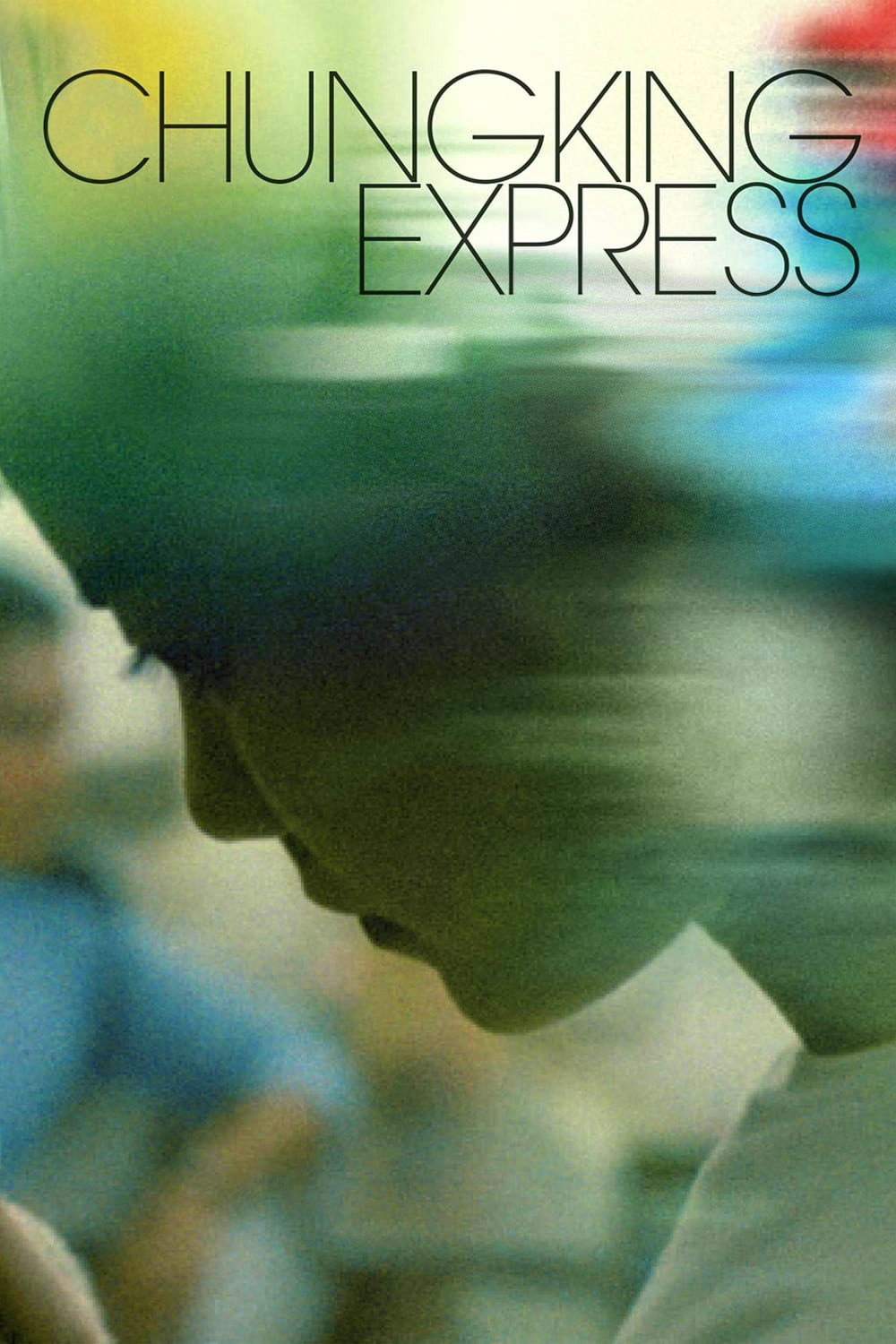
When I first watched “Chungking Express,” it didn’t feel like just another film to me; it felt like paging through someone’s scattered memories. The movie unfolds in two separate but thematically joined stories, both orbiting around heartbreak in bustling 1990s Hong Kong. Yet, to simply say it’s a film about love or heartbreak feels reductive. From the moment I was drawn in by the swirling crowds and flickering lights, I sensed Wong Kar-wai was more concerned with the soulfulness inside urban isolation than with plot. The movie presses close to two police officers adrift after breakup—one haunted by a woman in a blonde wig, the other intrigued by a dreamer working behind a snack bar counter. What endures for me is not sequence, but sensation: “Chungking Express” is about yearning, chance encounters, and the search for meaning inside city anonymity. The film’s world is saturated with ephemeral connections—fleeting but transformative—and that is what has lingered with me ever since.
Core Themes
The more I revisit “Chungking Express,” the more its core themes shimmer just out of easy grasp. Loneliness hovers at the surface, but never as a simple symptom of isolation. Instead, I notice how everyone in Wong Kar-wai’s city is simultaneously surrounded by people, yet craving a specific intimacy they cannot articulate—let alone find. Each character, from the policeman hopelessly eating tinned pineapple to the mysterious smuggler clinging to sunglasses as armor, is touched by transience. For me, the city’s endless movement makes every moment feel unanchored, yet marvelously charged with possibility. There’s a playfulness in how the film moves between stories, but also a melancholy acceptance that we connect with others only in brief, unpredictable bursts.
I think a major motif is the passage of time, marked by expiration dates and routine gestures pinning down memories that threaten to dissipate. I feel the movie grapples with the uncertainty of beginnings and endings—how we attempt, often awkwardly, to leave traces in someone else’s life, and how love can be as makeshift as a midnight meal. Loneliness, hope, longing for novelty, and the ache of missed connections form a knot at the film’s heart. Each time I see it, I’m left with that contradictory sensation: to be intensely seen by a stranger is both terrifying and tender.
Symbolism & Motifs
The symbols embedded throughout “Chungking Express” have always struck me as both playful and deeply resonant. I’m captivated by how seemingly literal objects come to embody ineffable states of longing. The most memorable is, for me, the recurring motif of expiration dates. Whether it’s a can of pineapple or a bar of soap being whittled away, these items remind me that everything we touch—not just food, but feelings and people—exists on borrowed time. Expiration dates aren’t just measures of shelf life; they become desperate attempts to create a boundary around heartbreak, to know when pain or yearning will end.
The motif of running (or sometimes merely walking with purpose) through crowds—especially in scenes blurred by Christopher Doyle’s signature cinematography—echoes how each character is searching for meaning amid urban chaos. I see sunglasses and costumes as another symbolic layer: both characters and city dwellers disguise their true emotions, hoping to move invisibly through heartbreak. Music, especially the repetition of The Mamas & the Papas’ “California Dreamin’,” assumes the weight of memory and yearning for escape; I hear in it a plea for both transformation and the impossible dream of leaving oneself behind. Even food—quirky, ordinary—acts as emotional shorthand, a way to fill absence or initiate connection when words fail.
Key Scenes
Key Scene 1
Few cinematic gestures have moved me more than the first story’s ritual: Cop 223’s obsession with canned pineapple. Here is a character who measures his pain by expiration dates, buying thirty cans set to expire on May 1st, anxiously consuming them as the deadline draws closer. The action is at once absurd and poignant—a literal consumption of time, a desperate attempt to control the uncontrollable. To me, it’s a scene that exposes how heartbreak can make us illogical, clinging to arbitrary rules as anchors. The pineapple is a relic, a hope that love (and the pain that follows) can be bracketed, labeled, consumed, and finally thrown away. I recognize in this act my own attempts to ritualize grief, perhaps as a way of making the unfathomable legible.
Key Scene 2
The fast food counter becomes, in the film’s second story, a site of longing and transformation. Compared to the chaos of the first tale, there’s an airy, daylit tenderness here that I find deeply affecting. When Faye, the counter worker, discovers the spare keys to the policeman’s apartment and playfully but sadly invades his private world, I feel her loneliness acutely. She changes small things—waters his plants, rearranges his belongings—substituting herself into the cracks of his routine. Rather than stealing, I see her actions as a wordless plea for connection, a fantasy enacted in silence and secrecy. The keys for me symbolize permission and trespass at once, and the apartment becomes a stage where hope and vulnerability can unfold. I’ve often wondered about the spaces in my own life where I wish someone would quietly change everything while I’m not looking, gently nudging me toward new beginnings.
Key Scene 3
The image of Faye at the airport, faced with a decision to leave everything behind or return to what might be possible, is among the most evocative scenes for me. She stands poised at the threshold between the known and the unknown, suitcases and boarding pass in hand. In Faye’s hesitation, I see my own vacillation between escape and commitment—the tug-of-war between dreams of freedom and the hope that love might bloom if only I stay a little longer. When the policeman offers her a boarding pass at the snack bar, the gesture is gentle, unforced, open-ended. This moment distills the film’s ethos for me: connection is not about guarantees, but about showing up with empathy for another’s unspoken hopes. The scene is bathed in possibility, uncertainty, and generosity—all the emotions, I realize, that tether us together while keeping us just a little apart.
Common Interpretations
In conversations with friends and fellow viewers, I’ve noticed how opinions about “Chungking Express” split into multiple interpretations, none quite exhaustive. For some, the film is a paean to 1990s Hong Kong, documenting a city caught in changing times—its restlessness and anticipation palpable in every shot. Others see it as a meditation on postmodern alienation, using fractured, nonlinear storytelling to echo how fate and chance mediate modern relationships. I often detect in critics’ accounts a preoccupation with the film’s style: jump cuts and color saturations, blurring and slow motion, as if the movie is challenging us to notice the fleetingness of attention, the impossibility of steady focus in life or art.
Personally, I’m less interested in reading it as a strictly urban narrative and more as a parable of emotional time. The film’s repetition and split structure suggest to me that stories of heartbreak and hope are endlessly recurring. Loneliness doesn’t resolve; it is reconfigured, re-encountered in new forms. While some viewers find the film’s openness frustrating, to me, it’s the point: the beauty of human life is not in closure, but in lingering, imperfect connection. A few interpret the characters as allegories for migration and cultural anxiety, seeing the urge to escape (to “California,” to somewhere else) as an echo of Hong Kong’s pre-1997 handover uncertainty. I think all these readings are valid, though none can fully capture the film’s emotional texture on their own. What stays with me is the gentle insistence that even strangers moving at cross purposes change each other, if only briefly.
Films with Similar Themes
Reflecting on “Chungking Express,” I find myself drawn to other movies that trace the invisible lines between longing and loneliness, especially in city settings. Wong Kar-wai’s own “Fallen Angels” feels like a companion piece—a similarly fractured portrait of dislocation and yearning in pre-Handover Hong Kong. “Lost in Translation,” directed by Sofia Coppola, echoes the motif of fleeting human connection in a sea of anonymity, suggesting that intimacy is as fragile as it is profound. I think of “Yi Yi” by Edward Yang, which observes the minutiae of urban life, revealing how each moment of encounter is precious and passing. Even Michel Gondry’s “Eternal Sunshine of the Spotless Mind” resonates here: both films use surreal visual style to probe why letting go and holding on matter equally in love.
French New Wave films—especially those by Jean-Luc Godard, whose influence on Wong’s style is unmistakable—also offer a touchstone for me. They share with “Chungking Express” a restless energy, a willingness to disrupt narrative comfort in order to get closer to what longing actually feels like. Ultimately, what ties these films together in my mind is their shared conviction: the briefest meeting of two souls, regardless of outcome, matters. Watching “Chungking Express” is a reminder to me that beauty is found in passing glances, unsent letters, unconsummated hopes—episodes that vanish even as they change us forever.
For more context before choosing your next film, these perspectives may help.
🎬 Check out today's best-selling movies on Amazon!
View Deals on Amazon