
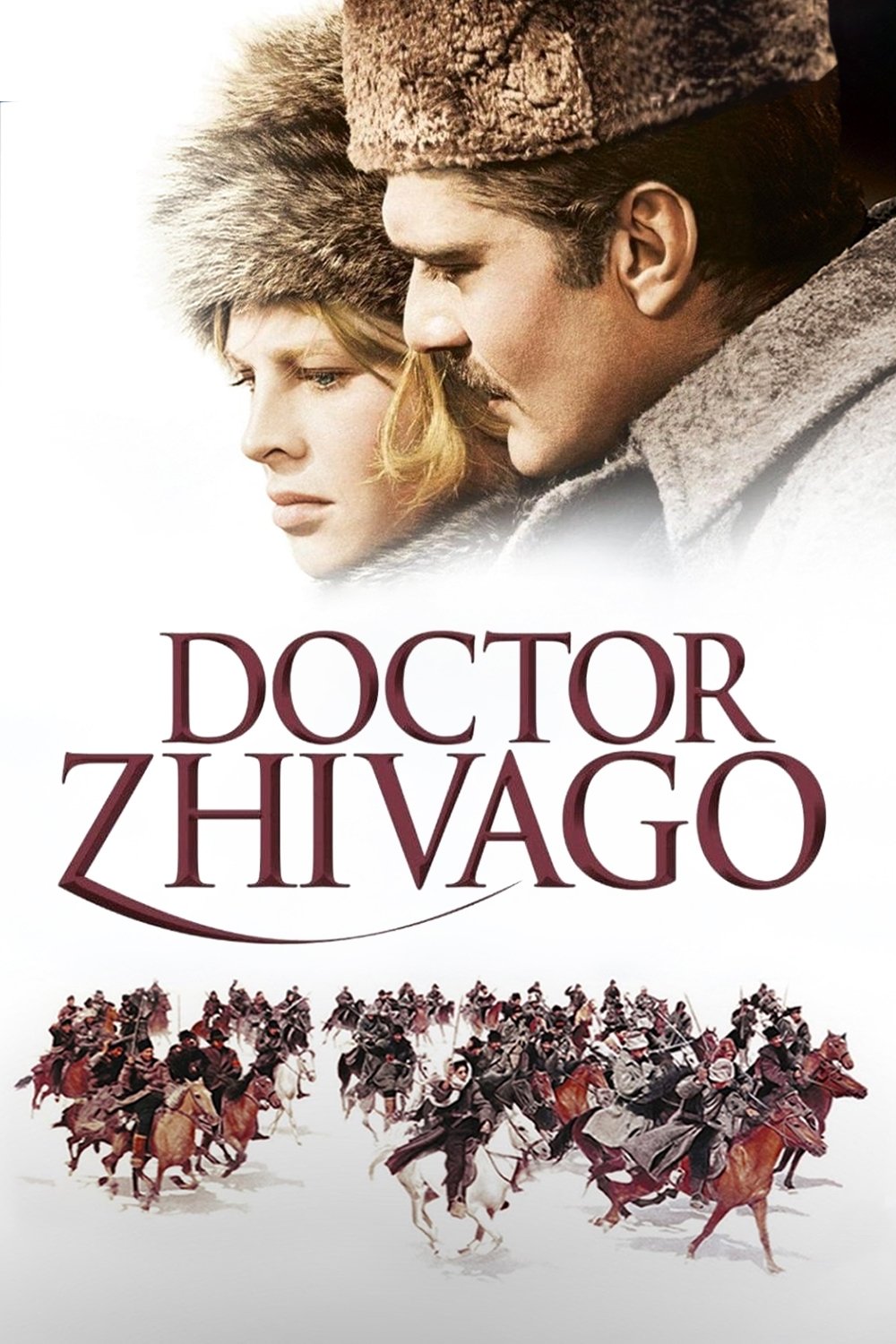
The first time I encountered “Doctor Zhivago,” I was just seventeen and reeling from a personal heartbreak I could barely articulate. Sitting quietly in a darkened room, the epic visuals and mournful balalaikas of David Lean’s adaptation swept over me, inviting me not just into Revolutionary Russia but into the raw, bewildering zone of the human soul at war with both history and desire. Even years later, each revisiting feels less like watching a period piece and more like a personal confrontation with the messy complexities of love, memory, and the cost of having a conscience in times that demand allegiance.
What the Film Is About
When I look at “Doctor Zhivago,” I see it as much more than a sweeping romance set against a snow-cloaked historical backdrop. The true subject, as it unfurls for me, isn’t simply the story of Yurii Zhivago’s love triangle or his suffering during the Russian Revolution and civil war. It is an intimate meditation on how ordinary people—poets, mothers, lovers—try to hold on to their inner selves as the tides of history violently and impersonally remake the world around them. The narrative seems almost secondary to that lived emotional question: How much of myself can I keep, and at what cost, when everything sacred is being torn away?
This film, based on Boris Pasternak’s legendary novel, finds its protagonist, Zhivago, at the mercy of both personal fate and social upheaval. But if I step back from the snowstorms and the train journeys, what remains most vivid is the impression of how history both crushes and shapes the possibility of love, creativity, and agency. That, I believe, is the true subject “Doctor Zhivago” invites me to wrestle with every time I return to it.
Core Themes
What has always drawn me to “Doctor Zhivago” is its insistent interrogation of the meaning of freedom and individuality, especially when those qualities become not just suspect, but dangerous. Each major character seems caught between the inexorable force of the collective and the fragile yearning for personal happiness. I find myself returning to Zhivago’s poetry, scattered like fragile petals throughout the film, as symbols of the irreducible human need to create beauty even as the world appears bent on destruction.
At the heart of the film, the love affair between Zhivago and Lara is rarely just melodrama. For me, it represents the collision between the private and the public, between what one owes others—family, comrades, lovers—and what one owes oneself. There is something hauntingly modern about Zhivago’s predicament: the sense of being swept along by events he can neither control nor escape, refusing to bow entirely to cynicism or despair, but recognizing that love alone is not enough to protect those he cares for.
I am always struck by how the film explores the price of idealism. The Russian Revolution, so often romanticized as a moment of liberation, is depicted here with tragic ambivalence. I see it not as a triumph but as a profound loss—the loss of nuance, tenderness, ambiguity, and individual vision in the name of ideology. For Zhivago, art and empathy are radical acts in a world increasingly unable to recognize their value. Whenever I watch the film, I feel the ache of that dilemma, one that is as relevant now as it was in 1965 or 1917.
- The cost of loving in a time of upheaval
- The role of the artist and the function of art
- The struggle to remain humane when the world rewards brutality
- Memory and nostalgia as forms of resistance
- Fate versus self-determination
Symbolism & Motifs
Every time I watch “Doctor Zhivago,” I am drawn to the layering of visual and musical symbolism that transforms what could be a straightforward narrative into a tapestry of association and suggestion. The most persistent symbol in my memory is the snow—vast, enveloping, both beautiful and deadly. Russia’s winter comes to embody the condition of choking silence imposed by history and repression, but it is also paradoxically a space of shelter, a blank slate, a backdrop for personal acts of courage and grace. The frozen landscapes do not simply signal hardship; they frame moments of connection, love, and fleeting beauty.
The balalaika, Zhivago’s inheritance from his mother, resonates on a subtler note. In my view, its repeated presence is a reminder of threads of memory, family, and passionate longing that can survive even when all else is swallowed by war. The balalaika connects Zhivago to a lost, perhaps irrecoverable Russia—his childhood, his poetic heart—suggesting that the sound of art and intimacy can linger on the air long after the artist or the dream has been exiled or eradicated.
I notice how trains recur throughout the film, carving across the white steppes—conduits for exiles, armies, families torn apart, and individuals struggling to chart their course. For me, trains become the axis of fate and inevitability, suggesting that no matter how hard one longs to control the journey, history’s momentum often dictates both the route and destination. Their relentless movement through blank, featureless wastes offers a potent image of how thoroughly personal will can be overridden by collective forces, yet also how every journey, however predetermined, remains populated by acts of choice and resistance within each compartment.
- Snow as oblivion and purity—covering sins, suspending time, yet also isolating and threatening to erase.
- The balalaika as a motif of memory and lost culture, a personal relic amid social erasure.
- Trains representing the inexorable path of history, sometimes rescue, sometimes exile, always transition.
- Zhivago’s manuscript as a metaphor for artistic survival—the attempt to record and redeem even fleeting truths.
Key Scenes
Key Scene 1
The scene I always return to is where Zhivago, after being conscripted as a field doctor, finds a moment alone with Lara in the chaos and squalor of the war hospital. Watching it, I am transfixed by the interplay between exhaustion and tenderness. For me, this is not mere escapist romance—here, love becomes almost an act of rebellion against the ugliness and brutality surrounding them. In these stolen minutes, surrounded by bodies ruined by war, they reclaim their humanity, if only for a heartbeat. The soft lighting, the quiet dialogue, and the gentle music all conspire to slow time, letting a fragile intimacy bloom amidst so much death and noise.
Key Scene 2
Another moment that haunts me is the family’s desperate winter journey by train, bundled together across the steppes in a cruel and indifferent Russia. The sheer physical discomfort is almost palpable—frostbitten hands, huddled bodies, the bleak monotony of white outside—and yet inside the carriage glows a dim intimacy. Here, communal suffering does not breed solidarity so much as it tests the very foundation of love and fidelity. I always feel the claustrophobic sense that each character is facing their private reckoning, even as they move together through history’s blizzard. The persistence of hope, the effort to sustain warmth—literal and emotional—becomes the central drama, and I find myself identifying with each character’s struggle to keep a corner of their soul intact.
Key Scene 3
Perhaps the most devastating scene for me occurs near the film’s end, as Zhivago and Lara part ways under the shadow of surveillance and political persecution. Here, all illusions of the private sphere are finally stripped away; there is no more room for tenderness, and love must give way to survival. The silence between them is almost unbearable, charged with both resignation and defiant affection. I have always read this as the ultimate cost imposed by history—the way tyranny invades even the heart’s innermost sanctuaries. Their parting is not just personal loss, but the shattering of the hope that beauty or connection might ultimately be enough to outlast the machinery of oppression. Watching it, I feel compelled to mourn not only for these lovers but for a world in which such partings become commonplace.
Common Interpretations
Throughout the years, I’ve come across myriad readings of “Doctor Zhivago.” Some viewers experience it as an indictment of Bolshevism and revolutionary absolutism, a tragic portrait of how October 1917 destroyed not only the Russian aristocracy but also the possibility of independent thought and artistic freedom. Others focus on the love triangle, reading it in more sentimental terms—a grand, ill-fated affair thwarted by circumstance, timeless in its passions and heartbreak.
As for me, I see these readings converging at the point where the public and private become inseparable. There is a sense in which the film is ultimately about memory—how individuals and whole cultures try to remember what they were before history remade them. Zhivago’s poetry, preserved as a legacy for the next generation and for the invisible reader, embodies the hope that some trace of beauty, some echo of a vanished self, can survive even the harshest times. It’s less about denouncing one side or the other, and more about recognizing that all ideologies have the power to wound those they most fervently seek to help.
Many critics have noted the film’s refusal to take an explicit political side, yet when I watch it, that very ambiguity seems to me both the film’s great strength and its source of enduring anxiety. It recognizes, more deeply than most historical epics I’ve seen, that in periods of revolution, there are rarely clean heroisms or wickednesses—only the repeated struggle not to become anesthetized to suffering, not to allow the soul to be flattened by necessity. This nuanced portrayal resonates with me, especially in times where simple answers are often demanded but rarely suffice.
Films with Similar Themes
If, like me, you finish “Doctor Zhivago” longing for other films that grapple with the relationship between love, selfhood, and history, several come to mind. I am strongly reminded of “The English Patient,” which explores how passion and conflict, memory and destruction, entangle in war’s aftermath. “Reds” also investigates the way revolutions change not just governments but individual fates—and, like Zhivago, it chooses ambiguity and tragic longing over propaganda.
Another film that lives in my mind alongside “Doctor Zhivago” is “Casablanca,” for all its differences in scale and setting. Both films, for me, are haunted by the awareness that every pivotal love story takes place in the shadow of war, and that real heroism sometimes lies in the refusal to surrender one’s conscience or humanity, no matter the pressure. Finally, “The Lives of Others,” though set in East Germany decades later, captures the same tension between love, surveillance, art, and the quiet heroism of those who resist, even in the smallest ways, the machinery of history.
- The English Patient (1996)
- Reds (1981)
- Casablanca (1942)
- The Lives of Others (2006)
- War and Peace (1966–67 Soviet adaptation)
In all these films, as in “Doctor Zhivago,” I find myself returning to that haunting question: how, in times of convulsion, can a person live in truth and love, even if the price for doing so is to walk alone under the implacable snows of history?
For more context before choosing your next film, these perspectives may help.
🎬 Check out today's best-selling movies on Amazon!
View Deals on Amazon