
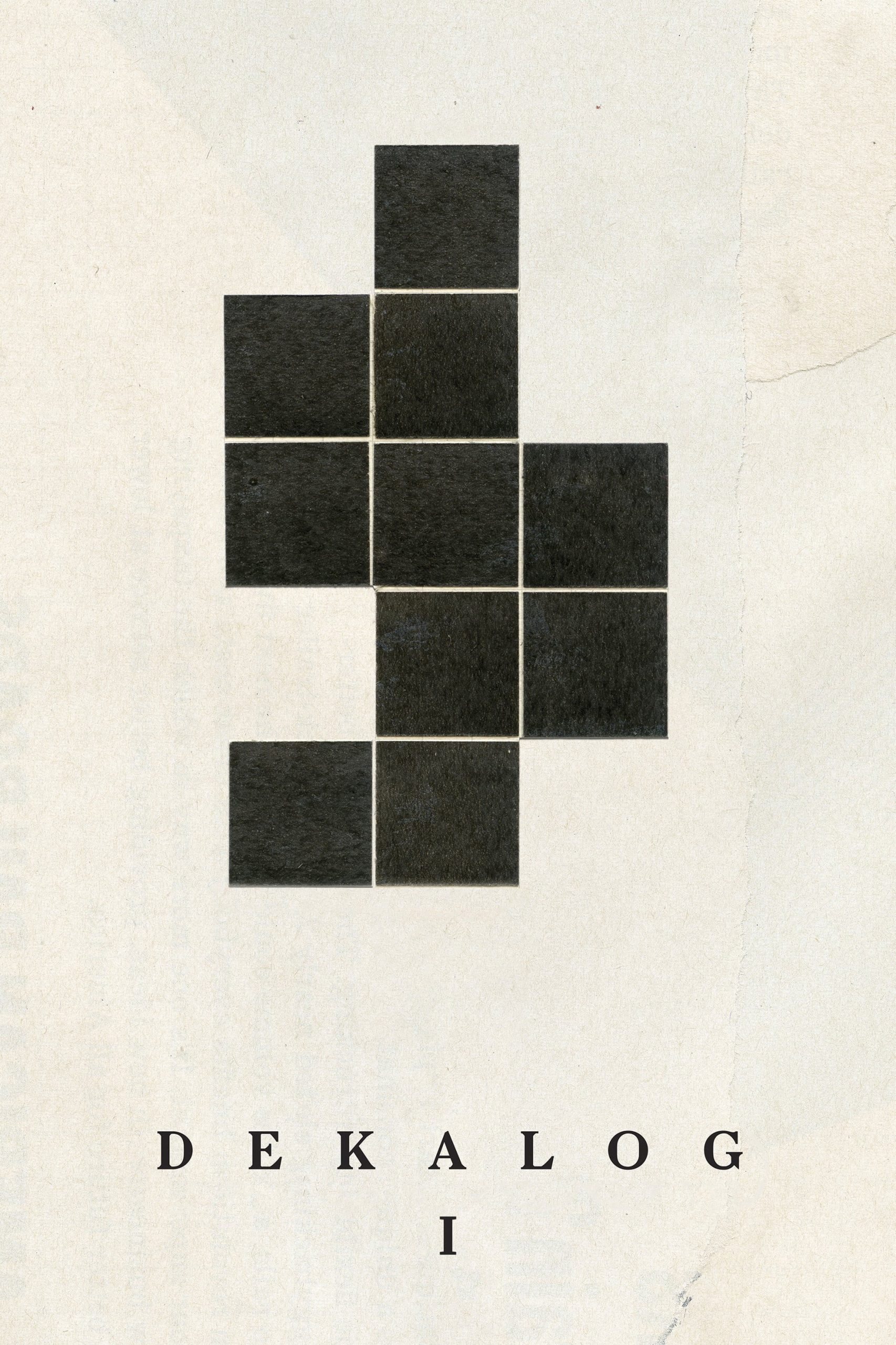
What the Film Is About
When I first encountered “Dekalog,” I approached it not as a film in the usual sense, but as a meditation, a quietly structured existential labyrinth crafted by Krzysztof Kieślowski in 1989 in Poland. I realized almost immediately this was something different—ten stories, each loosely inspired by one of the Ten Commandments, set in a drab Warsaw housing complex. Despite the overt structure, what struck me most was the relatability, the ordinariness of the settings and lives, and how these unremarkable apartments and corridors became a canvas for immense philosophical questions. The “plot” is never the real focal point here; it’s about watching the way moral dilemmas seep into everyday actions, eroding tidy resolutions.
There’s no overarching narrative in “Dekalog”; instead, the series functions as a suite of self-contained yet subtly interconnected stories, each bringing forth a unique moral quandary. What ties them together is a near-documentary study of human frailty and uncertainty. It’s a film where coffee spills and elevator rides carry as much weight as confessions or funerals. In each episode, I found myself less concerned with outcome and more transfixed by the ordinary faces wrestling with decisions of outsized consequence.
Core Themes
The more time I spent with “Dekalog,” the more I began to realize how it wove universal questions into the fabric of the mundane. On the surface, it’s a meditation on the Ten Commandments, but the approach is never didactic or dogmatic. In my own viewing, I felt the commandments serve not as answers, but as provocations; their black-and-white imperatives collide with the thousand shades of grey of real life.
- Moral Ambiguity: Kieślowski thrives in ambiguity—no action is cleanly right or wrong. I am continually left with discomfort, the lingering sense that choices ripple with unintended consequences.
- Freedom and Responsibility: I find each episode asks: How free are we truly? Each character faces a choice, yet social constraints, families, and past traumas bear down relentlessly. The line between agency and fate blurs.
- Faith, Doubt, and Secularization: For me, the most haunting element is how faith operates here. Catholic Poland is Kieślowski’s setting, but religious comfort is elusive. Rituals replace revelation; doubt is the water the characters swim in.
- The Search for Meaning: Each episode, in my reading, is propelled by the need to make sense of suffering, of loss, of guilt. But answers remain tantalizingly out of reach.
- Interconnectedness of Lives: The apartment complex becomes a symbol for the random ways our destinies intersect. I often catch glimpses of characters from other episodes — silent witnesses, accidental participants in each other’s moral tests.
None of these themes are resolved; instead, what makes “Dekalog” so intimate to me is that it honors the open-endedness of being human. Rather than preaching, it sits with the agony of the not-knowing.
Symbolism & Motifs
Kieślowski’s use of repeated motifs made me notice how a film can talk to the subconscious as much as the conscious mind. Most arresting in “Dekalog” is the presence of a silent onlooker—an unnamed young man, who appears in nearly every episode, present but never intervening. I have always found myself meditating on his purpose. Perhaps he is a stand-in for the divine, or the viewer, or the very principle of moral observation.
Then there is the enveloping motif of water. Water is everywhere: melting ice, tears, the presence of the nearby lake. Water is ambiguous—life and death, cleansing and drowning. In a way, water serves as a metaphor for the ethical dilemmas themselves—fluid, sometimes muddy, impossible to fully contain.
The motif of the apartment block, too, is inescapable. It’s not just a location, but a character in its own right. Its sprawling corridors and interchangeable rooms mirror, for me, the anonymity and interconnectedness of urban life, where neighbors become strangers and every wall is thin enough to let cruelty or kindness bleed through.
Glass, mirrors, and screens are pervasive—a television, a frosty window, a pane separating a mother and her child. These surfaces remind me how often the truth is obscured or reflected rather than clearly seen. Watching the film, I sense a constant tension: the yearning to connect, yet the frequent failure to truly communicate, as if these barriers are both literal and existential.
Key Scenes
Key Scene 1
One of the most quietly devastating moments for me occurs in “Dekalog: One”—a story centered around a father and his scientifically gifted son. The scene where the father calculates the safety of the ice covering the lake, assuring his son that playing there is safe, captures the collision between logic and life’s unpredictability. Watching that moment, I was struck by the hubris of certainty; equations and reason falter against fate. This sequence echoes throughout the series—our best plans are never enough, and rationality alone cannot shield us from tragedy.
Key Scene 2
Another unforgettable moment is found in “Dekalog: Six,” the story of a young voyeur obsessed with watching his neighbor. The moment when the woman finally confronts him—turning the gaze back on the watcher—is an encounter that made me squirm. It’s not just about privacy or trespass; what I see is the hunger for connection, the dangerous allure of knowing another person, and the prices paid on both sides of the glass. That shattering vulnerability—when boundaries are breached out of desperation, not cruelty—lingers long after the screen goes dark.
Key Scene 3
A third episode that haunts me is “Dekalog: Two,” where a woman asks a doctor to predict whether her terminally ill husband will live or die. On the surface, it’s a request for information. But as the scene unfolds, I find myself grappling with the moral implications: the woman’s life—and the life of her unborn child—hangs on this answer. The doctor’s struggle with what truth and compassion mean in this moment confronts me with the limits of certainty, and the burden that comes with holding another’s fate in one’s hands.
Common Interpretations
Among the many viewers and critics I have discussed “Dekalog” with, interpretations are as diverse and passionate as the episodes themselves. Some see it as a modern-day The Decalogue, an exploration of how ancient ethical rules are tested in the murky realities of late-Cold War Poland. Others reject this reading, insisting, as I sometimes lean toward myself, that the commandments are pretext—a lens rather than a prescription.
Many interpret the recurring silent observer as God, a moral presence who silently judges but leaves freedom intact. Others see him as fate, or as a proxy for the audience—a reminder that to watch is always a moral act, implicating us in the lives unfolding on screen.
Some critics focus on the film’s subtle critique of Polish Catholicism, especially in a society where faith is as much tradition as belief. I have often wondered if these moral crises are the direct result of a culture in transition: rules are at once internalized and questioned; the sacred is hollowed out, but nothing concrete takes its place. The universality of doubt, in a world thirsting for certainty, has seemed to me both radical and deeply empathetic.
- Are the commandments still relevant in a secular age, or does every moral act inevitably collapse into subjectivity?
- Is suffering avoidable, or is it merely the price of living authentically?
I’ve noticed that viewers with different life experiences extract surprising lessons: what is a moral failing to one becomes a tragic necessity to another. This slipperiness is, I believe, the heart of “Dekalog”—an artful refusal to resolve, forcing us to sit uncomfortably with ambiguity.
Films with Similar Themes
As I wrestled with the complex morality of “Dekalog,” I found kinship with a handful of other films and directors. The spirit of Andrei Tarkovsky hovers in the slow, contemplative pace and the quest for spiritual meaning amidst modern desolation—as in “Stalker” or “Nostalghia.” There is also a thematic neighbor in Béla Tarr’s “Satantango,” a portrait of communal decay and uncertain ethics in a bleak landscape. These films share “Dekalog’s” commitment to meditating on the human soul, resisting easy answers in favor of lived bewilderment.
More recently, the films of Michael Haneke—notably “Code Unknown” and “Cache”—echo the motif of moral gaps, the unseen consequences of small actions, and the isolating effect of modern civilization. Haneke, like Kieślowski, insists that cruelty and compassion are inextricable, woven into ordinary life.
Of course, the resonance extends beyond arthouse. In every neighbor who opens their door, in every family argument, in every difficult choice, I sense the lingering shadow of “Dekalog.” Its insistence on ambiguity, on the intractability of moral life, invites me not to judge, but to imagine: What would I do here?
If you’re deciding what to watch next, you might also want to see how this film holds up today or how it was originally received.
🎬 Check out today's best-selling movies on Amazon!
View Deals on Amazon