
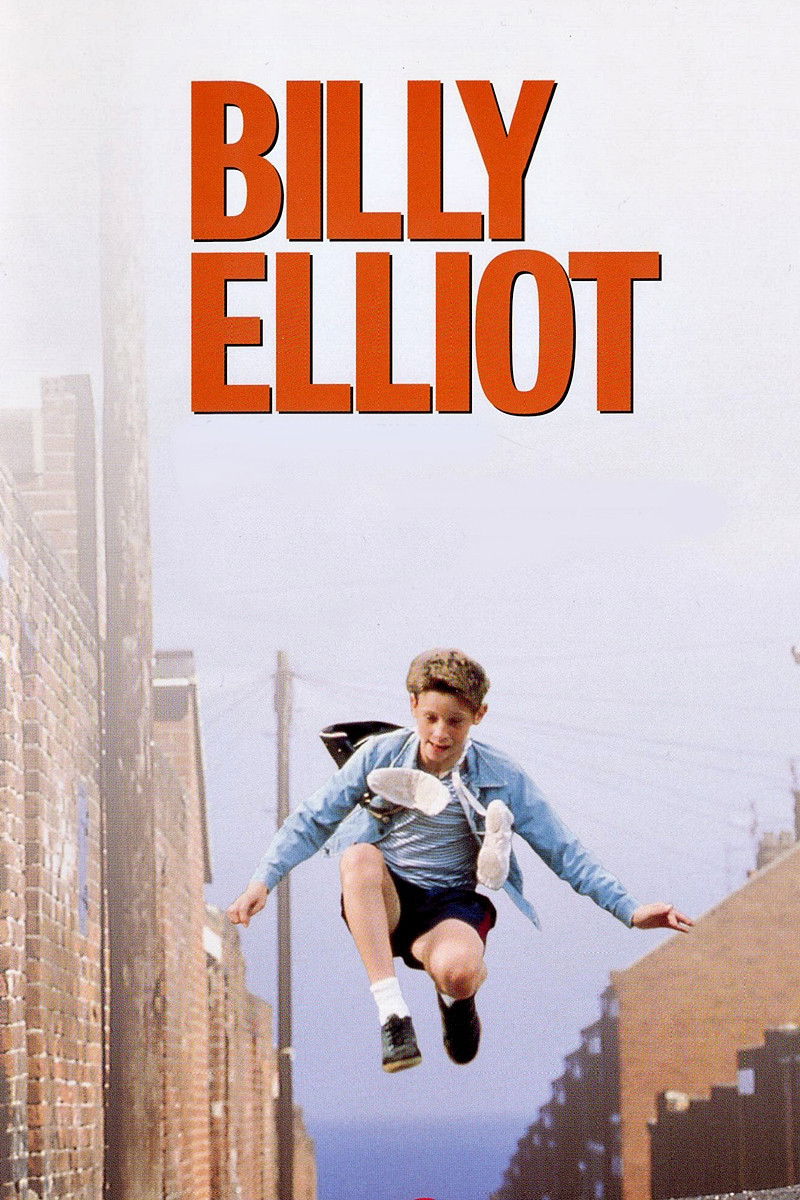
What the Film Is About
Whenever I revisit Billy Elliot, I’m immediately struck by how little the film relies on spectacle or melodrama to tell its story. What pulls me in with each viewing is the sense of quiet defiance simmering within its main character and the world he occupies. The film is, on the surface, about a working-class boy’s unlikely pursuit of ballet in an environment shaped by hard labor, masculine roles, and economic strife—but in my own experience, it’s really a film about how one child’s yearning can ripple outward, challenging not only family but also an entire community’s conception of dignity, masculinity, and hope. The emotional journey within the film unfolds through a tension: Billy’s dance becomes an act of rebellion, a search for selfhood amidst expectation and hardship.
This isn’t just a coming-of-age story to me. I see it as an unapologetically intimate portrait of a young boy surrounded by adults beset by fear and uncertainty, all trying to make sense of a world that seems to offer very little. As Billy struggles against the odds to articulate his own desires, his journey casts new light on the emotional landscapes of those around him, forcing everyone—especially his family—to confront uncomfortable truths about love, sacrifice, and the cost of tradition.
Core Themes
What resonates most personally with me about Billy Elliot is its interrogation of what it means to truly belong—both to oneself and to one’s community. I find the film’s central theme to be the transformative power of self-expression. For Billy, dance isn’t simply an aesthetic pursuit: it’s a means of making sense of the world, of demanding space in a life that others try to define for him. That struggle is deeply tied to questions of identity—particularly masculinity. The film probes, with surprising sensitivity, how narrow definitions of manhood can suffocate not only those who refuse to conform, but even those who cling to the scripts handed down to them.
I also see the film exploring generational struggle and the effects of social upheaval. Set against the backdrop of the British miners’ strike of the 1980s, Billy Elliot weaves together stories of economic hardship, class pride, and the disintegration of communities forged in solidarity. I am always struck by how Billy’s personal quest can’t be separated from the collective pain around him—the loss of work, the fear of obsolescence, the stubborn dignity of a town under siege. In this setting, chasing a dream is not just personal indulgence; it’s a radical act of hope.
When I think about why these themes mattered so much at the turn of the millennium, it’s impossible not to recall the looming uncertainties of that era—rapid cultural change, economic anxiety, shifts in gender norms. Even today, Billy’s story echoes for anyone who’s felt at odds with their environment, who’s had to justify their passion against indifference or scorn. For me, the film embodies the timeless struggle to assert one’s voice, especially when that voice is inconvenient or misunderstood. That’s a message that refuses to age.
Symbolism & Motifs
Every time I study the film’s visual rhythms, I’m fascinated by how dance itself becomes a symbol—a physical language for what’s often left unsaid. Billy’s movements are nothing like the polished grace of professional ballet; instead, his dance feels impromptu, almost explosive, as if he’s releasing all the pent-up emotion of his environment. To me, this rawness represents both his resistance to the constraints of his town and his desire to transcend his circumstances.
The motif of doors and thresholds stands out as well. Repeatedly, we see Billy hesitating at doorways or pressing against physical barriers—his family home, the dance studio, even the gates of the miner’s yard. For me, these moments carry obvious symbolism: the doors are not just literal but psychological, manifesting the obstacles Billy must push through, and sometimes the opportunities he fears to seize. Each transition through a threshold feels charged with meaning, representing the difficulties and hopes implicit in change.
I also find the recurring presence of family artifacts—boxing gloves, mining helmets, household clutter—operating like visual reminders of history and expectation. In Billy’s world, these items are more than background: they anchor him to legacy and duty, but also threaten to weigh him down. The contrast between the coal-stained world and the lightness of dance is a motif that deepens as the film unfolds, highlighting the chasm between old certainties and new possibilities.
Key Scenes
Key Scene 1
One early scene that always stays with me is the moment Billy first attempts to mimic the ballet exercises in secret, after his regular boxing class. Watching him, I’m moved by the way his awkwardness yields gradually to something approaching exhilaration. This sequence feels so crucial because it’s the first time Billy’s internal conflict becomes visible: he’s caught between conditioning and curiosity, shame and longing. I see this scene as the film’s foundational gesture—Billy is, quite literally, testing the boundaries of who he’s allowed to be. The camera’s gaze is gentle but persistent, underscoring how discovery often happens on the margins, away from watchful eyes.
Key Scene 2
Another pivotal moment, for me, comes when Billy’s father finally witnesses his son dance. There’s a shattering transformation here—not only in the father’s understanding of Billy, but in my perception of the adult characters’ pain and pride. Watching this silent, stubborn man dissolve into tears, unexpectedly moved, always reminds me that the film’s adults are just as imprisoned as Billy, each carrying their own unfulfilled desires. This scene shifts the axis of empathy in the film; boundaries between parent and child, tradition and progress, are momentarily suspended. I see this as a challenge not just to a single family’s prejudice, but to the audience’s comfort with inherited definitions of love and masculinity.
Key Scene 3
Toward the close of the film, a quietly devastating moment emerges when Billy is observed as a young adult, now a principal dancer, by his father and brother. For me, the weight of this scene has less to do with triumphant achievement than with the passage of time and the cost of following a dream. The act of Billy leaping onto the stage feels almost beside the point; the true drama is in the faces watching him, marked by pride but also loss. I see this as the film’s final statement: that liberation, when it comes, is as bittersweet as it is necessary. The world does not easily surrender its old wounds, but new beauty can still emerge.
Common Interpretations
Every time I explore critical responses or sit through discussions with audiences, I’m struck by how universal the film’s impact feels. Many see Billy Elliot as an affirmation of individual freedom—the right to dream, rebel, or carve a new identity even when your environment pushes back. For some, the story’s focus on a boy crossing into the traditionally “feminine” world of ballet offers a direct challenge to rigid gender roles. I often hear people describe the film as not just Billy’s journey, but a metaphor for anyone refusing to live inside someone else’s limitations.
Yet, I think there’s an equally valid reading that’s less about individualism than about community. When I watch the film, I’m never able to forget the miners’ strike encircling the family. To me, Billy’s escape isn’t an act of abandonment—it’s an assertion that hope thrives even in the most battered places. Some critics have suggested this complicates the “follow your dream at any cost” message, arguing that the film also grieves for the sacrifices necessary when someone leaves behind family or class. I find myself caught between these interpretations: I admire the film’s celebration of difference, but I also hear its quieter lament for what’s lost in that process.
There are viewers who focus on the role of art as a vehicle for social change. In my perspective, the film offers art not as luxury, but as necessity—a raw, vital force that can disrupt, heal, or transform. Still others are drawn to the film’s handling of masculinity as performance, impressed by its refusal to paint male vulnerability as weakness. Nearly everyone I’ve spoken to, however, agrees on one point: whatever divides Billy from those around him, the film’s heart lies in empathy and recognition. At its best, Billy Elliot invites us to recognize the dancer, and the dreamer, in every outcast or misfit.
Films with Similar Themes
- The Full Monty – I see a clear parallel in the way both films use working-class British settings and dance as forms of unlikely protest, translating private embarrassment into communal catharsis. Like Billy Elliot, The Full Monty explores how dignity and reinvention can arise from crisis.
- Kes – In my view, this classic about a boy finding purpose through his relationship with a kestrel offers another deeply felt look at individual aspiration amid suffocating social realities. Both films break my heart in their portraits of childhood resilience battered by adult disappointment.
- Pride – Whenever I revisit this story of LGBTQ activists supporting striking miners, I’m reminded of how resistance and solidarity sit at the core of both Billy Elliot and Pride. Each film, in my experience, calls attention to outsiders banding together to create new families of choice.
- Dead Poets Society – Though the contexts diverge, I find a resonant echo in the way both films tackle the tension between conformity and creative self-expression. Each tells its story through a mentor’s influence and the yearning of youth to leave behind stifling conventions.
Ultimately, what I take from Billy Elliot is an unflinching meditation on the human need for both rootedness and transcendence. The film portrays hope not as naïve optimism but as a hard-won act—one that asks us to risk comfort, confront tradition, and embrace uncertainty. I see in Billy a reminder that personal liberation never exists in a vacuum; it’s always inflected by those who shape us and the histories we inherit. Through its blend of defiance and tenderness, the film continues to prompt me to question: how do we hold onto dreams without turning our backs on where we come from, and what can we become once we let ourselves step across the threshold?
For more context before choosing your next film, these perspectives may help.
🎬 Check out today's best-selling movies on Amazon!
View Deals on Amazon