
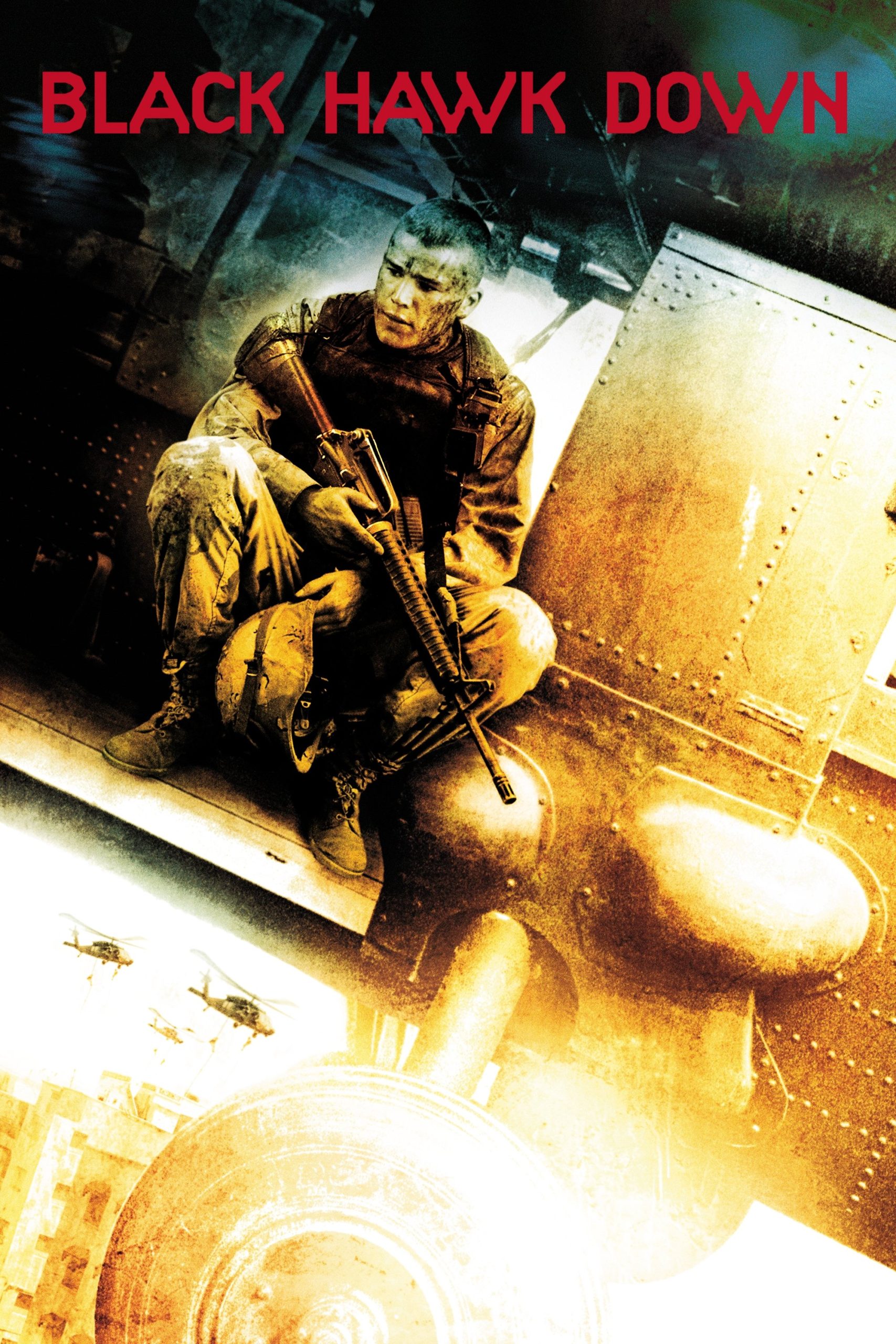
What the Film Is About
Raw, relentless, and at times gut-wrenching, “Black Hawk Down” always struck me not only as a historical war film, but as an unrelenting immersion into chaos, camaraderie, and human vulnerability. Rather than marching through traditional acts of heroism or straightforward battle lines, I felt pulled into a maelstrom where order, morality, and certainty are relentlessly stripped away. The narrative drops us into the heart of the 1993 Battle of Mogadishu, yet immediately it becomes more than a military story; it’s about young soldiers crashed into the unknown, clinging to training, loyalty, and the hope that something human can survive the storm.
From the dizzying first moments, the emotional current is clear: fear, adrenaline, and desperation drive both individuals and the collective. I see men trying to follow orders while grappling with the unpredictability of urban warfare—an environment that magnifies every mistake and erases the distinction between invader and prey. Purpose, survival, and identity all collide as the film unfolds, forcing me as a viewer to question what exactly anyone is fighting for by the time the dust settles.
Core Themes
As I reflect on what “Black Hawk Down” truly seeks to interrogate, questions of duty, futility, and the thin scaffolding of civilization keep resurfacing. This is a film obsessed with the limits of control—of both military might and individual agency. The prevailing theme, to my mind, is the myth versus the reality of intervention: the idealism of rescue and humanitarian action slugging it out against the visceral consequences of violence. I was struck by how the film sidesteps platitudes of victory or defeat and instead meditates on the cost—emotional and existential—of even a “successful” mission that unravels spectacularly.
What lingers for me is the sense that loyalty—brotherhood under fire—becomes the only stable ground when everything else is collapsing. There’s a somber honesty in how the film refuses to glorify the operation or demonize the enemy. Instead, I interpreted its central statement as a challenge to simplistic narratives: war is not clean, and the intentions that lead people into it rarely match the realities they encounter. In a world freshly marked by the uncertainties of the early 2000s—shaped by questions about humanitarian intervention, American foreign policy, and global interconnectedness—the film’s skepticism toward power and its consequences felt unnervingly timely.
For me, “Black Hawk Down” also explores the boundaries between individuality and group identity. One of its most powerful statements, I think, is on how crisis forges connections and erases divisions, but also imposes an unbearable loneliness. It’s a meditation on accountability: does moral responsibility end at the perimeter of the order received, or does it begin anew when confronted by the civilians and chaos beyond that boundary? It’s precisely these uneasy, unresolved questions that grant the film a relevance that feels durable even decades after its release.
Symbolism & Motifs
When I revisit the film in my mind’s eye, certain recurring images and motifs keep surfacing, and I believe they serve as windows into the filmmakers’ deeper preoccupations. The titular Black Hawk helicopters themselves become far more than simple machines—they’re icons of both power and vulnerability. The moment a helicopter crashes, the façade of invulnerability splinters and human frailty floods in. I find that these falling machines symbolize the collapse of best-laid plans and the uncontrollable spirals of consequence; the helicopters’ tangled wreckage mirrors the unraveling sense of order among the soldiers on the ground.
Another motif that persists through the film is the city itself. The labyrinthine streets and crumbling buildings of Mogadishu are not just backdrops but characters in their own right. Their unpredictability amplifies the story’s recurring message: that war upends the difference between knowledge and survival, turning every corner into a new gauntlet of doubt and disorientation. For me, this urban chaos becomes a metaphor for the soldiers’ inner tumult—the loss of clarity not just in strategy, but in purpose and self-understanding.
I also can’t ignore the repeated references to photographs and documentation—soldiers posing for snapshots before deploying, the cameras that appear in fleeting, frantic moments. Within this, I sense an underlying preoccupation with memory, history, and narrative control. Who gets to tell the story of war? What will be remembered, and how will these men and their actions be viewed by those who never set foot in the battleground? Through these motifs, I came to realize the film’s self-awareness: even as it depicts action, it asks us to reflect on our own position as viewers, complicit and distant in equal measure.
Key Scenes
Key Scene 1
One of the moments that always hits me hardest is the sequence in which the first Black Hawk helicopter is shot down. It’s pure chaos, but in that violence I find an emotional fulcrum on which the rest of the film teeters. This event is not just an operational disaster—it’s a psychic rupture. I feel that this sequence is the film’s way of telling us, “The rules are gone; you are in uncharted territory now.” It throws every character into improvisation, panic, and raw survival—erasing any lingering illusions of control or mastery. The immediacy and terror of this crash quite literally force every soldier, and by extension the audience, to confront the abyss of uncertainty and to reckon with what, if anything, can be salvaged from a situation that has spun wildly out of expectations.
Key Scene 2
Later, when the soldiers find themselves cornered, supplies dwindling, and trust eroding amidst a hail of gunfire, I find an acute distillation of the film’s unresolved questions about camaraderie and sacrifice. There’s a moment where disparate soldiers from different squads must join ranks—forced into an impromptu brotherhood without the comfort of familiar hierarchies or established bonds. As I watched, the breakdown of distinctions between units, roles, and ranks became almost an existential point: stripped to the bone, what matters most is a shared will to survive together. This isn’t a sanitized or triumphant vision of unity; it’s desperate, sometimes angry, and always complex. The tension between self-preservation and sacrifice presses in on every breath, reminding me how little separates courage from fear in the crucible of real danger.
Key Scene 3
In the aftermath, once the main group finally emerges from the chaos, there’s a haunting moment of relative quiet—bodies counted, survivors battered, the city left behind. I find this scene refuses the neat closure many war narratives crave. It’s here that I encounter the film’s most honest reflection: nobody walks away unchanged. Wounds—physical and psychological—linger. There is a sense of exhaustion, of mission accomplished in the most technical sense, yet it’s clear to me that the meaning of success has been utterly upended by experience. This closing beat doesn’t offer comfort; instead, it dares me to sit with the gravity of loss, uncertainty, and the impossibility of erasing what’s been witnessed and endured. In this, I feel the film levels its last, hardest truth: war’s consequences echo long past the immediate fight.
Common Interpretations
Every time I look at the discourse surrounding “Black Hawk Down,” it’s impossible not to notice the fault lines in interpretation—dividing audiences and critics, often along expectations of what a war film should be. To some, the film is an unflinching testament to sacrifice and brotherhood, a depiction of courage in the face of overwhelming adversity. These viewers tend to highlight the film’s detailed realism and praise its refusal to sugarcoat the terror and confusion of battle. I often see reviews lauding it as a monument to the professionalism and resilience of the soldiers involved.
Yet, others read “Black Hawk Down” as an unsettling critique of interventionism—a portrait of the limits of American military power and the absence of simple answers in global conflict. Where some see admirable heroism, others detect a warning against hubris and the temptation to presume control over foreign chaos. For many, the film’s lack of explicit political critique or clear condemnation is its own kind of statement: a refusal to pronounce judgment, thereby leaving its viewers alone with uncomfortable questions. As for me, I find myself returning to this ambiguity, appreciating that the film resists settling for easy conclusions or cinematic patriotism.
One final interpretation that circulates powerfully, especially among those who served or have personal connections to military service, is that the film works best as an immersive memorial—less about ideology and more about honoring the cost in human life and spirit. The focus on the shared hardship, the trauma, and the bonds forged in fire is seen by these viewers as an important record of the soldier’s experience, separate from the politics that shape their missions.
Films with Similar Themes
- Saving Private Ryan (1998) – I often pair this film with “Black Hawk Down” because of their shared obsession with the realities of combat and the way both movies center on small-scale stories within massive historical events. They both interrogate duty and camaraderie, although in markedly different contexts and styles.
- Full Metal Jacket (1987) – The relentless depiction of urban warfare and the psychological toll it exacts on soldiers links this film closely to “Black Hawk Down.” Both films peel back the mythology of war to reveal its dehumanizing effects and moral gray zones.
- Lone Survivor (2013) – I see this film as charting similar territory in its depiction of a doomed mission, an unforgiving landscape, and the intensity of brotherhood-in-crisis. Like “Black Hawk Down,” it avoids cheap sentiment, focusing instead on stark survival and the blurred edges of heroism.
- Platoon (1986) – This film’s focus on fragmented perspective, moral ambiguity, and the internal as well as external battles of its characters make it, for me, a natural companion piece for anyone interested in the deeper tolls of warfare as dramatized in “Black Hawk Down.”
For me, “Black Hawk Down” endures as a relentless meditation on what happens when the boundaries between mission, meaning, and survival collapse. It refuses to offer easy answers or to elevate its characters to mythic status. Instead, I’m left with a somber portrait of young men caught between duty and chaos, loyalty and doubt, resilience and trauma. In doing so, the film captures not only the specificity of the 1993 Battle of Mogadishu but also the larger truth that no amount of training or technological prowess can insulate humanity from the unpredictable storms of violence and loss. Its questions about the cost and complexity of intervention continue to haunt me—echoing not just through history but through the uncertain present.
If you’re deciding what to watch next, you might also want to see how this film holds up today or how it was originally received.
🎬 Check out today's best-selling movies on Amazon!
View Deals on Amazon