
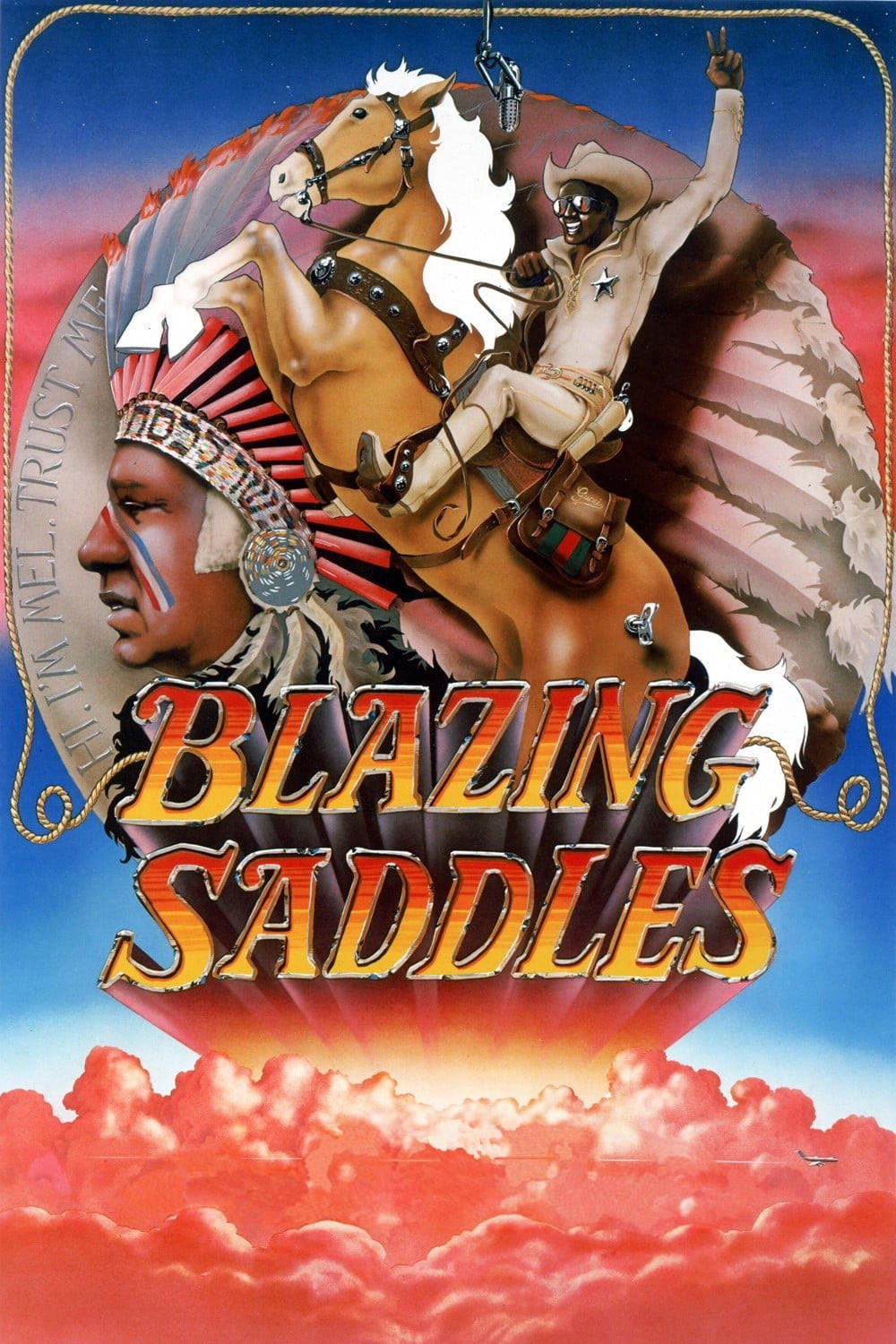
What the Film Is About
Whenever I revisit “Blazing Saddles,” I’m struck not just by its rollicking humor, but by the way it subverts expectations at almost every turn. Mel Brooks doesn’t simply lampoon the Western genre; he exposes and mocks the prejudices baked into that tradition. For me, beneath the comedic surface, this film is a bold confrontation with American racism and power structures—disguised as a gleeful farce.
The emotional journey centers on an outsider’s quest to gain acceptance in a town that resists change with every fiber of its being. Through outrageous satire, “Blazing Saddles” hurls its protagonist—and me as a viewer—into a world where decency battles bigotry, and where laughter functions as both weapon and shield. I see the film’s narrative direction as one big meta-commentary: it uses absurdism and irreverence to reveal the raw nerves in American cultural identity, daring its audience to interrogate what it finds funny, and why.
Core Themes
From my perspective, the main themes of “Blazing Saddles” swirl around race, power, hypocrisy, and the elasticity of American myth. I find its engagement with racism to be both vital and shocking, especially given that it debuted in 1974—a time when American cinema was just beginning to address its own complicity in erasing or stereotyping Black characters and minority stories. The film doesn’t walk around bigotry; it barrels through it, unafraid to make the audience uncomfortable in its relentless pursuit of exposing the idiocies and cruelty of prejudice.
Brooks uses parody to unmask how nostalgia can sanitize dark histories. When I watch the townspeople blanch at a Black sheriff, I don’t just see a joke—I see a reminder of how American society often excludes or fears “the other,” and how easy it is to hide behind the sentimentality of traditional Western tales. The movie’s relentless ridicule of authority (from bumbling mayors to hapless villains) pokes at deeper questions about who truly holds power and how clueless or corrupt those authority figures can be.
Identity is another inescapable theme. I love how “Blazing Saddles” frames identity as a negotiable, performative act—whether it’s Bart donning the uniform of sheriff or the townsfolk putting on a façade for self-preservation. And at its heart, the film grapples with the idea that genuine progress emerges not from heroic individuals acting alone, but from communities—however begrudgingly—deciding to embrace change.
What astounds me is how these themes haven’t lost their edge. Racism and social exclusion remain urgent topics, and the film’s willingness to use humor as a sledgehammer (rather than a scalpel) sometimes feels more current than comfortable. It’s an unruly reminder that satire can be a force for provocation, not pacification—that to laugh at something is not always to diminish it, but sometimes to reveal its true, painful shape.
Symbolism & Motifs
I’ve always admired the audacity with which “Blazing Saddles” uses symbols and recurring gags as a kind of shorthand for deeper meanings. One motif I can’t ignore is the repeated breaking of the fourth wall—it’s not just a comedic device; it signals to me that the entire concept of the Western, and perhaps the notion of manifest destiny itself, is up for grabs. When the film’s characters burst beyond their “set” and into other genres, or into the audience’s space, Brooks is dissolving the boundaries that keep prejudices safe and tradition unchallenged.
The railroad stands out as a potent symbol. On its surface, it’s a plot device, but I see it representing the relentless push of so-called “progress”—a force that claims to build community, but often tramples those deemed expendable. It is, to my mind, a metaphor for American expansionism that takes a hard look at who gets written into history, and who gets erased.
Another recurring motif is the use of music—both orchestral scores in mock-grand style and diegetic songs that wildly undercut what’s happening onscreen. “The Ballad of Rock Ridge” initially strains for earnestness, only to become a farce as the lyrics and visual gags pile on. For me, this playfulness with music underscores how every myth, every solemn ritual, can be exposed for its constructed, sometimes ridiculous nature.
Finally, the very language in “Blazing Saddles” is symbolic—the rapid-fire one-liners and parodies of “old-timey” speech patterns serve as a kind of code-switching. They highlight who belongs and who doesn’t, and remind me that the way societies talk about themselves says as much as any law or gunfight ever could. In my interpretation, Brooks invites us to laugh, but only so we notice what lies beneath that laughter—a far less comfortable reality.
Key Scenes
Key Scene 1
For me, one of the most crucial moments comes when Bart, the newly appointed Black sheriff, makes his grand entrance into Rock Ridge. The entire scene is played as an uproarious spectacle—with townsfolk staring in outrage and disbelief, and Bart coolly tipping his hat. This is where the film’s balancing act between comedy and critique is at its sharpest. I see this scene as essential because it puts the viewer in a double bind: the racism on display is repugnant, yet the wit with which it’s skewered is irresistible. It’s a microcosm of the film’s entire mission—to hold a mirror up to prejudice, using laughter not as an escape, but as a tool for confrontation.
Key Scene 2
Another defining scene, in my opinion, is the one in which Bart and the Waco Kid, bunking together in the jail, start to connect—not just as comic foils, but as survivors of exclusion. The easy, irreverent banter between Cleavon Little and Gene Wilder is where I first sense the movie’s genuine warmth. For all its caustic jokes, this moment humanizes both characters and hints at unlikely alliances. Here, the film subverts the myth of the lone Western hero: strength comes from solidarity, not just rugged individualism. This friendship becomes a kind of blueprint for overcoming deep social divides, if only people can learn to laugh at—and with—one another.
Key Scene 3
There’s a scene late in the film that, every time I view it, strikes me as a deliberate eruption of the film’s core ideas—the famous “movie lot fight” where the action spills beyond the Western narrative and into other movie sets, even shattering the fourth wall entirely. By breaking out of its own fictional world, the film is making a riotous, almost desperate plea for realization: that the systems of violence, racism, and buffoonery it mocks are not confined to history, or to Hollywood myths, but spill out into every aspect of life. This, to me, is Brooks at his most subversive. He’s telling us that the pat solutions of the Western can’t hold—that America’s deep contradictions can’t be contained by genre conventions. He wants us to see the artifice for what it is, and to recognize that breaking the mold might be the only honest response to systemic injustice.
Common Interpretations
When I talk to fellow cinephiles or pore through critical essays about “Blazing Saddles,” I notice most interpretations agree that the film’s primary purpose is to satirize racism—and to expose how normalized and invisible prejudice can become within society. Many viewers, myself included, see the relentless use of racial slurs and stereotypes as an attempt to hold up a grotesque reflection, daring the audience to wince, laugh, and ultimately confront their own discomfort. Some feel the film is a necessary corrective to the sanitized versions of American history endlessly repeated by classic Westerns.
Other interpretations zoom in on its parody of Hollywood and genre itself. In this reading, “Blazing Saddles” is less about race per se, and more about the constructed nature of all movie myths—the ridiculousness of heroism, the bankruptcy of authority, and the secret absurdity lurking behind every “timeless” story. I sometimes hear this view from those who prefer to see the film’s wild comic anarchy as its chief message; for them, Brooks exposes all structures of power (not just racial ones) as fundamentally absurd.
There’s also an enduring debate over whether the film’s humor defangs or perpetuates the very stereotypes it mocks. Speaking personally, I find this tension productive rather than fatal—a reminder that satire is always risky, and that laughter can seduce or awaken, often at the same time. For me, the film’s greatest success lies in its refusal to resolve this tension neatly. By making fun of everything, including itself, it leaves me grappling with questions rather than easy answers.
Films with Similar Themes
- Blazing Saddles (1974) – It’s hard not to see “Blazing Saddles” as its own best companion piece, given how it reimagines the Western from within. No other film I know quite juggles this mix of satire, social critique, and utter absurdity.
- Dr. Strangelove or: How I Learned to Stop Worrying and Love the Bomb (1964) – I’m always reminded of how both films wield comedy like a scalpel to expose existential fears and institutional lunacy, though “Strangelove” targets the military rather than the Old West.
- BlacKkKlansman (2018) – This recent film also weaponizes genre conventions and humor against racism, taking real historical events but filtering them through contemporary satire, much as Brooks did in his era.
- Young Frankenstein (1974) – Also directed by Brooks, I find it less political but similar in its ability to deconstruct and parody classic tropes, showing us how absurd tradition can become when interrogated with genuine affection and mischief.
For more context before choosing your next film, these perspectives may help.
Reflecting on “Blazing Saddles,” I’m always left with the sense that the film is a wild act of truth-telling masquerading as chaos. What Brooks communicates, through gags both high and low, is that society’s stories—about race, power, progress—are more fragile and fabricated than we’re often comfortable admitting. The film shatters old myths not to leave us empty, but to suggest the possibility (and sometimes the necessity) of inventing better ones. If I had to boil down its core message, I’d say it’s a call to see through deception, laugh at our own failings, and face up to the messiness beneath every happy ending. It’s a satirical slap in the face, but somehow, always, an oddly hopeful one.
🎬 Check out today's best-selling movies on Amazon!
View Deals on Amazon