
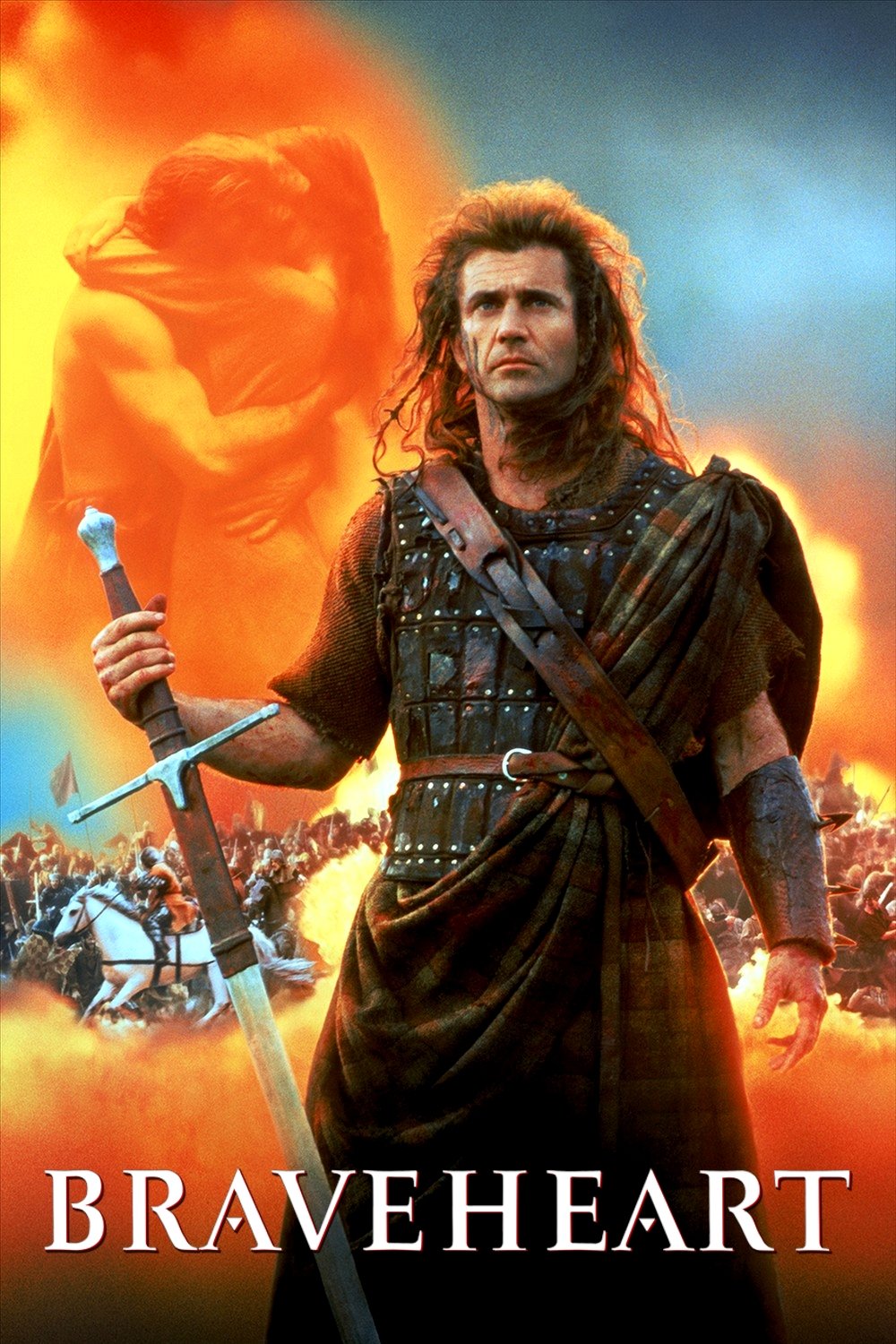
What the Film Is About
From the very first frames, I felt like Braveheart was less concerned with recounting historical events than with immersing me in the fevered heart of a people pining for freedom. The film’s emotional core, as I experienced it, is a collision between individual yearning and the suffocating realities of a society under foreign rule. Rather than focusing only on broad battles, I was drawn into an intensely personal struggle: a man versus the machinery of oppression, idealism pitched against cynical power, hope burnished in the crucible of betrayal and personal loss.
What truly resonated with me was the way the narrative moves—with bracing energy—between moments of searing intimacy and rousing public spectacle. The story isn’t just about rebellion; it’s about the heavy costs of heroism. I watched as the characters, and the land itself, became charged with longing, fury, and an aching desire for dignity. The central conflict is not simply between two armies or two nations; it’s the struggle to define what it means to be truly free, even while the odds—and history itself—seem squarely stacked against you.
Core Themes
To my mind, Braveheart surges with several interwoven themes, each brought vividly to the fore through its bold visual style and passionate performances. The most immediate theme that struck me is the pursuit of freedom—not just as a political reality, but as a deep-seated human need. I felt the film was meditating on how the need for liberty transforms individuals and communities, even at tremendous personal risk. William Wallace’s journey, as I saw it, illuminated the kind of moral courage required to push back against a long-standing system of dominance.
Loyalty also became a driving current throughout the film. I noticed how the characters’ allegiances—to each other, to their land, and to their shared sense of justice—are relentlessly tested. The film doesn’t shy away from the messy complications of trust, betrayal, and the perils of holding faith in others. I sensed that loyalty, in the worldview of Braveheart, is both sacred and fragile—a bond that can inspire glory, or collapse under the pressures of ambition and fear.
What also stood out to me was the way love—romantic, platonic, and patriotic—is wielded as both weapon and shield. Love empowers Wallace and his followers, but it also leaves them vulnerable to heartbreak and brutality. I felt the film was suggesting that true intimacy and connection inevitably expose us to pain, yet are the very things that make sacrifice meaningful.
Finally, the theme of sacrifice loomed large in my experience of the film. Braveheart dwells on the high price paid by those who defy oppressive systems, from personal loss to the ultimate surrender of life itself. Watching this, I couldn’t help but reflect on how thin the line is between martyrdom and futility, and how history often romanticizes suffering while neglecting its grim realities. Released in the mid-90s—a time marked by seismic political changes across Europe and a sense of renewed collective identity—the film’s invocation of resistance and self-determination felt both timely and timeless. Even today, questions about the meaning of freedom and the cost of dissent echo in societies across the globe, lending continued urgency to the film’s central ideas.
Symbolism & Motifs
As someone who obsesses over cinematic details, I found Braveheart to be densely layered with visual and narrative motifs that deepen its messages. The recurring image of the Scottish thistle, for instance, felt immensely poignant to me. The thistle is hardy, difficult to uproot, and able to thrive in harsh conditions—a fitting metaphor, I realized, for the resilience of Wallace and his people. Whenever it appeared, I was reminded of the stubborn hope that persists in the most unforgiving circumstances.
Another motif that reverberated throughout the film was the use of painted faces and kilts during the battle scenes. On one level, this is a dramatic flourish, but for me, it also conjured up a sense of collective identity—the transformation of individual fighters into a single, fearsome force. When I saw the blue war paint, I didn’t just see preparation for battle; I saw a tribe uniting around a shared vision, seizing back the narrative from a conquering power that would erase them.
Mirrors and reflections pop up in key moments, and I took these as a reminder that every act of courage is also an act of self-recognition. From Wallace’s private moments of grief to his public addresses to the clans, the film keeps returning to questions of authenticity. Is he the man he appears to be, or is he what others need him to become? Those moments of image and illusion, I thought, revealed the tension between personal desire and communal expectation.
Finally, I was struck by the persistent motif of open landscapes versus stone fortresses. The wild Scottish moors seem to symbolize freedom and possibility, while the castles and dungeons evoke confinement—physical and psychological. In my viewing, every return to the mist and heather was a breath of liberation; every scene within stone walls, a grim acknowledgment of control and captivity.
Key Scenes
Key Scene 1
For me, the first pivotal scene is the moment when William Wallace returns to his village after years away and reunites with Murron. I felt this scene encapsulated the emotional engine of the whole film—a pure, almost primal longing for home, connection, and normalcy in a world scarred by violence. The tenderness between Wallace and Murron isn’t just about romance; it gave me a sense of what’s at stake in the larger fight. Their intimacy is rendered fragile by the surrounding brutality, and when tragedy strikes, it feels both deeply personal and universal. This moment clarifies for me that the war is not merely strategic or historic; it is rooted in the simple, profound need to protect loved ones from harm and indignity. It’s a microcosm of the film’s plea for human dignity.
Key Scene 2
Another indelible moment for me is Wallace’s speech before the Battle of Stirling. I remember feeling the emotional pitch rise—it isn’t just the rhetoric that moves the crowd, but the raw vulnerability he displays. In this speech, themes of freedom and courage crystallize, and I found myself reflecting on the transformative power of communal conviction. What makes this scene so compelling, in my reading, is its acknowledgment of fear: Wallace doesn’t pretend victory is likely, but insists the fight is worthwhile anyway. It’s in this surrender to the greater good—in the willingness to risk everything—that the film’s ethical core emerges. I came away convinced that Braveheart sees true courage as less about blind bravado than about honest reckoning with our deepest fears.
Key Scene 3
The execution of Wallace at the end of the film, for me, is the ultimate distillation of everything Braveheart is wrestling with. As I watched, I was struck by the way the scene lingers on his defiance in the face of humiliation and pain. This is not just a gruesome spectacle; it’s an assertion of selfhood that reverberates across time. His final cry of “Freedom!” still echoes for me long after the credits roll. In that moment, I believe, the film is arguing that the spirit of rebellion outlives its physical embodiment. However bleak the outcome, the refusal to succumb becomes itself an act of creation—a legend that will inspire those who inherit the struggle.
Common Interpretations
There’s no denying that viewers and critics have arrived at a variety of interpretations regarding Braveheart’s true message. Most mainstream readings, I’ve found, center on the film’s role as a meditation on national identity and the myth-making power of storytelling. For many, the film is a rallying cry for oppressed peoples, ripe with the belief that justice can, however briefly, carve an opening in the fabric of destiny. To these viewers, Braveheart is ultimately about the power of one passionate person to ignite collective action.
Others I’ve spoken with, and some critics I’ve read, point to the film’s vision of masculinity and heroism, sometimes lauding its portrayal of stoic fortitude, other times critiquing what they see as a narrow, even violent, conception of masculine virtue. There are also those who are wary of how the film manipulates historical fact, arguing that its liberties serve a larger mythic function—but risk papering over the messiness of actual history in favor of grand, cinematic gestures.
One interpretation that resonates with me centers on the commodification of sacrifice. Watching Wallace’s ordeal transformed into legend by those around him, I was left pondering how societies use individual pain to galvanize group identity. Some see this as an inspirational blueprint, while others sense a lurking darkness—the possibility that noble suffering can be as much a tool of control as a means of liberation. Ultimately, I think Braveheart’s richness lies in its resistance to any one reading; it invites us to interrogate our own relationship to freedom, memory, and the cost of loyalty.
Films with Similar Themes
- Spartacus – For me, the theme of a reluctant leader rising against oppression and rallying a disparate group resonates powerfully with Braveheart’s spirit of insurrection and sacrifice.
- Gladiator – I’m repeatedly reminded of the personal quest for justice set against a backdrop of imperial violence, where honor and loyalty are inextricably bound to individual suffering.
- The Last of the Mohicans (1992) – Watching this film, I’m struck by how it explores identity and belonging amid a clash of civilizations, with love and freedom motivating acts of breathtaking courage.
- Rob Roy – In my view, this story of Scottish resistance, personal integrity, and the moral gray zones of rebellion acts as a companion piece to Braveheart’s exploration of national myth and individual courage.
For me, Braveheart stands apart for the way it refuses to offer easy answers, even as it sweeps me up with its operatic scale and intensity. The film leaves me wrestling with what it means to fight for something larger than myself, and whether the act of resistance—however costly—can ever truly be in vain. The story is rooted in its own era’s anxieties and hopes, yet the questions it asks about the value of freedom, the complexity of loyalty, and the nature of sacrifice continue to haunt me as powerfully now as when I first saw it.
For more context before choosing your next film, these perspectives may help.
🎬 Check out today's best-selling movies on Amazon!
View Deals on Amazon