
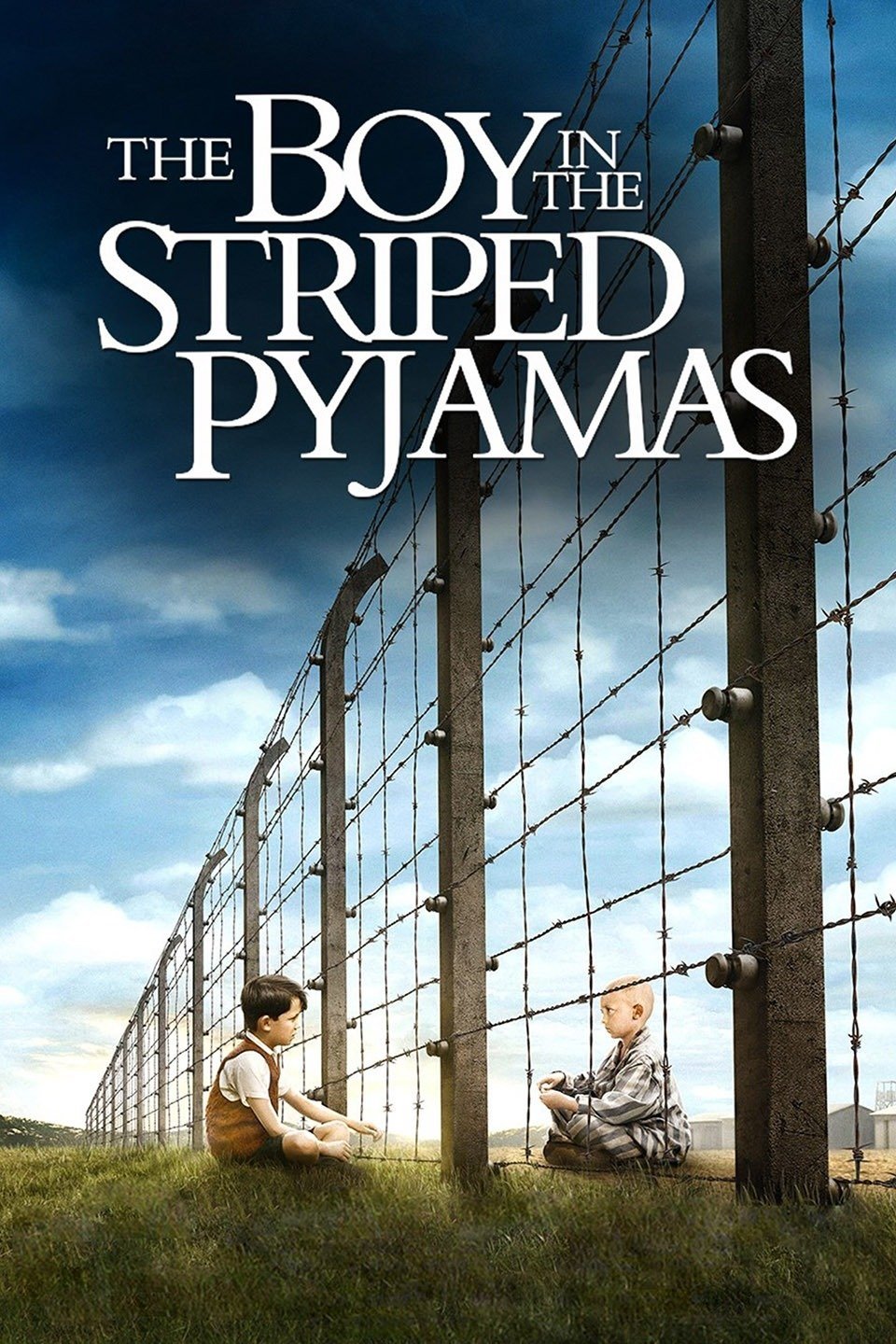
What the Film Is About
What shocked me most when I first watched Boy in the Striped Pyjamas was how deftly it pulls me into a child’s perspective—not to trivialize atrocity, but to give me a piercing clarity about innocence and its fatal collision with institutional cruelty. I found myself swept up in the immediate, confined world of Bruno, whose life is one of safety and comfort until slowly, almost imperceptibly, the sinister truth of his environment closes in. What lingers is the emotional dissonance between the wonder of childhood and the horrifying machinery of history grinding away just beyond a garden wall.
To me, the central conflict is rooted in the abyss between what we wish not to see and the brutal reality that insists on making itself visible, no matter how fiercely we try to deny or rationalize it. The narrative direction isn’t just about physical boundaries; it’s a moral journey that pulls innocence through a dark maze, forcing me to confront my own complicity as a viewer. It’s about empathy, denial, and how ignorance is rarely ever bliss for long.
Core Themes
I can’t talk about this film without confronting its boldest theme: the tragic dangers of innocence in a world poisoned by ideology. Throughout, I’m reminded that innocence is not only vulnerable, but in a world where some lives are deemed worthless, it can be weaponized or erased without warning. The story navigates the terrain of friendship against the sharp barbed wire of historical violence, making me question what it means to see (or not see) the suffering of others.
The power dynamics throughout the film needle at my conscience. Authority here isn’t distant or abstract; it’s domestic, even familiar, embodied in Bruno’s father, who represents not just the personal, but the chilling reach of totalitarian cruelty. I find myself dwelling on how the film refuses to let me escape into the comfort of easy villains; by showing brutality from the viewpoint of a child whose father is also the architect of horror, I’m forced to wrestle with moral complexity in a way that stings long after the credits roll.
As I interpret it, another crucial theme is the permeability of boundaries—physical, emotional, and ethical. The fence is an obvious symbol, but so much of the film grapples with what it means to cross lines: of understanding, of compassion, and finally of no return. The relevance of these themes hasn’t faded for me; if anything, they feel more urgent as the modern world grapples with tribalism, denial, and dehumanization on a global scale.
Symbolism & Motifs
What strikes me every time is the film’s relentless use of visual boundaries—not only the literal fence but all the ways the world of the camp is hidden in plain sight. The striped pajamas themselves become more than just clothing; in my eyes, they’re the costume forced on innocence, an identity imposed through violence. When I think about Bruno’s pristine home clothes in contrast with Shmuel’s uniform, I’m reminded of how easily identities can be rendered by arbitrary authority, and how quickly we adapt to seeing the other as belonging on the other side.
Motifs of vision and blindness run throughout. Windows, curtains, and doors—always opening, closing, or half-drawn—impel me to notice how the privileged can choose not to see what’s happening around them, while those on the inside are forced into exposure. The recurrent motif of hands and touch, from passing food to the quiet grasp between Bruno and Shmuel, whispers to me of the humanity that survives even when everything else is stripped away.
I find myself haunted by the recurring presence of childhood objects—balls, books, toys—repeatedly shown as artifacts of a safer world, yet tainted as they travel into forbidden territory. These items represent a yearning for connection but become corrupted by the realities they encounter. The film’s spare use of music and silence works to reinforce a sense of growing dread, heightening my awareness of what’s being left unspoken.
Key Scenes
Key Scene 1
If I had to choose one turning point, it would be the moment when Bruno first sees Shmuel on the other side of the fence. It isn’t just a simple meeting; it’s the moment when the artificial boundaries of their worlds become not merely physical, but devastatingly personal. For me, this scene encapsulates the shattering realization that the political is always, ultimately, personal. I see innocence reaching out through wire, both literally and metaphorically, and I’m forced to acknowledge that empathy can flicker even at the edges of a nightmare.
Key Scene 2
Another moment I always return to is Bruno’s confrontation with his mother, as she begins to unravel the horror surrounding them. For me, this scene is less about the transfer of knowledge and more about the agony of lost illusions. When Bruno’s mother learns the truth, her heartbreak reverberates; I feel her powerlessness in the face of a machinery much bigger than her or her children. This scene doesn’t just move the plot forward; it throws a harsh light on the price of willful ignorance and on how long one can maintain emotional distance while horror festers in the backyard.
Key Scene 3
The finale shreds whatever distance I might have left as a spectator. When Bruno and Shmuel cross the world’s most lethal threshold together, it’s not just narrative closure—it’s a devastating indictment. For me, this scene is the film’s harshest accusation against dehumanization and the logic that sustains it. The tragedy is not abstract; it is viscerally personal, forcing me to see the cost of allowing evil to flourish through the smallest and most preventable failures of compassion. In this climax, the film sews together innocence and atrocity in a single, unforgettable tableau.
Common Interpretations
Most discussions I’ve heard or participated in about this film pivot around its bold choice to frame the Holocaust through a child’s eyes. I regularly hear critics questioning whether the film risks trivializing the subject by filtering it through such innocence. However, others—myself included—find this approach to be the source of the film’s lasting power. I see it as a harrowing reminder that the greatest horrors can become invisible when seen through the lens of normalization and family loyalty. There’s a current of interpretation that highlights the film’s indictment of complicity: for many viewers, the real tragedy is not only what happens to Bruno, but the slow, terrifying realization within his parents, especially his mother, of where denial and blind allegiance can lead.
Some scholars and film fans emphasize the film’s historical inaccuracy as a narrative tool, arguing that the era’s dangers would have made such a friendship impossible. Yet, I see the narrative’s constructed innocence as a way to force me (and all viewers) into a confrontation with my own sense of what’s “impossible,” and how boundaries are enforced or broken in our own lives. For many, the film’s enduring legacy is in the debates it sparks about remembrance, responsibility, and the limits of empathy. I personally see it as a meditation on how those who don’t directly bear the costs of brutality can be lulled into a false sense of safety—until it’s far too late.
Films with Similar Themes
- Life is Beautiful – I’m always struck by the thematic overlap here: both films use a child’s perspective to explore innocence amid genocide, though Life is Beautiful leans into fantasy as much as tragedy.
- The Book Thief – This story draws me in with its focus on childhood and family life under Nazi rule, showing how ordinary Germans comprise both witnesses to and victims of the era’s horrors.
- Schindler’s List – While far more explicit and adult in its imagery, this film’s exploration of moral awakening and the choices that define complicity always brings me back to the central questions posed by Boy in the Striped Pyjamas.
- The Painted Bird – Watching this deeply unsettling film, I’m reminded of Boy in the Striped Pyjamas through its unsparing focus on a child lost in an adult world of violence and prejudice.
Reflecting on all of this, I’m left with a feeling that Boy in the Striped Pyjamas is far more than a lesson in history. It’s a challenge to every viewer: to see beyond their own fences, to interrogate the ease with which atrocity becomes ordinary, and to reckon with the price of seeing others as less than ourselves. The film compels me to remember that innocence is precious but never immune to the consequences of indifference. By embedding the Holocaust in the story of two boys, it asks me not only to remember history, but to measure what I, in my own time, choose to ignore, accept, or change.
If you’re deciding what to watch next, you might also want to see how this film holds up today or how it was originally received.
🎬 Check out today's best-selling movies on Amazon!
View Deals on Amazon