
What the Film Is About
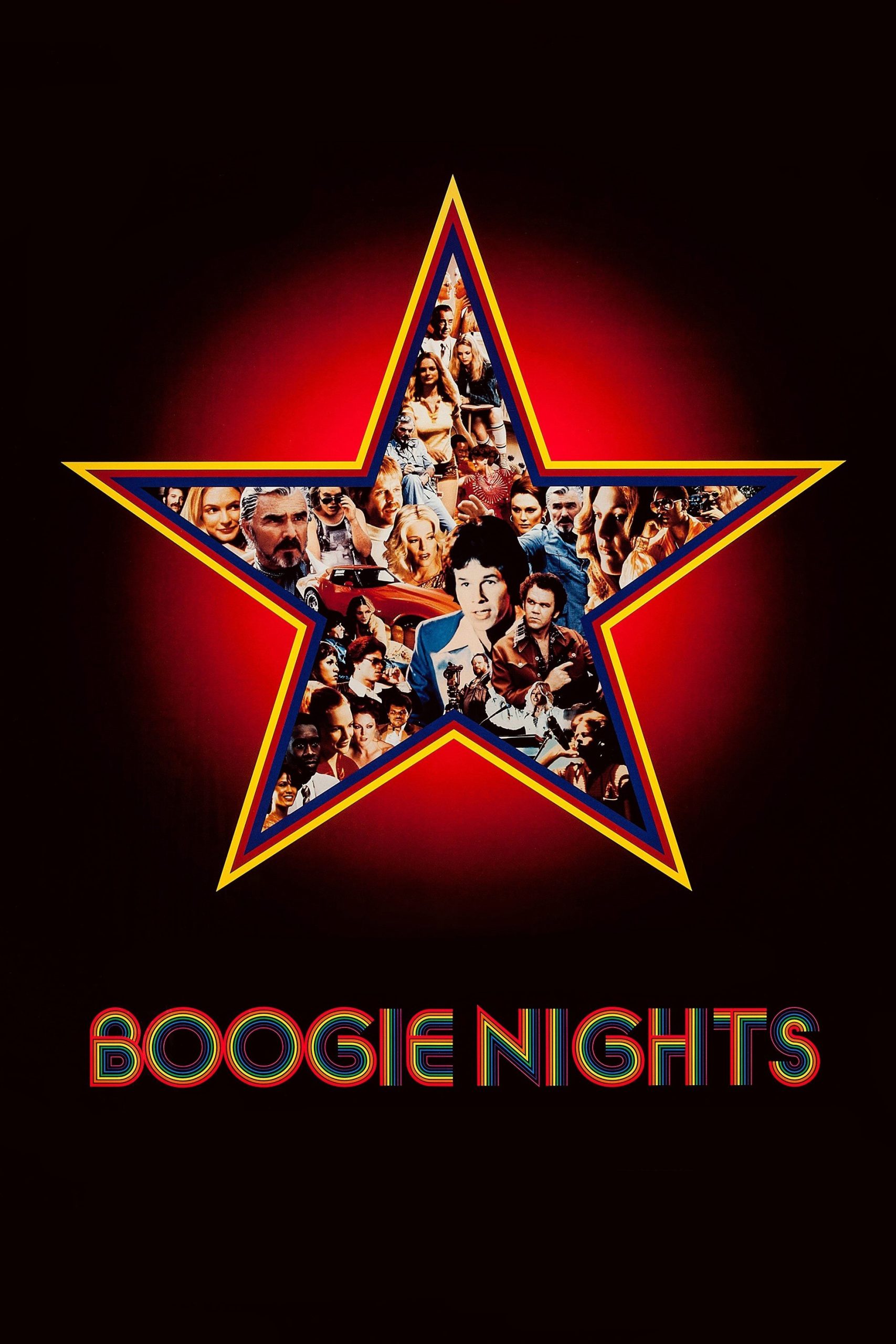
Watching Boogie Nights for the first time, I felt a kind of vertigo, pulled into an intoxicating swirl of ambition, desperation, and makeshift family. To me, the film zeroes in not just on the rise and fall of a young man in the adult film industry, but even deeper, on what it means to search for identity and belonging in a world that offers little stability. There is always an undercurrent of longing — not just for fame or money, but for acceptance, connection, and meaning. The emotional journey, for me, revolves around people trying again and again to fill empty spaces in themselves and in each other, sometimes succeeding, more often failing, but always exposing the rawness of their hope.
At its core, I see the narrative as a study of the fragile line between self-destruction and self-invention. The characters orbit around success and oblivion with stunning vulnerability. I’m left asking not how these people will survive their tumultuous industry, but whether any of them can ever feel whole. The film becomes a meditation on both the risks and the intoxicating possibilities of reinvention and the cost of chasing a fantasy that constantly recedes in front of you.
Core Themes
What strikes me most about Boogie Nights is its unflinching, empathetic examination of the search for self-worth in unlikely places. The film delves into themes of family, exploitation, ambition, and the relentless need for acceptance. For all the humor and kinetic energy swirling through the film, I find a profound sadness beneath the surface — the sadness of people who constantly remake themselves, hoping to become someone worthy of love and recognition.
I find the motif of family especially poignant. The film presents a makeshift family within the adult film world, suggesting that when conventional support fails, people will improvise. Jack Horner’s “set” becomes a haven for misfits and outsiders, a place of provisional safety. Yet, as I watched, I couldn’t help but sense the fragility of these bonds. The hunger for validation propels these characters into dangerous choices; their emotional reliance on one another is both their strength and their undoing.
Morality in the film is intentionally ambiguous. I don’t see a simple condemnation or glorification of the industry; instead, I sense a kind of anthropological curiosity — a desire to understand why people choose these paths, and how the world around them shapes those choices. This ambiguity feels honest and very of its time, as the late 1990s were marked by a growing skepticism toward supposed moral certainties. The film asks uncomfortable questions about exploitation versus empowerment, the edges of art and commerce, and what happens when the American dream attaches itself to unlikely vessels.
Identity, for me, is nearly inseparable from performance in this world. As characters step in and out of their screen roles, I realize how much of our everyday selves are also constructed — how we choose who to be under the gaze of others. The film’s setting during the transition from the freewheeling 1970s into the more cynical, video-driven 1980s amplifies these questions: What happens to people built for one era when the world abruptly changes? Are we more than the sum of our performances?
These themes feel just as urgent today as they did in 1997. In our own digital age, performance, belonging, and personal reinvention are more visible and fraught than ever. Boogie Nights asks me to consider the price of “making it” and the ache of working so hard to be seen, only to lose yourself in the process.
Symbolism & Motifs
I see Boogie Nights as a film filled with rich, interconnected symbols that echo quietly throughout. The ever-present motif of the camera stands out — it is never just recording, but transforming, elevating ordinary people into something larger than life or, sometimes, exposing their most vulnerable selves. The camera is both mirror and trap; it gives characters new identities, yet can also strip them bare. When I consider those slow, gliding tracking shots, I read them as evidence of a world in perpetual motion, teetering on chaos but trying to maintain an illusion of glamour and control. There is an unmistakable sense of spectacle, of everything being both authentic and artificial at the same time.
The changing music — from the exuberant disco of the 1970s to the colder, brittle pop of the 1980s — mirrors the transformation of both the industry and its people. The joyous, communal dance sequences aren’t just celebrations to me, but also acts of collective denial, a way to stave off loneliness and the inevitable comedown.
Mirrors pop up throughout the film, and I’m haunted by how often characters catch their own reflections. These are moments of reckoning: the brief flickers of doubt or shame when the performance ends. Mirrors, in my view, are invitations to face oneself — but the answers are often unsettling, or incomplete.
I’m also drawn to the symbolic importance of found families and surrogate parenting. The house parties, late-night hangouts, even the chaotic workplace on set all feel charged with longing for connection. This searching for family is both a protection against and a symptom of the instability outside. The film’s visuals — neon lights, garish costuming, expensive cars next to rundown apartments — create a tension between aspiration and reality, capturing the vulnerability beneath all that bravado.
Key Scenes
Key Scene 1
The first meeting between Eddie Adams (soon to be Dirk Diggler) and Jack Horner stands out as a kind of origin myth in the film’s universe. I found this sequence deeply revealing, not because of what is said but because of what hangs unsaid between them: mutual recognition, a transfer of longing. Jack sees the raw material for a star; Eddie feels, for the first time, truly visible. This encounter crackles with possibility and establishes the push-pull between mentor and protégé that defines so much of what follows. To me, the emotional charge here is not just about a job opportunity, but about the intoxicating prospect of a new life — with all the danger that entails. This is the seed from which the film’s entire emotional logic grows: the seductive (and perilous) notion that someone else might give you a shortcut to self-worth.
Key Scene 2
Another scene that lingers in my memory — and in my gut — is when Dirk, at his lowest, desperately tries to sell himself to strangers on the street. This sequence, shot with a kind of feverish, handheld intimacy, is not simply about rock-bottom in the celebrity lifecycle. What I find so powerful is how it strips away all the artifice of earlier scenes: the bright lights, the bravado, the self-invention. Stripped of his fantasy, Dirk is reduced to the scared, lost young man I sensed all along. It’s a harrowing confrontation with reality and a devastating commentary on what can happen when someone’s entire sense of self-worth is externalized — found only in applause, validation, or notoriety. The film refuses to pass judgment here; instead, it forces me to reckon with the cost of chasing identity at any price.
Key Scene 3
For me, the closing moments in Jack Horner’s dressing room are nothing less than a thesis statement for the film. When Dirk, now humbled, prepares to return to the fold, there is a sense of family reconstitution that is both comforting and painfully cyclical. Dirk faces his own reflection, reciting the mantra of his greatness, echoing the very performance that launched him. This is where I realize the film’s tragic insight: sometimes the only way forward is to embrace the roles we’ve been given, even when they no longer fit. The scene crystallizes the tension between self-acceptance and self-delusion, and leaves me wondering whether any of us ever really escape the person we once pretended to be.
Common Interpretations
In conversations with other cinephiles and through my own reading, I’ve noticed that Boogie Nights invites a spectrum of interpretations. Some audiences, especially critics, often see it as a masterful meditation on the cost of the American Dream — that is, a commentary on how ambition and capitalism turn people into both products and consumers, chewed up and spit out when the culture moves on. They read the film as an allegory about fads, obsolescence, and the fickleness of fame, especially as the 1970s mutate into the harsher landscape of the 1980s.
Another interpretation centers on the theme of found family as both salvation and trap. I resonate with the idea that the “family” Jack creates is sincere, yet never able to shield its members from their inner voids. For many, the film is both tragic and strangely warm: a story about broken people doing their best, dancing on the edge of self-destruction while longing for connection. This duality — joy underscored by sadness — is what I think gives the film its staying power.
Some viewers focus on the moral ambiguity. Rather than taking a position on the adult film industry, the film is, in their view, more interested in exploring what it means to be seen, accepted, and used by those around us. This reading aligns with my own reaction: I don’t see easy answers or judgments here, just relentless curiosity about how we construct and reconstruct our identities within unforgiving systems.
Of course, there are also readings that view the film as a send-up or critique of the excesses of both pornography and Hollywood at large. For a certain segment of viewers, it can even serve as a cautionary tale, a stylized mirror reflecting the dangers of unchecked hedonism and ambition. What unites these readings, at least in my mind, is the film’s insistence on empathy — everyone is treated with a certain tenderness, even at their lowest, which complicates any simple interpretation.
Films with Similar Themes
- Magnolia – I’m reminded of this film for its exploration of broken families and longing for redemption, set against the backdrop of interconnected lives in Southern California.
- Goodfellas – While a very different genre, I see a resonance in its depiction of found families, rise and fall trajectories, and the price one pays for trying to transcend social limits.
- Sunset Boulevard – I can’t help but notice the shared themes of faded stardom and self-invention, both films examining what happens when the world stops looking at you the way you hope it will.
- Almost Famous – Its nuanced take on belonging, performance, and the hedonism of 1970s America feels, to me, like a softer echo of the emotional landscapes found in Boogie Nights.
At its heart, Boogie Nights reminds me that the search for identity is riddled with pitfalls, but also flashes of hope and moments of genuine connection. The film paints a world where dreams are both currency and curse, where the need for belonging wars with the pain of reinvention. Through its kaleidoscopic energy and characters’ naked longing, I come away with a sense that to be human is to always be a little bit lost — desperately improvising, hoping for love where we find it, and searching for wholeness despite the odds. The era may be the 1970s and 80s, but the ache at the film’s core couldn’t feel more personal or more timeless.
For more context before choosing your next film, these perspectives may help.
🎬 Check out today's best-selling movies on Amazon!
View Deals on Amazon