
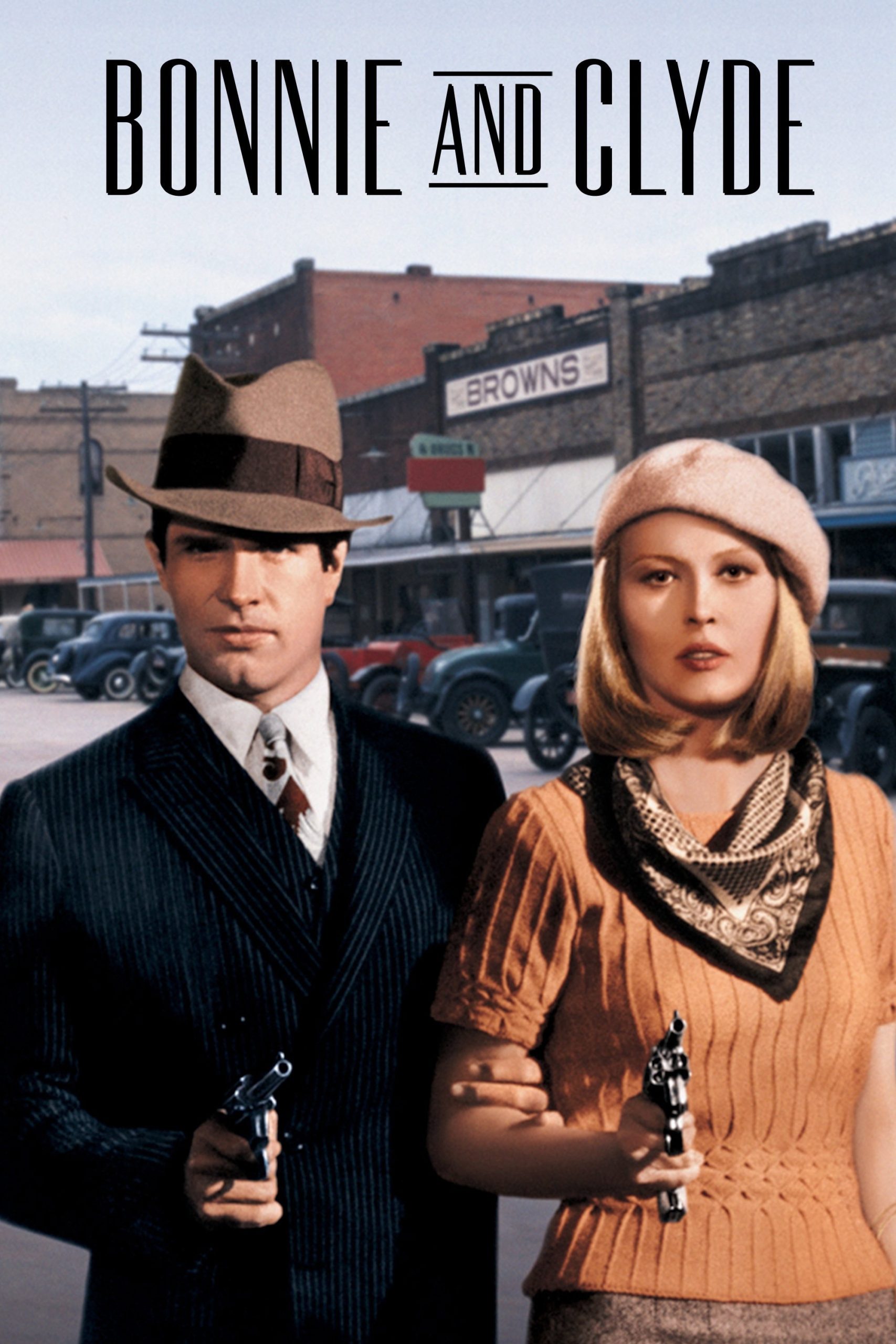
What the Film Is About
From the opening moments, I’m struck by the way “Bonnie and Clyde” thrusts me into a world that feels electric, dangerous, and heartbreakingly human. This isn’t a film that merely recounts the exploits of two infamous outlaws; it immerses me in an emotional tempest where love and desperation collide with rebellion and violence. At its heart, the film is about searching for meaning—about two people straining against the suffocating limitations of their lives, daring to believe there is more, even if that “more” is criminal. Their journey is nothing less than a high-wire act over the chasm of the American Dream’s darker side.
It’s a movie that keeps me emotionally off-balance. Sometimes I find myself rooting for this couple, even as they barrel toward disaster. The central conflict isn’t just with the law; it’s an existential collision between yearning and reality—between how things ought to be and how they are. The bond between Bonnie and Clyde pulses with a mixture of romance, excitement, and deep, unshakable loneliness. Each bank robbery and narrow escape isn’t just crime but a desperate act of self-assertion. The direction of their journey is less about triumph than about confronting the limitations imposed by both society and their own pasts.
Core Themes
One of the most indelible aspects of “Bonnie and Clyde,” in my mind, is the way it brazenly blurs the boundaries between heroism and villainy. I always feel that the film invites me to question the morality of its protagonists in a very personal way. Their actions are criminal and often violent, yet the world they exist in—Depression-era Texas, battered by poverty and humiliation—creates a context that makes their rebellion strangely sympathetic. I can’t help but see their lawlessness as a reaction to a system that offers them little dignity or future. The theme of social change pulses through the film. In the backdrop of the late 1960s, with America’s own social upheavals, their defiance seems less like an isolated crime spree and more like a cry from a generation searching for freedom on its own terms.
But I’m equally moved by the film’s meditation on identity. Bonnie and Clyde are constantly fabricating themselves, romancing one another with stories about what they could be and what they might have become. They’re not just running from the law; they’re fleeing from disappointment and anonymity. In this sense, the film explores how our identities can be constructed as an act of will—how, sometimes, we choose the roles we play as much as we are shaped by circumstance.
I’m also haunted by the film’s relationship to violence. There’s a glamour to the way their crimes are staged, but that glamour is always fragile—quickly punctured by raw, shocking brutality. Every bullet, every shattered pane of glass, feels heavy with consequence. For me, the film’s violence is never just spectacle; it’s a reminder of how quickly fantasy curdles into nightmare, how easily rebellion can leave ruin in its wake. In the context of 1967, this was revolutionary—forcing audiences to look at violence not as entertainment, but as something visceral and tragic.
Finally, “Bonnie and Clyde” is, at its core, about love and loyalty, but these too are deeply complicated. The fierce attachment between the two isn’t enough to insulate them from insecurity and longing. Their intimacy is at once romantic and intensely sad—built on a dream that is, perhaps, always doomed to shatter. In all of these themes, I’m left wrestling with what it means to live authentically—even if the price of that authenticity is destruction.
Symbolism & Motifs
Whenever I revisit “Bonnie and Clyde,” I find myself drawn to the movie’s visual grammar—the way it uses recurring images and patterns to amplify its themes. Cars, for instance, are more than mere vehicles; they become rolling symbols of both freedom and entrapment. Every roaring getaway isn’t just escape—it’s a chase after agency, a fleeting moment when Bonnie and Clyde seem briefly in command of their own destinies. Yet these same cars box them in, limit their choices, and eventually become their metal coffins.
The motif of windows recurs in my memory, too—windows shattered by bullets, glimpses of the outside from cramped rooms, and moments when characters stand poised between looking out and being exposed themselves. It’s as though the glass represents the thin, often broken barrier between private yearning and public consequence.
I’m repeatedly struck by the way light and shadow are wielded throughout the film. There’s a kind of lyricism to the sun-drenched fields where hope seems possible, only to be shattered by sudden bursts of violence, often rendered in stark, shocking detail. Guns themselves become more than props; they’re extensions of desire, rage, and impotence. In the hands of Bonnie and Clyde, they’re a means of asserting identity as much as committing crime, yet every trigger pulled is a step closer to doom. There’s also the recurring appearance of the camera within the diegesis—especially the whimsical photographs taken early on. These images aren’t just mementos; they are statements of existence, bold attempts to capture and define the fleeting defiance that animates their lives.
Even seemingly incidental motifs—Bonnie’s poetry, for instance—take on outsized significance. Her verses are childlike but poignant reminders of the need to be remembered, to rise above the anonymity of ordinary suffering. These motifs weave through the fabric of the film, serving as reminders of lives lived in the margins, defined by both yearning and transgression.
Key Scenes
Key Scene 1
One scene that reverberates with meaning for me is the celebrated sequence where Bonnie, after realizing the limitations of life on the run, returns to her mother’s house in a hopeful but doomed attempt at reconnection. The golden light of the countryside contrasts cruelly with the emotional distance between Bonnie and her family. For me, this scene encapsulates the film’s core sadness: no matter how thrilling Bonnie’s adventures, home is irreparably lost. There’s a ghastly tenderness to her mother’s weary resignation—a sense that some rifts can’t be bridged. As I watch Bonnie look to her mother for approval or perhaps absolution, I feel the pull between belonging and exile that defines the whole film. This moment crystallizes the emotional costs of rebellion, highlighting how dreams of escape often calcify into painful separation.
Key Scene 2
Another sequence that always lingers is the famous moment when the gang kidnaps a young couple and spends a carefree day picnicking by the river. For all its surface charm, the scene is layered with tension and irony. This tableau momentarily reframes the outlaws as just another group of friends. Yet, the innocence is deeply precarious: the intrusion of violence is only ever a heartbeat away. For me, the scene lays bare the ideological conflict at the heart of the movie. It forces me to confront the ambiguity that defines Bonnie and Clyde—how easily they slip between the roles of villain and folk hero, threat and companion. I’m left questioning what “normalcy” even means in a world so unmoored by deprivation and fear.
Key Scene 3
The haunting slow-motion climax sears itself into my memory every time. The ambush in the dusty sunlight is both a visual and emotional onslaught. As bullets shred the stillness, I’m pulled into a maelstrom of loss, inevitability, and unresolved longing. There is no glory in their deaths, only a shocking reminder that bravado and love offer little sanctuary against the grinding machinery of fate. This finality forces me to reflect on the myth-making impulse that has animated the entire film. Their legendary status, hammered into being in this burst of violence, seems both a triumph and a deep tragedy. It’s as if the film is saying that, in America, to be noticed at all might require an act of such outrageous defiance that the cost is annihilation—the moment demands I reckon with the things we’re willing to sacrifice for significance.
Common Interpretations
When I talk to other critics and cinephiles, “Bonnie and Clyde” is almost universally recognized as a turning point in American cinema—not simply for its style but for the moral ambiguities it presents. Many interpret the film as an allegory for the youth-driven unrest of the late 1960s, with Bonnie and Clyde standing in for a generation railing against old certainties. There’s widespread agreement that the film’s depiction of violence—startlingly graphic for its time—was meant to shatter complacency and force a reckoning with the realities beneath society’s surface.
Yet, I’m also aware of the nuanced debate concerning the characters’ likability. Some viewers, especially on the film’s release, saw them as dangerously glamorized antiheroes, romanticizing violence. Others, myself included, perceive a deeply ironic undertone—one that subtly critiques the very mythology it constructs. The idea that “Bonnie and Clyde” is as much about the American urge to mythologize outlaws as it is about the outlaws themselves is a reading that continues to resonate across generations. Some critics focus more closely on the film’s subversive sexuality, especially Clyde’s impotence and its implications for power, companionship, and alienation. These interpretations coexist, sometimes uncomfortably, but that discomfort is central to the film’s enduring power.
I find that “Bonnie and Clyde” rewards multiple readings because it’s so skillful in playing with contradictions—glamorizing while deconstructing rebellion, generating empathy while never flinching from the ugliness of desperation. Its willingness to leave questions unresolved seems to me the key to its long life as a cultural touchstone.
Films with Similar Themes
- Badlands (1973) – I see a clear connection in the way both films use outlaw lovers to probe the dark side of the American Dream and explore the tension between romance and violence.
- Natural Born Killers (1994) – This movie’s use of media spectacle and “celebrity criminal” themes brings to mind the same fascination with notoriety and the consequences of myth-making I found in “Bonnie and Clyde.”
- True Romance (1993) – Both films dwell on couples swept up in a whirlwind of illicit activity, with love serving as complicity and catalyst.
- Thelma & Louise (1991) – Here again, the motif of the road, friendship, and rebellion against a stifling social order echoes many of the motifs and themes I wrestle with in “Bonnie and Clyde.”
If I had to distill what “Bonnie and Clyde” ultimately communicates—what continues to haunt and provoke me—it’s the idea that longing for meaning and defiance is inseparable from the possibility of destruction. The film peers unflinchingly at how people try to break free from roles assigned by family, economy, and gender, even if it means forging an identity from violence and risk. What endures is its sense of urgency, its insistence on asking whether rebellion is a path to freedom or simply another route to obliteration. The choices Bonnie and Clyde make are always tangled with the consequences of a society unable or unwilling to allow for other routes to significance, love, or even basic dignity. In reflecting on their story, I’m reminded how difficult it remains—in any era—to both love and see clearly; how the urge to be remembered, to matter, is both ordinary and, at times, catastrophic.
If you’re deciding what to watch next, you might also want to see how this film holds up today or how it was originally received.
🎬 Check out today's best-selling movies on Amazon!
View Deals on Amazon