
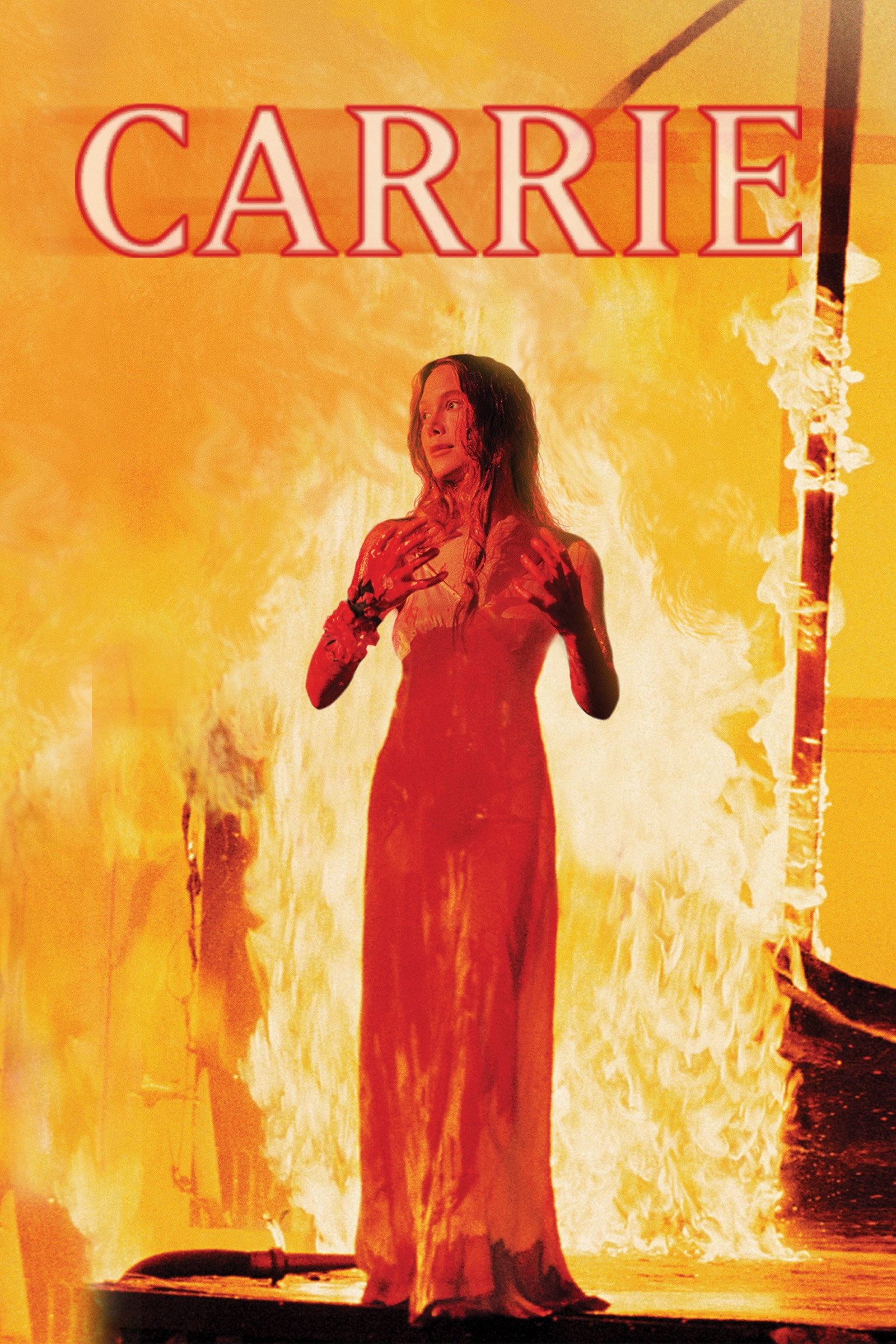
What the Film Is About
When I first encountered “Carrie,” I was not so far removed from adolescence myself. I approached it with a nervous curiosity, aware of its reputation for cinematic terror but unprepared for how personally it would knot itself into my thoughts. To me, “Carrie” is not a simple story of revenge or supernatural destruction; it is, above all, a ferocious meditation on the terrifying, paradoxical pain of being seen — and the desperate, contorted measures one takes to survive when every gaze seems cruel.
Brian De Palma’s 1976 adaptation of Stephen King’s first novel takes its horror from high school–an environment with which I intimately empathize. Through the story of Carrie White, an outsider hemmed in by an oppressive mother and a hostile student body, the film becomes a portrait of adolescent suffering: a psychic landscape teeming with shame, isolation, humiliation, and the explosive longing to be acknowledged. Where many horror films feed on outside danger, “Carrie” finds its terror within the self and the social microcosm of school—a kind of gothic fairy tale where being different is as dangerous as any specter. The terror, for me, lies in how deeply it recalls the traumas and yearnings of growing up.
Core Themes
During each viewing of “Carrie,” I am struck by how persistently the film returns to the anguish of being an outsider. Adolescence, in my memory and in “Carrie’s” world, is battlefield defined by constant, bruising judgment from peers and parents. The film presents eviscerating themes:
- Isolation and Shame: Carrie is an outcast not only at school but at home. This isolation—social and spiritual—serves as the film’s emotional engine. The violence that erupts from her is inseparable from the years of emotional starvation she endures.
- The Tyranny of Conformity and the Dangers of Difference: The most chilling cruelty in “Carrie” is routine, anonymous bullying, rooted in fear of the other. To dare to be different—be it in appearance, belief, or behavior—is to become a target, as I have often felt in my own adolescent years.
- The Religious Nightmare: Margaret White’s evangelical zeal is a weaponized form of love, creating a fusillade of guilt and repression. The film’s religious motifs—blood, purification—meld with Carrie’s bodily awakening for a particularly suffocating form of horror.
- The Violence of Awakening: Carrie’s telekinetic powers blossom not in freedom but in pain. To me, her abilities are a metaphor for coming of age: sudden, frightening, and punishing, as powerful and uncontrollable as the very anger and sexuality she is forbidden to own.
- The Catastrophe of Female Adolescence: At its core, the film is charged by the specific violence of female puberty—shame cast on the body, demands for purity, horror at sexuality. As someone who watched the film both dreading and desiring adulthood, I could not look away.
Symbolism & Motifs
What lingers most strongly for me in “Carrie” is De Palma’s use of recurring, loaded imagery. The film is not subtle—it can’t afford to be with the subjects it raises. Yet the bold visual choices, the motifs of blood and mirrors, make Carrie’s psychic reality palpable. It’s easy to underestimate how deeply these images worm their way into the subconscious, both of the film and the viewer.
- Blood: From the infamous locker room scene to the climactic prom, blood is the film’s central motif. For me—and surely for many others—blood signifies both mortality and transition, horror and life itself. Here, it symbolizes the moment when Carrie crosses from childhood to adulthood, experiencing humiliation and, ultimately, vengeance.
- Mirrors and Reflections: Each time Carrie gazes at herself, the audience is drawn into the crisis of self-awareness. What does it mean to be seen—by others, and by oneself? I recall my own teenage despair in front of mirrors, searching for identity and instead finding confusion or self-loathing. De Palma’s use of mirrors externalizes Carrie’s fractured self-concept.
- Religious Imagery: Every corner of Carrie’s home is suffused with iconography: saints, crosses, eyes peering from holy images. Instead of safety or comfort, they bring threat and censure—a visual reminder of the unyielding standards against which Carrie is forever measured.
- The Color Red: The color red saturates the film, further amplifying its themes of shame, sexuality, anger, and violence. No matter how much Carrie hopes to blend in, her world is painted in colors that demand attention and provoke fear.
Key Scenes
I come back to several scenes in “Carrie” again and again—each a crucible in which the film’s emotional and thematic force is distilled. Rather than mere plot, these scenes are scalding emotional set pieces that torment and liberate the film’s protagonist and, by extension, the viewer.
Key Scene 1
The Shower Room: This early scene is scorched into my memory—not merely for its brutality but for its place as a primal moment of shame and difference. Carrie’s terror during her first period, compounded by her classmates’ mocking, is agony that reaches across time and gender. The camera’s slowness as it tracks through the humid, eerie locker room feels almost voyeuristic, capturing both sensuality and stark vulnerability. What has always disturbed me is not the blood, nor even the cruelty, but the utter aloneness of Carrie in this moment. Reflecting on my own youth, I realize that this scene is less about puberty than about the horror of sudden, unwanted visibility—where the most private pain becomes public spectacle. Few films capture such a raw moment of unwilling ascension into society’s gaze.
Key Scene 2
Mother’s Closet: In the stifling confines of her mother’s prayer closet, Carrie is forced to repent for her imagined sins. The red-soaked lighting, religious statues, and claustrophobic angles all contribute to a sense of spiritual and emotional suffocation. For me, this scene is a concentrated expression of how religious fervor, in the wrong hands, becomes a tool for psychological torment. Margaret White’s invocation of original sin is not one of guidance but of relentless punishment. Carrie’s silent, tearful prayer is less a communication with the divine and more a desperate wish to be allowed to exist in her own skin. This dynamic reminded me uncomfortably of dogmatic environments in my own community, where conformity to moral codes eclipsed any understanding of compassion.
Key Scene 3
The Prom and the Bucket: The prom scene is one of those iconic moments that is often referenced for its shock-value climax, but to me it is the slow, trembling hope preceding the horror that is most wrenching. Watching Carrie transform under the flattering lights, I am reminded of how fragile hope feels when it’s been so late in coming. The split-screen editing, the dreamlike movements, and the creeping dread as the trap is set—all combine to create a sense of inevitability. The humiliation that follows, the gleaming, sticky blood, feels like a destruction not only of Carrie’s dreams but of any fleeting belief that kindness or inclusion is possible. The eruption of her powers is a moment of rupture and release—the repressed self made manifest, for better or worse. Every time I watch, I feel caught in the fusillade of heartbreak and cathartic violence, compelled to ask what any of us are capable of under such torment.
Common Interpretations
Over the years, “Carrie” has inspired essays and debates, each tracing meaning like veins through the film’s disturbing body. Some see it as an explicit parable of female adolescence, others as a cautionary tale about social cruelty or fundamentalism gone awry. For myself, I am most drawn to interpretations that highlight the brutality of social conditioning and the hunger for connection.
- Many readings focus on female sexuality and the terror faced by young women as they are forced to navigate a world both fascinated and horrified by their bodies. Carrie’s telekinesis becomes a symbol for untapped female power made monstrous by repression and fear.
- Others view the film through the lens of religious extremism, where blind certainty becomes its own form of violence. Margaret White’s theology is so rigid it destroys not only herself but her daughter, twisting even love into suffocation.
- There’s also a powerful strand of interpretation seeing “Carrie” as a warning about the danger of cruelty in insular societies—how scapegoats are made, how small torments become cataclysmic. For me, Carrie’s story is a tragedy of what happens when we refuse to protect the vulnerable among us.
- Some even read the film as a dark fairy tale, where the prom—supposed dream of American adolescence—becomes a nightmarish inversion of the Cinderella myth. The film persists as a ritual, played out whenever difference is punished, and hope becomes a weapon.
In every version, “Carrie” is less a horror story than an x-ray of the systems that create monsters. The terror isn’t Carrie herself, but the ways that relentless aggression and suppression generate eruptions.
Films with Similar Themes
Watching “Carrie” led me to seek out other films that, each in their own way, examine outsiders, repression, and the destructive powers lurking beneath ordinary life. Some of these films, like Carrie, are explicitly supernatural. Others find horror in the painfully mundane.
- The Virgin Suicides (1999) — Sofia Coppola’s film is another portrait of young women silenced and shamed by religious and parental repression, where tragedy grows silently beneath the surface.
- Heathers (1989) — This dark satire exaggerates high school social politics to hilariously murderous effect, laying bare the dangers of popularity and exclusion.
- Ginger Snaps (2000) — A coming-of-age horror film where puberty and lycanthropy merge, exploring the terror and allure of a girl’s transformation.
- Elephant (2003) — Gus Van Sant’s study of a high school tragedy refocuses the lens on alienation, misunderstanding, and the capacity for violence inherent in ignored pain.
- Black Swan (2010) — Like “Carrie,” this film studies the psychic breakdown that emerges under unrelenting pressure for perfection and bodily control.
- Welcome to the Dollhouse (1995) — Todd Solondz’s wry depiction of middle school outsider-dom approaches the same territory as “Carrie” without the supernatural, demonstrating that cruelty and alienation need no magic to be devastating.
All these films, like “Carrie,” meditate on what it costs to grow up in a world unprepared to offer understanding. Watching them, I am reminded that monsters are rarely born, but made, and that the truest horror is the moment we recognize ourselves—guilty, wounded, complicit—in their creation.
If you’re deciding what to watch next, you might also want to see how this film holds up today or how it was originally received.
🎬 Check out today's best-selling movies on Amazon!
View Deals on Amazon