
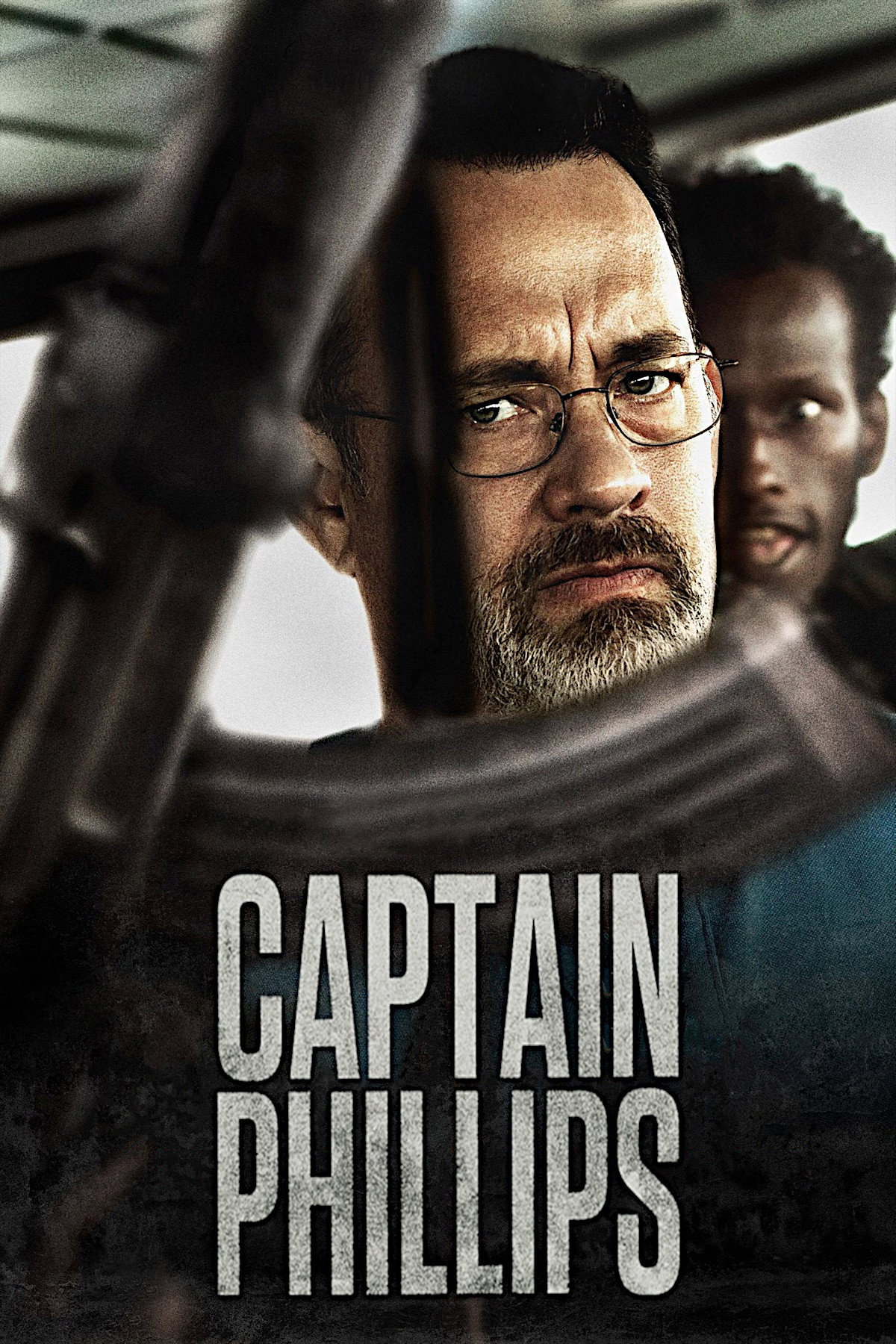
What the Film Is About
I rarely watch a film that leaves me as unsettled and introspective as Paul Greengrass’s Captain Phillips. From my first viewing, I felt as if I was being pulled out to sea, not just geographically but emotionally and existentially. This was not just a high-octane hostage thriller; it was a film that mirrored anxieties about vulnerability and power in our interdependent world. The film, based on the real-life Maersk Alabama hijacking off the coast of Somalia in 2009, forced me to place myself in the shoes of its characters—both the American captain and his Somali captors—reckoning with the all-too-real messiness of globalization, desperation, and the fluctuating lines between victim and perpetrator. I came away reflecting not only on piracy on the high seas, but questioning how easily the security I take for granted can be punctured—sometimes by acts both banal and horrific.
Core Themes
What lingers most with me from Captain Phillips is its intricate exploration of power dynamics and the dehumanization that arises when people become symbols in conflicts they cannot control. Greengrass’s direction places the viewer in a constant state of unease, never committing completely to Captain Richard Phillips’s perspective. The Somali pirates—led by the gaunt, haunted Muse—are not simply faceless villains; they are desperate men, as scared and limited as their captives, trapped by poverty and coercion.
I found this tension reverberates throughout the film: the American crew, insulated by technology and corporate protocols, are suddenly face-to-face with young men forced into piracy by a devastated economy. As I watched, I was uneasy about how quickly my sympathy vacillated—from outrage at the pirates’ violence to unease at the immovable system that produces such violence in the first place. The film refuses to render its events as binary or to offer easy catharsis. Instead, it stages a relentless, hour-by-hour negotiation of agency, stripping its characters down to their rawest forms.
If there is a single thread that runs through the movie for me, it is the larger context of globalization—not simply as commerce but as a force that can empower or destroy, that connects and divides. The American cargo ship, filled with goods destined for international markets, and the impoverished Somali coast, a wasteland left behind by greater forces—this juxtaposition never leaves my mind. Greengrass constantly reminds me that for every container shipped safely, there are unseen costs; for every moment of Western routine, there are worlds roiling in turmoil to keep that routine churning unbroken.
Symbolism & Motifs
Several motifs in Captain Phillips subtly intensified my experience, prodding me to look deeper beneath the procedural surface. Water is a constant: both a provider of livelihood and danger, a space for connection and separation. The sea, as Greengrass frames it, is not only a setting, but a character—vast, unyielding, indifferent to individual suffering. It is through the endless expanse of water that these disparate lives collide, and it is water again that, ultimately, is the site of trauma, confrontation, and baptismal chaos.
There is also the repeated motif of windows, doors, and hatches—barriers that are locked, breached, or thrown open in frantic bid for control. Each threshold crossed in the film, whether the pirates’ boarding ladder or a sealed lifeboat door, is emblematic of a line crossed, a boundary violated. These transgressions linger long after the initial tension dissipates. To me, doors are never just doors here; they represent the impossibility of absolute safety, how every fortress has its weakness.
Another potent symbol is the radio. The radio is a lifeline between ship and world, crew and authorities, captor and captive. Its occasional silence is oppressive, its sudden bursts of static or language unfamiliarity fuel the tension. I found that the radio’s presence underscored how communication can become a tool of both hope and fear, clarity and confusion, much like the global environment in which the film is set.
Key Scenes
Key Scene 1
The moment the Somali skiff finally catches up to the Maersk Alabama is etched in my mind—the pirates scrambling up the hull, the American crew scrambling to hide. This is not just an action sequence but an enactment of systemic collision: the world’s haves confronted by its have-nots, each equally panicked. I always feel my stomach knot as I witness the forced transformation of everyday seamen and desperate outsiders into antagonists in a drama neither wanted. For me, the sound design here, the repetitive thud of the boarding ladder, and the screaming wind, is all-consuming. It’s primal, as if history itself is battering the hull.
Key Scene 2
Another sequence that resonates is the stifling confinement in the orange lifeboat. Here, the dynamic between Captain Phillips and Muse, his captor, is stripped of all artifice. As days pass, sweat and bodily fear mixing in the cramped capsule, I see a performance that is less about actor or villain, more about two individuals, both out of options. The cramped shots make me feel almost physically pressed against the hull alongside them. Their exchanges oscillate between threats and flickers of understanding, two men thrown together by currents neither controls. In this lifeboat, all notions of nationality, legality, and occupational role begin to collapse under the urgency of survival.
Key Scene 3
Finally, I come back again and again to the shattering aftermath, when Phillips is rescued but irreparably broken. The medical examination—raw, unfiltered, and devastating—is for me the most truthful scene in the film. Tom Hanks’s trembling confusion and disassociation are a needed punctuation: survival, here, does not equate to triumph. I remember feeling my own breath catch during this scene, as the bravado of rescue gives way to trauma. When the camera lingers on Phillips’s eyes, struggling to process what he has endured, I am forced to face the lasting costs of violence, both seen and unseen.
Common Interpretations
Over time, in discussions with friends and fellow film enthusiasts, I have encountered several dominant readings of Captain Phillips. Some focus on the tale of leadership and resilience—Phillips as the quintessential American captain, staying calm under pressure, never losing sight of his responsibility. It’s not a wrong interpretation; indeed, his conduct under duress is extraordinary. Yet to me, this approach can sometimes feel too narrow, missing the ethical complexity the film presents.
Others draw parallels between Phillips and Muse—both at the mercy of economic forces, both trapped in roles demanded by environments shaped by faraway powers. I find myself more drawn to this second reading: the idea that the captain and his captor are not moral polar opposites, but mirror images in a system that dehumanizes them in different ways. In these conversations, the idea surfaces that neither Phillips nor Muse is truly free; that both are responding, ultimately, to a logic of survival imposed by structural inequalities. Their confrontation is less personal and more symptomatic of vast geopolitical and economic forces.
There also exists a more critical interpretation, one that I wrestle with as I reread accounts and watch interviews: the notion that the film, despite its nuances, still aligns closely with an American-centric, even imperial gaze. The might of United States Navy SEALs, the portrayal of the pirates as dangerous unknowns—these elements, for some, reinforce stereotypes and justify a certain violence in the name of protecting Western commerce. I see validity in this reading, particularly in how the film’s later acts seem to pull the audience toward identification with the Americans by virtue of language, cultural cues, and narrative rhythm. Yet I cannot ignore Greengrass’s efforts to humanize the pirates and present them as more than caricatures. The film’s greatest tension lies in its refusal to choose a side completely, instead exposing the limits of empathy and the dangers of reductionism.
Films with Similar Themes
Reflecting on the impact of Captain Phillips, I am drawn to other films that probe the costs of global interconnectedness and the ambiguities of survival under impossible circumstances.
- United 93 — Also directed by Paul Greengrass, this film dissects the harrowing events aboard the hijacked United 93 on September 11, 2001. Like Captain Phillips, it refuses to offer simple answers, instead immersing the viewer in real-time terror and acts of extraordinary courage shot through with ambiguity. Both films challenge me to confront not only what heroism means but also what it costs.
- The Hurt Locker — Kathryn Bigelow’s 2008 film examines war zone anxiety with intimate, uneasy realism. Its portrait of addiction to danger and the psychological aftermath of trauma echoes Phillips’s final breakdown, reminding me that the physical drama often pales next to the wrenching internal struggles left behind.
- Captain Fantastic — While utterly different in setting, Matt Ross’s 2016 drama about a father raising children in isolation prompts me to question what constitutes genuine leadership and connection in an antagonistic world. Like Captain Phillips, it blurs the lines between protector and authoritarian, safety and entrapment.
- A Hijacking — This Danish film, released in 2012, predates Captain Phillips and covers a cargo ship’s kidnapping by Somali pirates. Its gaze is colder and more meditative, focusing on the agonizing negotiations between corporate executives and pirates. When I watch both films back-to-back, I see two sides of the same coin: the impossible decisions faced by people in boardrooms and lifeboats alike, both distorted by their distance from violence yet ultimately complicit.
- Gravity — Alfonso Cuarón’s 2013 film finds survival and isolation at the edge of space. Though its setting is cosmic, its meditation on the fragility of life and how we regain agency in the face of overwhelming odds feels kin to Captain Phillips’s examination of perseverance on the open sea.
Each of these films asks me to join its characters in grappling with danger, fear, and the ethical dimensions of survival—none offering solutions, but each refusing to let me off easily.
For more context before choosing your next film, these perspectives may help.
🎬 Check out today's best-selling movies on Amazon!
View Deals on Amazon