
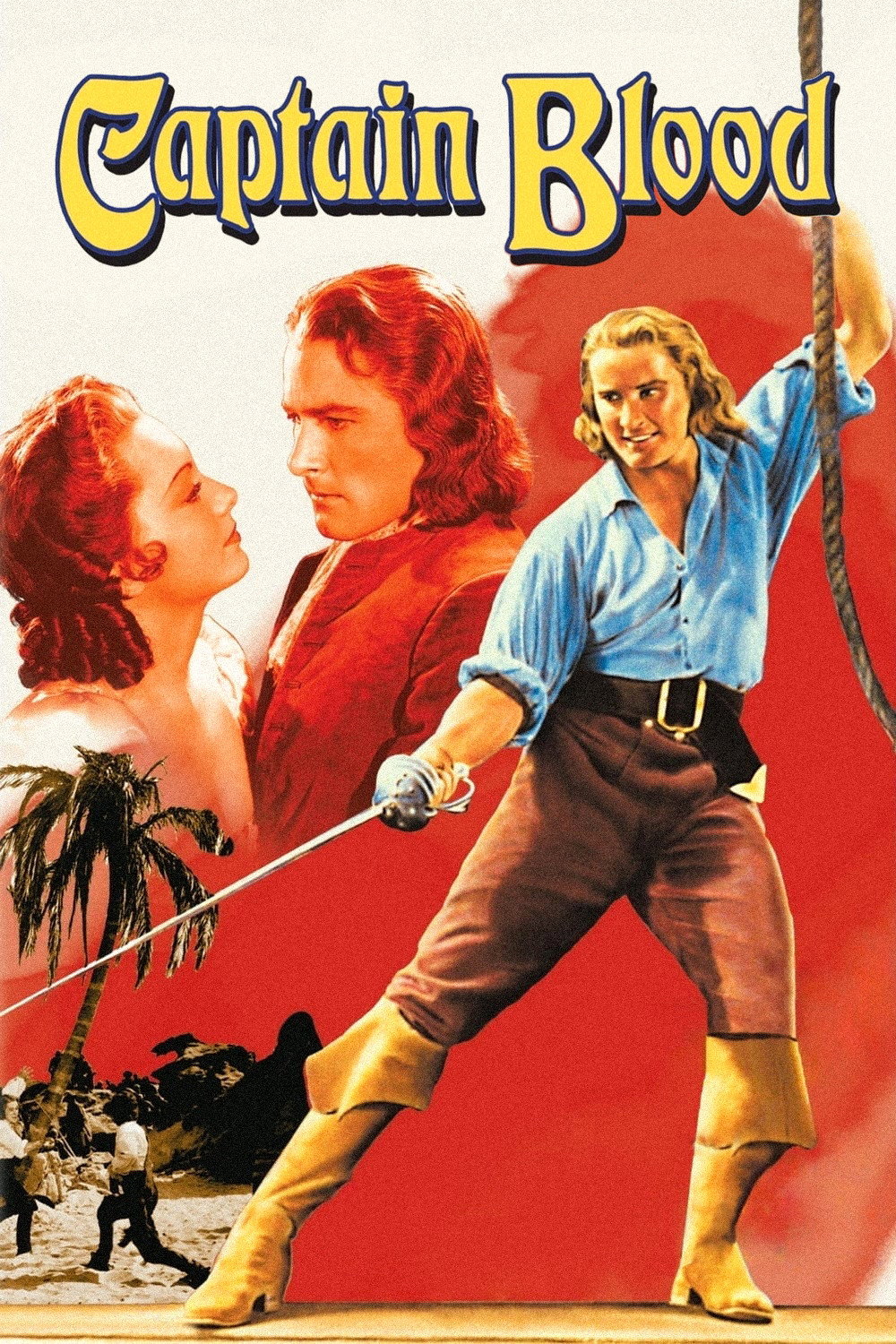
What the Film Is About
Sometimes a film enters my life as a revelation, not simply by entertaining me, but by pushing me to question the undercurrents of freedom, fate, and conscience that shape every human act. “Captain Blood”, first released in 1935, has always been one such film for me. At its heart, I’ve come to see it as a rousing adventure built on the resilience of the human spirit, a story that tempers swashbuckling spectacle with a probing look at justice and self-determination. Watching it, I never merely follow Peter Blood’s journey from British doctor to Caribbean pirate—I’m compelled to chart my own course of introspection, wondering how each of us manages to resist injustice without losing our way.
On the surface, “Captain Blood” is spun from the fabric of classic Hollywood spectacle: dazzling swords, perilous escapes, romance, and grand ships thundering across sunlit waves. Yet beneath those vivid trappings lies a richer exploration of what it means to fight for autonomy, to stand in principled opposition even under threat of annihilation, and to shape identity in exile and adversity. This film doesn’t just whisk me from the plagues of England to lawless Caribbean waters. It invites me to reflect on the many prisons, literal and metaphorical, imposed by society—and the fierce, often lonely work it takes to break free.
Core Themes
The themes of “Captain Blood” unfold with complexity, seldom resolving into black and white. Rather, I’m drawn into ambiguities: is Peter Blood’s rebellion noble or self-serving? Does justice demand strict adherence to law, or is it sometimes only found in acts of defiance? Through these tensions, several defining ideas emerge.
- Resistance to Tyranny: The film grows from the soil of the Glorious Revolution and England’s divisive politics. Watching Blood’s arrest and transportation as a slave, I see more than a plot device; I see an archetypal reminder of how those with conscience are often branded traitors by the powerful. For me, the film’s lasting charge is its message that authority, abused, must be confronted with courage.
- The Search for Identity: Peter Blood’s forced transformation from healer to outlaw is both thrilling and unsettling. I reflect often on the line dividing adaptation from self-betrayal. Blood neither acquiesces passively to his bondage nor simply inverts victimhood into vengeance; he reinvents himself, yet his actions are shadowed by nostalgia and moral doubt. This tension, more than any duel, keeps the film alive to me.
- The Meaning of Justice: Laws are played both as shields and swords in this story. The contrast between law as written and justice as lived is everywhere: in Blood’s courtroom protest; the brutality of the slave auctions; the pirates’ ragtag code. I find myself thinking about how justice is forged not by institutions alone, but by the courage of those daring enough to interpret and embody it.
- Exile and Belonging: While grand sailing adventures fill the screen, what really anchors the film for me is the sense of homesickness, of yearning for some place or state where one is no longer hunted or misunderstood. Blood’s journey is shaped by the longing for home, the ache of separation from country, tribe, and self.
These themes tangle together, refusing easy unraveling. They animate every character, not just the hero, and call me to look for my own place within them, to ask where I stand in the stories of outrage, retribution, and forgiveness.
Symbolism & Motifs
What makes “Captain Blood” linger in my thoughts long after viewing is not merely its rousing story, but the way it constructs meaning through image and metaphor. The film is rich in visual motifs and recurring symbols that deepen its exploration of freedom and constraint.
- The Sea: Central to the film’s symbolic world is the sea itself—an ever-shifting space of peril and possibility. I see the Caribbean not just as a backdrop, but as a living force, mirroring Blood’s own tumultuous spirit, promising escape but also ever-present danger. The sea is where identity becomes malleable, and fate is reinvented daily.
- Chains and Manacles: I’m struck by the repeated imagery of chains, both literal and figurative. The physical bonds of slavery—the clinking shackles, the auction block—set the baseline for Blood’s oppression, but as these are shed, the memory of constraint lingers throughout. Blood wrestles with new kinds of bondage: piracy’s temptations, his own rage, even the obligations of love.
- Swords vs. Scalpel: Blood’s conflicting roles as healer and swordsman find expression in recurring motifs. The scalpel represents his desire to mend and save, his fundamental hope in reason and order. The sword stands for violence and retributive justice, tools demanded by a cruel world. Watching him choose between the two, I’m reminded of the razor’s edge between survival and self-alienation.
- Ships as Microcosms: Each ship in the film–whether Spanish, English, or piratical—serves as a floating world where power is wielded, rules are challenged, and new allegiances are formed. The mutiny that frees Blood is not just a plot turn, but a metaphor for uprising against ossified authority, with the ship a crucible of democratic (if volatile) order.
- The Auction Block: The slave auction sequence endures as one of Hollywood’s most haunting images of commodification and dehumanization. Here the film does not look away from the mechanisms by which the strong subjugate the vulnerable, driving home the cost of injustice—yet also setting the stage for acts of resistance and human connection.
These motifs accumulate, imbuing the film with a resonance that far outpaces its genre conventions. Each time I revisit “Captain Blood”, I discover new echoes—new questions about what it means to cut one’s own chains, and at what cost.
Key Scenes
While every adventure tale turns on its set pieces, the real heart of “Captain Blood” lies in key scenes that serve as crossings, moments when character and meaning are forged anew. Three sequences in particular stand out in my personal experience of the film, each shaping the emotional and philosophical spine of the story.
Key Scene 1
The trial in which Peter Blood is condemned for treating a wounded rebel draws me irresistibly. Here, the film departs from expected melodrama, choosing instead a clear-eyed look at the machinery of state repression. Blood’s impassioned defense—delivered with weary wit and disdain for hypocrisy—reminds me of the essential tension between law and justice. He does not plead for mercy, but for understanding, staking his claim to medical ethics and universal humanity. This moment reminds me that even when individual conscience is powerless to halt injustice, bearing witness to its wrongs is itself an act of defiance. Watching that scene, I often wonder what I would do with my own principles when faced with such a perilous choice.
Key Scene 2
The slave auction and Blood’s subsequent purchase by Arabella Bishop sweep me into a vortex of humiliation, rage, and ambiguous compassion. The auction sequence strips away the façade of civilization, exposing the brutal commerce in human bodies, the hypocrisy of genteel society, and the limits of Blood’s agency. Arabella’s intervention is both an act of kindness and a further complication; Blood’s pride and vulnerability are laid bare, and the audience is forced to ask uncomfortable questions about privilege and power. I find myself holding my breath, torn between gratitude for her action and a prickly discomfort at the layers of dominance and dependency that remain. The film’s handling of this scene spurs me to reflect on how real-world acts of kindness are so often entangled with structural inequality—and how fraught the path to mutual respect can be.
Key Scene 3
The final confrontation—when Blood is offered pardon and restoration by a grateful England, only to hesitate—strikes me as the culmination of every moral and existential dilemma raised so far. Blood’s reluctance to seize easy absolution or cynical power speaks to the wounds left by betrayal and the slow reclamation of hope. He must reckon with all his identities: fugitive, pirate, healer, leader. The film subtly suggests that true freedom is not merely the absence of oppression, but an inner reconciliation, a return to one’s better self forged through hardship and self-knowledge. Watching Blood waver in that moment, I’m pushed to confront my own threshold for forgiveness, both given and received, and to ask whether any restoration can fully heal the divides within and between us.
Common Interpretations
Over time, I’ve read and heard hundreds of takes on what “Captain Blood” is ultimately about. Far from settling on a single explanation, its richness seems to glow brighter with debate and dialogue. Some critics emphasize its political allegory, casting Blood as a romanticized stand-in for anyone who has ever been criminalized by the state for following conscience—an echo of the tides that shaped Colonial America, the abolitionist movement, or even twentieth-century resistance to totalitarianism. To me, this frame feels valid but incomplete, missing the deeply personal stakes at the center of the narrative.
Others view the film as pure escapism—the fantasy of liberation from every authority, whether king, captain, or moral code. I understand the appeal of this reading, especially at a time (the heart of the Great Depression) when so many viewers longed for an imagined space where wit, courage, and luck could upend the world’s injustices. Yet, each time I watch, I find the film honors not just rebellion but the painful ambiguity that follows revolution. It is no accident that Blood is reluctant to rule, wary of the quick fix; the story’s real legacy is its appreciation for the hard work of reimagining justice beyond simple victory.
Romantic interpretations, too, have a following, focusing on the slow-burning bond between Blood and Arabella. Their relationship, forged in adversity, walks a fine line between rescue fantasy and mutual respect. What matters most to me, though, is how the film refuses to tidy up its emotional entanglements; Arabella and Blood learn more about themselves in facing each other across divides of class, gender, and power than in any conventionally happy ending. The film acknowledges the cost and complexity of trust between equals, especially when history itself seems arranged to keep them apart.
Films with Similar Themes
Part of what keeps me returning to “Captain Blood” is the feeling that, while unique in style, its thematic DNA is shared by many other classic and modern films. It stands at the intersection of the adventure genre and the tradition of moral allegory—a crossroads that has brought forth films as diverse as “The Adventures of Robin Hood” (1938), “Spartacus” (1960), and “Les Misérables” in its many incarnations.
- “The Adventures of Robin Hood” retells the tale of outlaw heroism and noble-banditry, with a similar flair for spectacle and a comparable interest in the limits and possibilities of resistance. Watching Robin and Blood side by side, I’m struck by the difference in mood: Robin’s world is brighter, more certain, while Blood’s is shadowed by moral uncertainty and trauma.
- “Mutiny on the Bounty” (1935) explores the moral cost of rebellion at sea, its hero pushed to mutiny by unbearable cruelty. Like Blood’s Caribbean odyssey, it positions the ship as both prison and crucible, a space of danger and possibility all at once.
- “Spartacus” builds on the tradition of the righteous outlaw, turning a slave revolt into a meditation on leadership, loyalty, and the challenges of building a truly just society out of brokenness and pain. Watching these films in parallel, I see how the question comes less about victory, and more about what follows: Who gets to define freedom? How is justice rebuilt from the ruins of tyranny?
- “Les Misérables”, whether in silent, musical, or dramatic form, shares with “Captain Blood” a fascination with law, forgiveness, and the long shadow of injustice. Both films honor the solitary struggle of individuals seeking dignity despite their pasts.
- I’m also reminded of modern films like “The Shawshank Redemption” and “12 Years a Slave”, which take the journey from bondage to self-assertion in wholly new directions, but never lose sight of the ache for home, meaning, and redemption that pulses beneath the adventure.
In each of these films, as in “Captain Blood”, I find not only thrilling stories, but enduring challenges to the easy certainties of power, the wisdom of the law, and the possibility of a kind of grace born in adversity.
If you’re deciding what to watch next, you might also want to see how this film holds up today or how it was originally received.
🎬 Check out today's best-selling movies on Amazon!
View Deals on Amazon